Thursday, 1 April 2021

The Best Blogging Platforms (In-Depth Review)

Disclosure: This content is reader-supported, which means if you click on some of our links that we may earn a commission.

Do you want to skip the read and get right to my top pick? The best blogging platform for most people is Wix.

I’ve been making a good living as a blogger for more than a decade. This is an area of the internet I know really well.

You’ve got a lot of good options. Some are free and might do the trick. Others are paid and you can do a whole lot more with them.

To help find the best option for your situation, I reviewed the top five blogging platforms on the market today and created a short list of criteria to think about as you search.

By the end of this article, you’ll be well on your way to starting your own blog. 

#1 – Wix Review — The Best for Launching a Beautiful Blog Right Now

If you are looking for the shortest distance between you and a functional blog, go with Wix.

There are other great options on my list, but nothing is as easy to get started with as Wix. 

It’s an excellent choice for beginners interested in creating a full-fledged website with a blog included.

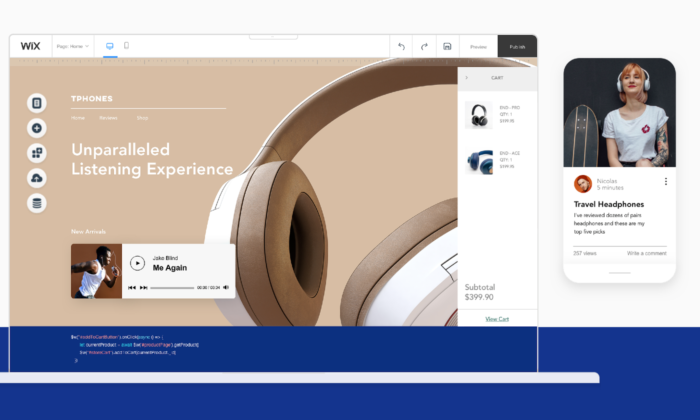
Wix is highly template-driven, but there are an astonishing range of options available. You’ll be able to find something that fits with your brand. Getting things set up is as simple as using the drag-and-drop editor to design your site—no code necessary.

Alternatively, you can use Wix Artificial Design Intelligence (ADI). Just answer a few questions about who you are and the purpose of your blog, and Wix ADI will create a website for you. I’m not kidding:

And even if you want to design your own site, Wix ADI will help you figure out which layouts work best by letting you preview your content before making a decision.

Everything looks crisp with very little configuration on your end. Your final product is going to make a professional impression, whether visitors are on a laptop or mobile phone.

And if you are an on-the-go person, don’t worry. The Wix mobile app lets you design and blog right from your phone.

For the more technically confident, greater customization is possible in Wix, but most users aren’t going to need to do more than plug and play.

As one of the best website builders available, Wix is more than capable of supporting your entire site, not just your blog. Set up an online store, book appointments, post jobs, and more. 

In terms of growing your audience, Wix comes packed with powerful tools to help you increase your reach and engage meaningfully online:

  • Industry-leading SEO tools
  • Social media tools
  • Visitor analytics
  • 500 professional design templates
  • Post scheduling
  • Embed HTML codes
  • Categories and hashtags
  • Advanced search capabilities
  • Collaborators
  • Easy image editing

From site building to outreach, Wix a lot more than just a blogging platform. You can get started today and use Wix free forever.

The pros of a free Wix account are hands-off maintenance, as Wix hosts everything, and access to the world-class site building tools. Your site will have wixsite.com in the web address, and you’re limited to 500GB bandwidth, which basically means it only works for small sites without too much traffic.

The other drawback are the Wix ads, which enable the company to offer the free version. If you are running your blog as part of your business, do you really want another company’s advertisements?

If you upgrade, Wix removes the ads and gives you a custom domain name free for the first year. Your blog is fully yours, which I think is more than worth it.

Premium Wix plans are broken down into three groups: Websites, Business & eCommerce, and Enterprise. 

If you are looking for a straight up blogging platform, the Websites plans will do. Plans start at $14 per month for Combo, which is good for personal use, and range up to $39 per month for the VIP plan, which has a lot more storage space and tools to grow your brand.

Business and ecommerce plans start at $23 per month and allow you to accept payments online. Sell products and services directly from your blog. Even for more complex sites, the Wix set up process will still be very user-friendly.

Wix is an excellent choice for individuals and small businesses trying to get the word out. There’s a 100 page limit for Wix websites (excluding blog posts, of course), and site performance may suffer if you start to hit the upper limit.

If this is a concern, I’d just go with WordPress, which can grow as big as you need. That said, Wix offers custom solutions for enterprise clients that start at $500 per month.

For most users, especially those looking to get their blog up and running without any stress or frustration, Wix is fantastic.

Try Wix Premium today free for 14 days, or blog free as long as you like.

#2 – Squarespace Review — The Best for Bold Branding Without a Web Designer
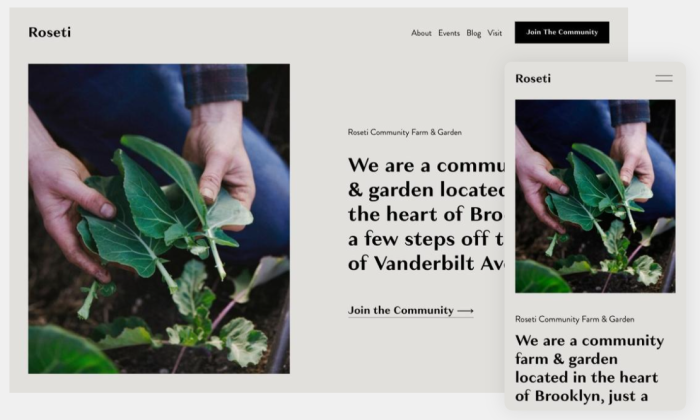
Squarespace is an all-in-one website builder, like Wix. However, it’s famous for aesthetically pleasing templates, making it perfect for visual-based businesses like photographers, designers, and artists. 

For as great as your published work looks on Squarespace, it’s a relatively effortless platform to use.

Looking at the clean, beautiful brand presentation on Squarespace blogs, you might think that everyone hired a designer to get there. That may not be true.

Don’t get me wrong. Graphic design gurus can take Squarespace to amazing places, but I think the draw of the platform is that non-technical folks can spin up an amazing site themselves.

For the entrepreneur or small business looking to build their online presence, Squarespace is a phenomenal choice. They can get the sleek blog they want without having to hire a web designer or developer.

This is huge, because you’re not having to pay anyone to create your site, or having to scramble to find assistance when something breaks.

And if something does go wrong, Squarespace has highly-responsive customer service available 24/7. The relatively small monthly fee for the sitebuilder is probably a lot less than keeping a professional designer on retainer. 

Think of Squarespace as a middle-of-the-road option between Wix and WordPress—it’s got a little more freedom to customize than Wix, though not as much as WordPress, but it’s going to be easier to use on day one than WordPress.

Like Wix, you start with templates and customize from there. Squarespace templates are very elegant, and the editor is drag-and-drop, which means no coding to get started.
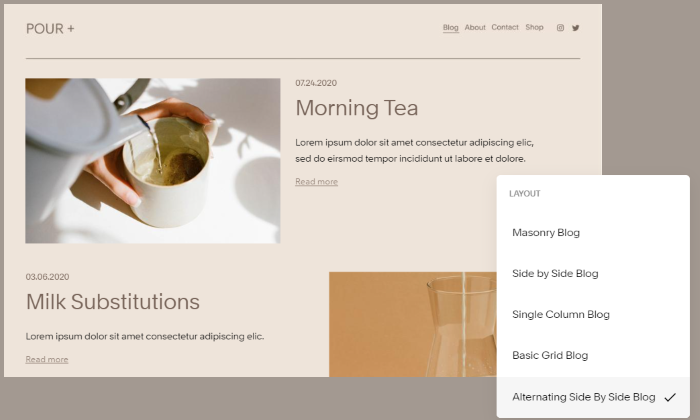
What you see is what you get in terms of design, so you are not having to preview your page constantly to make sure everything is placed where it needs to go.

Squarespace is not quite as intuitive a design interface as Wix, but it’s not hard to get the hang of it. And once you do, you’ll find that you have more control over what you can do with the color palette and layout. 

This freedom is why a lot of artists, designers, and creatives flock to Squarespace.

Not that you need to be a designer to achieve an elegant blog on Squarespace. People without an artistic bone in their body are creating amazing sites on the platform every day. 

For a company that wants a beautiful blog, but doesn’t want to hire a designer to babysit it, Squarespace is perfect. Out of the box, you get:

  • Free blogging templates to help you get started
  • Categories, tags, and featured posts
  • Built-in post scheduler
  • Contributor permissions
  • In-depth analytics
  • SEO and social media tools
  • Email marketing tools
  • Expert customer service
  • Mobile app

Now you won’t have total control to customize, as you do with the thousands of plugins offered by WordPress.

That said, all of the add-ons and third-party extensions in Squarespace are built into the platform—this means no maintenance or updates for you. This is going to be less work than managing WordPress plugins and themes.

Adding ecommerce functionality to your Squarespace blog is extremely easy. Launch an online store, book appointments, create and sell member’s only content. 

Get these features set up in minutes and drive the right type of traffic to your blog with Squarespace’s excellent marketing and SEO tools. Everything you need for a complete website for your business is just as easy to set up as your blog, and it’s all going to look sharp.

Squarespace plans start at $12 per month for a website, and as low as $18 per month to add ecommerce:
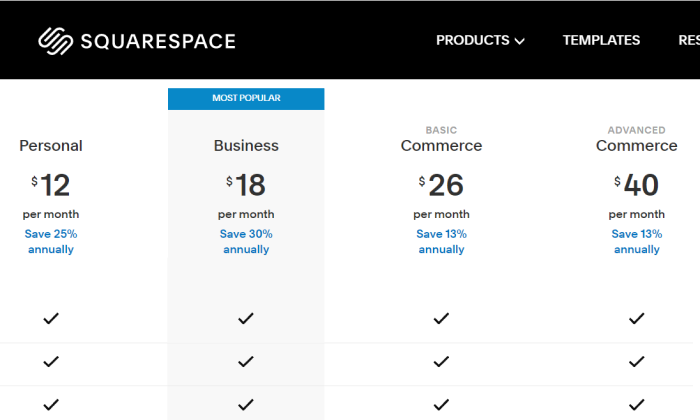
The Personal plan is more than enough to power your website with a very good looking blog. You get the rich design and editing features I’ve described, as well as access to basic website metrics and the Squarespace extensions, which can expand your site with third-party features and content.

The Business plan lets you accept secure online payments and further customize your site with premium integrations. Take reservations, book appointments, or sell products and services. Choose the features you want and leave the maintenance to Squarespace.

I like the Business plan because you get more advanced analytics to understand your audience and fine-tune your marketing strategy. With higher tier plans, you’ll get more tools to understand your web traffic and additional ecommerce functions.

No matter what plan you choose, you get access to Squarespace’s customer service any time of day. For companies looking to get by without a web designer, the always-available assistance is a huge relief.

Squarespace is a fantastic option that keeps improving. The company is constantly adding features and upgrading the interface. 

Within a week or two, anyone can become a Squarespace master even if they are starting from scratch. It’s the perfect platform for an individual or small company that wants a professional-looking blog without hiring a professional to get it.

Try Squarespace free for 14 days and give your company the on-brand blog you’ve always wanted.

#3 – WordPress Review — The Best for Creating a Unique Blog
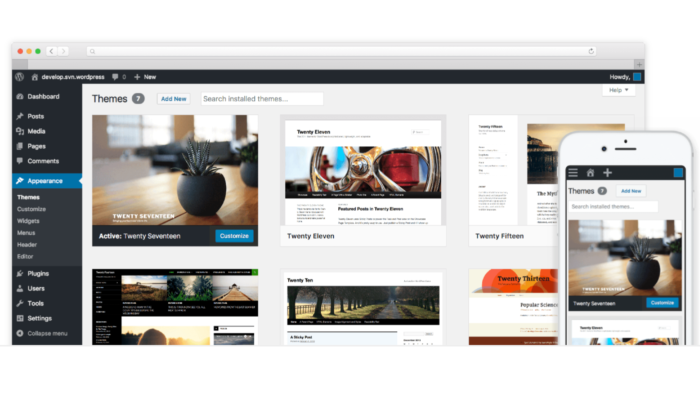
WordPress is the most popular blogging platform in the world. It’s free to use and the potential to create is boundless.

You can blog for free at WordPress.com. The company hosts your site and gives you a subdomain. The downside is that it’s supported by running its own ads unless you upgrade your plan.

Alternatively, you can download the platform for free at WordPress.org and use it on a site you host yourself. Hosting isn’t free, but if you go with an officially recommended WordPress host like Bluehost, the whole thing winds up being less expensive than going with a similar website builder.

The payoff is that you can build whatever you can imagine with your WordPress blog.

The whole WordPress.com vs. WordPress.org concept can be a little confusing, so just know that my review is of the WordPress.com option. When you read WordPress throughout this post, that’s what I am recommending.

It starts with choosing your WordPress theme. Think of it like a template that formats your whole site as opposed to just one page. 

There are a ton of amazing free themes to promote your content. These will keep your blog on brand and help you curate posts for your readers.

To add more functionality to your blog, there are tens of thousands of WordPress plugins you can use. These will help with SEO, site security, setting up newsletter subscriptions, and so much more. Lots of useful plugins are free.
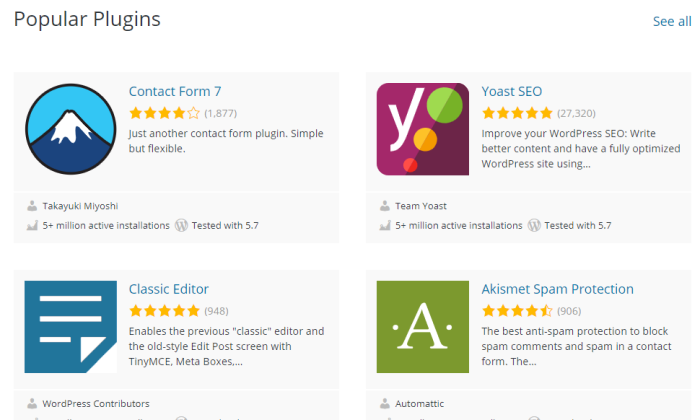
There are also premium plugins and themes you can buy to add rich capabilities or custom looks for your site.

Since WordPress is open-source and ridiculously popular, there is an active community that is constantly building new features for today’s challenges. These are just some of the reasons more people choose WordPress for their blog:

  • 55,000+ plugins to extend the functionality of your site
  • Thousands of free and premium themes
  • The Gutenburg block editor
  • Advanced user roles and permissions
  • Powerful media management
  • A massive community of experts
  • Infinite design control

You can get plugins and themes to take your site wherever it needs to go, and if you can’t, there is probably someone working on a solution right now.

With Wix and Squarespace, you are paying for an all-in-one platform. With WordPress, the platform is free, and you can purchase what you need à la carte. Choose your own mix of plugins and themes to get exactly what you need.

Turn your blog into a social media forum or host member’s only content behind a paywall. Anything you want is as simple as finding the right plugin.

Wix is going to be easier to use, especially at first, but WordPress is by no means difficult.

If you start building out a really complex site with a lot of plugins, sure, it’s going to be more work to maintain, but you’ll also have a blog that’s much more unique than what you could assemble on Wix.

In terms of day-to-day editing, though, WordPress is a breeze. The Gutenberg editor simplifies that process of arranging and refining your blog. You can work in HTML or edit visually, block by block, and effortlessly add content from your media library.
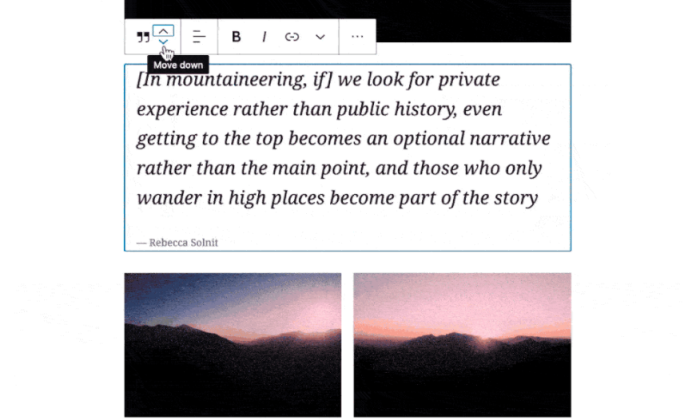
For the non-technical user, building a custom blog that’s rich with images and videos is incredibly easy. Gutenberg can even help you cut down on the number of plugins you need, which can start to cause conflicts if you are using too many.

Looking at the all-in costs of using WordPress as a blogging platform, it really depends what you are trying to do. If you are looking for the traditional blogging experience, you just need to pay for hosting and a domain name.

From there, you can do a ton with free plugins and themes. Or you can invest more in your site with paid options.

If you are just starting your blog, I’d recommend Bluehost Shared WordPress hosting. It starts at $2.95 per month. They give you a domain name free for the first year, custom themes, and automatic WordPress updates.

The whole process takes minutes instead of hours. It is affordable, easy to set up, and Bluehost takes over some of the maintenance. For all these reasons, I recommend Bluehost as the best way to start a WordPress blog.

#4 – Medium Review — The Best for Reaching Readers with Minimal Effort
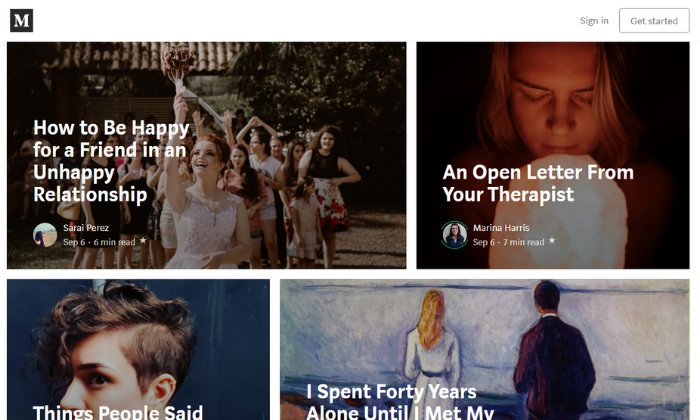
One thing most blogging platforms don’t include is a built in audience. Medium does.

In order to read articles on medium, you need to pay a monthly membership fee. Some of that money goes to sustain the site, but some goes to the writers whose stories are being read.

So, if you write on Medium and join the Partner Program (which is free, and you don’t have to be a paying Medium member to join it), there’s a chance you could earn money if people spend time reading your blog posts.

Any topic you can think of, there is a Medium audience waiting to read more. You can share your posts easily, and check out what other bloggers in your space are doing. People who read similar types of posts to yours will see your posts, if you join the Partner Program.

This is a potentially monster avenue for targeted outreach within your niche.

Now it’s not entirely clear just how Medium curates your posts for other readers, which can be a little frustrating for bloggers who can’t find traction on your site. That said, Medium does provide helpful stats about your visitors so you can get a sense of how traffic is arriving.

You also can’t make a million dollars on Medium, like you can with a website builder with more monetization options.

But you also don’t have to worry about hosting or maintenance with Medium. The lack of effort is a huge plus for bloggers looking to write, not write code.

In that sense, Medium makes the initial hurdle to getting paid for blogging as easy as possible.

And if you aren’t worried about turning a profit, Medium is one of the best free blogging platforms available. 

There’s a good bit of design freedom, though definitely not as much as you get with website builders like Squarespace. You can play with the layout and fonts to capture your online persona, and you never have to worry about advertisements disrupting your flow.

You don’t have a techie bone in your body to start drafting, editing, and embedding your own pictures or third-party media.

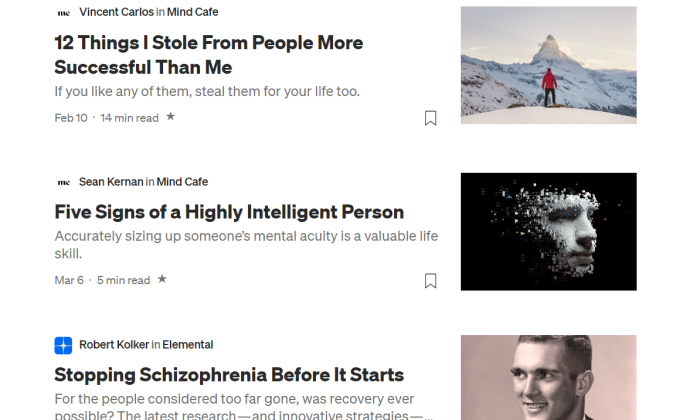
That’s another big draw with Medium: you hardly have any work to get perfectly formatted, mobile responsive blog posts. Everything lands on feed curated beautifully for readers:
For individuals and businesses alike, Medium is the perfect stress-free option for blogging. 

Spotlight an ongoing portfolio of work, client success stories, your hottest daily deals, or simply share news and updates. 

Medium lets you connect with a curated audience for free, and gives you the ability to share posts across social media with ease.

All of this through your own blog, which you don’t have to pay for or maintain.

Start using Medium today for free, and who knows, maybe you can generate a little cash on the side.

#5 – Blogger Review – The Best for Sharing Your Story
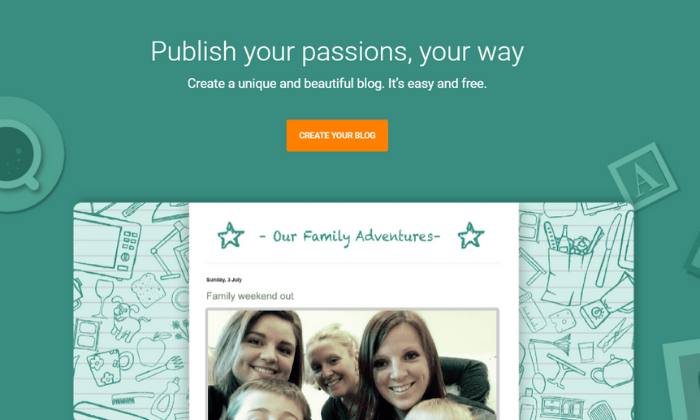
Blogger is a great platform for the casual blogger, individuals advocating for a cause, or potentially companies who want nothing more than a traditional blog. 

It’s owned by Google, and offers the same level of dependability and intuitive navigation as Chrome and Gmail. If you can write an email, you can write a post on Blogger.

It’s also entirely free, forever, and includes your own subdomain. Your web address will be at example.blogspot.com. Set up takes minutes, and you never have to worry about hosting, storing your files, or keeping your site speed fast.

Leave that all to Google.

If you are trying to create an on-brand blog, and you want to get rid of the blogspot subdomain, simply purchase your own custom domain through one of the best domain registrars. It’s very easy to set everything up, especially if you use Google Domains.

I like it best for personal use as the platform is limited in some ways that can hamstring a blog built for business purposes. You have options to tweak the blog presentation, but you can’t change too much to make it your own.

There are gadgets to add functionality to your blog, but nothing remotely close to the power and diversity of WordPress plugins. You also have no ecommerce options, as you would with other website builders.

That said, you can monetize your Blogger page very easily using Google Adsense. Fill out a quick form with your payment information, and Blogger will put relevant ads on your site, bringing you income based on how many people visit.

Now this isn’t your ticket to a full time salary, but a little revenue coming in the door from your blog can’t hurt. All of the essentials you need to get started are included, like:

  • Image storage with Google Photos
  • Integrated ad campaigns
  • Simple text editor
  • A free SSL certificate and free domain mapping
  • Google integrations

Think of Blogger as a low-stress, near-zero maintenance blogging platform. It works well for people that have a story to share, but aren’t willing to invest significant time and resources into their blog.

Your story could be about your life, your product, your community, whatever you want. Blogger gives you a venue to broadcast your message, and Google handles all the technical legwork. You don’t have to worry about backing up your site or getting hacked.

If you aren’t super worried about aesthetics, Blogger is a good choice. The template selection is relatively sparse and you have to know HTML in order to customize beyond the basics. 

In other words, you are not going to be able to create a really unique experience for your readers with interactive content and dynamic pages as easily as you can with a website builder like Wix. 

The Blogger templates are repeated everywhere on the web. If that doesn’t bother you, Blogger is going to be one of the easiest and cheapest ways to get your blog off the ground.

Choose Blogger if what you want is a traditional blog. With minimal effort and oversight, you’ll be able to get a readable blog off the ground. 

Start your blog for free today.

What I Looked at to Find the Best Blogging Platform

Your options break down into two basic categories:

  1. Traditional blogging platforms
  2. Website builders with great blogging capability

Depending on what you are trying to do, one of these is going to make a lot more sense than the other.

If you are looking for a low maintenance venue to share stories with the world or advocate for a cause, traditional blogging platforms are perfect. They can also work as a simple portfolio for businesses that want to share wins and finished work.

Website builders can do a whole lot more, though they aren’t free like the traditional platforms. 

Let me walk you through the major criteria you need to figure out which type you want, and how to weigh your different options from there.

Cost and Revenue

For some bloggers, turning a profit isn’t the main focus. If they can make a little extra cash on the side, it’s a bonus, but they’re not depending on blog income to live.

If you fall in this group, I strongly suggest checking out Medium and Blogger. 

These two traditional blogging platforms are free forever. You don’t have to pay for hosting, web design, or worry about the site staying online. These providers handle all of that.

There are free versions of Wix and WordPress, but I like Medium and Blogger better because you won’t have any vendor ads on your site. In fact, Blogger lets you run ads and keep the money yourself. 

Medium has a Partner Program that lets you earn money on your blog posts if people read them. The program is free to join and takes no effort on your part to get your posts in front of new readers who care about your blogging niche. 

You can even add affiliate links to your Medium posts to generate your own source of revenue. Some free platforms don’t let you do this.

If you are using the platform for a business or want to make serious money blogging, I’ll steer you toward Wix, Squarespace, and WordPress. These options aren’t free, but there is a ton of value in what they provide.

For instance, you’ll be able to accept payments for products, services, and put content behind a membership paywall. The free platforms don’t support ecommerce, even if you do get a few avenues to monetize.

I’ll say more about the benefits of premium blogging platforms throughout this post, but it really comes down to this simple truth—the more you want your blog to do, the more it’s going to cost.

To decide between the paid platforms, look at how they offer services, as one may have a better pricing set up for your needs.

With Wix, for example, you can purchase all-in-one plans that include literally everything you need to get a site up and running. You can choose plans for simple blogs or plans for ecommerce and you are good to go.

WordPress, on the other hand, is free to download, but you have to pay for hosting. Wix and Squarespace (another solid all-in-one website builder) take care of the hosting and lump the cost in the total package.

What you’ll find, though, is that hosting your own WordPress site often winds up being cheaper than getting everything bundled. 

It’s a little more legwork on your part, but you also get a lot more control. Instead of purchasing a package of features and templates, you can add WordPress plugins and themes at your own discretion.

Is your blog going to have videos, plugins, or other resource-intensive features? 

Be sure to make sure the plan you’re considering comes with enough resources to support your site. Storage and traffic requirements may disqualify the entry-level plans.

If you are just starting off, this isn’t too much of a concern. But performance can suffer once you start to see a lot of traffic or add a lot of features to your site. No one reads blogs that take a long time to load.

Branding Your Blog Your Way

Is your blog part of your brand? This is important when looking at blogging platforms, as some of your free options are going to limit the branding control you have.

WordPress and Wix support their freemium options by running their own ads on your site. You don’t control what they sell or see any revenue. It’s no big deal for a hobby blog, but far from ideal for a business.

Blogger and Medium, on the other hand, don’t run ads. So if you want a free blog to promote your business, I’d start with one of those two.

You also want to get your own domain name to build your brand. Free blogs give you a subdomain with their company name in your web address. On blogger, your URL would be yourusername.blogspot.com.

It’s easy to buy your own domain name and looks way more professional. It also helps search engines like Google direct the right people to your site.

Wix and Squarespace include a free domain name for the first year, so you can get that custom web address without anyone else’s brand involved. 

If you sign up for WordPress hosting via Bluehost, you get a domain name free for the first year as well. Starting at less than 3$ per month, I think this is the best way to start a WordPress blog.

With the website builders, you get a lot more freedom to create your site your way. It’s easier to align your blog with your brand when you have more control.

Design Freedom

Blogger and Medium offer simple tools to create, organize, and share posts. There’s not a ton you can do with the layout, but it’s always going to look sharp.

The premium blogging platforms give you a lot more control and design flexibility, allowing you to build a complete website and brand around your blog.

Customize the look and feel of nearly every aspect of your blog instead of having to color inside the lines someone else drew.

For the first time blogger who wants an original site, I highly recommend Wix. There’s virtually no learning curve and you can drag-and-drop your way to a site you love.

Squarespace is very approachable in terms of design. It might take slightly longer for the novice user to build their first site than with Wix, but the tradeoff is greater control over your blog’s layout and design.

It’s one of the reasons that Squarespace is the website builder of choice for many artists, architects, photographers, and the like.

WordPress is at the top of the heap in terms of design freedom. There is little you can’t do, but there is a bit of a learning curve. It’s certainly manageable, just a little harder in the first hours than Wix.

But if you are looking for the freedom to create, a WordPress blog is your ticket to infinite possibility.

Maintenance Requirements

How much upkeep does your blog require? 

Or put it this way: How much time are you willing to spend making sure your blog is up and running?

Those who want a hands-off blog experience are going to be very happy with Medium and Blogger. You don’t have to worry about hosting, or updates, or really anything besides publishing your posts.

Wix and Squarespace are still fairly hands-off in terms of maintenance. They can host your blog, manage SSL certificates, patch security issues, and all the other backend work that most bloggers aren’t excited about.

With WordPress you’ll need to get web hosting and a domain name to get started. Over time, you’ll have to update WordPress as well as any plugins and themes you use. As the most free-range, customizable platform, it requires the most attention.

This is why I recommend that people starting their first WordPress blog use Bluehost. For less than $3 per month, you can get WordPress hosting that comes with automated WordPress updates and a free domain name for the first year.

Get everything you need in one place and let Bluehost take over some of the basic maintenance.

Tools for Growing Your Audience

One of the big reasons I recommend these particular blogging platforms is that they all include features that make it easier to connect more people. 

It could be readers, customers, fellow enthusiasts—whatever your blog audience, you can build it bigger with these solutions.

Even the free platforms. Blogger analyzes traffic on your site and lets you know how visitors arrived. Connect Google Analytics for a deeper picture of what’s happening.

Blogger also integrates with popular email marketing services, which turn your blog into a newsletter.

Medium has a built-in audience of paying readers. Once you join the Partner Program, Medium will curate your content for readers who are interested in the similar blog posts. 

Plus, you can easily share your Medium posts across social channels, reaching exponentially more readers with a few clicks.

And those are just the free options. If you go with a premium platform, the quality and variety of your growth features increases tremendously. 

Squarespace includes free email campaign tools to help you build your list. You can add on premium email marketing tools as well, to automate tens of thousands of sends each month.

Wix keeps SEO front and center. At a glance, you can monitor blog performance on the dashboard. To get a richer understanding, there are integrations with Google Analytics and Ubersuggest, which could be the best tool you can get for understanding how to improve SEO on your blog.

WordPress lets you broadcast your message and engage your audience along any conceivable vector. Use plugins to turn your website into an SEO powerhouse or double your blog’s traffic. There are thousands of plugins and a giant community of users building new solutions every day.

The bottom line is this: If you want people to read your blog, you can’t just post posts and expect the world to figure it out. 

To increase traffic, you’ll want to cast a wider net across social media and other channels. All these products can help, but which one aligns with your audience?

Conclusion

If you are still having trouble deciding about which blogging platform to choose, I suggest checking out the vendors sites and reading their blog.

How does it look? They are using their own platform, likely pushing it to the edge of possibility in order to show off new features.

This will give you a really strong sense of what you can do with each platform. Follow these links to visit my top recommendations:

  1. Wix – Best for launching a beautiful blog right now
  2. Squarespace – Best for bold branding without a designer
  3. WordPress – Best for creating a unique blog
  4. Medium – Best for reaching readers with minimal effort
  5. Blogger – Best for sharing your story

Wix will even let you start editing a sample blog right on their site, to get a feel for how the designer works. If you like it, you can begin working on your own Wix blog immediately.

In terms of getting a great looking blog off the ground quickly—with zero web development experience—Wix should be your first choice.

Squarespace is another excellent choice for those without a ton of web design or development resources. It’s not quite as easy as Wix, but it does provide a significant bit more artistic freedom. Along with the top-notch customer service, Squarespace can help you handle all of your website and blogging needs without having to hire someone.

WordPress is my top choice if you are trying to deliver a unique blog experience for your readers. There are no limits to what you can create, and if you pick a reputable cheap web hosting option, it may cost you less than the all-in-one website builders.

In terms of free blogs, I highly recommend Medium to people looking to broaden their audience without investing too much time. The built-in readership is unlike any other platform and offers a great way to connect without spending more money.

And if what you came to this post to find was a free and simple way to share your story with the world, Blogger will suit you just fine. It’s a no frills platform that’s supported by Google. What more could you want?

What’s your go-to blogging platform and why?


from Blog – Neil Patel https://ift.tt/3iPhIng
via IFTTT

The 6-Step Guide to Make Your Mobile Site Load Faster

how to make your mobile site load faster.

Your users expect your site to load fast. If it doesn’t, you could lose a ton of traffic.

How fast, you ask?

Some research suggests that if a page doesn’t load in the literal blink of an eye, people could lose interest. That’s about 400 milliseconds.

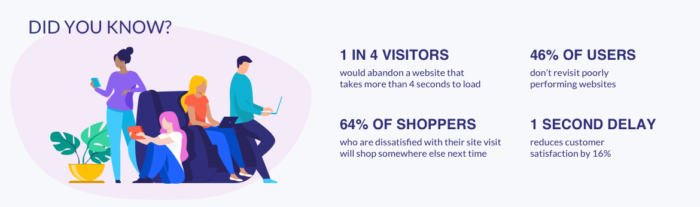
Just a one-second delay can reduce customer satisfaction by 16 percent and one in four visitors will abandon a site if it takes more than four seconds to load.

mobile site speed stats

Not to mention the mighty Google says site speed is a ranking factor for mobile sites.

So if your site isn’t fast, both your audience and Google will think poorly of it. You’ll lose visibility and traffic.

So, how fast is your site?

Because if it takes longer than one or two seconds to load, you’re losing traffic right this moment.

It’s okay if your site is slow. There are steps you can take to make it faster to ensure you don’t let a single visitor slip through your fingers. Here’s how.

Step 1: Test Your Mobile Site Speed

Before you do anything else, you should test how fast your mobile site really is.

You might think it loads just fine, but it could be slower than you think.

One of the best mobile tests is from Ubersuggest. Here’s how it works:

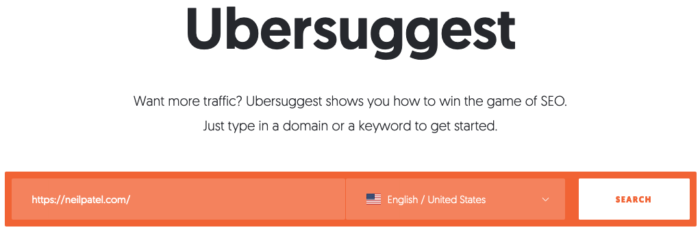
Step #1: Enter Your URL and Click “Search”

ubersuggest make your site load faster

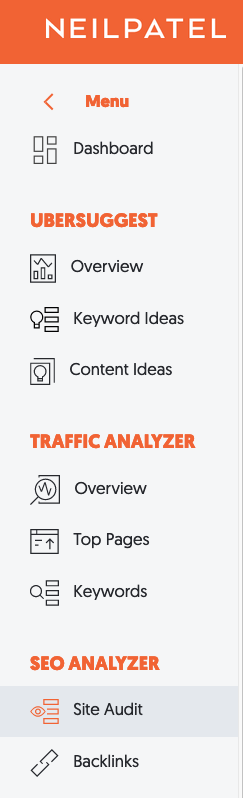
Step #2: Click “Site Audit” in the Left Sidebar

ubersuggest make site load faster site audit

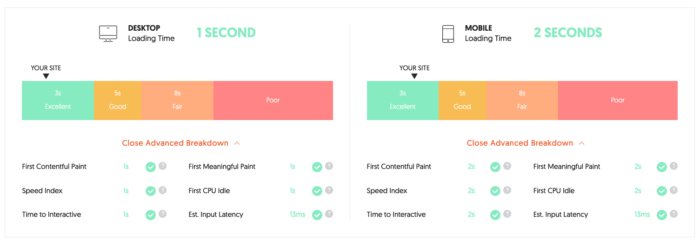
Step #3: Scroll Down to “Site Speed”

ubersuggest make site load faster site speed test.

This is where you’ll find the loading time for both desktop and mobile devices. This shows that my site’s mobile loading time is 2 seconds, which is an “excellent” score.

It also tests speed related to six key elements of your website:

  • First Contentful Paint
  • Speed Index
  • Time to Interactive
  • First Meaningful Paint
  • First CPU Idle
  • Estimated Input Latency

If your site speed is excellent, you shouldn’t have any concerns. But if there’s room for improvement, don’t wait to take action. Every additional 0.5s it takes to load your site increases the percentage of visitors that will leave.

I’m going to address the most common causes of slow mobile sites and explain what you can do to improve yours.

Step 2: Perfect Your Mobile Site Design

Think back to when you designed your site.

Did you have mobile devices in mind?

I’m guessing you didn’t. (If you did, give yourself a pat on the back.)

If you didn’t now is the time to rethink your design with a mobile-first mindset.

Mobile sites have changed a lot in the last few years.

It used to be that sites would have two versions, one for mobile and one for desktop.

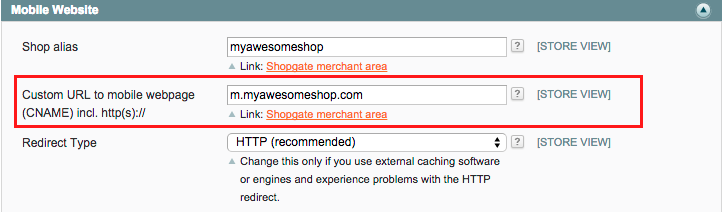
A mobile site is easily identified by the “m.” subdomain:

mobile subdomain make your site load faster.

In this situation, the mobile and desktop sites are two completely different animals operating separately from one another.

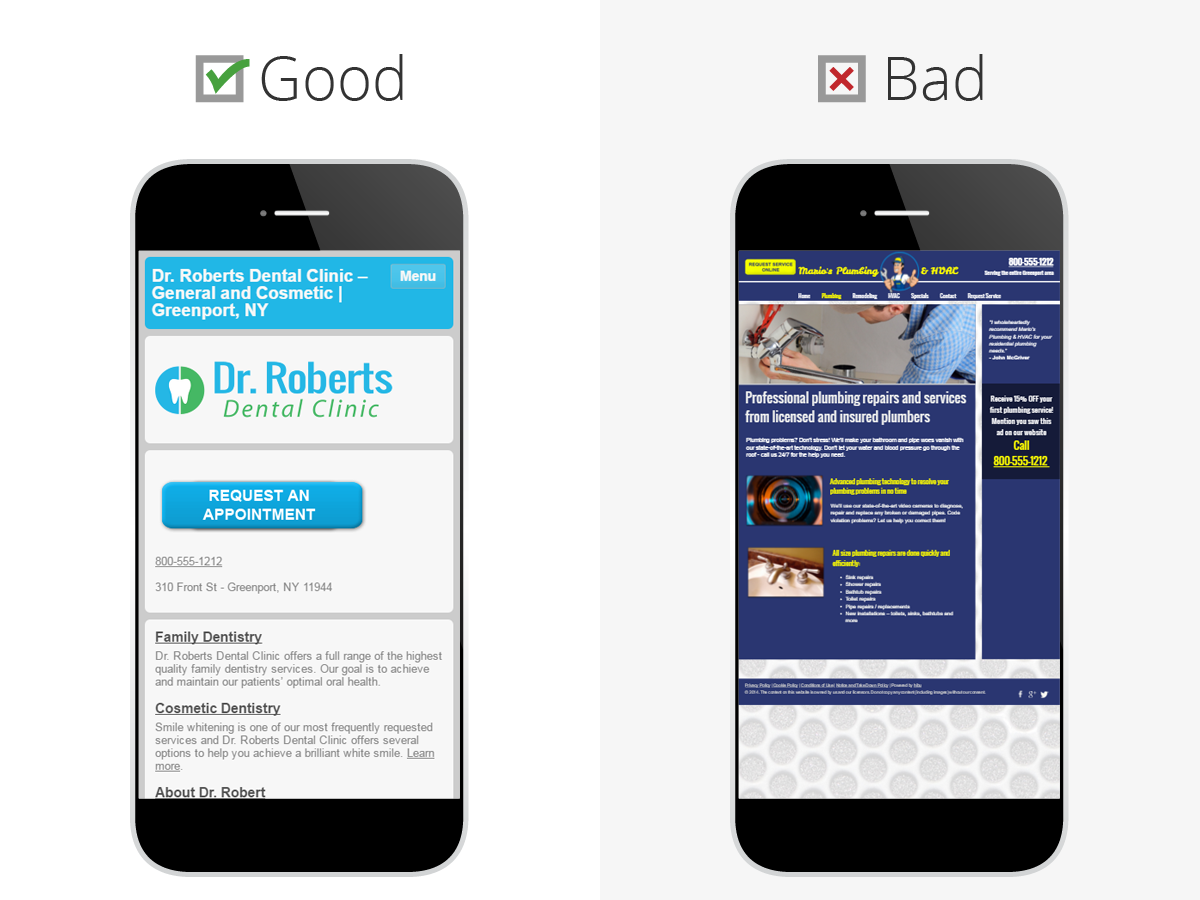
This is no longer the case. Now, most sites use responsive design.

Responsive design allows you to have one site that dynamically changes depending on how it’s being accessed.

So your mobile and desktop users will be looking at the same site, but it will appear differently on each device.

This is actually what Google prefers. They state it quite simply:

“Responsive design is Google’s recommended design pattern.”

You’re probably thinking, “Okay, cool, but what does this have to do with speed?”

Responsive designs typically load faster than mobile-only sites, so you’re gaining a massive SEO advantage there.

If you use a responsive design, your site will get more attention in the form of social shares, which will also boost your SEO.

Making your site responsive is good for both the short term and the long term. If you don’t already have a responsive site, I recommend looking into it as soon as you can.

Step 3: Keep Your Site Lightweight

It’s easy to get caught up in making the best and most eye-catching design out there.

Sometimes you get too caught up, and as a result, your site gets slower and slower because you keep adding more and more.

This is a condition that developers call code bloat.

Code bloat happens when your site gets weighed down with excess code.

make your site load faster code bloat

Most of the time, code bloat happens when a designer is too focused on the visual presentation of a site.

Don’t get me wrong. How a site looks is extremely important.

But performance can’t take a backseat to looks.

Luckily, it doesn’t have to. You can have your cake and eat it too. Here are some tips to keep in mind when designing your site:

Keep it Simple

Leonardo da Vinci had this to say about simplicity:

Simplicity is the ultimate sophistication.

Now, about five hundred years later, his words still ring true.

Look all around you. The complex designs of the past have been replaced with the minimalist designs of the future.

This applies to websites too. Especially mobile sites.

On a mobile screen, sites can easily become too crowded, so it’s important to keep everything open and decluttered.

As a rule of thumb, you should only have one call-to-action per page. This will help you reduce the amount of code you use, and it’ll also improve your site’s user experience.

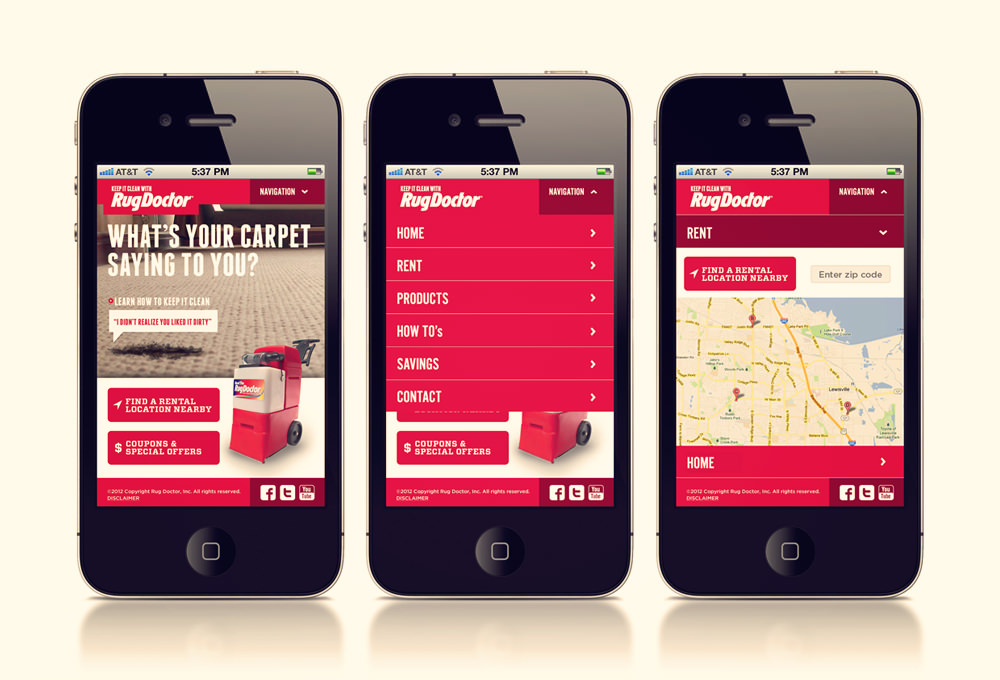
You might also want to consider a more simplistic design like this one from Rug Doctor:

It’s not flashy, but it catches your attention with its sleek style.

You don’t need lots of bright colors and photos to make your site stand out. When it comes to mobile design, less is often more.

Eliminate Steps

The less your users have to do, the better.

Think about it. Why should there be seven steps between a customer and a sale when there could be only 3?

This effectively shortens your sales funnel, but it also makes the user experience even simpler.

Lots of ecommerce sites use this strategy to increase their sales.

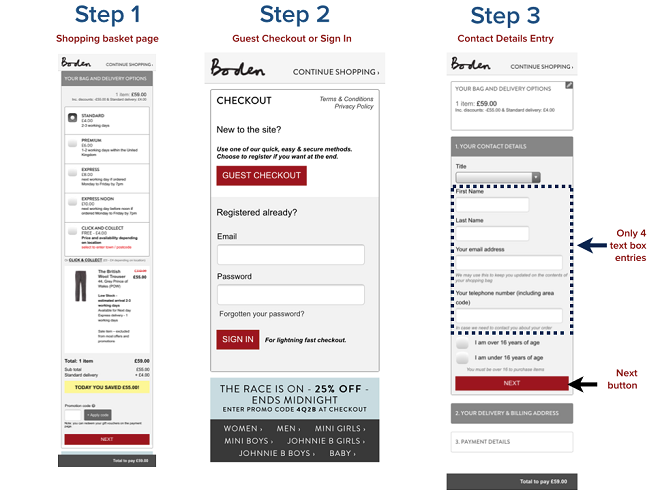
On Boden’s mobile site, it’s super easy to buy a product. You add it to your cart, click checkout, and pay.

It’s straightforward and to the point. There are no unnecessary steps.

This also naturally helps relieve code bloat. It’s hard to go overboard with code if you don’t have tons of pages on your site.

Cutting out unneeded steps is one of the best things you can do for your visitors. Mobile users are much more likely to stay on your site if they don’t have to do much.

Save your users a few clicks, and you’ll reap gigantic rewards.

Use Fewer Images 

Before I get into this, I want to say that good images are definitely important for any site, and they also have SEO benefits.

However, you can have too much of a good thing.

In this case, you can go crazy with images and slow down your site in the process.

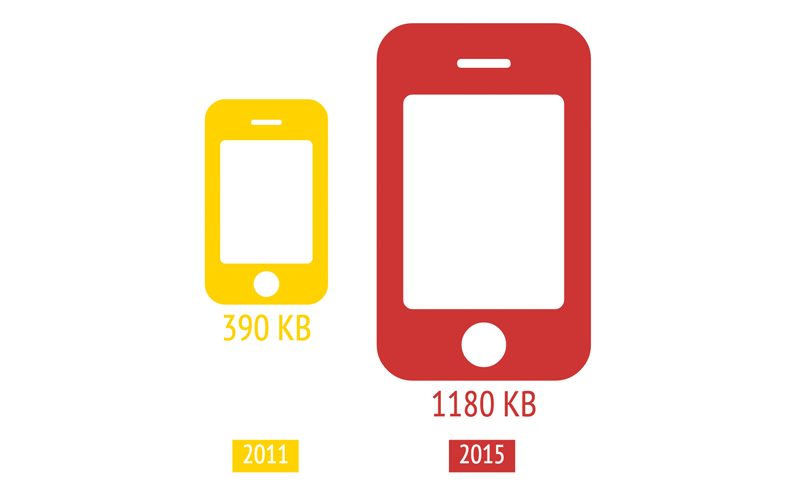
You may not think this is a big deal, but images make up roughly 63 percent of a page’s “weight.”

From 2011 to 2015, the size of the average mobile page tripled.

make your site load faster use fewer images

That means images are some of the most demanding elements on your site. They take up a lot of space, so having too many is not good.

One solution is to simply cut back on images.

Another (probably more practical) solution is to compress your images and reduce their file sizes.

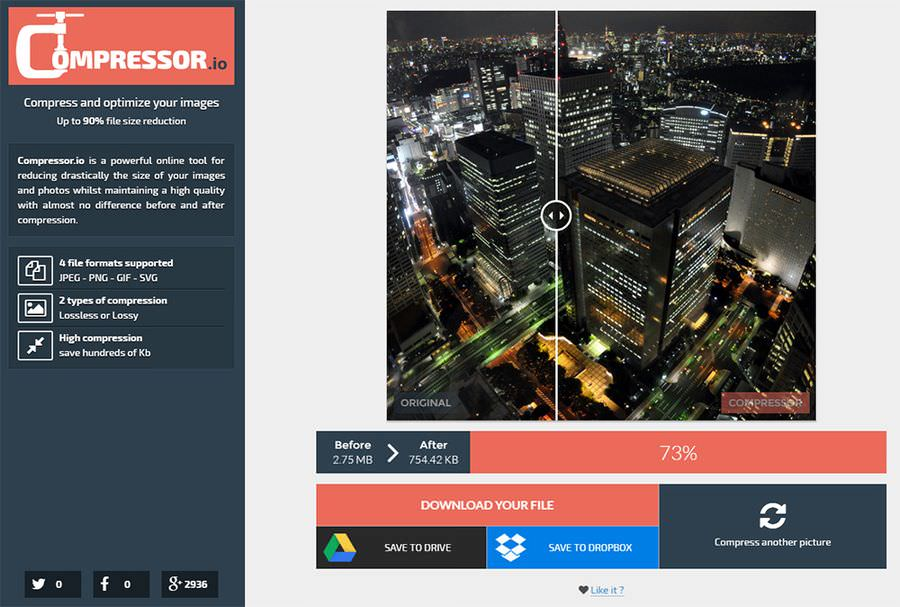
Compression basically makes your images smaller without degrading the quality. This reduces the amount of time it takes for your site to load.

As a bonus, it also reduces the amount of time it takes for search engine bots to crawl and index your site.

Sites like Compressor.io can do this in a snap.

make your site load faster compress images

In fact, this is a best practice you should adopt even if your site is already blazing fast.

Don’t Use Custom Fonts

 I like a nice custom font as much as anyone else, but some of them are really high maintenance.

Some fonts use tons of CSS, while others go heavy on JavaScript. Either way, you’re looking at a ton of code.

If you want a really deep read on this subject, check out this post on Google’s Web Fundamentals site.

If you want the short version, here it is: Only use custom fonts when they’re absolutely necessary.

Step 4: Minify Your Code

Minification is a super useful technique for streamlining your code.

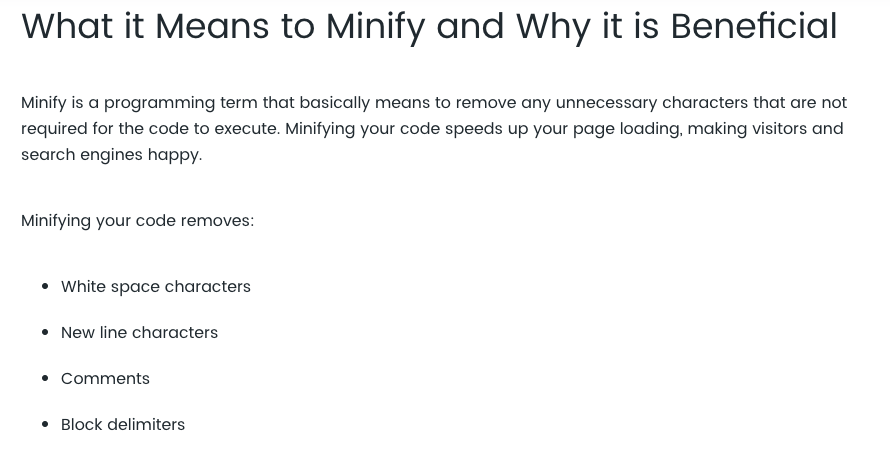
Here’s a quick definition of what it means to “minify” code:

make site load faster minify code definition

Essentially, minifying your code takes out everything that’s redundant and unnecessary. It makes sure your site is only using the code it needs.

This goes a long way toward making your site lightweight.

You can minify code manually (instructions here), but if you don’t have any coding experience, it can be a little bit intimidating.

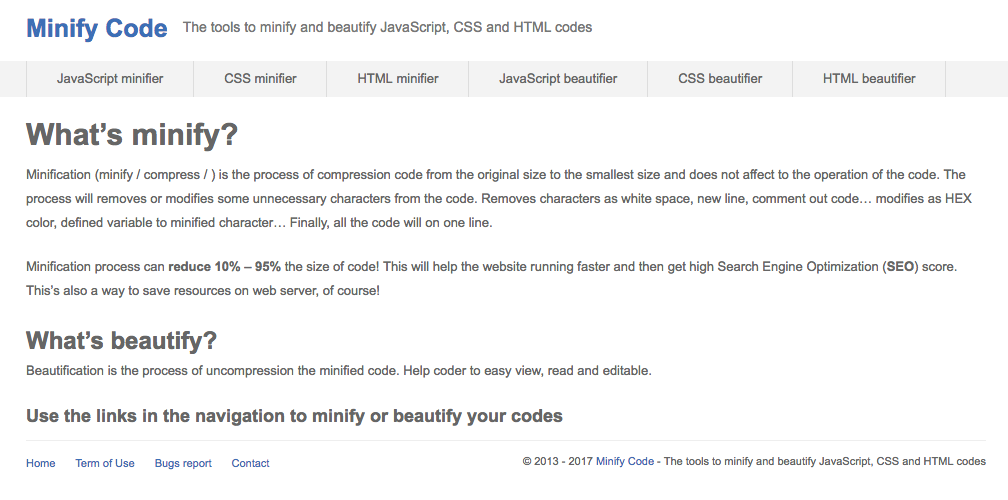
Thankfully, there are several free tools you can use to minify your code in no time at all.

Minifycode.com offers several minifying tools to let you simplify your HTML, CSS, JavaScript, and more.

minify code tool make site load faster

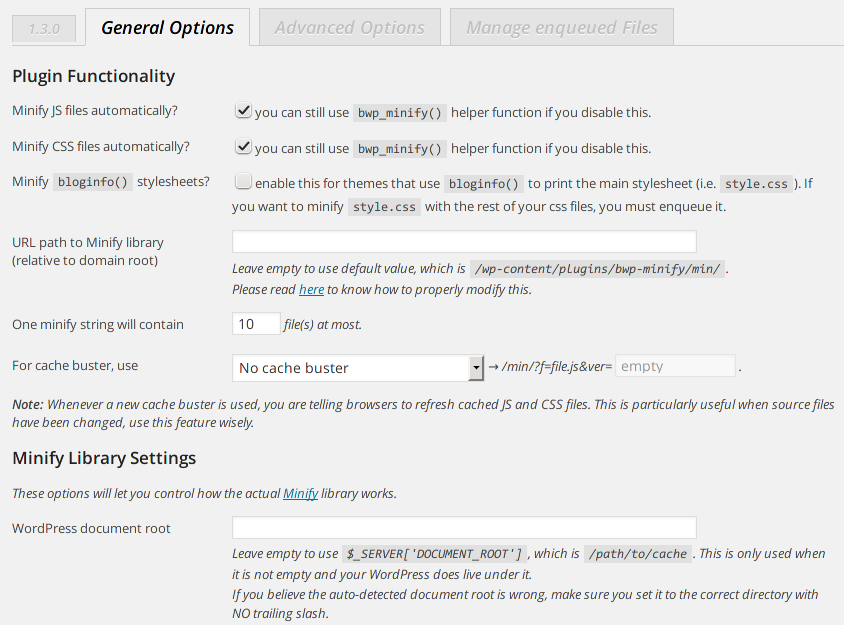
If your site runs on WordPress, you have even more options thanks to plugins like Better WordPress Minify:

minify code wp plugin make site load faster

By using these tools, you can minify your code with just a few clicks, and you’ll be well on your way to a speedier site.

Of course, you should do all that you can to make sure there’s no unnecessary code, but mistakes happen. These tools let you fix those mistakes and improve your site at the same time.

Step 5: Cut Down on Redirects

I love redirects. They can be really useful for SEO and user experience.

But just like code, redirects have limited uses. You can’t use redirects all over the place and expect your site to perform well.

That’s because redirects inherently slow down your site.

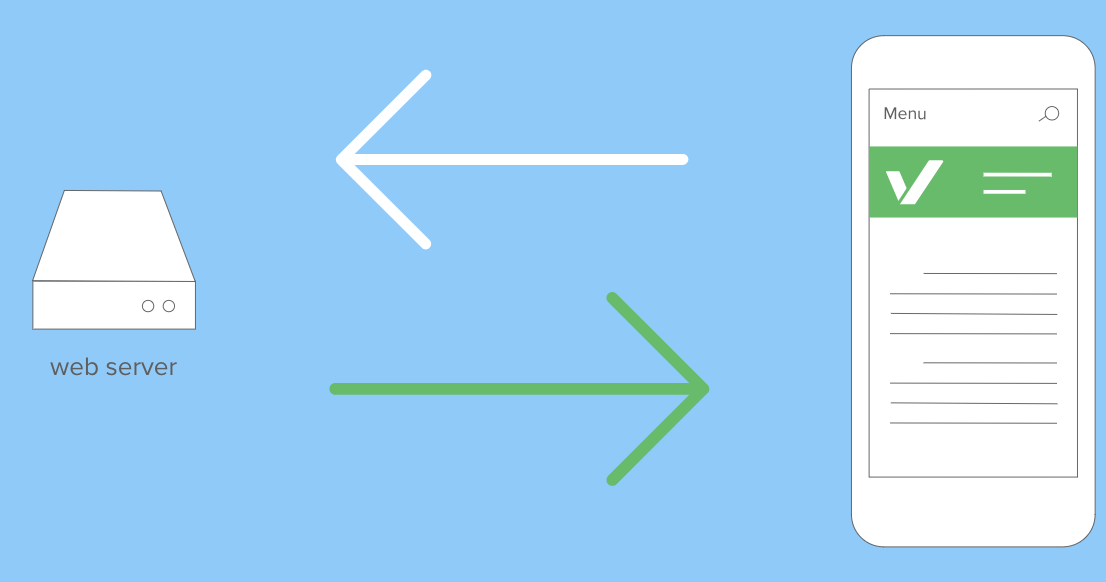
When you click on a normal mobile link, the server provides the document found at that link.

But a redirect means there’s no document at that particular link. Because of that, the server has to go to the page where the document lives and retrieve it.

make site load faster reduce redirects.

This process has to happen with each file on a web page. That means every image, CSS file, and JavaScript file will go through the redirect.

As a result, it could be several seconds before the right page loads. By that time, your users could be long gone.

I recommend using Screaming Frog to check for redirects.

Then you can trace the roots of your redirects and change any that aren’t completely necessary.

The less work your site has to do, the faster it’ll go. While redirects have a time and a place, don’t overuse them or grow dependent on them.

Step 6: Load Above The Fold First

It’s obvious that users see above the fold content before they see anything else.

So why load your entire page all at once?

Why not load only the above the fold content at first and then load the rest as needed?

This is a concept referred to as “lazy loading,” and it can work wonders for site speed.

I bet that if you had the choice, you’d rather lift three pounds than 30. Am I right?

Lazy loading is that exact same concept applied to websites.

By implementing lazy loading, you’re asking your site to do only as much work as it needs to do and no more.

If you’re comfortable with code, you can use this jQuery plugin.

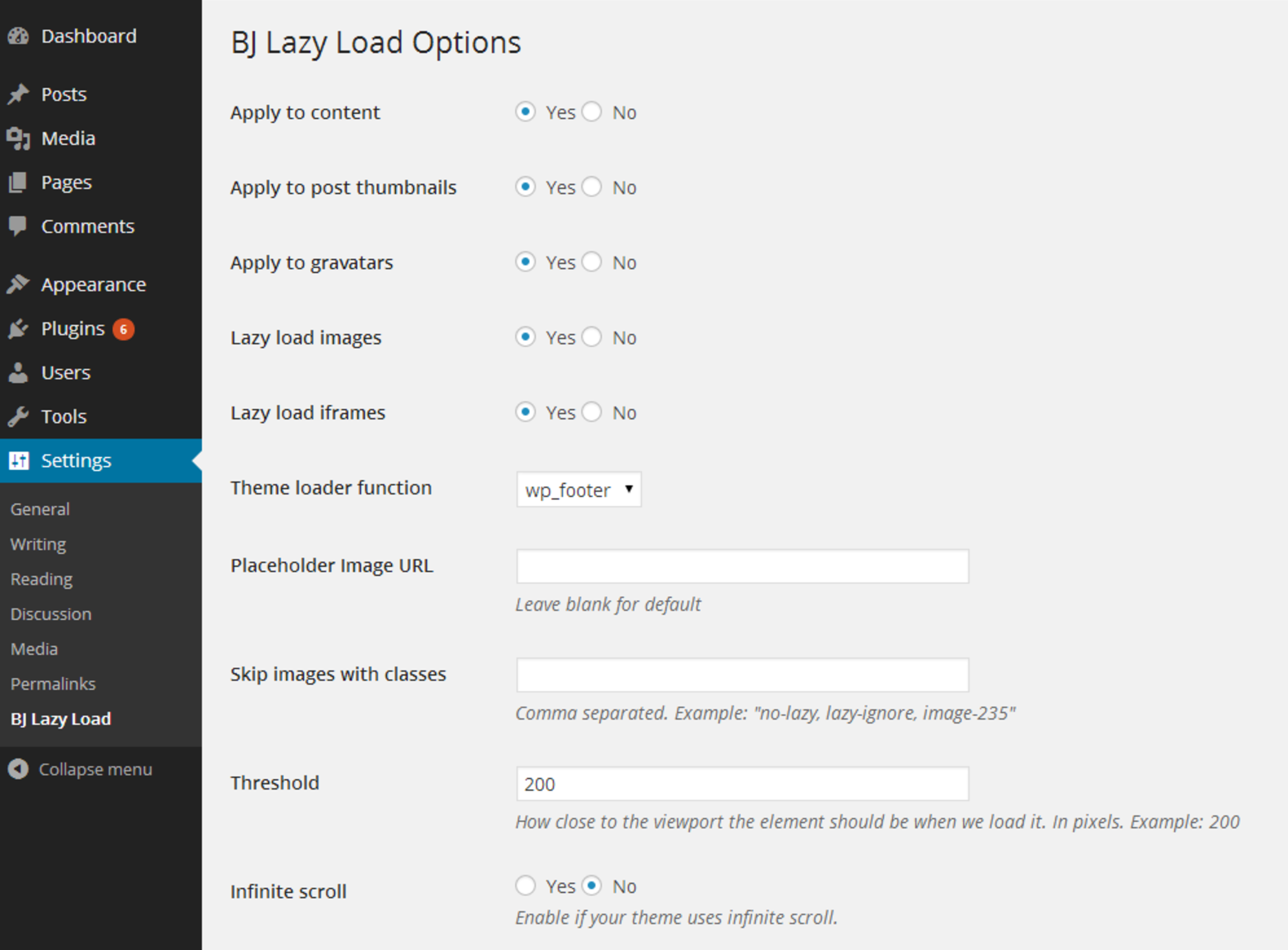
For WordPress sites, there are plugins like BJ Lazy Load to come to the rescue.

lazy load make site load faster

If neither of those options fit, you may need to hire a developer to help you out.

This is a more advanced technique, but it can save your site from doing a lot of work in the long term.

Conclusion

Speed isn’t just for race cars. It’s one of the most fundamental ingredients of a great mobile site.

A faster mobile-friendly site can increase traffic and bring in a flood of new customers and conversions.

It’s no surprise.

Mobile is here, and it’s here to stay.

Desktop performance still matters, but mobile is the present and the future.

In short, make your site as fast as possible and reduce the amount of weight your site is pulling.

This Think With Google article put it perfectly: “If speed thrills, friction kills.”

Improving your mobile site speed is a one-two punch that will make your site better for your users and for search engines.

If you haven’t focused on mobile yet, I urge you to start today.

Which of these techniques are you going to use to speed up your mobile site?


from Blog – Neil Patel https://ift.tt/2soynqV
via IFTTT

The Ultimate Guide to Social Media for E-Commerce

The Ultimate Guide to Social Media for E-Commerce

Social media for e-commerce has become a critical element in sales growth for many businesses. Using social media to boost your marketing offers many benefits to help build your business, so don’t wait to explore these valuable channels.

Sprout Social reports that after following a brand on social media, consumers continue to engage in other ways. Ninety-one percent check out the brand’s website or app, 89 percent make a purchase, and 85 percent recommend the brand to someone they know.

Let’s look at what you can do to promote your e-commerce business with social media and which tools and best practices you should use.

14 Steps for E-Commerce Companies to Find Success Using Social Media

The more people integrate social media platforms into their daily routines, the more it makes sense to market to them here. Consumers spend almost two and a half hours per day on social media channels.

Why not reach them with social posts where you know they spend a significant amount of time? For example, eye-catching posts with appealing visuals like these posts from Sephora are a great way to market products on Instagram.

Social Media for E-Commerce - Sephora on Instagram

How can you stay on top of new developments and know what you should be doing to serve your customers best? Follow industry leaders in your feeds and keep tabs on trending topics in your industry. You can also discreetly watch what other companies are doing that seems to gain traction.

While social commerce is still relatively new, it’s making a significant impact on e-commerce businesses and how they market to customers. As each platform improves its features to help users sell, opportunities grow for businesses to tap into these audiences to boost their marketing.

The steps below can help you develop best practices in your business to optimize your social media for e-commerce.

1. Define Your E-Commerce Company’s Social Media Goals

There are two main ways to use social media for e-commerce: to drive traffic to your company website or drive sales. While each can be important in its way, it’s essential to identify which you value most so you can effectively plan how to use your resources.

It’s essential to establish your goals before investing time into strategy and implementation to ensure you’re taking action to move you closer to your goals.

If you don’t set goals, you can’t measure your success or repeat what works.

2. Decide If You Want to Become a Social Commerce Company

Social commerce is selling directly to your customers on social media platforms. Everything from discovering your product or service, to a buying decision, to the checkout process happens in the app or platform they are already using.

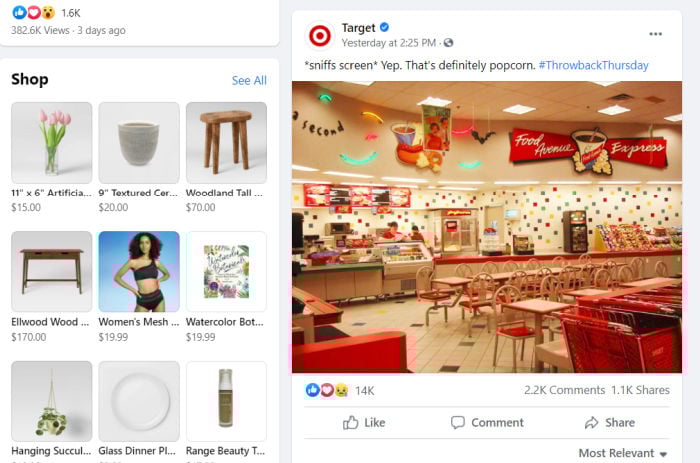
Target’s Facebook page, for example, has a shop built right into it where customers can browse and purchase products.

Social Media for E-Commerce - Target on Facebook

You might find success with social commerce if you sell products that a potential customer can quickly evaluate online from a photo and might buy on impulse. Think lower price points and items that aren’t likely to need returning.

An apparel company might successfully sell their clothing and accessories on social media as the process suits how people tend to buy these products.

When is social commerce perhaps not a great fit? If your products or services are higher ticket items where customers want to discern quality in-person. A customer buying an engagement ring will want to spend more time evaluating options and vetting sellers than social commerce might allow.

Start by focusing on the networks your ideal customer and target audience uses the most. Take time to engage your audiences and respond to their comments and questions.

Whether or not you want to pursue social commerce for your business, you should still be investing in social media marketing. Social channels can help boost your visibility, increase website traffic, generate leads, and help you engage with your customers.

3. Create a Social Media Strategy for Your E-Commerce Company

You’ll need a social media strategy for your e-commerce company that considers your goals, your resources, and the best platforms that will help you reach your customers. Once you clarify these parts of your strategy, you can expand on each element to create effective campaigns that fit your goals.

When you work from a social media strategy, you’re also more likely to use best practices to help you be more effective overall. Get a clear idea of your target audience, where they spend time, and their worries. From here, do some research to check which platforms are most popular with your target demographic.

With this information, you’ll be better able to plan where your time and effort will pay off.

4. Determine Which Social Media Channels Your E-Commerce Company Should Target

First, look for established platforms that offer a range of features, different ways to advertise and sell products, and focused targeting. Some may appeal to you because they are an excellent fit for your products.

The apparel brand we mentioned earlier would likely want to use Instagram because it is image-focused, and consumers are already used to discovering and purchasing apparel on the app.

Next, consider which platforms attract your target demographic. You’ll want to go where your ideal customers spend time.

What kind of data might inform your decision? With some research, you might discover 60 percent of Pinterest users are women, and 98 percent of Facebook users access the site via mobile devices. From these and other data points, you’ll be able to pinpoint which platforms might be best for your business.

5. Optimize Your Social Media Accounts for E-Commerce

One of the first steps you’ll need to take is to optimize your social media accounts. Fill out your profiles completely, adding helpful information wherever you can.

Make it easy for people to find the information they need at a glance to understand your business and buy from you. Perform research to identify relevant keywords and hashtags to use so you show up in search results. Make your location obvious.

Be sure to link to pages where customers can find the products they clicked through to see. Use clear CTAs so people know what to do to buy from you.

6. Run Social Media Paid Campaigns Optimized for E-Commerce Companies

Nearly every social platform has a version of paid advertising that can allow you to raise visibility even as organic reach becomes more challenging to achieve.

There are also different ad types on each, so it can be valuable to explore the various options. You may try different types of ads on each platform. You might try retargeting ads on Facebook, but use Shoppable posts on Instagram. Take advantage of audience targeting capabilities on each.

7. Use Automation Tools

If social media is a part of your sales strategy, you’ll need to explore automation tools and use what you can. Why is automation so key to social selling? People expect timely and personal interaction on social media networks. To meet their expectations, you’re going to need help.

It’s simply not possible to run a successful business and spend every waking moment online replying to comments and answering questions. Social media is like a storefront that is open 24 hours a day, seven days a week (plus holidays!), so don’t take the chance of turning people away or missing crucial requests or concerns.

8. Consider the Mobile Experience

More people are accessing social media networks and websites via their phones than ever before. When it comes to social media for e-commerce, however, mobile design is just the first step. The whole purchase journey needs to be seamless.

Payment options should be mobile-friendly. Apple Pay, for example, allows you to let users make purchases from their phones. We’ll look at more payment options further down the page.

Consider content formats as well. With more than 100 million hours of video consumed on Facebook every day, you’ll want to offer videos in vertical format for mobile users. People like convenience, a personalized experience, and to feel like they can easily navigate and engage with your site.

9. Optimize Landing Pages for E-Commerce

Optimizing your landing pages for e-commerce helps create a better user experience by providing people with all the information they need to make a buying decision.

If they click through to your site, you want them to understand quickly they’re in the right place. They should be able to move seamlessly to purchasing the item they wanted.

Ensure you have high-quality product images and videos, if appropriate, with well-written product copy outlining features and benefits. Include sizing or specifications on the product page and clear calls to action (CTAs) to help them convert.

10. Create Clear CTAs on Social Media Optimized for E-Commerce

CTAs are what motivate your user to convert to a customer. Take the time to craft these carefully and include them in each interaction you have with potential customers.

You can use different CTAs, like asking questions, including hyperlinks, or simply adding clickable buttons. Your page design might include banners with clear offers, sidebar clickable buttons, or pop-up ads to help customers convert.

11. Ensure Easy Website Navigation

User experience (UX) should be your priority when you launch your e-commerce site. You want shoppers to find products quickly and understand how to move from browsing to purchasing without confusion.

The easier you make it for people to buy from you, the better the chance they’ll convert from visitor to customer. Keep your navigation simple to understand and avoid design elements that are too unusual for people to use easily.

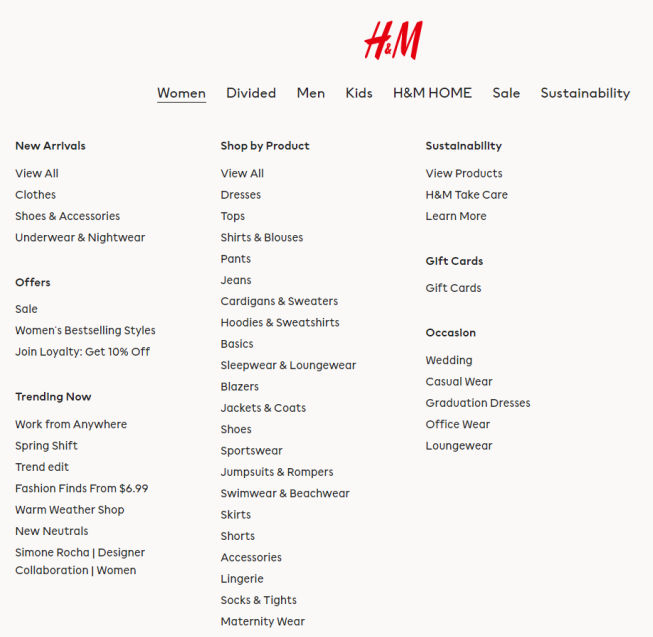
Organize your site information with clear labels for product categories and avoid tricky navigation styles that could create confusion.

Social Media for E-Commerce - H&M site navigation

12. Offer Easy Payment Options for Customers

If you’re going to run a successful e-commerce site, you need to offer reliable and trustworthy ways for people to pay for your products and services.

You can explore a wide range of payment options for your e-commerce business, each with its features and policies. Options include Square, PayPal, Stripe, Apple Pay, Google Pay, and many others.

Some social media platforms allow customers to purchase directly from the app, depending on what features you choose to use. A few of these options include Facebook (with Facebook stores, Messenger Chatbots, and Ads), Instagram (with Stories, Shopping, Live, IGTV, and Ads), and Pinterest (with Promoted Pins, Rich Pins, and Shop the Look Pins.)

You also can investigate third-party websites as a way to advertise and sell your products. Keep reading to learn more about a few of these that may support your e-commerce business.

13. Advertise and Sell on Third-Party Websites

There are other options for boosting your sales beyond your website. Third-party websites allow you to benefit from established functionality and huge audiences while building your legitimacy and website traffic.

One example of third-party website selling is Amazon. While shoppers on Amazon may realize they’re buying from you instead of directly from the retail giant itself, you still benefit from the credibility of their brand and purchasing capabilities. You also get to tap into their vast audience of visitors with a solid intent to buy.

Another option is using sites like Like to Know It, which allows readers to purchase an item or items from an Instagram post by linking the product emailed to them.

RewardStyle is an invitation-only affiliate network focusing on lifestyle, fashion, and beauty products, allowing sellers to earn money through content creation featuring certain products.

14. Track the Success of Your E-Commerce Company’s Social Media Strategy

It’s essential to track your strategy’s results as you implement your ideas, so you can accurately analyze your successes and where you need to improve.

Choose quantifiable metrics representing engagement (such as likes, shares, comments, or retweets). Track your website traffic and how much traffic you are getting from your social media channels. Keep track of sales generated by social media marketing and sales completed online or through your campaigns.

It’s not always easy to tie your efforts to your results, but you can try. With specific metrics, you’ll be better able to repeat the working tactics and revisit the areas that don’t seem to be offering you the same return on investment.

Conclusion

Social media is a big part of everyday life for many people and offers an excellent opportunity to get in front of potential customers and sell your products and services. You can use various platforms to strengthen your brand, increase sales, and develop loyal fans.

If you also sell online, using social media for e-commerce is a natural step for your business as you plan future growth. If you haven’t tapped into the benefits of social media marketing yet, start now, so you don’t miss out on the opportunity it represents.

With the steps outlined above, you’ll be ready to reap the benefits of social media for your e-commerce business. If you haven’t explored these options or want some help to make them work for you, reach out for digital marketing support.

Have you invested in social media for e-commerce in your business? Which of the above tips will you try next?


from Blog – Neil Patel https://ift.tt/2GQhtJK
via IFTTT
How to Do Niche Marketing For Tiny Audiences

how to do niche marketing

Are you in a crowded industry and can’t seem to stand out?

Does your brand operate in a niche with a small audience?

If you answered yes to one of those questions, then you know reaching your target audience is no walk in the park.

That’s exactly why you must leverage niche marketing.

What Is Niche Marketing?

Niche marketing refers to any marketing tactic aiming to attract and convert a specific market segment with unique preferences and demands.

The main difference between niche marketing and other types of marketing is it uses hyper-personalized messaging and is picky about platforms.

To truly understand what niche marketing is, we must first understand what a niche market is. 

Simply put, a niche market is a small, defined segment of a larger market. What makes a niche market more defined than a broad market is the niche has its own needs, preferences, and identity.

A good example is that of FreshBooks. While they’re an accounting software like tons of others in the business, they’ve narrowed down their niche to target small businesses and freelancers.

Advantages of Niche Marketing

There are many advantages to choosing a niche market over a broad one. Let’s explore some of those positive aspects of niche marketing.

Helps Make You More Visible to the Right Audience

Niche marketing means you narrow down your focus to reach only relevant customers. As a result, you could stand out from the crowd with strategies designed for those most likely to be interested in your products or services.

Can Help Optimize Your Marketing Budget

Rather than pouring money to reach a wider audience where you may get few conversions, focusing on a niche allows you to target a specific segment that is more likely to desire your product or service. The result is you could spend less on ads while enjoying better conversions.

Reduces the Competition

Targeting a specific segment of the market may mean reaching fewer people, but going niche has the advantage of less competition. While most brands aim their marketing at the broader market, niche marketing allows you to market a product or service to a specific group. 

As your business becomes more specialized, you could see fewer direct competitors.

7 Strategies for Using Niche Marketing to Reach Small Audiences

Then let’s look at seven niche marketing strategies that can help you reach, attract, and convert those hard-to-reach small audiences.

1. Use More General Keywords

Using general keywords may sound counterintuitive as it may feel like more hyper-targeted keywords would be better for bringing in the right traffic. However, using niche-specific keywords may not drive a ton of traffic to your website.

The key to effective SEO is to understand the search terms your target audience uses.

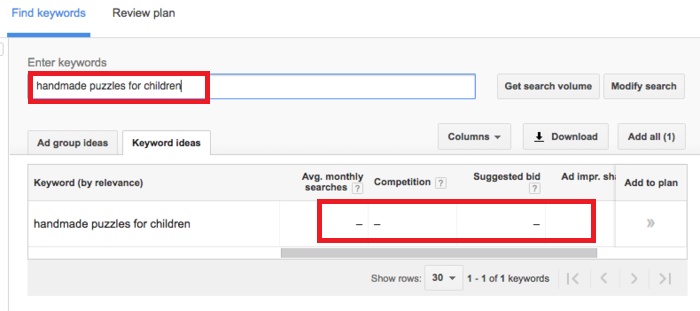
Their search queries will probably include natural language and are unlikely to have extremely specific keywords. That’s why these types of keywords often have ultra-low search volumes. Here’s an example of a specific keyword—handmade puzzles for children—and its search volume:

Strategies for Using Niche Marketing to Reach Small Audiences - too specific keywords

Zero people searched for “handmade puzzles for children.” That doesn’t mean there isn’t a market for it—the only problem is the keyword used.

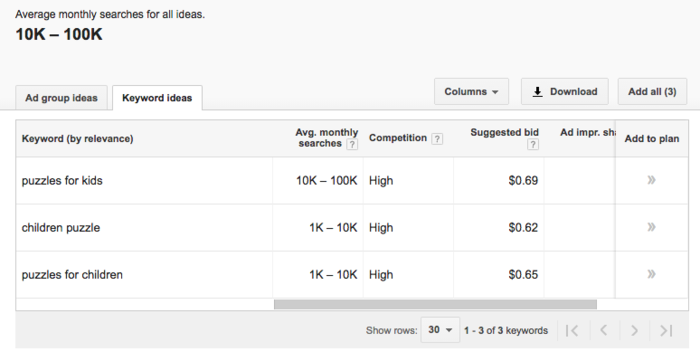
Strategies for Using Niche Marketing to Reach Small Audiences - Use More General Keywords

By using more general keywords, you drive more traffic to your website. And those looking for handmade puzzles are probably among them.

As you plan your niche SEO strategy, be careful how you conduct your keyword research. Favor general keywords over hyper-targeted ones.

2. Do Extensive Audience Research

One thing making niche marketing a bit more challenging than general marketing is your target audience’s unique demands. You must understand what they want and how they want it delivered.

To do that, you must conduct extensive audience research. Audience research for a niche market involves:

  • Social listening: Use social listening tools to monitor what people are saying about your brand, products, or services. Doing so will help you know what they’re looking for from brands like yours. 
  • Competitor research: Check out the kind of audience your competitors reach and how they engage with them. 
  • Develop buyer personas: Create buyer personas of your ideal customers to help you better understand them.

Because your target audience has unique needs and preferences, you must conduct extensive audience research to understand how best to reach them. Audience research also helps you understand their pain points and how best to create messaging that addresses them. 

3. Choose Your Platforms Carefully

When trying to reach a particularly small target audience, you must consider which social media platforms they use regularly.

You must choose your platforms carefully.

For example, research shows you’re better off reaching millennials on Facebook when it comes to social media. Gen-Zers, on the other hand, prefer Snapchat. 

Strategies for Using Niche Marketing to Reach Small Audiences - Social Media Demographics

With a niche strategy, you don’t have to be everywhere. You just have to appear on the platforms your audience frequents. Ask yourself questions like:

  • Where do they shop?
  • How do they find products?
  • Which social media channels do they prefer?

The answers to these questions should help you narrow down the platforms you use to communicate with your target audience. Then, tailor your content for those platforms.

Carefully selecting your platforms helps you maximize your marketing budget. You’ll only focus your energy and resources on platforms that could give you a good return on ad spend (ROAS).

4. Dig Deep Into Your Competitor’s Strategies

When it comes to marketing, particularly niche marketing, your competitors can be your best resources because you can learn a lot from their marketing strategies. For example, you can get insight on:

  • your audience
  • the market
  • your competitor’s strengths and weaknesses

Of course, competitor analysis starts by first identifying your competitors. From there, pay close attention to the:

  • keywords they target
  • content distribution platforms they use
  • how they engage with their audience
  • how they structure their messaging

Get as much intel as possible from your competitors. Doing so can help you know how to tailor more effective niche marketing strategies.

5. Build Relationships and Utilize Partnerships

Because the number of customers in a niche market is limited, you must devise ways to drum up business continuously. Here are some of the ways to do this:

Build Relationships With Your Audience

One of the keys to success in a niche market is building relationships with your audience and customers. A significant reason for this is that relationships result in repeat customers—it’s generally easier and cheaper to retain a customer than acquire a new one.

Utilize Strategic Partnerships

Strategic partnerships are vital to your success in a niche market.   

  • Partnerships with specialized marketing agencies: Specialized marketing agencies understand your audience better and are in a better position to identify opportunities and threats in your niche. 
  • Partnerships with other brands: Get together with a brand your audience already knows. A good example is the partnership between Red Bull and GoPro. This is a partnership made in heaven as Red Bull is a mammoth media brand while GoPro is a brand specializing in making cameras for people who live an active lifestyle.
Strategies for Using Niche Marketing to Reach Small Audiences - Utilize Strategic Partnerships

You can’t ignore relationships and partnerships when it comes to niche marketing. Once people know and trust you, it can become easier for you to sell to them.

6. Develop Brand Loyalty

Building brand loyalty can pave the way for your customers to become your brand ambassadors. It often leads to you having one of the most powerful marketing strategies of all time—word of mouth marketing (WOMM)

Research shows 83 percent of people trust recommendations from family and friends more than any other source. That makes WOMM a potent marketing strategy you must employ. After all, in a niche market, the best way to get the word out about your product is when other customers rave about it.

Again, all this starts with brand loyalty. A few ways you can develop brand loyalty include:

  • Create exceptional experiences: From your products to your customer service, ensure every interaction your customers have with your brand is memorable. In a positive way, of course.
  • Engage with your audience: Leverage every opportunity you get to engage with your customers, be it on social media, through email, or any other channel. Add value every time you do.
  • Anticipate their needs: Use your buyer persona and customer behavior data to predict what your customers are likely to need and offer it to them. Doing so shows you value them and want to make their lives easier.
  • Align your brand with your customers’ core values: 83 percent of millennials prefer to buy from brands that align with their values. Knowing the core values of your target audience and aligning with them is crucial to developing brand loyalty.

In short, a loyal customer base is an essential ingredient for success in niche markets.

7. Establish Yourself As an Authority in Your Niche

One of the biggest challenges of being in a niche market is winning your customers’ trust. Because of their unique preferences, they need to know you can deliver as promised.

That’s why part of your niche marketing strategy must include establishing yourself as an authority in your niche. 

A few ways to help you establish your authority include:

  • Create valuable resources: Resources like blog posts, case studies, and white papers can showcase your expertise and build authority.
  • Give free advice: Leverage niche forums and social media to engage in conversations with your niche audience. As you do so, give free advice. This could show your customers you understand their needs.
  • Run webinars: Information for niche markets can be scarce. Run webinars to educate and inform your audience to help them find what they need.

Once you establish yourself as an authority in your niche, customers should come looking for you, and their word of mouth could result in free marketing.

Conclusion

Niche marketing can be pretty tricky if you don’t know how to go about it. With a proper niche marketing strategy in place, you should be able to:

Your niche market is always looking for people who understand them. Once you figure out exactly who they are and what they need, get out there and start selling.

Which niche marketing strategies resonated with you the most?


from Blog – Neil Patel https://ift.tt/2QWpxOS
via IFTTT