Thursday, 8 December 2022

How to Create a Customer Journey Map (w/Examples)

Graphic saying: How To Create A Customer Journey Map (W/Examples)

Creating a customer journey map is enough to make even the best marketers freeze in their tracks and realize how little they really know about their prospects.

If this sounds like you, don’t worry.

Even if you’ve never created a buyer persona before, I’ll help you make sense of the process by giving you a guide to better understand who your customers are and what they want.

Let’s take a closer look.

What Is A Customer Journey Map?

A customer journey map is a diagram that illustrates each step in the buyer’s journey, including who the customer is, what their needs are, and what objections they may have.

This map makes it easier for sales, marketing, and executive teams to make more informed decisions while humanizing your audience and making them easier to target.

The first step in a customer journey map is the core demographics, such as:

  • Gender
  • Age range
  • Job title
  • Job responsibilities
  • Salary
  • Region
  • Company size

You’ll likely find most of this data in your CRM. If not, a survey can give you a clear picture of who your audience is and what they do.

I recommend “humanizing” the persona by giving them a name and image. This brings out more of our emotional, empathetic side versus looking at the potential customer as a number to slot somewhere in a sales funnel.

Different Stages of the Customer Journey

When mapping out the customer journey, there are different stages that businesses need to be aware of. By understanding these stages, companies can create a more seamless and effective map that leads to conversions and customer satisfaction.

Let’s take a look:

Awareness Stage

The customer journey map begins with awareness, which means when the prospect becomes aware of your product or service.

They may see an ad, read an article online, or hear about your business from a friend at this stage.

Comparison Stage

This is when customers look at the various options and compare them side by side. Typically, they look at features, prices, and reviews to decide which product is right for them.

The comparison phase is crucial because it’s where customers make their final decision. If you can influence them during this part, you can increase your chances of making a sale.

Decision Stage

The decision stage is the final stage of the customer journey map when the customer either makes or does not make a purchase. Many factors, such as price, product quality, and customer service, influence the decision stage.

Now that you have the basics, let’s see what this looks like in practice.

Customer Journey Map Example

For our customer journey example below, we’ve chosen to work with Lucy, a marketing director in her late 40s.

Her job primarily entails lead generation, sales management, and gathering competitive intelligence.

She organizes and prioritizes campaigns; she’s a pro at gathering competitive intelligence and uses it wisely to reinforce the brand while cementing customer loyalty in a highly competitive marketplace.

Due to the increase in popularity of social media, Lucy’s looking to streamline the interaction process on social media without losing the “personality” of the brand.

She’s in the market for a solution and wants to make a confident decision quickly.

With this in mind, our persona map looks something like this so far:
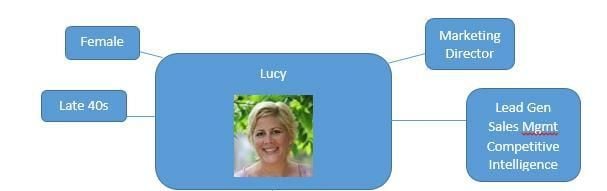
An example of a customer journey map.

Now we’ve got a persona, what about the buyer’s needs?

How To Understand the Buyer’s Needs

Buyers are eager to tell you what they need. All you have to do is ask.

Basic lead follow-up and nurturing questions can reveal quite a bit. Additionally, simple polls and surveys can often show a great deal about where the buyer is in the process (and whether they have an urgent need for your product or service versus basic curiosity).

Even if we don’t know specifically what they need, we can make a few general statements and apply them to our persona.

Returning to the example above, ask yourself, what would someone in this job typically need from our solution?

  • For starters, the buyer likely needs the product to be well-documented. She’ll be managing dozens, perhaps hundreds, of staff members, some of whom may be more technically savvy than she is.
  • Some staff may pick it up quickly; others may need more time. We’ll add the needs and the persona’s place in the decision-making process (one persona can have multiple roles in the decision process; they can be a user and initiator, for example)
  • Is the solution adaptive and flexible to accommodate the buyer’s existing platforms and tools?
  • Does the purchaser have procedures and requirements to add to the mix, like cloud-based access and specific security protocols?
  • These factors can influence and even conflict with what the primary buyer wants.The internal stakeholders often make decisions like these, which lengthens the required time and features.
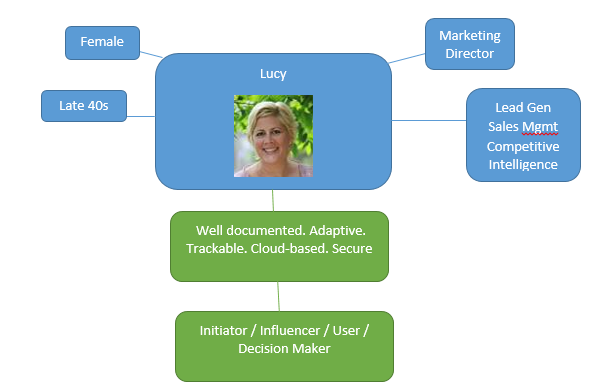
An example of a customer journey map.

Dealing with Common Roadblocks in Customer Journey Maps

During the customer journey, constraints, concerns, frustrations, and issues often affect the buying decision. These roadblocks will prevent your customer from taking action, so you need to outline those in your map.

You can brainstorm these obstacles and add them to your customer journey map to ensure that your sales team knows how to address the most common objections before becoming major pain points.

You also have to decide where this buyer falls on the decision-making scale.

Will they be using the product, influencing the decision-maker, or perhaps just initiating contact with the company? Could they be a mix of all of these?

On your map, note these roadblocks and the buyer persona’s place in the decision-making cycle.

Following our example, we end up with something like this:
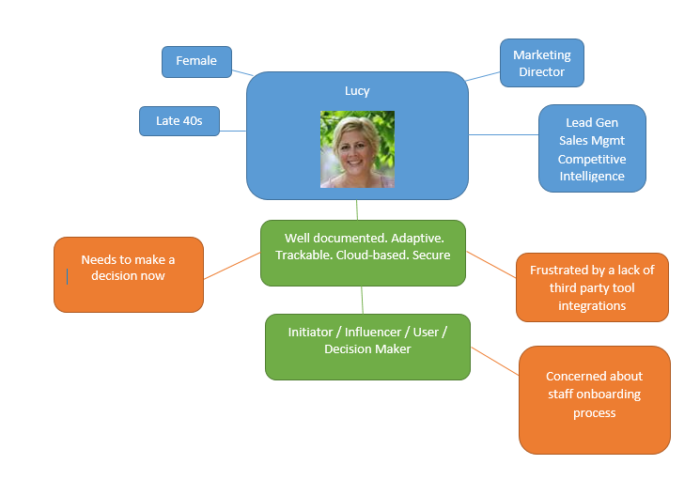
An example of a customer journey map.

Here, we’ve managed to discover (and brainstorm) the buyer’s potential:

  • Needs
  • Concerns
  • Frustrations
  • Urgency/Timeframe to Buy
  • Place in the buying cycle
  • Requirements

As the list above shows, all the kinds of sales-propelling information needed to acknowledge objections, concerns, and frustrations while concentrating on needs, requirements, and urgency.

We’ve learned core demographics about our buyers and key information that may prevent them from taking action or details that could move a sale into the next stage.

Our customer journey map is less of a neatly-organized, bulleted list and more like a mind map that’s always being adjusted and revised. It may not be as tidy, but it’s closer to the actual customer experience and, therefore, far more useful

In other words, our customer journey map puts you in the buyer’s shoes. The buying decision is rarely a simple one, and the model we’ve designed allows a more accurate look at how people think when planning a purchase.

Create a Customer Journey Map for Each Type of Customer

Now, you must go through this entire process with every type of buyer your company encounters. Each type of customer will have a different buyer path, objections, and challenges. For example, in retail, you’ve got suppliers, wholesalers, resellers, and a whole avalanche of personas out there.

Need some inspiration? Here are some customer journey map examples:

You can break customer journey maps into smaller parts for more complex situations and focus on different areas, like the e-commerce checkout process.
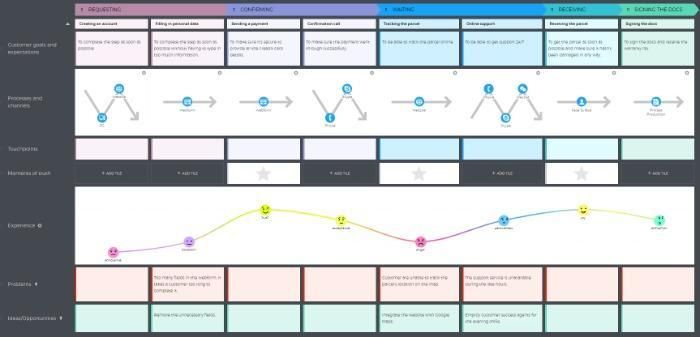
An example of a customer journey map in ecommerce.

Another approach is to create a customer journey map for specific features like Spotify did.

Spotify wanted to track playlist-creation touchpoints through a third-party app to understand customers’ emotions better.

By using customer journey mapping, Spotify found its users were reluctant to share their playlists in case others judged their musical tastes. Additionally, Spotify found some users didn’t know about the feature.
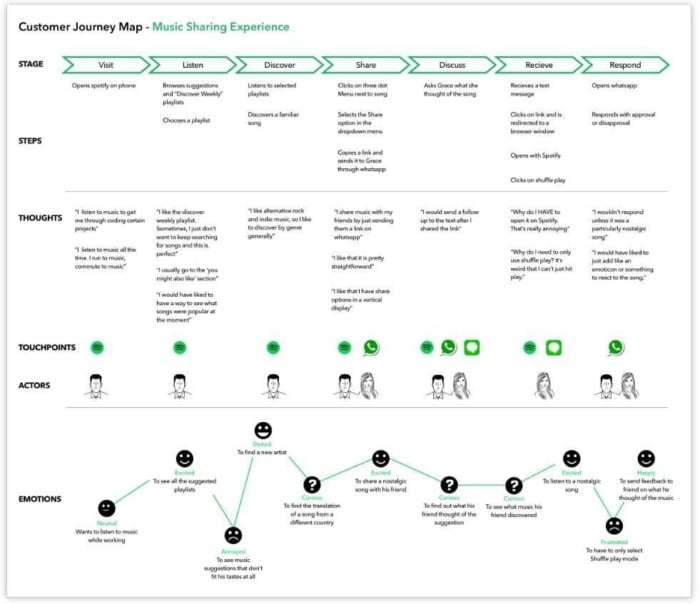
An image of Spotify's customer journey map.

Spotify responded to this by improving its user interface and in-app flows to refine the customer experience and improve touchpoint relevance along the way.

The above are just two customer journey map examples; buyer journeys are also a key part of PPC campaigns.

The Customer Journey and Your Marketing Strategy

As a business, you want to ensure that your marketing strategy aligns with your customer’s journey. Here are some steps to help you do that.

First, you’ll need to identify your customer’s various touchpoints with your brand. This could include everything from visiting your website to speaking with customer service.
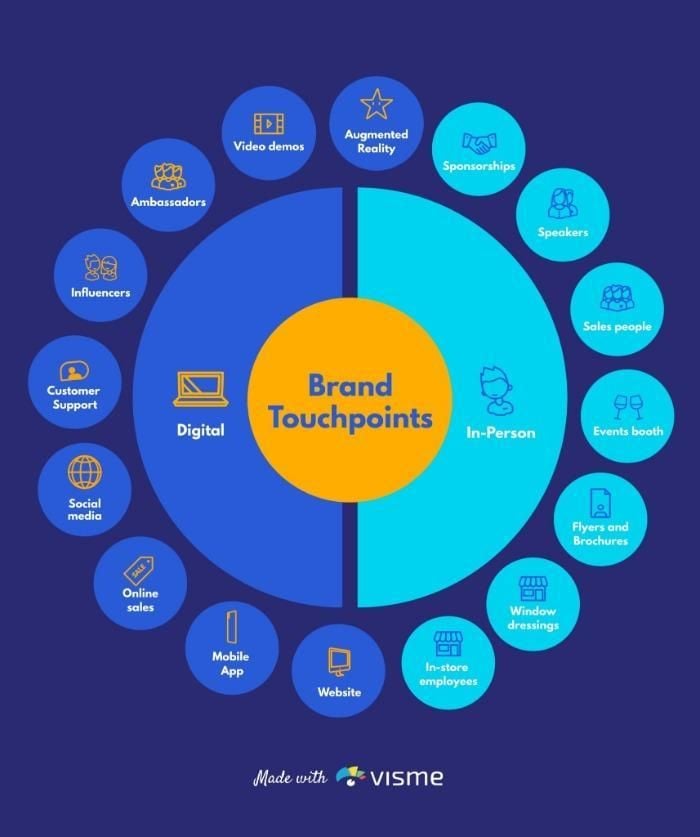
An image of different brand touch points and how it impacts your customer journey map.

You can use marketing attribution (the process of measuring which specific marketing activities are driving results for your business) to help you identify these touchpoints.

Next, you’ll consider the customer’s emotional state at each journey stage. What do they need? Answering these questions will help you create a more effective customer journey map.

Finally, don’t forget to consider the overall purpose of the customer journey map and how it ties in with your market strategy. What do you want your customers to achieve? Once you have a clear goal, you can start mapping out the steps needed to get there.

Customer Journey Maps and Content Creation

Creating content for each stage of the customer journey is an effective way to guide your prospect all the way to the purchase point.

By providing helpful, informative, and engaging content, you can keep your customers engaged and nurture them to become lifelong fans of your brand.

I’ve listed some content ideas for each stage of the journey.

The Pre-purchase (Awareness) Stage

The pre-purchase stage is all about education. Your potential customers are trying to learn more about their options and what would be the best fit for them. They’re looking for unbiased information to help them make a decision.

That’s where your content comes in. Providing them with helpful information that answers their questions helps them narrow down their options and make informed decisions.

Types of content you could create include:

  • Blog posts
  • Social media content
  • Ebooks
  • Case studies

The Consideration Stage

During the consideration stage, your customers make up their minds about which product or service to choose. They’re looking for reassurance that they’re making the right choice. How can you help them along? Try content like:

  • Product comparisons
  • Ebooks
  • Blog posts and videos explaining more about the product
  • Email marketing (Focusing on the product/service your lead is interested in).

The Purchase Stage

Your prospect is about to make their decision but might have some doubts. What content can you give them that may get them over the line and turn them into a fully-fledged customer? Try:

  • Product information guides
  • FAQs
  • Pre-sale support through email, chat, and social media
  • Email marketing

Finally, remember to look after your customer post-purchase. Ensure your client gets the best from the product/service with how-to guides, product updates, and access to customer service support.

FAQs

What Is a Customer Journey Map?

A customer journey map is a diagram that shows the steps a customer takes during their journey with a company. It includes all touchpoints where the customer interacts with the company, from first contact to post-purchase follow-up.

What is Customer Journey vs Customer Experience?

The customer journey represents all the summed up actions and interactions that a customer has with a given brand. The customer experience represents how a business interfaces with customers at every touch point. So customer experience plays a big role in the customer journey, but the two things aren’t the same.

What Are the Most Common Customer Journey Stages?

While your team may add additional steps depending on your market and audience, the most common customer journey steps are:

  • Awareness
  • Consideration
  • Purchase
  • Retention
  • Advocacy

What Are the Five Reasons to Use a Customer Journey Map?

Five reasons to use a customer journey map include:

1. Improved communication with customers.

2. Better understanding of customer needs.

3. Identifying potential problems before they happen.

4. Taking a proactive approach to customer service.

5. Saving time and money by resolving issues quickly.

What Should A Customer Journey Map Include?

First, it should clearly outline the various touchpoints a customer has with your brand, from initial awareness to purchase and beyond.

It’s also important to consider the emotions and needs of customers at each stage of their journey. What are they trying to accomplish? What are their pain points? Addressing these questions will help you create a holistic view of the customer experience.

Finally, don’t forget to include data! Collecting data points at each stage of the customer journey will give you valuable insights into your customer demographics and how best to market to them.

Conclusion

Don’t panic. Prioritize.

Focus on your most profitable customers first and find the unifying threads that tie them together, then build on that persona. Once you have those, start working down the list until you have all your customer journeys mapped.

Additionally, remember that buyers are multi-faceted human beings.

Sometimes they make decisions that go against the grain of even the most well-developed persona. It happens.

However, when you have a better idea of who your customers are, you can build more effective conversion funnels that make it easy for buyers to take the action you want them to take.

Are you planning to create a customer journey map? What is holding you back?


from Neil Patel https://ift.tt/FKmnXuE
via IFTTT

Wednesday, 7 December 2022

Survey Questions for Market Research – with Examples

Survey questions for market research -- with examples

Are you wasting time and money because you don’t really know your customers? Creating products that your customers don’t want just doesn’t make sense. In any business, before you can meet your customers’ needs, you have to know:

  • What are their problems?
  • What solutions do they want?
  • How can you introduce those solutions to them?

So, do you know your customers’ needs? If not, now is the time to analyze who your customers are and how you can give them what they want, before they seek answers elsewhere.

Luckily, doing this is easier than you may think. You can gain practically everything you need to make your customers happy by using survey questions for market research.

While there are several ways to gather customer information, customer surveys work and are one of the most effective methods to use when collecting this kind of data.

Surveys are great information-gathering tools, but to get accurate results, you have to ask the right questions in the right way.

We’ll look at the kinds of questions to ask. These questions will unlock your customers’ innermost thoughts, get you the answers you want, and even help you segment your customer base.

First, here are some general guidelines to help you prepare result-focused survey questions for market research:

1. Remember KISS (Keep It Simple, Stupid)

When it comes to surveying, simplicity is key.

Most people are pretty busy, so they don’t have time to answer overly complex, lengthy surveys.

This is why you have to make the questions easy to comprehend. Additionally, verify that your market research survey questions are easy to access and answer.

Brevity is important. A lengthy survey likely means high abandonment rates. High abandonment rates mean you may not get the best results because they create:

  • A poor survey experience.
  • Responses with incomplete information.
  • Less representative final data.

You want people to respond excitedly to your questions, right? A 40-minute survey won’t support that.

The bottom line here is to remember the KISS principle and apply it.

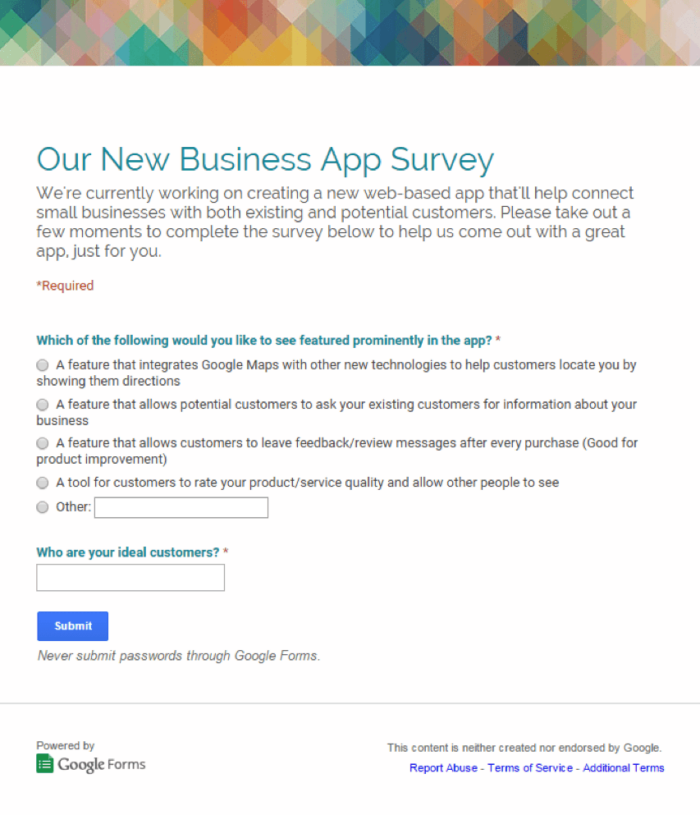
Here’s a great example screenshot of a short survey:

Survey questions for market research using the KISS principle

Instead of using a detailed questionnaire, go with plain, easy-to-understand survey templates, and rather than asking complex questions, ask simple questions with a well-defined approach.

Asking complicated questions may confuse or even frustrate respondents. When that happens, two things are bound to follow: they will either not answer the question at all, or, if they do, they will give you unclear, inaccurate answers.

By complicated questions, I mean:

  • Trick questions: These are purposefully deceptive and complex so respondents often answer in a specific way.
  • Long questions: These are long, convoluted questions that provide so much information that it becomes difficult to comprehend and answer accurately.
  • Confusing questions: These are simply questions that don’t make sense to the respondent.

Avoid these at all costs to engage participants and obtain accurate results.

When writing survey questions for market research, the main goal is to keep things as direct as possible.

Do you know the variations of the phrase KISS? “Keep It Simple and Straightforward” and “Keep It Short and Simple” also apply here.

To get respondents to answer your questions, keep it simple, short, and straightforward.

2. Avoid Too Many Polar “Yes/No” Questions

Polar questions have only two possible answers: yes (confirmatory) and no (negative). They’re also known as yes/no questions.

Why should you avoid asking only polar questions?

Well, the simple reason is that when you ask a yes/no question, that’s all you will get. Respondents don’t have the chance to tell you what’s on their minds (which may be other possible answers that you hadn’t considered).

Closed-ended questions may lead respondents toward a particular answer which can easily create bias. This won’t unlock your respondents’ authentic answers.

Survey questions that pull respondents toward one answer can disrupt the objective of the survey. When using questions in a survey, make sure the options for responses are as unbiased as possible.

An alternative to yes/no questions is multiple-choice questions. You can ask survey participants to select one answer or “all that apply.”

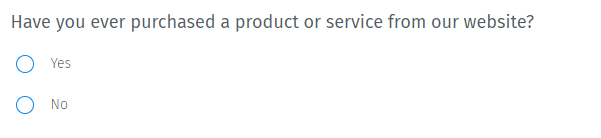
Here is an example of a polar question:

A polar survey question for market research .

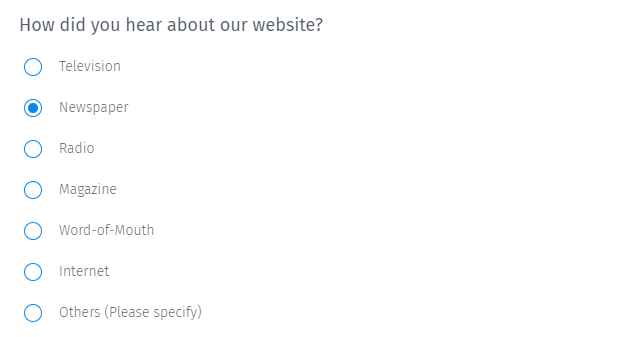
Here is an example of a multiple-choice question:

A multiple-choice survey question for market research .

Just keep in mind that multiple-choice questions may not always provide the best information, as they are still somewhat closed-ended.

However, multiple-choice questions do give respondents the chance to choose from various choices, and you may find that their preferred choice is different from what you anticipated.

To get additional information, you can always provide a space for unique answers and call it “Others – please specify” or something similar.

When asking a multiple-choice question, remember to include all the possible answers you can think of that respondents may want to choose.

You should consider using polar or multiple-choice questions in a survey when you want to:

  • Offer a set number of responses to choose from.
  • Collect unambiguous answers.
  • Receive simple responses to simple questions.
  • Create a short, quick survey that takes respondents less time.

Polar and multiple-choice questions make it easy to capture and analyze data. In other words, you’ll be able to generate more quantitative data that gives clear-cut numerical results. You’ll know exactly what respondents answer with because you’re the one that wrote the responses.

What’s more, you can give customers some freedom by asking one or two open-ended questions after polar or multiple-choice questions to gain more clarity. This leads us to my next point.

3. Write a Couple of Smart Open-Ended Questions

Open-ended questions are a type of survey question for market research requiring the respondent to write a comment, an essay, or other types of free-reaction text. They produce qualitative data, which is a little more difficult to analyze at the end of the survey than quantitative (numerical) data. These responses will give you a lot of juicy details, though, so it’s well worth the effort.

You don’t need to make all the questions open-ended, but you should aim to include at least one or two. This will free your respondents to blurt out what’s on their minds without holding back.

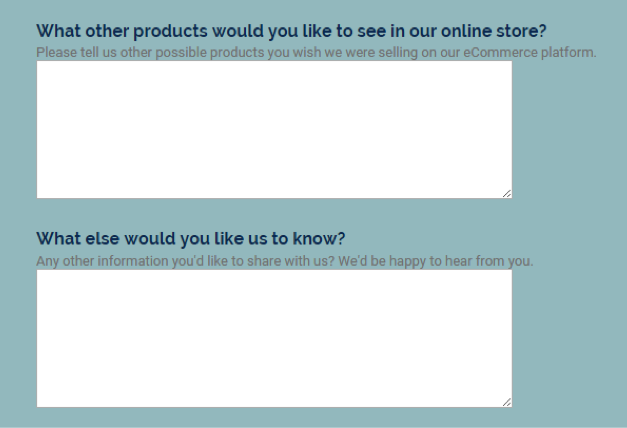
Below are two thoughtful, open-ended questions culled from a recent survey by an e-commerce company:

Open-ended survey questions for market research .

When asking an open-ended question, you need to be careful, as some respondents may get carried away and provide you with long blocks of text.

To prevent this, provide a text box where they can write their answers, but limit the number of characters the text box can accept. That way, they’ll provide you with only the most important things they have to say.

4. Ask One Question at a Time

How do you feel when someone asks you a string of questions?

“How did you find our products? What results have you gotten by using our products? Which of our products do you find most beneficial and why?”

You probably feel like the desperate interrogator wouldn’t let you finish your sentence. That’s exactly how your respondents feel when you ask a chain of questions at once.

In addition, multiple questions make it hard for people to give precise responses, making it difficult for you to interpret those answers.

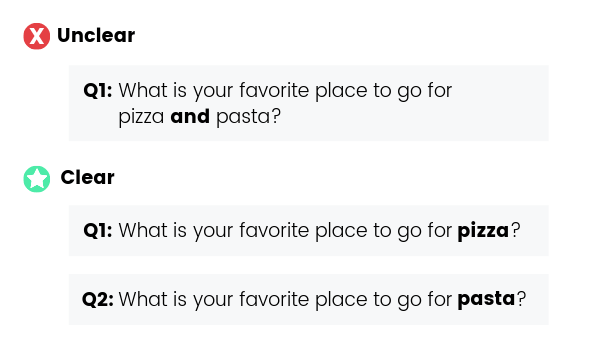
A bad example of survey questions for market research.

One approach to solving this issue is to aim for questions that encompass multiple things you want to ask. However, avoid this if the question becomes too long or confusing. Otherwise, providing space to respond between each question is likely your best bet.

3 Example Survey Questions That Will Help You Know (and Solve) Your Customers’ Biggest Problems

Next, we will be looking at some specific survey questions for market research that can get you helpful answers.

These investigative questions will help you discover your audience’s biggest problems. They’ll also help you know what product to create and what to share with your customers in your newsletters, walk-through guides, blogs, etc.

The truth is, as a business, your job is to solve problems and meet people’s needs. This could be by rendering a service, creating a product, or sharing helpful information and fresh content, just as we do here at the Neil Patel blog.

You cannot solve any problem without getting to know it first; thus, asking these questions is critical.

With that in mind, here are some pin-pointing, open-ended survey questions for market research that will elicit helpful answers from your audience:

1. What’s Your Biggest Challenge in ___?

Are there challenging situations that customers are facing right now in your specialization? Your customers are the best people to give you this insight.

The answers to this question will help you understand the greatest problem your customers need help with so that you know where to focus your company’s energy.

Sometimes, you may receive diverse answers from respondents; however, with the data gathered, you will find the most significant common challenge among them.

2. What Are Your Most Burning Questions About____?

You’ve been doing all the interrogations so far. Now, it’s time for customers to take their turn. Sometimes the most useful information you’ll gather comes from customers’ questions rather than their answers.

The trick is to get them to ask only their most burning questions about the niche or subject you’re dealing with.

So, that means you might have to limit the number of characters in the text box or just tell customers to ask only their most important questions.

By the way, if you do share information with your audience (through blogs, videos, podcasts, newsletters, eBooks, eCourses, etc.), the questions your customers ask here will help provide you with a bunch of content ideas you can use for a long time.

Their questions may even generate ideas for services to add to your service list, products to create, and other ways to improve your existing offerings.

But, if you want to lay it on the line, you can really tap into their wits. That’s the job of the next question.

3. What’s Not Out There? What Product, Service, Tool, or App Would You Like to See?

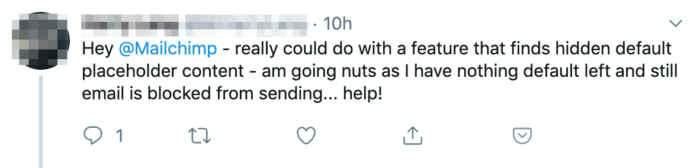
A tweet directed at Mailchimp offering customer feedback and asking for help.

If you use only your own ideas for products without customer feedback, you may end up creating the wrong product. This is a product that won’t sell a piece, won’t make you a dime, and won’t solve a single problem.

Luckily, customers can help you avoid this dilemma. You can be explicit by asking this question to define what people want and need.

Surveys can make or break your start-up because they are all about how well you comprehend what your customers want to tell you. Not using them can mean taking a shot in the dark about whether a product will succeed. A product misfire can sink a company in its early stages. Even at the enterprise level, a product that doesn’t meet company needs can have severe consequences.

The answers you get here will help position you advantageously to create products that matter, thereby giving you an edge over your competitors.

2 Example Survey Questions That Will Help You Know How to Best Reach Your Audience

While the questions above will get you helpful customer-centric answers, it’s not all about knowing what your customers want. You also have to find out who they really are and how to reach them.

Here are some questions to help you do that:

1. What Level of Expertise (Beginner, Intermediate, or Expert) Do You Have in ___?

You may think you know who your audience is, but do you really? Without a basic knowledge of who you’re reaching out to, you may not be able to solve their problems.

This question is especially significant if you are responsible for training people (through in-app messages, blogging, video content, webinars, online courses, information products, etc.).

Knowing your customers’ level of expertise will help you comprehend how much support they need and what sort of content you should create for them. Also, you can easily determine which features a product needs based on customer experience and knowledge. Customers with less expertise may need features that those with more expertise don’t want.

All this information improves the customer experience and helps you better serve your target audience.

2. What’s Your Preferred Method of Learning (Reading, Listening, Watching, Practicing, or Other)?

Even if you create the best podcast that’s ever existed, it won’t matter if your customers prefer to receive information via written online content like blogs. You have to know how to reach your customers where they are.

This question is important for narrowing down where your audience exists, but it also helps you gain insight into alternative possibilities. Perhaps you’ve been focusing on helping your audience learn by listening when they really want to learn by watching.

Use the responses to this question to analyze where you’re meeting your audience’s preferences and where you may be falling short.

How to Build Survey Questions for Your Audience

So far, you know that survey questions should be:

  • Simple.
  • Honest.
  • Understandable.
  • Unbiased.

You also know that a healthy mixture of closed-ended and open-ended questions will give you the most accurate results. Also, it’s not a good idea to ask too many questions in a row before allowing respondents to answer because it can make the survey a little overwhelming.

With all this in mind, you are ready to build out your survey questions for market research.

A graphic with red, teal, and yellow stick figures and a magnifying glass.

The first thing to consider is what you want to gather from your survey results. What do you want to know, and how will this help you give your customers what they need?

Survey language is critical here because you want respondents to recognize what you’re asking so that they can give you the most accurate answers.

Second, think about your audience. What sort of experience do you want them to have while taking the survey? Respondents who can effortlessly complete a survey will likely give you better responses with more meaningful insights.

In addition to others mentioned in this blog, some survey design mistakes to avoid include:

The third factor to focus on is the format. If respondents have trouble navigating the survey or selecting their answers, this will lead to a bad experience and poor survey results.


Frequently Asked Questions

How long should my survey be?

When crafting survey questions for market research, aim for less than 30 questions. The survey should take participants about 10 minutes or less to finish to avoid bad-quality answers or abandonment.

Where can I build an online survey?

Figuring out how to design survey questions for market research is so much easier when you use online resources and tools. For example, QuestionPro makes it simple to build, design, and distribute surveys to all of your participants.

What is a good sample size for a survey?

Statisticians agree that a good sample size should land around 100 participants or more if you want significant results. Nevertheless, aim for about 10% of the target population (or 1,000 participants max) to get the most accurate findings.

What types of questions should I ask on my survey?

You’ll need to use various question types to engage respondents and make the survey easier to complete. Ask a blend of yes/no, multiple-choice, and open-ended questions for the best survey outcomes.


Conclusion

A great product and excellent customer service begin with getting to know who your customers are and what they want. For this to happen, you have to compile customer information, and surveys are one of the best methods to collect precisely what you need.

When reaching out to gather customer information, it’s essential to get it right from the beginning. The types of questions you ask play an important role in creating a successful survey.

You won’t get good responses when you ask bad questions. Pay attention to how you’re framing questions and what possible answers respondents may give to gain the highest-quality results from your survey.

If you take the time to write good survey questions for market research, you’ll be on your way to getting handy customer information that can help you drive your business in the right direction.

The next time you conduct a survey, try the tips above, ask the right questions just as I’ve pointed out, and you’ll be on your way to uncovering your customers’ deepest desires.

Do you use market research surveys? If so, what type of questions do you usually ask? Let me know below!


from Neil Patel https://ift.tt/wydWIGH
via IFTTT
Tuesday, 6 December 2022

16 Market Research Tools To Uncover Actionable Insights

16 market research tools to uncover actionable insights

In a world of increasing competition, understanding your target market is vital.

Conducting thorough research of past, current, and prospective customers helps you uncover insights to improve your product or create more effective marketing messages.

Those insights don’t have to be hard-won, either. Thanks to new tools and data sources, businesses no longer have to rely on traditional methods like surveys and focus groups.

Ready to learn what your audience really wants? These are the 15 best market research tools to use.

Benefits of Leveraging Marketing Research

There’s a reason the global revenue of the market research industry has more than doubled since 2008 and is now valued in excess of $76.4 billion. It comes with a heap of benefits. Any business wanting to improve its product or launch a new marketing campaign will be at a significant disadvantage without market research.

If you’re asking yourself “what is market research?,” look no further. Market research keeps your target audience at the center of every decision. By understanding their needs and desires, you can tailor everything from your product to your marketing to your customer. In doing so, you’ll reduce the number of bad customer experiences—one or two of which are enough to make 64% of customers switch to a competitor.

Market research tools can also help you discover new business opportunities and threats. New markets become obvious when speaking to customers and understanding their behavior. The same applies with competitors and external threats that could threaten your business if you don’t act. It can also be used to help create customer personas, which only add to the effectiveness of your marketing. Customer personas are fictional takes on your ideal consumer created by your team to describe the characteristics and buying motives of specific customer categories.

Ultimately, using market research will give you a huge competitive advantage. That’s because of the benefits above and because 6 out of 10 marketers are using consumer research to drive decisions. Do you really want to be on the outside looking in?

As a start, you can use these tools to spy on the competition and see where your brand stands against them. There are also tools to help you collect that all-important market research data.

How to Use Marketing Research Data in Your Marketing

You can leverage market research data in several ways, but using it to inform and optimize your marketing strategy, from campaign creation to execution, is one of the most powerful.

For instance, market research can ensure your new product launch goes off without a hitch. Almost half of all product launches are delayed, and 20% fail to meet targets. By understanding exactly what customers want, a successful product launch simply becomes a case of delivering it.

Market research can also help you focus your marketing efforts on areas where you have a competitive advantage. By understanding what customers are really searching for, you could identify untapped markets with very little competition in terms of paid ads or SEO. Focusing your efforts here, rather than on saturated verticals, will send your ROI soaring.

Finally, you can use market research data to optimize your marketing efforts after launch. Analyzing social media and other types of user engagement data can highlight how effective each message is so you can do more of what works and less of what doesn’t.

Combine this with techniques to understand your customers and you fully understand what your content needs to accomplish to reach them. 

5 Best Free Marketing Research Tools

You don’t have to spend a dime to get the benefits of marketing research. There are plenty of free market research tools out there. I’ve highlighted five of my favorites below.

1. Google Trends

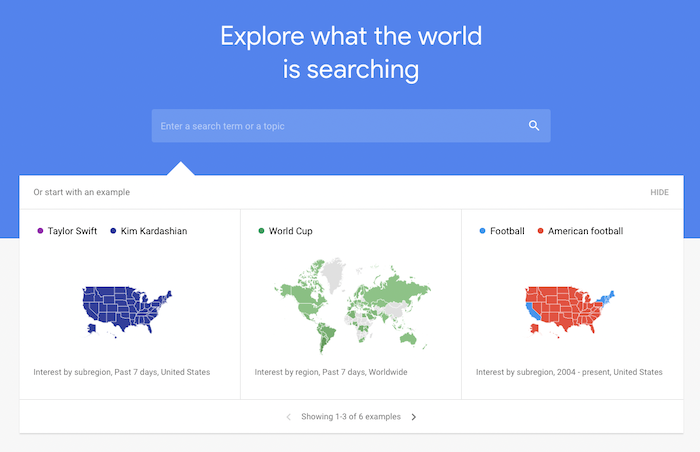
Google Trends market research tool

Google Trends shows you what people are searching for on Google. It was introduced in 2006 and tracks the popularity of topics over time by location. You can see exactly how popular searches are for Taylor Swift in the U.S. this year. Or how searches for Brexit have declined in the U.K. since 2019.

At the time of writing, Google processes 99,000 searches every second. That’s over 85 billion searches every day, making it the largest and most valuable search data source in existence. Google Trends gives you access to that data in a categorized and aggregated way.

Enter a trend and Google will show you how trendy that term is with a line graph and give you a score out of 100. You can also compare different terms.

Pros

  • easy to use
  • visually appealing
  • huge amount of data

Cons

  • doesn’t show the exact search volume
  • related topics aren’t always relevant

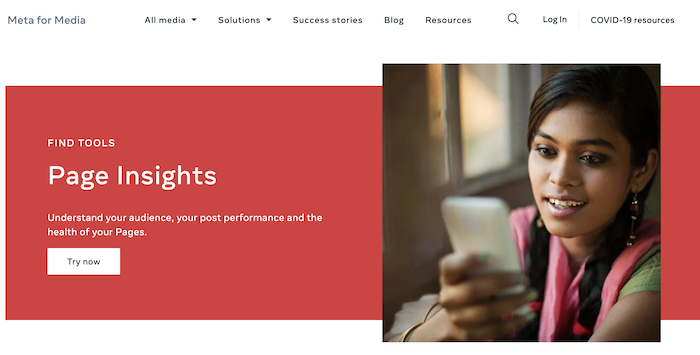
2. Facebook Page Insights

Facebook Page Insights market research tool

Facebook Page Insights is a fantastic and free market research option if you use Facebook to market your business. If you don’t use Facebook for marketing yet, you probably should. With 2.9 billion monthly active users, it’s one of the best social media platforms for marketing.

The tool provides insights into your audience, post performance, and the health of your pages. You can use the tool to see who likes your page and why, which posts get the most engagement, and learn how to increase the reach of your content.

If you’re struggling to get started, Facebook offers two courses: one on how to generate insights and make data-driven recommendations and one on how to make the most of marketing insights.

Pros

  • unparalleled insight into your Facebook audience
  • easy to use
  • courses available

Cons

  • limited to your Facebook pages
  • not as comprehensive as it once was

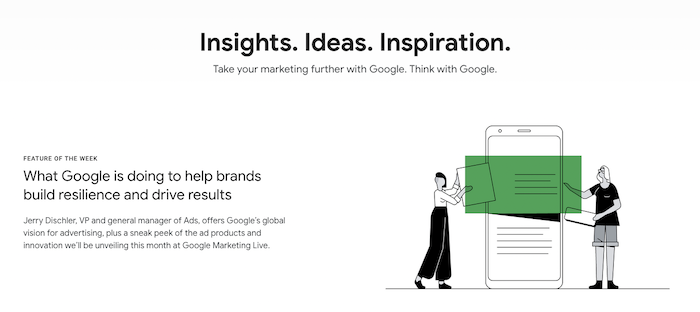
3. Think With Google

Think With Google market research tool

Think With Google is one of the search giant’s lesser-known tools, but that doesn’t make it any less powerful. It’s a free-to-use resource library of facts and figures based on Google’s own data and other research that can supercharge your marketing efforts.

If you want a broad understanding of what’s going on in the world, Think With Google is a great starting point. Search the platform, and you can uncover marketing trends, understand the latest consumer behavior and find the insights you need to drive your marketing strategy.

The site is split into four areas (Consumer Insights, Marketing Strategies, Future of Marketing, and Tools) which you can use to find the insights you’re looking for.

Pros

  • huge resource of statistics and studies
  • easy to use
  • great for marketing research

Cons

  • limited to marketing studies

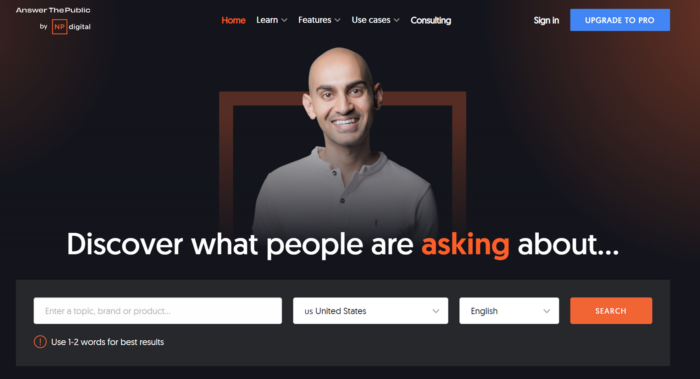
4. Answer The Public

Answer The Public market research tool

See a familiar face? Answer The Public is now part of the NP family, and makes a great free asset for your market research needs. It’s one of the simplest options out there for getting a deeper understanding of what people are talking about.

Simply enter in the topic you want to research, the region you are looking at, and you’ll get a whole set of adjacent topics and questions that people are searching for about the subject. On top of that, Answer the Public puts these in flat data sets or handy data visualizations for you to share with your teams.

Struggling to come up with content ideas? Answer The Public gives you a bunch of baseline ideas, pulled right from the minds (and searches) of your audience.

Pros

  • Easy interface to get you insights fast
  • Data visualization to make sharing insights easier
  • Incredible insights on how a subject is approached in search.

Cons

  • Limited users and searches with free plan — but upgrading gives you that and a variety of other features, including comparing data over time and search listening alerts.

Price

Free with limited uses, paid plans range from $79 to $199 per month.

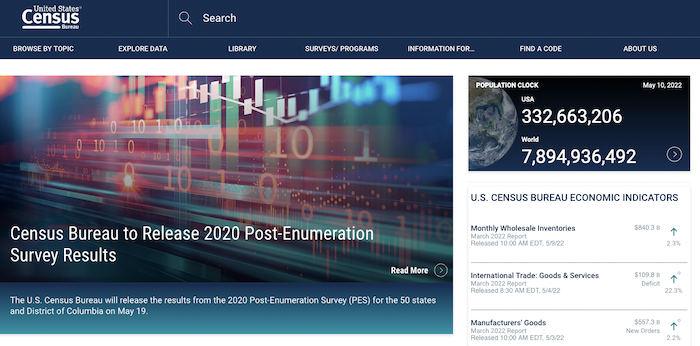
5. U.S. Census Bureau

U.S. Census Bureau market research tool

The U.S. Census Bureau website lets you search U.S. census data for free. The Bureau of the Census conducts over 130 surveys a year (which are used to allocate billions of dollars in federal funds), making it an in-depth source of reliable data.

You can filter by several variables, including age, location, and income. It also provides visualization of some data sets. One interesting way to use this data set is to filter the results using your business’ NAICS code to see where and with whom your industry is most popular. This is a great way to discover new target markets.

Pros

  • one of the biggest demographic resources online
  • easy to search through reports

Cons

  • limited to the U.S.
  • older census reports can become outdated quickly

Price

Free.

11 Best Paid Marketing Research Tools

Free market research tools are a great way to dip your toes into the industry. However, there will always be limitations when you don’t pay for the data. If you’re serious about market research, you’re going to want to pay for premium access. These are the best paid market research tools to use.

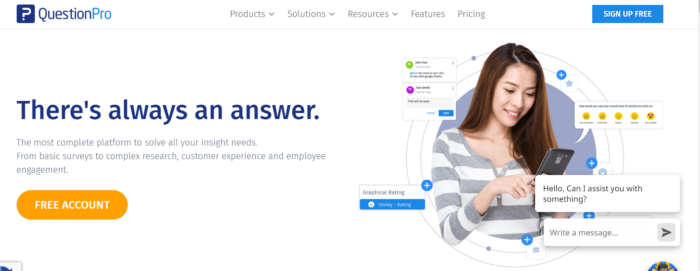
1. QuestionPro

QuestionPro market research tool

So far, we’ve only discussed secondary data sources. A primary data source would involve gathering results directly from people through surveys. 

QuestionPro is a great option, with over a billion questions answered, offering a range of free plans and professional research licenses. 

These plans are great for making, distributing, and analyzing surveys. Importantly, all users can get 24/7 LiveChat support, which is a huge asset. Surveys can be sent through a variety of means including email, links, social media, embedded text, etc. Analysis can be done in-app or through an export.

Pros

  • easy to start using, especially with built-in templates
  • a generous free plan
  • 24/7 LiveChat support for all

Cons

  • mastering the software takes time
  • user interface prioritizes function over aesthetics

Price

The Basic plan is free, while the Advanced plan costs $99 per month.

2. SurveyMonkey

SurveyMonkey market research tool

SurveyMonkey is one of the best and most popular tools to use, with over 20 million questions answered using the platform each day.

The company’s enterprise-grade platform makes it easy to create, send out, and analyze surveys. Surveys can be sent via a link, email, social media, or embedded into a web page. You can browse through individual responses or use the tool’s custom reports and charts to visualize data.

Pros

  • easy to use
  • good template selection
  • great free plan

Cons

  • analytics could be improved
  • lack of customer support

Price

Basic plan is free. Standard plan costs $99 per month.

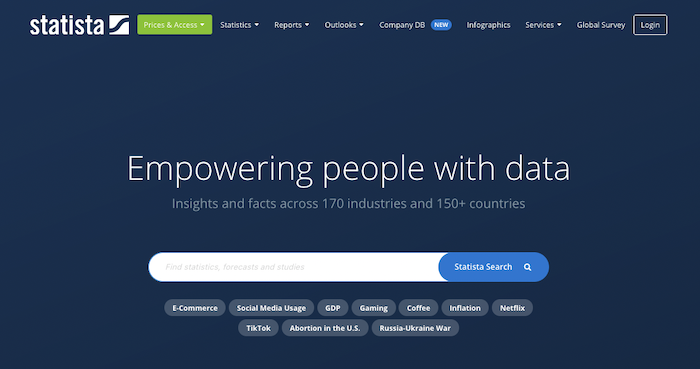
3. Statista

Statista market research tool

Statista is a hub of visual data, market research reports, and statistics. It collates data from several reputable sources, turning most of them into graphs and charts that are easy to digest. Because Statista’s data is continually updated, you can keep coming back to the same chart year after year to see how trends are changing.

The site has data on almost any topic you can imagine, making it a great way to discover consumer behavior and market trends, no matter your business.

Getting started with Statista is as easy as searching for a particular topic. The site’s search functionality is excellent and will return hundreds of reports and dashboards that you can use to influence or support your marketing efforts.

Pros

  • one of the best statistical resources online
  • great UX
  • easy to search for data

Cons

  • free plan is limited
  • visuals aren’t the best

Price

Basic account is free. Premium account costs $59 per month.

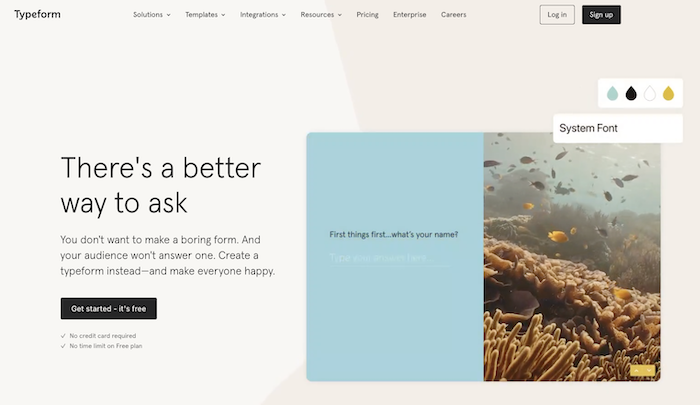
4. Typeform

Typeform market research tool

Typeform is another survey-based market research tool and an alternative to SurveyMonkey. It benefits from a more user-friendly design with a bunch of pre-made templates, making it easy to create forms and online surveys that you can send to customers. Typeform drives more than 500 million digital interactions every year and integrates with hundreds of other apps.

You can format questions in multiple ways, including multiple-choice, scale ratings, and open-ended answers—perfect for collecting quantitative and qualitative data. You can even use conditional logic to change the structure of your survey based on a respondent’s answers.

The respondent experience is also different. Unlike other survey tools, respondents are only shown a single question at a time. This makes for a more user-friendly and less intimidating experience that can increase the number of responses.

Pros

  • easy to use
  • respondent-friendly
  • strong data visualization
  • mobile-optimized

Cons

  • lack of customer support
  • data reporting isn’t amazing

Price

Limited free plan available. Premium plans start from $25 per month billed annually.

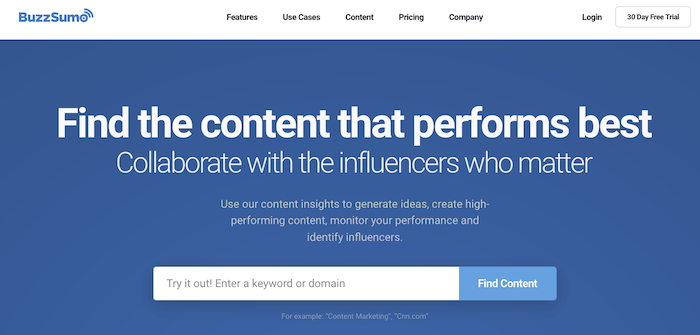
5. ​​Buzzsumo

Buzzsumo market research tool

Think of Buzzsumo as the content marketing and social media market research tool. It analyzes over 8 billion articles and 300 trillion social engagements, so you can see which topics or types of content receive the most engagement, what’s getting shared on social media, and find influencers who can help increase the reach of your content.

This makes Buzzsumo an incredibly effective market research tool for any marketer looking to put together a content marketing strategy. There’s no need to second guess what’s going to rank well and receive engagement when you can use Buzzsumo to see what’s getting traction at the moment.

There are several ways you can use Buzzsumo. The easiest way is to use the tool’s Content Analyzer to search for a topic and see which articles have the most engagement. You can also set up alerts to monitor mentions of a particular optic or keywords.

Pros

  • accurate social share counts
  • great for competitor research

Cons

  • doesn’t include every social media channel
  • filtering could be better

Price

Free plan available. Premium plans start from $99 per month.

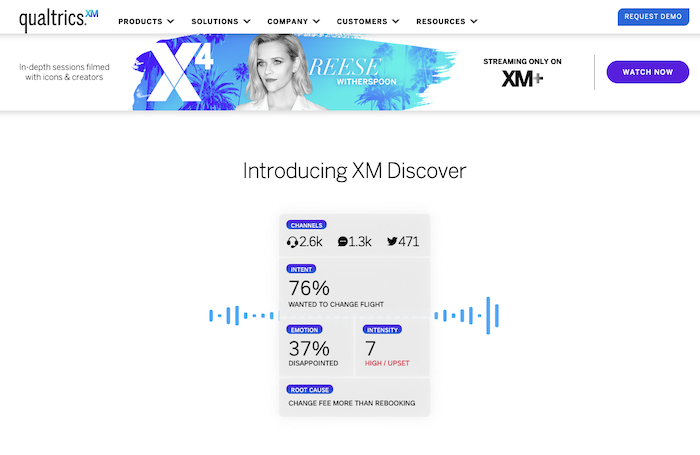
6. Qualtrics

Qualtrics market research tool

Qualtrics is an all-in-one market research tool. From creating advanced surveys to segmenting markets and analyzing data, Qualtrics does it all. Create your own survey to gather data or upload an existing data set and Qualtrics will run statistical tests and apply visualizations to help you gather insights.

There’s no need to spend time finding respondents for your surveys, either. You can use the platform to find a representative sample of your target audience and have them fill in your survey.

There’s even on-demand training to help you get the most from the platform.

Pros

  • easy to build surveys
  • excellent data reporting

Cons

  • software has a steep learning curve
  • limited customization of surveys

Price

Plans start from $1500 per annum.

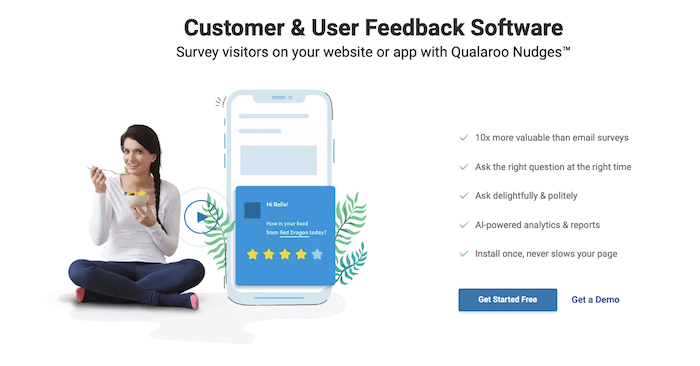
7. Qualaroo

Qualaroo market research tool

Qualaroo is an advanced customer survey tool that helps you ask the right questions at the right times. What separates Qualaroo from other survey tools is that you can embed surveys into your site, allowing you to catch users in real-time, with context. That makes their responses significantly more valuable and insightful.

Creating surveys is easy thanks to a wide range of templates and customization options. Analyzing and reporting results is also a breeze courtesy of the platform’s AI-powered analytics tool. There are also tons of other features like dozens of answer types, branching questions, and automatic language translation.

Pros

  • easy to create and deploy surveys
  • analytics reduces reporting time
  • easy to learn

Cons

  • pre-built templates can be generic
  • dashboards could be improved

Price

Plans start from $80 per month.

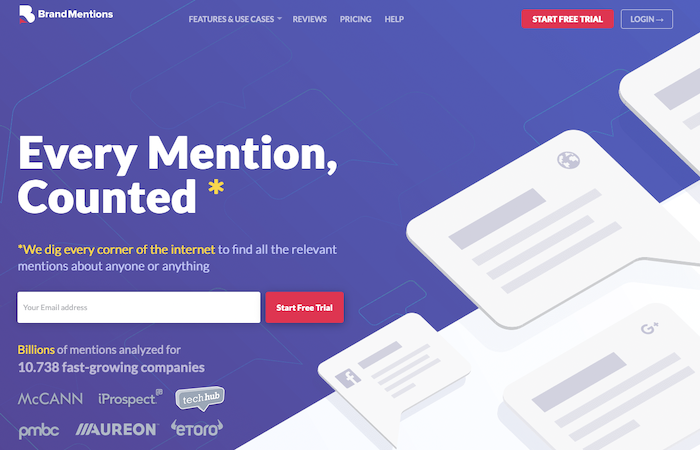
8. BrandMentions

BrandMentions market research tool

BrandMentions is another social media monitoring platform similar to Buzzsumo but with a greater emphasis on social media. It estimates it currently analyzes billions of social media mentions for over 10,000 companies.

You can use the tool to quickly understand social media users’ opinions on practically any topic. Simply search for a keyword, and BrandMentions will display the most recent social posts as well as the context in which it was used. So not only do you see what people are saying, you understand the broader sentiment around the topic.

The tool also shows a range of other metrics, including how many people view the topic each day, how many people engage with the topic, and which days the topic trends on.

Pros

  • great for social media research
  • can also be used for brand monitoring
  • intuitive UX

Cons

  • can be time-consuming to automate reports
  • only analyzes social media data

Price

Plans start from $99 per month.

9. Gartner

Gartner market research tool

Global research and advisory firm Gartner is a heavyweight when it comes to market research. The company has three core services (trusted insights, strategic advice, and practical tools). We’re only going to focus on its trusted insights offering here.

Trusted insights offer an incredible amount of detailed, verified, and peer-driven research. It’s a fantastic way to identify trends in your industry, spot gaps in the market, and discover other insights to power your business.

These reports are at another level compared to other research teams. Gartner boasts over 2,000 research experts and several proprietary research methodologies to deliver objective and unmatched insights.

Pros

  • unmatched insights
  • unbiased data

Cons

  • very expensive

Price

Plans start at $30,000.

10. Tableau

Tableau market research tool

Tableau is a business intelligence suite centered around data visualization. You can connect to almost any data source and Tableau will transform that data into beautiful visual reports that make it easy to analyze and share with stakeholders.

You don’t need to know any code to use Tableau, and the tool makes it easy to be as broad or granular as you like with data analysis. Import data from tons of different data sources, like PDFs, spreadsheets, and Google Analytics.

Tableau is a trusted market research tool for some of the country’s biggest companies, including Verizon, Lenovo, and Charles Schwab.

Pros

  • best visual data reporting tool
  • acts as a central repository for data
  • analyzing data is easy

Cons

  • can be slow to upload large data sources
  • requires you to source your own data

Price

Tableau Explorer starts at $42.

11. Ubersuggest

Ubersuggest market research tool

Ubersuggest is one of the best tools for doing SEO and PPC-focused market research. Full transparency, this is a tool I created, but I would think it’s pretty awesome even if I didn’t make it.

Put a phrase into the search bar and it will provide you with a list of other relevant keywords people are searching for, along with search volume and a difficulty score. You can also enter your own domain or that of a competitor to identify areas for improvement.

It’s a great tool for identifying the size of a potential market, how competitive that market is and what chance you have of ranking in it. You can also use it to get the low-down on a competitor and find out which audiences they’re targeting.

Pros

  • great UX
  • one of the best market research tools for digital marketing
  • wide range of affordable plans

Cons

  • limited to SEO and PPC data

Price

Ubersuggest has a free plan that allows for 3 keyword searches a day with limited insights.

Paid plans start at $29 per month or $290 for lifetime access.

Market Research Tools Frequently Asked Questions

What are the primary market research techniques?

There are five main techniques for conducting primary research: surveys, one-on-one interviews, observational studies, focus groups, and field trials.

What can I discover with market research?

The best insight from market research is the discovery of a relevant and actionable insight about your target market you can use to improve your offering or influence your marketing efforts.

Are market research tools worth the cost?

If you are on a budget, there are plenty of free market research tools available. However, the best market research tools cost money and provide access to more data and additional capabilities that can increase the effectiveness of your market research.

Why is it important to do market research?

Market research uncovers important information about your business and target market that can highlight opportunities for your business that would otherwise be missed.

Conclusion: Market Research Tools

Market research tools are an invaluable way to find out exactly what your target audience is thinking. Whether you use free market research tools or paid market research tools, you can uncover plenty of insights that can have a transformative effect on your business.

Stop making uninformed decisions and start taking time to understand your customers and use that information to inform your marketing strategy.

What are your favorite market research tools?


from Neil Patel https://ift.tt/bzjIl8o
via IFTTT
Monday, 5 December 2022

How to Overcome Writer’s Block with Ubersuggest

Graphic that says, "How to overcome writer's block with Ubersuggest."

You’re staring at your screen.

Your screen’s staring back at you.

Only one of you can win this writer’s block contest (and believe me—I’m rooting for you).

You’re not the only one who experiences writer’s block.

In the blogosphere, 70 million posts are published monthly on WordPress alone.

Their authors all likely hit a wall somewhere in their content creation process.

Even I had to fill my blogger toolbox with writer’s block tools.

So, how do I manage to crank out four to five high-quality blog posts every week?

I developed a creative inspiration formula.

I’ll show you how I use Ubersuggest to generate content ideas to break my writer’s block.

I believe it will work for you too.

You’ll be able to content batch dynamic ideas to keep your brand’s content fresh and exciting.

More than just your audience will enjoy the end result.

Your team will feel inspired to think big, win big, and crush writer’s block.

What Is Writer’s Block, and What Causes It?

Do you want to know my nickname for writer’s block?

I call it the creativity killer.

You want to write but don’t know what to write.

I call it this because it puts you in a creative slump. Thankfully, you can reverse-engineer your way to a great writing breakthrough.

You’ll know when you’ve hit a block.

You may be feeling uninspired. Maybe your message is unclear.

Stress can also block your creative flow. This can come in the form of self-doubt or lack of motivation.

You may even be plagued by perfectionism.

Or your foundational knowledge of the topic isn’t sound.

But you’ve got to break through the wall at some point.

Understand what led to the block. Once you can put your finger on it, you can get that spark back.

How Writer’s Block Impacts Your Business

Overcoming writer’s block is a delicate process, but it shouldn’t interfere with your business.

You don’t have to wait to let the sentences form in your mind to get started.

Allow your research and notes to guide you.

Planning helps you commit to communicating with your audience.

Your audience wants to hear from your content to take their next informed steps. You don’t want to negatively impact your brand by failing to post regularly because of writer’s block. It’ll cost you both organic traffic and brand awareness.

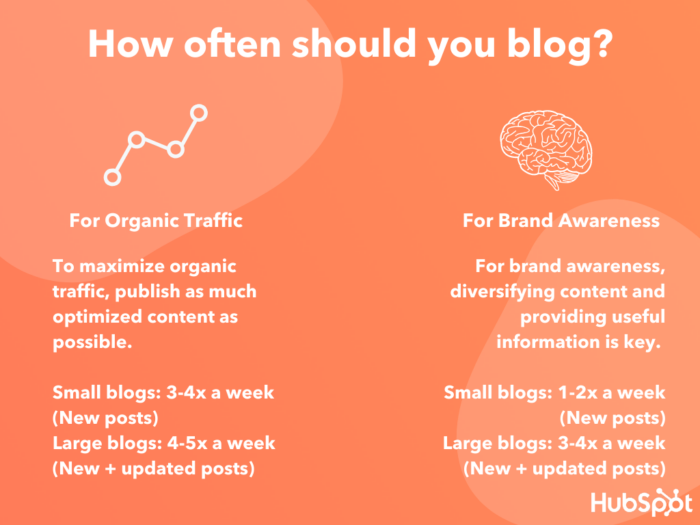
HubSpot reported your blogging frequency should be at least two to three posts a week, no matter your blog length or content goals.

A graphic designed by HubSpot that is titled, "How often should you blog?"

You’ve gained your audience’s attention through what you have to say—and they value you.

While trying to up your page views and domain authority, don’t lose their attention over one tricky topic.

Be patient with yourself and work through your process if you want to stay connected with your audience and maximize the visibility of your business.

So, mix up your approach. Try something different.

Have you thought about using an AI writer or other tools to overcome writer’s block?

Can Tools Help You Overcome Writer’s Block?

Push through that empty page with tools to overcome writer’s block.

I know, like you know, that there’s nothing more frustrating than writer’s block. But a checklist of tips and tools to overcome writer’s block will help you solve the problem quickly.

One of the best ways to overcome writer’s block is to start with an “I can” vs. an “I can’t” attitude.

That includes thinking outside the box and seeking out tools to help come up with the words and ideas you need to move forward.

Overcome writer’s block with resources like question forums. Everybody knows Quora, so get some answers and ideas from a community of users likely in your niche.

Help A Reporter Out (HARO) is also helpful in gathering expert advice and quotes on topics. You can set a query to help you expand on topics and even draw inspiration from the responses you receive.

Need a writer’s block tool that’ll help beat a time crunch? Try Copy.ai, an AI writing tool. Just enter a few sentences or phrases about your topic, and it’ll generate copy you can use to help crush your content project.

Think of AI writers as your copywriting assistant. Even if you’re writing for SEO, AI writing assistants take your topic and turn it into content that converts.

Perhaps your topic isn’t working, or your keywords need beefing up.

To optimize your copy, use Ubersuggest. You can expand keyword long-tail phrases, drawing from sources like videos or images. You can even shape your content with the built-in AI rewriting tool. All you have to do is enter text into the tool and it rewrites it into fresh and unique content.

AI rewriting tools can write quickly, generating high-quality content for your company. This is a great starting point to ensure you’re hitting the mark for your audience within your niche and industry.

Using Ubersuggest to Overcome Writer’s Block: How It Works

Using Ubersuggest helps you reorganize your idea(s) to overcome writer’s block.

As a savvy content marketer, you know when it’s time to get innovative.

One way is to give direction to your writing.

Let me show you how to use Ubersuggest—an SEO content marketing tool—to help you break past your block.

Say you can’t think of what to cover about the topic.

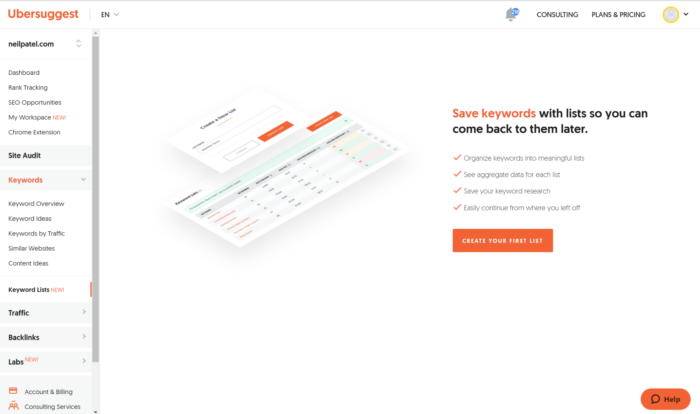
Head to Ubersuggest and enter your target keyword(s) or topic into “Content Ideas.”

Screenshot of Ubersuggest's homepage.

We’ll plug in the keyword “mobile-friendly website” as your topic is optimizing a mobile-friendly website.

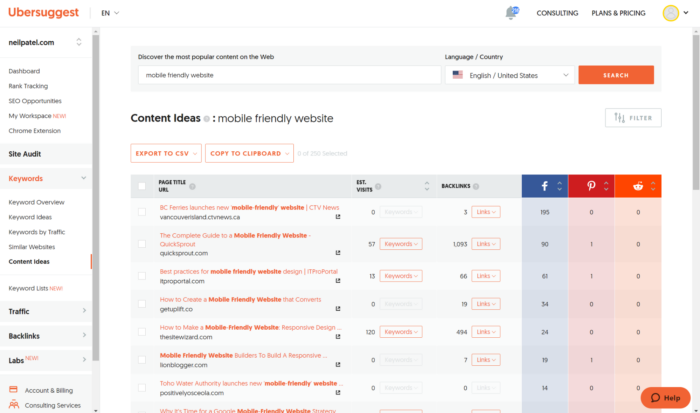
Screenshot of Ubersuggest's page when searching for content ideas to overcome writer's block.

We can then look at the top-performing URLs alongside your query.

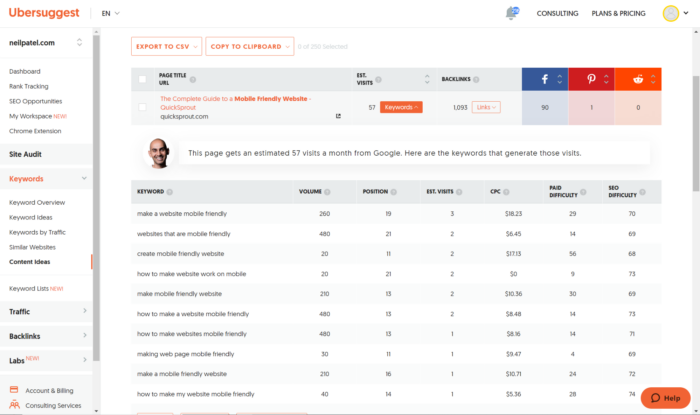
Let’s see the keywords they used to help them form the piece by zooming in on the site with the most backlinks.

Screenshot of Ubersuggest's webpage and SEO information to help overcome writer's block.

Look at the keywords generating these visits.

We can draw from these results that many brands don’t have mobile-friendly websites and want to know how to make changes for the better.

Based on the demand from the audience, here are angles to take with your post:

  • Include subtopic listing strategies for making WordPress websites compatible with mobile.
  • Add the coding changes needed on your website’s CSS style sheet to make your website mobile-friendly.
  • Write a step-by-step on making websites mobile-friendly.
  • Scroll down to find more relevant keywords worthy of writing as a subtopic in your post.

You can also gather any other keywords you didn’t consider to get in front of your target audience.

Finding other related keywords with this quick content research session will help you reach your audience and rank well in Google.

You just defeated writer’s block with your golden ticket of an outline.

If you find your page headings or titles are really not the direction you want to go, rework them with the AI rewriter on Ubersuggest.

Screenshot of Ubersuggest's AI writer to help overcome writer's block.

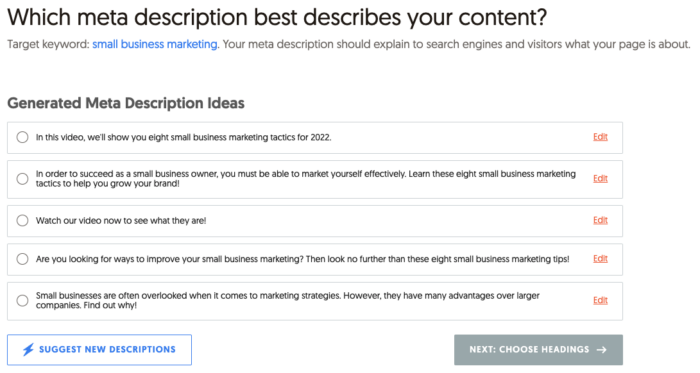
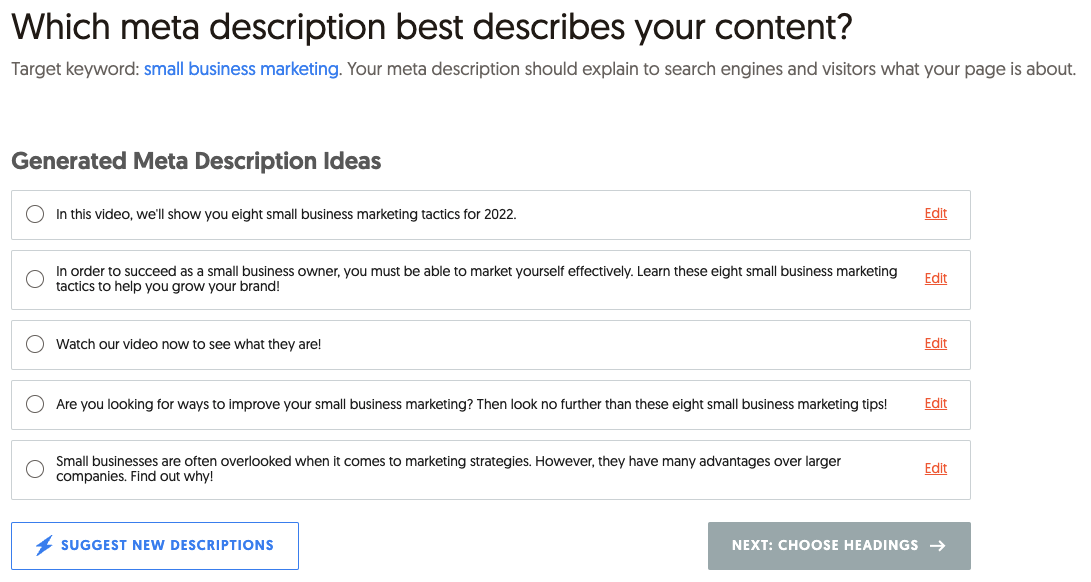
These are the components of your post that will help navigate your reader down the page. So, the flow matters for you to express your ideas and for your audience’s comprehension. To top off your work, use the tool to shape your meta descriptions.

Screenshot of Ubersuggest's AI writer to help overcome writer's block.

Now your reader and search engines will know what your content is all about.

Being Proactive to Beat Writer’s Block

Being proactive to beat writer’s block molds you into a more efficient writer.

Sometimes finding inspiration is hard.

Some of the greatest writers, like Hemingway, wrote daily to stay on their toes with topics.

A writing routine can help you with this. Try different exercises like picking a topic randomly and giving yourself timed writing assessments.

A simple way to find inspiration is reading. The more you read, the more new concepts, ideas, and words you’ll have. Use these as writer’s block tools.

As you get the words on the page, think of questions your users might ask along the way. You are responsible for being the subject matter expert. Use their potential questions to spark ideas and shape how you communicate with your audience (including a FAQ section on your post).

Suppose you need to brainstorm. Set time aside before you start writing for content ideation or research. This way, topics you aren’t familiar with will be easier to navigate.

Maybe you’re experiencing mild writer’s block. You know, like when you aren’t landing that punchy line.

Write down what you’re trying to say in a paraphrasing tool like QuillBot. Allow the tool to form your words in a different way to help you land a phrase well for your audience.

This is how you can train your writing muscles for success and beat writer’s block.

Frequently Asked Questions

What is writer's block?

Writer’s block is the overwhelming feeling of not knowing how to express yourself to move forward in the writing process. Everyone experiences it differently, but there are many tools to overcome writer’s block, like Ubersuggest’s AI rewriting tool.

How to overcome writer's block?

Ways to overcome writer’s block—other than free writing for creative flow—include:

  1. Changing your work environment
  2. Getting energized (i.e. take a break or have a cup of coffee)
  3. Read quality content
  4. Use an AI copywriter
  5. Use a keyword or content generator

What tools can I use to beat writer's block?

Tools to overcome writer’s block include:

  • Quora: A Q&A forum
  • HARO: A service providing expertise and quotes from industry leaders on yo,ur research query
  • Copy.ai: An AI copywriting tool
  • Ubersuggest: An SEO content marketing tool

Conclusion

Stop overthinking it.

If you experience writer’s block, it doesn’t make you any less of a writer.

There’s more than one solution to every problem. This is where tools to overcome writer’s block come into play.

You’ll likely get past the block by embracing new ways to overcome writer’s block, like an AI writer or Ubersuggest.

Don’t give up or stress about writer’s block when you have tools to overcome writer’s block (that don’t include going to buy a coffee and sitting at a coffee shop all day for inspirational vibes).

You can use tools to seed writing ideas and prepare you for future writing pieces.

If you’ve experienced writer’s block, how do you fight it? Have you tried Ubersuggest or other tools to overcome it?


from Neil Patel https://ift.tt/8GLWPhS
via IFTTT