Tuesday, 30 January 2018

How to Schedule Time for an Imaginative Process, Rather Than an Exact Task

I’m pretty happy with my current writing process. Once you’ve accepted that you don’t need to convince anyone that your creative job is actually work, you’re free to focus on optimizing the processes that allow you to produce creativity on demand. And that’s exactly what I’m up to right now … although my creative process
Read More...

The post How to Schedule Time for an Imaginative Process, Rather Than an Exact Task appeared first on Copyblogger.


from Copyblogger http://ift.tt/2FryynO
via IFTTT

Making a Book, Blog or Podcast? Start Here!

We see a lot of entrepreneurs who have great ideas but they keep getting stuck in the ‘how’ of their business and losing sight of the most important elements.

Here’s what I mean:

Let’s say you wanted to make a book (for podcast or blog) on “mindfulness and parenting.”

The common big mistake is to rush into thinking about your HOW. How you’re going to be different than others out there. How you’re going to teach people your truths. How you’re going to setup your website.

Like I mentioned above, we see this happen very often AND IT’S A BIG MISTAKE.

Why is it a big mistake? Because you can spend weeks/months/years thinking about the HOW of your business only to have that business fail… because you didn’t set the right foundation.

You have to set the right foundation!

If you want your blog or podcast or book or instagram account or youtube channel to be successful, you have to focus yourself in the beginning on what matters most…

… And if you want to learn about that, then get yourself a cup of coffee and strap in, because you’re about to learn one of the most important lessons in modern business.

This lesson is more important now than ever before because you have more opportunity to succeed than ever before.

So, if you want your business dream to actually become a reality, you’ll want to get a notepad ready to take some notes…

… because this lesson may change how you think about business forever.

Maybe you weren’t planning on listening to a podcast here. Maybe you wish you could just skim through the content…

… well, maybe your business idea needs more than just a skim at this point. We hope you’ll dive in and give it a listen because the results are likely to make it WELL worth your while.

Enjoy!

Subscribe (how to)   iTunes   Overcast   Pocket Casts   Stitcher   Google Play   RSS  

“Making a book, blog or podcast? Set the right foundation!”


Download your customer journey map

The Customer Journey Map Guide will help you set your business up with the right foundation because it helps you discover WHY people want what you offer them.

  • It helps your business idea get better
  • It helps your marketing resonate deeper
  • It helps your content reach more people

Get Your Customer Journey Map

You’ll get the guide immediately and any supporting content necessary for growing your busines.


Show Notes & Links:


from Fizzle http://ift.tt/2GrOCaJ
via IFTTT

Monday, 29 January 2018

Why Entrepreneurs Cannot Ignore Their Company’s Brand

“Branding”

“Our brand is strong”

“Brand equity”

“Our brand is admired around the world”

These words and phrases make most entrepreneurs and employees roll their eyes. They view brand as an overused term that means very little to the world outside the company.

But your brand may be the most valuable asset your company has. It’s also the most fragile.

Here’s why a brand is so important, what can happen when a brand is damaged, and how to create a great brand.

What is a Brand?

“Your brand is what other people say about you when you’re not in the room.” – Jeff Bezos

A company brand is an intangible asset because it is not a physical object. This is opposed to a tangible asset, such as your company office and company equipment.

And while it is not a physical asset that you can look at or hold onto or assign value to, it is perhaps the most valuable and fragile piece your company owns. One mistake or PR blunder and your brand, and thus your company, will be damaged.

Why is a Brand Important?

A brand is what people think of when they think about your company. If you’re in the airline business, you want your brand to be known for reliability and quality. You don’t want to have a customer service disaster like United Airlines had, which meant significant damage to their brand.

Brands are built overtime, but can be damaged very quickly and result in a significant loss of sales. Public companies routinely place maintaining their brand reputation as a risk factor in annual reports. This means that your company, no matter how small, cannot ignore your brand.

Brands are not built overnight. Instead, they are built up over years and can be destroyed in days.

What Happens When a Brand is Damaged?

To further understand the impacts that a brand has on a company, let’s look at what happens when a brand is damaged, using a few examples we all know.

Chipotle

If you asked a person in spring 2015 what they thought of Chipotle, they’d probably tell you they served delicious burritos. The food was quality and the prices were reasonable. And shortly after telling you that, they’d go to Chipotle and order one of those delicious burritos.

Ask that same person in 2016 and they’d tell you that it would be risky eating at Chipotle and there are probably some better Mexican food options nearby.

The difference?

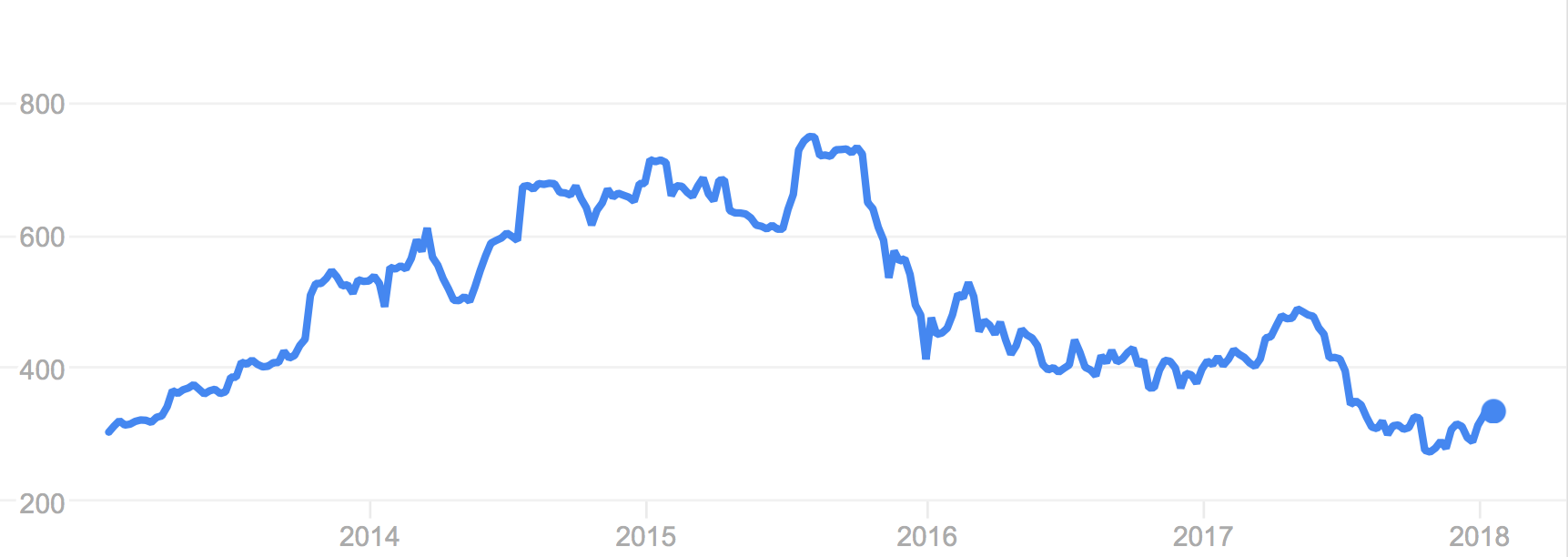
The e coli and norovirus outbreak at Chipotle restaurants. This outbreak resulted in significant damage to the brand (could anyone say their food is quality?) and declining sales. Just look at what happened to the company’s value after this outbreak:

Chipotle stock price value leading up to the outbreak and the aftermath

This is what can happen if your brand is damaged. Your company value can be cut in half. And if you’re a startup, you could be put out of business if you lose customers and investors trust.

Today, Chipotle is still recovering from the damage their brand took from the food safety issues. As I stated, building a quality brand takes years, but can be damaged in days. That’s what happened to Chipotle, and they’re still working to restore their brand to what it once was. It will only take time and a long string of no food-borne issues.

Equifax

Similar to Chipotle, Equifax had another safety issues. Except this time it wasn’t about food safety, it was about information safety.

Because of poor security measures, Equifax was hacked and left the extremely private information of hundreds of millions of US customers vulnerable to cybercriminals.

After the hack was announced, there were more bad headlines about how poor the security measures were at Equifax:

Equifax has taken steps to restore public trust and rebuild their brand, but they’ll have a long way to go before anyone can trust them again.

Today, would you use Equifax for any of their services? Probably not, as you couldn’t trust that they’d do a good job or keep your data safe.

Yahoo!

Remember Yahoo? Some of you may still use it. Personally I haven’t used Yahoo in a number a years because their competitors offer a better product.

Yahoo used to have a strong brand. The classic shade of purple, the yodel, the beautiful design, and the array of features that came with the Yahoo brand.

But that was early to mid 2000s. Over the last few years, Yahoo has suffered a decline. The board hired Google executive Marissa Mayer, and while she gave a valiant effort to rebuild the empire, she ultimately came in too late for it to be saved.

Yahoo was acquired by Verizon and while it is still around today, it’s nowhere near its peak.

So what happened?

Hacking, malware attacks, privacy concerns, increasing criticism, and a product that didn’t keep up with competitors or the times has led to Yahoo’s downfall.

And while Yahoo is still one of the most visited websites, their brand has been damaged and will likely never recover.

Uber

Travis Kalanick created an innovative new service that changed the world. Uber made it possible for anyone in an urban area with a smartphone to be picked up with the touch a button. It took over, growing to billions of dollars in annual revenue in only a few years.

Then came a PR nightmare.

He was caught on camera telling a driver to take responsibility and boasts that a tough culture is needed to win.

Then the influential New York Times did a feature piece that didn’t shed the best light on him. And another piece was published that reported that Kalanick had knowledge of Uber’s sexual harassment problem but didn’t do anything about it.

Apple CEO reportedly threatened to kick Uber off the App Store because it violated Apple’s privacy standards.

Kalanick wasn’t always well behaved, but he was a tremendously talented entrepreneur. But by the time he grew Uber and the brand, the Board decided it was time for Kalanick to go and Kalanick submitted his resignation.

Today, Uber has a new CEO. He’s got a big job to do in rebuilding trust in the brand, but has a strong company behind it.

KISSmetrics Lawsuit

I’ve experience one of my companies brand’s being damaged. The company I cofounded, KISSmetrics, took a hit to our brand when we were sued. It resulted in significant damage to our brand at the time, and it still lingers today.

The lesson here is that your brand is the most valuable asset. It needs to be built up and protected. A good brand can take your company a long way.

Now, let’s look at companies with strong brands and what we can learn from them.

Creating a Brand

Brand building is an important step in starting a business. People that are looking at your new business need to know what your company stands for.

Know What You Stand For

This is the most important step. Great companies have brands that stand for something. Here are some examples:

  • Zappos stands for customer service
  • Virgin Airlines stood for an airline experience that was fun, not stressful
  • Whole Foods stands for healthy, organically grown food
  • Patagonia stands for environmentally friendly outdoor clothing
  • Firefox stands for being the privacy browser.

You have to know what your brand will stand for. “Selling quality food” isn’t a stance. Any company can say they sell quality food.

“Selling the highest-quality organic and natural food” is a stance because you know what you’re getting when you go that store. You can’t buy Skittles and Coke when you visit this store. You can buy organic food there. People now know what you stand for, and will visit your store when they’re seeking those items.

A lot of companies will say they build world-class products. Many of those companies also have dozens of products. The simple reality is that you can’t be world-class at 12 different things. You need to know what you’re willing to be bad at.

In this video, Scott Belsky discusses why companies have to be willing to be bad at certain things in order to exceed in others. I’d recommend setting some time aside to watch this.

There will have to be tradeoffs. If you have great customer service, you may have to have higher prices to maintain your margins.

Just look at a company like Apple. Consumers know that Apple products are quality. There aren’t a lot of bugs, it’s well-built, and their products generally last for years. Any bad news about their product quality is going to significantly affect their brand. That’s why they go a long way to protect it.

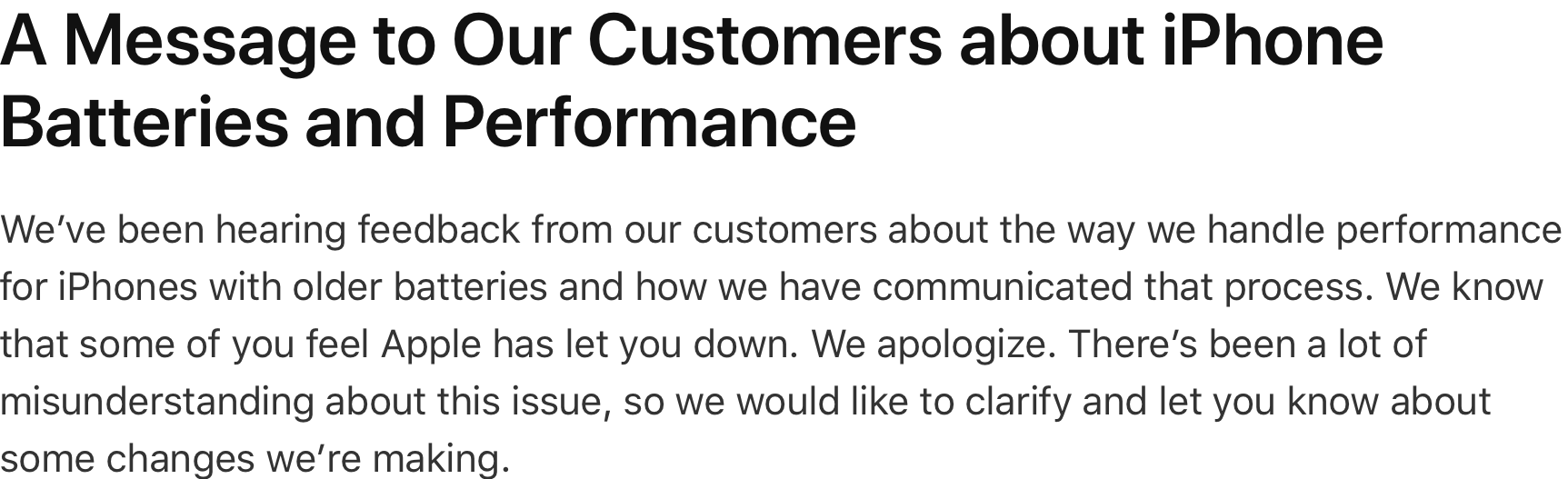
So when the issue came out about the battery usage on older iPhones, Apple had to go to great lengths to win consumer trust back. They wrote a message to customers and offered a battery replacement for only $29, a $50 reduction in price. This means that Apple will make less money, but consumers ran to Apple stores to get their batteries replaced.

The takeaway here is simple – if you screwed up, admit it to customers (even if it was a misunderstanding). Then offer a discount or something else to win their trust back. For 8/10 customers, this will work great. The other 2/10 will never be pleased.

Make your brand something memorable that stands out in a crowded market.

So when you know what you stand for, you can then effectively message this to consumers.

Messaging Your Brand

You know what you stand for, now it’s time to make sure customers know.

Remember this viral video?

Believe it or not, this is actually a video promoting a brand.

The video features Trent Kimball from Texas Armoring, a company that builds armored vehicles. If you were looking for an armored vehicle (chances are you aren’t, but stay with me) then it would be difficult to not buy something from this company. It’s the owner of the company literally standing behind his protect while three gunshots are fired.

This is Kimball doing his best to message his company’s brand. While you don’t have to go to similar lengths, you should do all you can to make your brand message stand out and be memorable for people.

Let’s look at a couple other examples of how companies message their brand.

Spotify

Spotify’s message is simple. They can message the “Music for everyone” because their music catalog has something for everyone. No matter who you are, you know that Spotify will have music for you to enjoy.

Lifelock

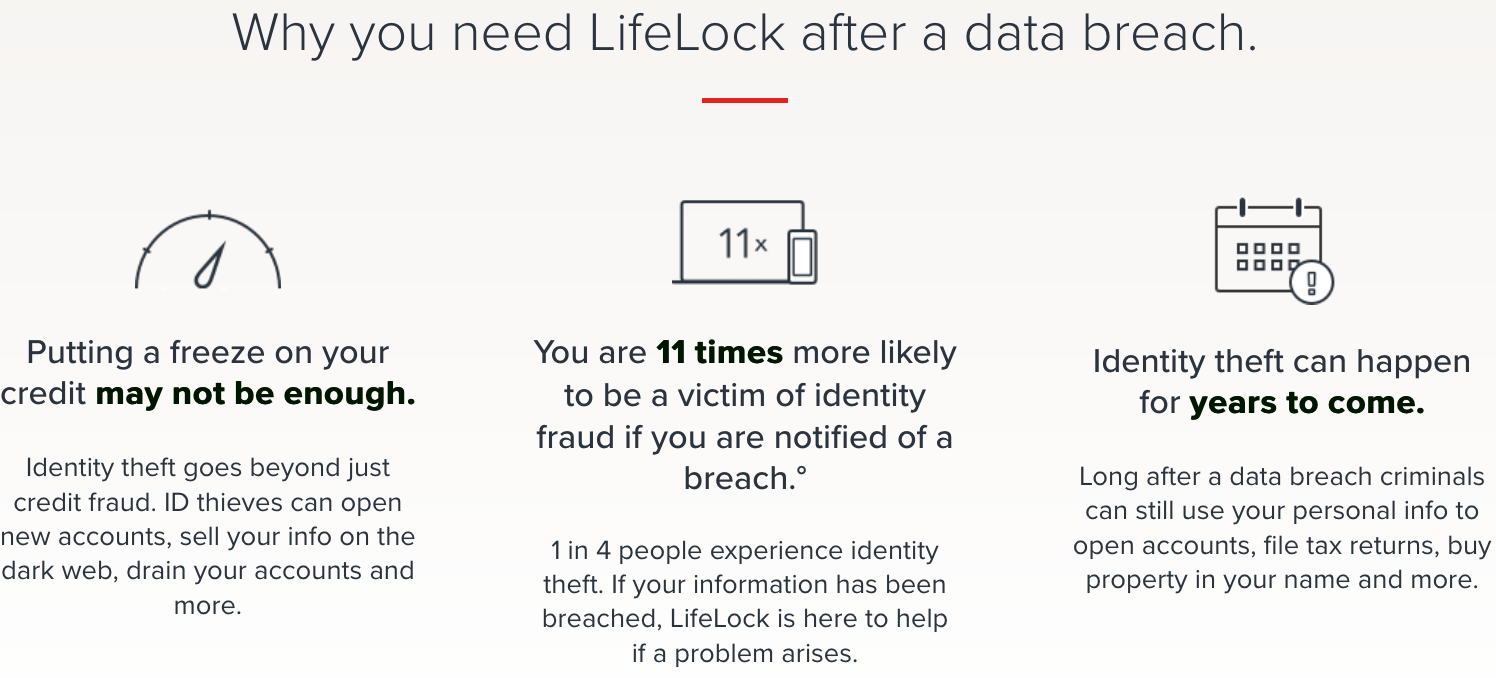
Lifelock wants you to connect two terms – data breach and Lifelock. When you hear about a data breach, think of Lifelock. They are the protection against any breach on your data.

Where to Message Your Brand

Many B2C companies message their brand through their website and advertisements. It’s also common to use social media to message your brand to followers.

Just look at the social media followings of companies like Skittles, Wendy’s, GoPro, Denny’s, and many more. In many cases, most people wouldn’t even know much about these brands if they didn’t follow them on social media. These companies aren’t just tweeting and sharing promotions, they’re showing their brand personality.

Taco Bell is perhaps the one we all know about. When you think of Taco Bell, you think of a fun place to grab a quick bite to eat. And their social media supports this brand message.

Now, let’s get into the last step of brand building. This is perhaps the most important step because if you ignore it, you’ll lose public trust and your company will have big hurdles to overcome.

Create the Products and Services That Build Your Brand

Some entrepreneurs will tell you that a brand is overrated. Just create your product and customers will create your brand.

You are what they say you are and there’s nothing you can do about it but change your business. Once you change your message, then eventually customers will change what they say about you.

This is all true to some extent. The issue I have is that it’s a passive mentality. It means that you’re not doing all you can to message your brand.

You need to message your brand and build the products and services that support that brand message. Think of Whole Foods. We all know them as an organic grocer. Can you imagine if you went into one of their stores and saw Pepsi and Mike and Ikes for sale? The brand would be tarnished for you. Their loyal customers would be furious.

This is why your business must support your brand. Once you do that, and message your brand effectively, your brand will become a fixture for consumers. They’ll know what your company is about. Warren Buffett says it best:

“Your premium brand had better be delivering something special, or it’s not going to get the business.”

In this video, I’ll go deeper into explaining not just why you need to build a brand, but also how to measure your brand using a simple tool from Google.

Conclusion

Entrepreneurs and managers frequently think of branding as unnecessary and a waste of time.

But when you have a company, you’ll have a brand attached to that company. It’s what consumers will think of when they think of your brand.

Brands are fragile. One minor slip up can damage your brand, which is why good PR skills are necessary. The good news is that a good brand will last forever.

As an entrepreneur, how have you been building your brand?

About the Author: Neil Patel is the cofounder of Neil Patel Digital.


from The Kissmetrics Marketing Blog http://ift.tt/2BC3Ypo
via IFTTT

Why Your Friend with a Creative Job Isn’t the Village Idiot

It happened again. You were out to dinner with your Writer Friend, and the waiter came over to see if you needed anything. This led to a short, friendly conversation with him, and as he walked away your meal companion apologized for reaching into her purse to get her phone. She opened her Notes application
Read More...

The post Why Your Friend with a Creative Job Isn’t the Village Idiot appeared first on Copyblogger.


from Copyblogger http://ift.tt/2GtRqUP
via IFTTT

Friday, 26 January 2018

How to Convert Blog Readers to Leads

17 comments, 223 likes on Facebook, and 88 retweets.

You’re writing stuff, and people are reading it. They’re clicking your links and arriving at your blog. Your efforts are finally paying off with a steady stream of traffic.

We’re not going to focus on the importance of a business blog. You know it’s crucial to business success in the 21st century:

  • 85.1% of American households have some sort of computer, to say nothing of the prevalence of smartphones.
  • Marketers that prioritize blogging as part of their efforts are 13x more likely to see a positive return-on-investment.
  • The number one challenge for marketing departments is generating traffic and leads. A frequently updated blog can kill two birds with one stone.
  • Nearly 80% of people identify as blog readers.
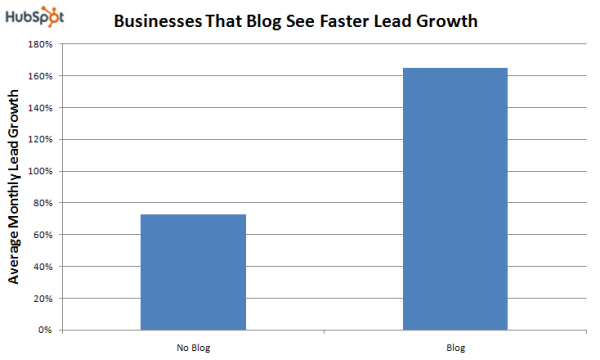
  • Companies that blog generate 67% more leads than those who don’t, 434% more indexed pages, and 97% more indexed links…all of which lead to better SEO and ranking.
  • 70% of B2C marketers use blogging in their marketing efforts, second only to social media (89%) and email (86%). The numbers are even higher in the B2B sphere, where 79% use blogging, 92% use social media, and 93% use email.
  • More is more: those that publish 16+ posts per month generate nearly 3.5x more traffic and 4.5x more leads than those that only publish between 0-4.

Blogs are a popular, effective, and affordable way to bring people to your digital domain. That’s the good news.

The “bad” news? Traffic generation is only half the battle. Pageviews, likes, tweets, and comments are nice, but none of them are the ultimate goal. You need to convert that traffic into leads. According to Forrester Research, around 97-98% of your visitors leave without taking an action or identifying themselves.

They may absolutely love your posts. They may come back again and again. They may consider you an authority and expert in your industry. But the vast majority pop in, read, and leave. You have to do something to take it to the next level. Can you afford to let 98% of your potential leads disappear without a trace?

Traffic generation combined with lead generation make your blog a worthwhile investment. Everything else – likes, retweets, comments – are nothing but vanity metrics. People like your posts and that gives you a nice little ego boost, but that and $3.50 might get you a coffee at Starbucks.

You need to actively generate both traffic and leads. Traffic without leads is meaningless. Leads without traffic will eventually dry up.

Here’s the best news: a frequently updated blog with high quality, valuable content is a lead generation machine…when done properly.

Small to mid-sized (SMB) businesses that blog experience 126% more lead growth than those that don’t bother.
So increase your traffic. There are plenty of great guides and tutorials on how to do that. Just don’t forget about the lead generation part of the equation. Remember:

Traffic generation + lead generation = digital marketing bliss

That said, you don’t want to explicitly bombard your readers with aggressive tactics. No one likes a pushy salesperson.

Nor do you want to be so subtle that no one even notices you’re trying to convert them from visitor to lead.

Find the middle ground with these tactics to nudge your traffic into lead territory because that’s where they want to go.

If you want them to do something, you’ve simply got to ask.

Call-to-Action

For some of you, this might be a wake-up call. Your blog posts need a call-to-action. Every one of them. If you’re ending your posts with nothing more than an invitation to leave a comment, you’re doing it wrong. You need to get your visitors to do something: sign up, download, click, read something else, subscribe, install, contact you, and so on.

Are you asking? Are you giving them those opportunities to convert, or just hoping they’ll decide to do so on their own?

A high quality blog post without a compelling CTA is a lead lost. They’re already on your site. They’re already interested and engaged with you and your brand. So give them more.

A strong CTA is action oriented, benefit-to-them driven, visual, persuasive, and ideally creates a sense of urgency.

But it also needs to be easy to find. There are several places you could locate your CTA on your site:

  1. At the top of the page
  2. At the end of the post
  3. Within the post itself
  4. In the sidebar
  5. As a floating or scrolling popup
  6. As a sliding popup
  7. As a full-screen overlay

You don’t want to crowd the page and choose them all. You need to select one or two that maximize exposure on your blog and resonate with your readers.

And you do that by testing. In real estate, the axiom is location, location, location. In digital marketing it’s test, test, test.

“Almost any question can be answered, cheaply, quickly and finally, by a test campaign. And that’s the way to answer them – not by arguments around a table. Go to the court of last resort – the buyers of your product.” ~Claude Hopkins

Pick a few, set up an A/B test, and see what actually works best. Test various locations, types, colors, designs, copy, offer, and more. Zero in on the single most (or top two, or top three) powerful to turn your traffic into your leads. Use VWO, Optimizely, AB Tasty, or a similar service to make it fast and easy.

While only you can ultimately decide what works best for your blog, these are a few popular and efficient tactics to test.

Hello Bar

When someone arrives on your blog, they’re at the top of the page, and there’s no guarantee they’re going to scroll down any further. Putting your CTA at the very top, then, makes a lot of sense.

The Hello Bar is a very simple but highly effective tool that places your call-to-action in a thin, attention-grabbing band across the very top of your page. Instantly recognizable, static, and stays there even if they do decide to scroll down.

Using just a hello bar, DIYThemes generated just under 1200 new subscribers in only 30 days.

While the Hello Bar is perhaps the industry standard, there are alternatives available that do the same thing:

  • SalesPanda
  • Sumo SmartBar
  • WP Notification Bar
  • Sleeknote
  • OptinMonster

You can also find several free WordPress plugins, but remember that you get what you paid for.

A hello bar can be used to encourage social engagement or email subscriptions, promote new products or services, and more.

In-text CTAs

According to recent analysis by Chartbeat, most people don’t read your entire blog post. In fact, a full 10% never scroll at all, while the majority stop after scrolling through about 60% of it.
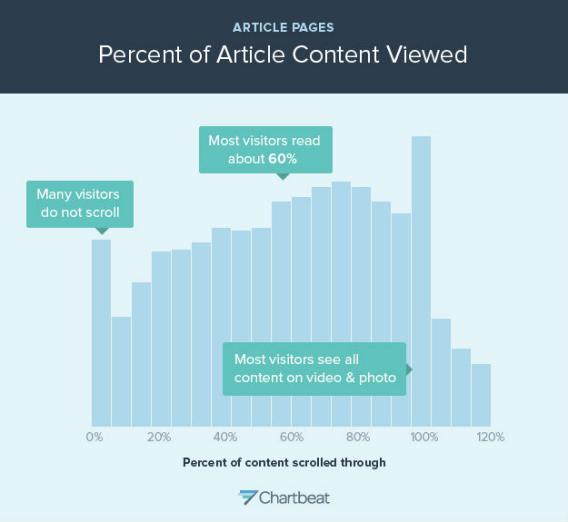
You can still get your call-to-action in front of those individuals with an in-text CTA.

Some of you may be thinking that the hello bar solves this problem. It’s at the top and seen by everyone. That’s true in theory. But let me introduce you to something called banner blindness.

Because we’re so used to them, because we’re inundated with them everywhere while online, many of us either choose to ignore or subconsciously block out static banners and ads. We just don’t “see” them. This is banner blindness at work, and your colorful hello bar may fall victim to it.

But an in-text call-to-action that’s either a direct or indirect part of your blog post is different. Include 1-2 in the first 60% of it, and you’re going to have a lot of eyes on it as they read.

Hubspot generates between 47-93% of their leads via what they’ve labelled anchor text CTAs (compared to only 6% for end-of-post banners).
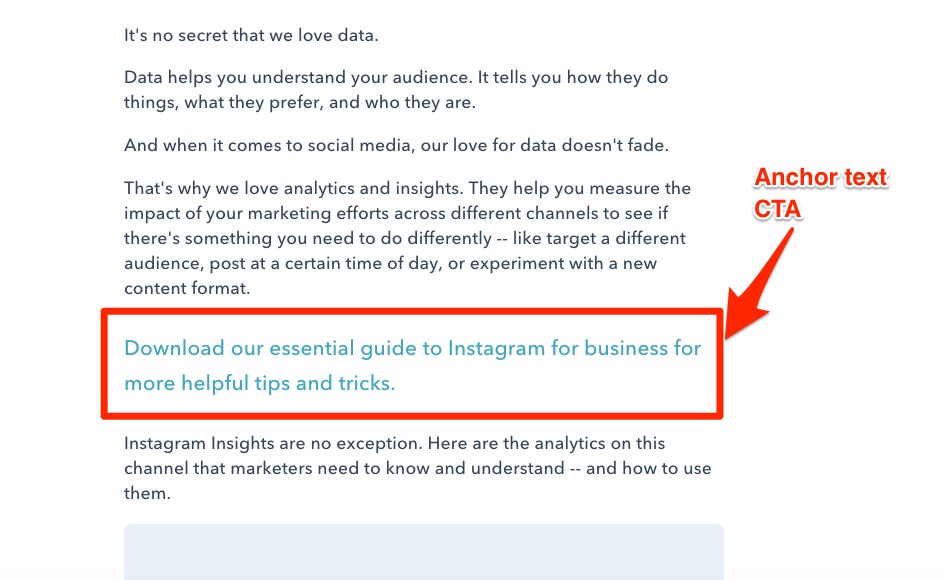
It’s a bigger font and different color to stand out, but still relevant to what they’re currently reading about in the blog post. Value added. Visitor to lead.

That same analysis revealed that anchor text CTAs combined with internal link CTAs represent a whopping 83-93% of their leads.
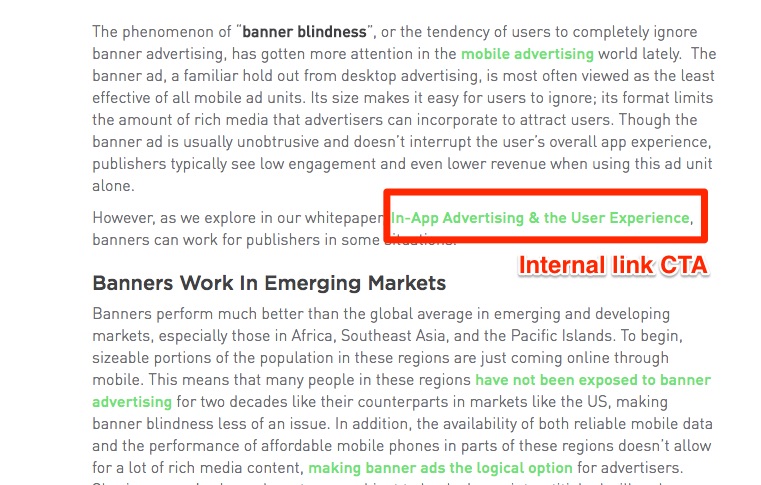
As you can see, internal link calls-to-action are part of the blog post itself. Click one, and it takes you to a landing page to subscribe or download something relevant to the topic at hand.

Location, Location, Location

Besides the top of the page and in the post itself, you can place a CTA virtually anywhere on your page. Test each one to see what works best for you.

Static Sidebar
A static banner in the sidebar is widely used in the blogosphere because it typically works quite well. Almost every blog you visit will likely have at least one inviting you to either subscribe to the email newsletter or contact the author.

It’s unobtrusive. It’s not “in the face” of your readers. It’s not annoying. It’s just there, quietly doing its job of helping to convert traffic to leads. Here’s the sidebar CTA I use on my blog:
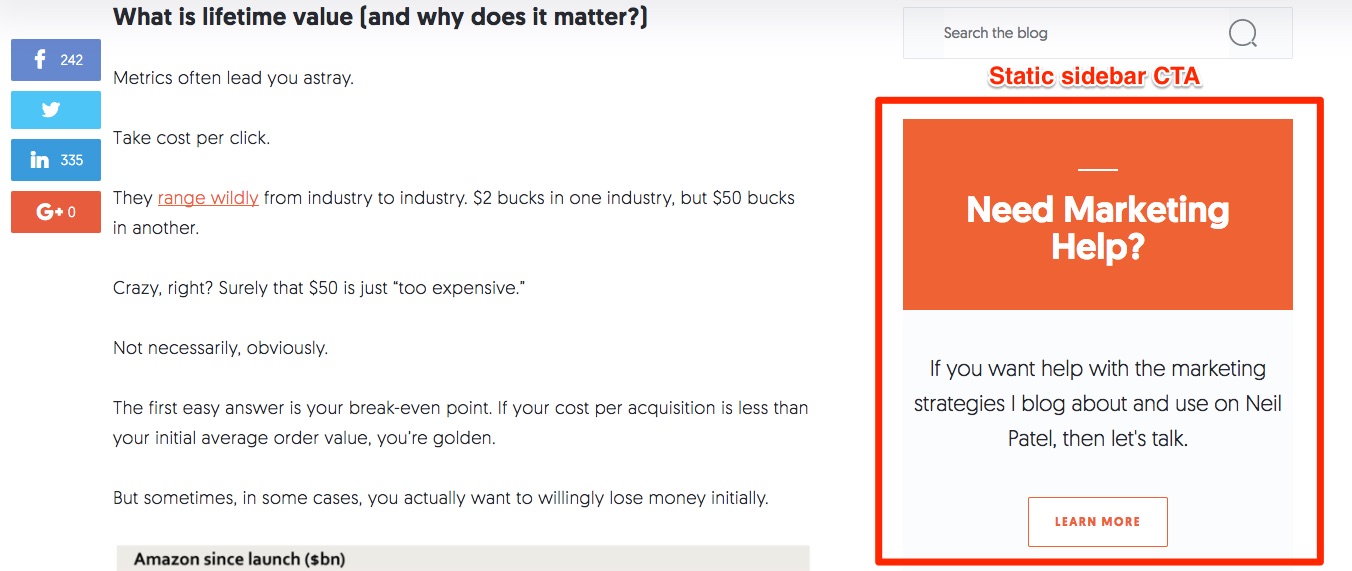
That said, it shouldn’t be your only tactic. The sidebar CTA is easy to ignore, subject to banner blindness, and gone as soon as they scroll down. Use it in partnership with something else.

AdEspresso found a 0.4% conversion rate (CVR) for their static sidebar CTAs.

Scrolling Sidebar

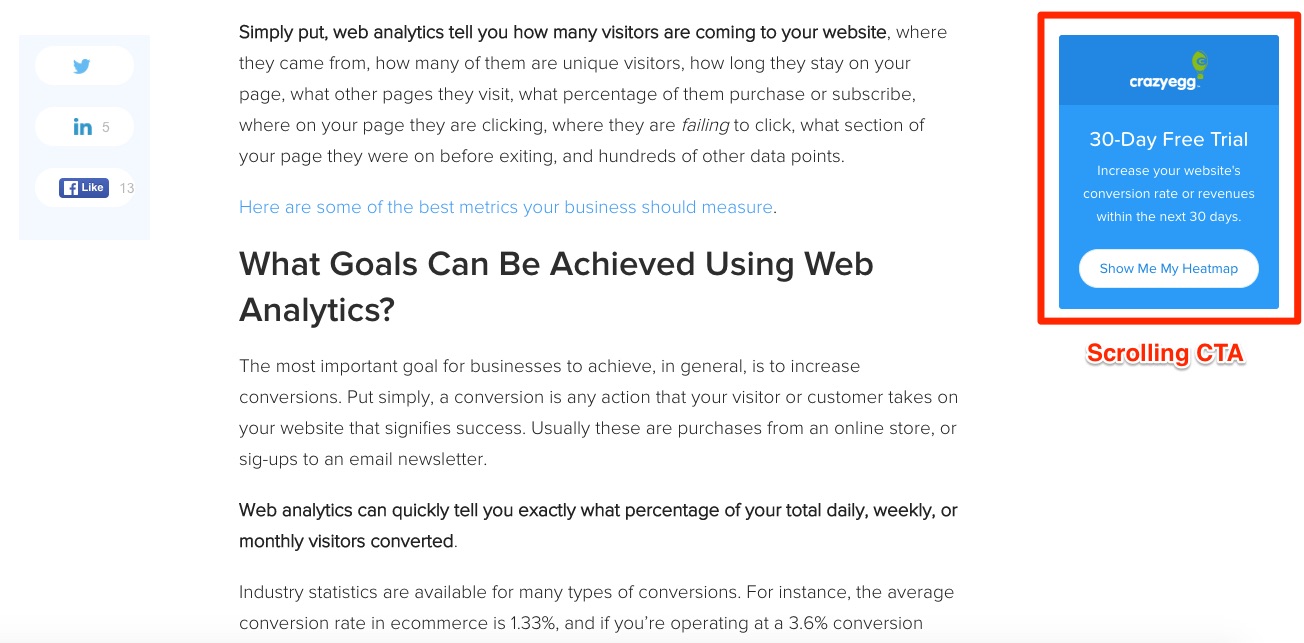
A scrolling CTA looks very similar, but it follows the reader down the post. Because of this mobility, it tends to stand out a bit more and gives the reader more time to decide to click. AdEspresso scrolling ads had a CVR nearly double – 0.76% – the static rate.
Slide-in or Popup

A slide-in popup or overlay is the next logical step in the evolution of the call-to-action. It relies on a trigger – say, X% of the page scrolled, or X number of seconds on page – before it slides in from the side, top, or bottom.

In doing so, it’s only revealed to those readers that have already demonstrated real interest in the post. If they’ve scrolled down 75% of the way – past the 60% where most visitors stop – or spent at least 90 seconds reading, then you’ve got their attention. Strike while the iron is hot.

OptinMonster, Sumo, and NinjaPopups are three respected options to give these a try. Popups delivered a 2.5% CVR for AdEspresso, while others have experienced an impressive 10x higher email subscriptions after introducing the strategy to their site.

You can customize and experiment with everything from where, when, and why to find the perfect combination.

Exit Intent Overlay

An exit overlay works in much the same way, but is only triggered when someone demonstrates their intent to leave by moving the cursor towards the tab, address bar, or back button on their browser.

Remember when I said that 97-98% of your traffic leaves without completing an action? An exit popup or overlay can pull back at least some of those lost leads.

Demonstrate intent to leave on the DODOcase website, and this pops up:
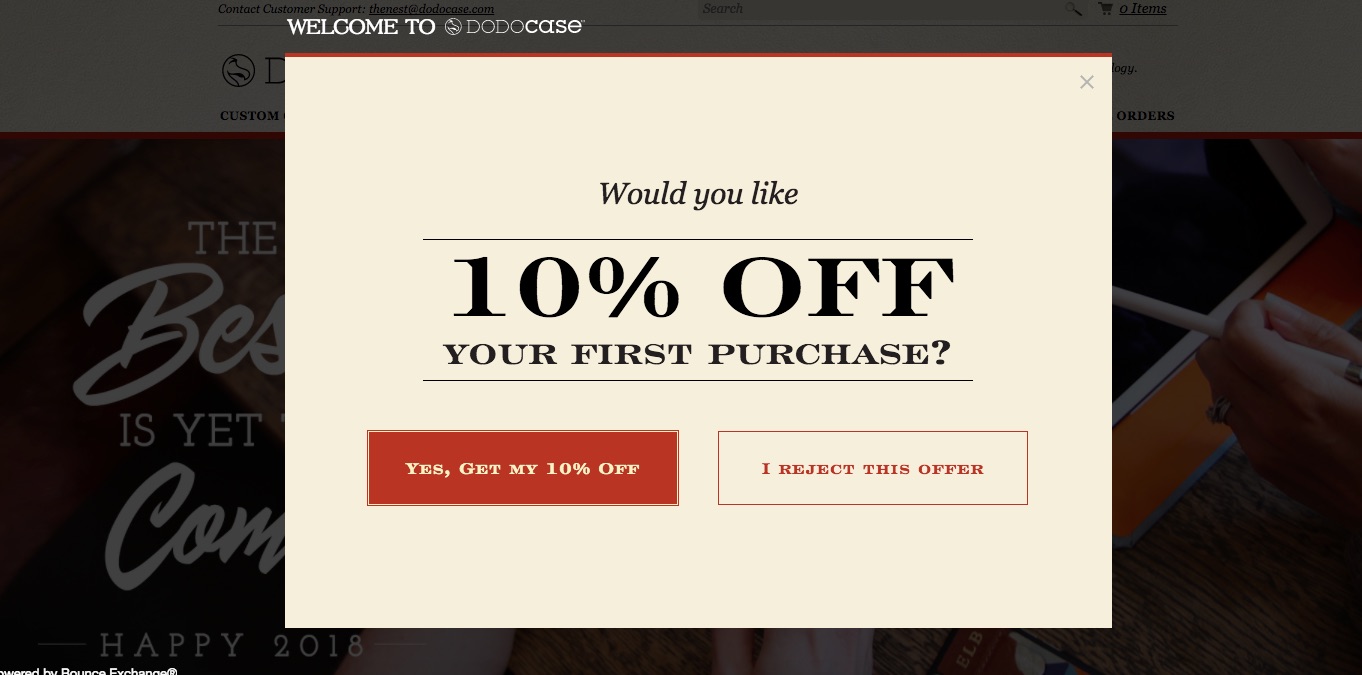
This is a great example of a lightbox overlay. The box takes center stage, overlaying and darkening the rest of the website. It stands out, and gives each visitor a clear choice between this or that.

An exit popup can offer a special discount or coupon, collect feedback, introduce a useful lead magnet, suggest another product or blog post, recommend your newsletter, or whatever else you want to dangle in front of them to tempt them to stay and convert.

Welcome Mat

When a visitor first arrives at your site, take advantage of the opportunity to convert immediately with a welcome mat. This whole page overlay displays a compelling call-to-action before revealing the post or page they’ve clicked on.

Navigate to ClickMinded, and you don’t initially see their homepage, you see this:
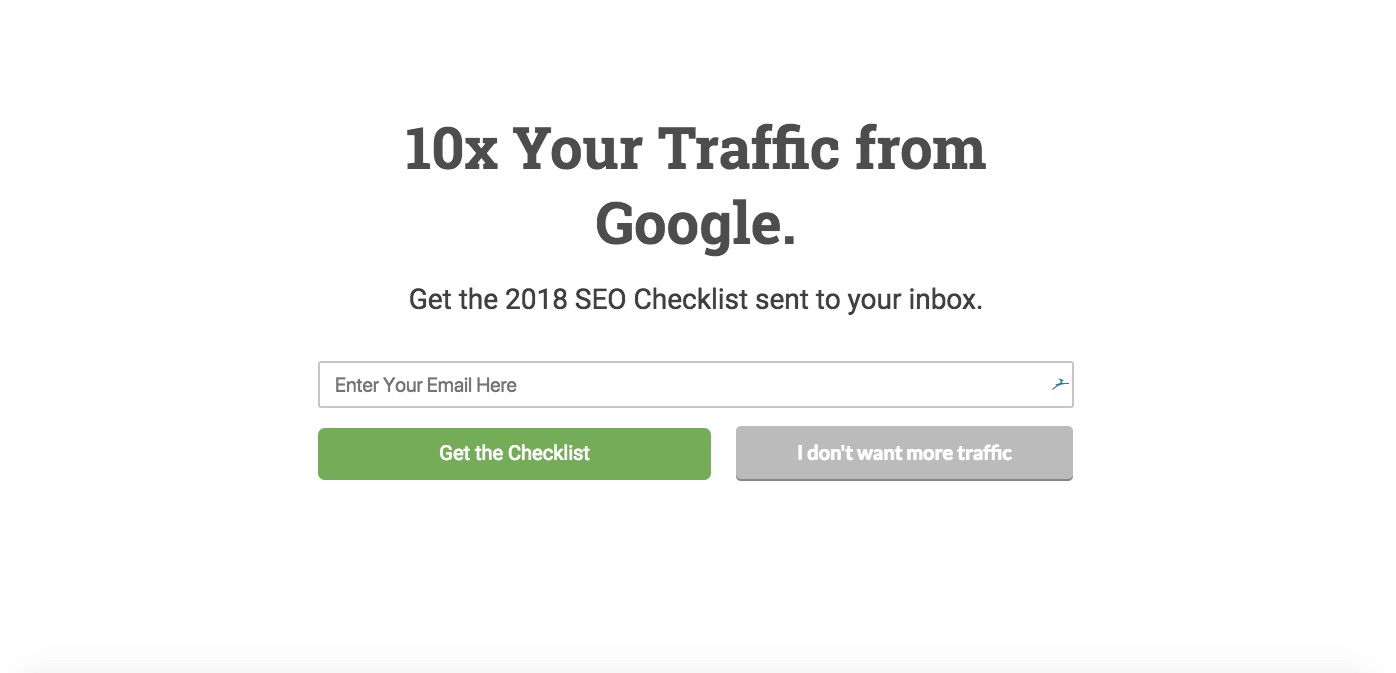
Both Sumo and OptinMonster offer popular options. With them, you can encourage your site visitors to join your email list, check out your latest blog post, download some valuable resource, and more. Much like an exit overlay, they have to actively choose not to do whatever it is you’re asking them to do. Some will. Many won’t.

AppSumo discovered that a welcome mat was 3x more effective for them than any other page or tactic for collecting email addresses.

An optimized and compelling call-to-action strategically placed on your page is your best bet for turning traffic into leads, but it’s not the only way.

Retargeting

Despite your best efforts, there will still be a sizeable chunk of traffic that leaves without completing your CTA. Maybe they were pressed for time, or your offer wasn’t compelling enough, or they simply missed it.

That’s where retargeting comes in. It gives you another kick at the can.

To make use of it, you need to use a service like ReTargeter, Perfect Audience, PixelMe, or AdRoll.

Essentially, a tiny string of code called a pixel is placed on your website. This pixel drops a tracking cookie on the browser of every visitor to your blog. That done, it can follow them around the internet.

It’s a lot less creepy than it sounds.

Ever notice an ad for a product you were looking at on Site A in the sidebar of Site B, or on your Facebook feed? That’s retargeting doing its thing.
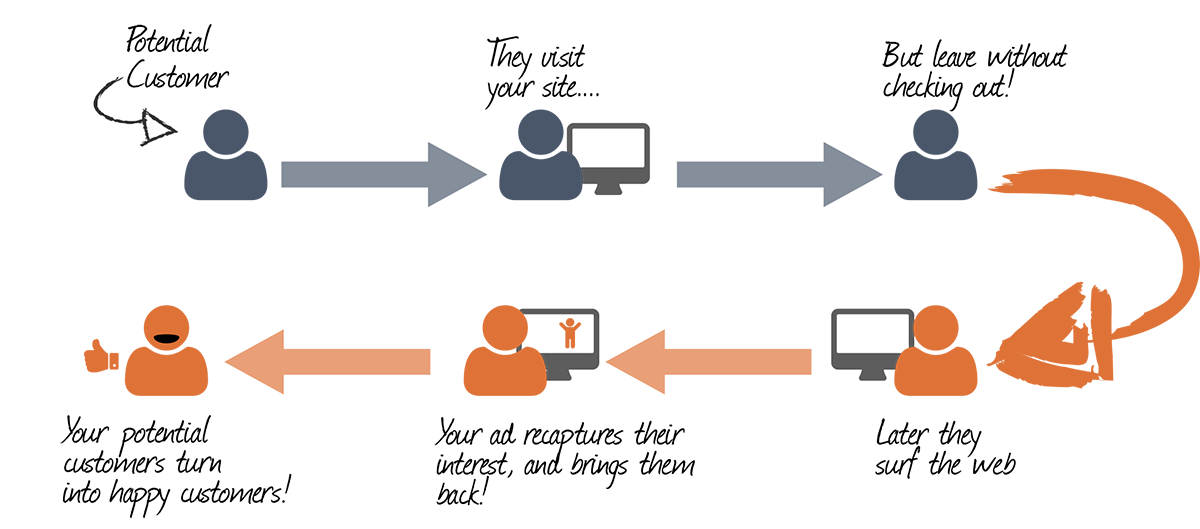
The pixel follows them, and displays relevant ads to them to draw them back to your blog or landing page. You get a second chance to convert them.

Wordstream, for example, experienced a 300% increase in engagement and 51% more leads after 18 months of retargeting.

If you’re willing to put some time, money, and effort into retargeting, you will absolutely see an increase in conversions.

There’s a learning curve to it, but most services provide tutorials and how-tos to get you going in no time.

The more chances you give yourself to turn your visitors into leads, the better.

Exclusive or Upgraded Content

Another useful tactic to try is offering exclusive or upgraded content in exchange for contact details.

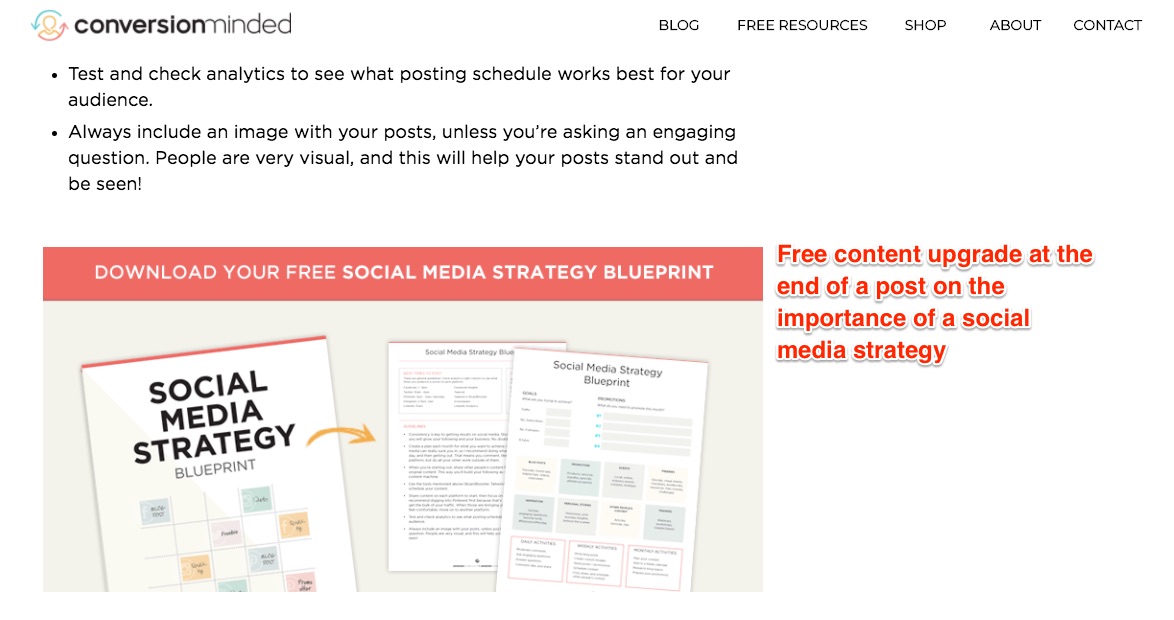
Either in or at the end of your post, offer some relevant but additional piece of content. It might be a template, or checklist, or blueprint that allows your readers to put what they just learned into action with as little friction as possible.
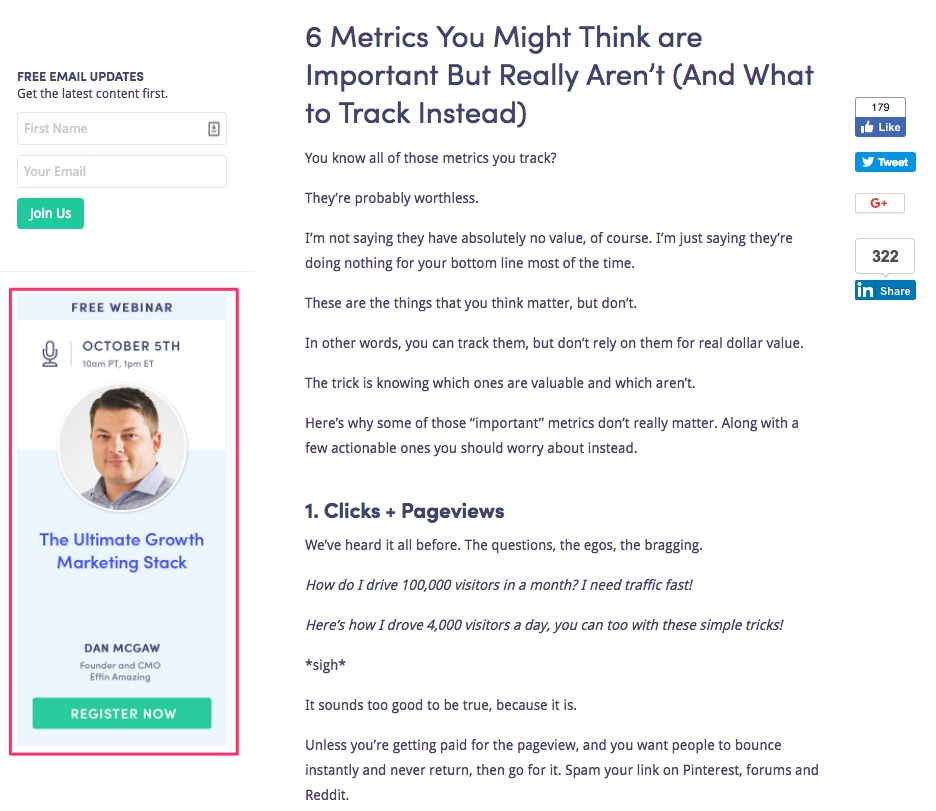
How about a registration box for an upcoming webinar on a relevant skill or strategy?
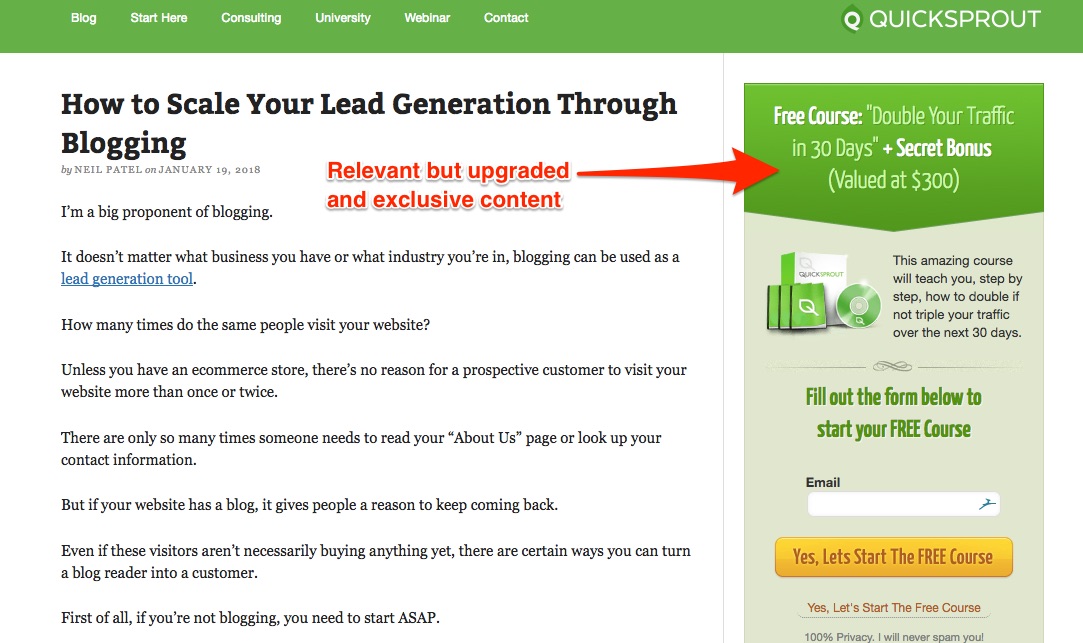
Or a free online course to help readers build complementary skills. A post about lead generation through blogging combined with a sidebar ad for a course on doubling or tripling traffic? That’ll work.
The sky’s the limit on what you can offer. Make it relevant, useful, and irresistible. Ask for nothing but an email address and maybe a name. Make it easy for them to say ‘yes’.

Learn To Be More Persuasive

Ultimately, you’re trying to convince someone to trust you. Most of us are a bit reluctant and cynical when it comes to handing over our details online. You’ve got to persuade and convince them.

To do that, there are few tools as powerful as the six principles of influence as described in Dr. Robert Cialdini’s seminal book Influence: The Psychology of Persuasion. If you’re not familiar with it, I highly recommend it.

Cialdini outlines six basic principles – sometimes called weapons – and you can use them all in your blog posts:

  1. Reciprocity: we feel obligated to “return the favor” when someone does something for us. If you’re consistently providing your readers with fantastic content and useful tips, they much more likely to give you their email address when you ask for it.
  2. Commitment and Consistency: if you can get your readers to commit to something small and innocuous – like clicking on a related post – we’re wired to remain consistent in our action. If they’ve committed or agreed to something small like that, they’re very likely to agree to a larger request like their name and contact details later on.
  3. Social Proof: this hinges on the idea of safety in numbers. If you can demonstrate that the majority already trusts you or uses your product with subscription numbers, social media following, clients or companies you’ve worked with, “as seen on” or “featured in” section, testimonials, and reviews, you’ve got a much easier time convincing new visitors to sign up or purchase.
  4. Liking: simple. We are more willing to trust or purchase from someone we find agreeable and likable. Be friendly, positive, approachable, helpful, entertaining, relatable, and engaging in all your posts.
  5. Authority: we inherently trust an authority figure like a teacher, police officer, or doctor. So make yourself an authority in your industry or niche with frequent guest posts on authority sites, speaking at conferences and other events, engaging on social media, answering questions on sites like Quora, displaying your formal credentials and relevant training or experience, and more.
  6. Scarcity: we want what we can’t have or believe is exclusive. Place a limited period of time or limited number on something, and watch conversions skyrocket. Amazon displays ‘low stock” on items for a reason. But – and this is a big but – don’t overuse this strategy or it quickly loses its power and people feel lied to and manipulated.

While you don’t want to utilize all six in every post you write, strategically using one or two will make you a more persuasive and trustworthy individual.

Quick Tips

Most of the strategies we’ve covered so far are long games. But that doesn’t mean you can’t use a few quick tips to land more leads.

  • Promote your products in your posts. You don’t want to overdo it, and avoid aggressive sales tactics, but mentioning a relevant product or resource in the post itself can generate interest and leads. If you’re writing about Facebook Ads, and that’s one of the services you offer, there’s no harm in mentioning that…once.
  • Include plenty of internal links to other blog posts, a “related posts” or “you may also like” section, and perhaps ‘previous’ and ‘next’ buttons at the end. Anything you can do to a) further demonstrate your expertise, and b) keep readers on your site will only increase your chance of converting traffic to leads.
  • Use plenty of headers, subheaders, and bulleted lists to break up your posts, make them scannable, and keep your readers from bouncing.
  • A simple but effective offer at the end is a downloadable summary of the post they just read. If the article is 3500 words, but you can provide them with a convenient, 350 word PDF summary in exchange for their contact details, you’d be surprised how many people will jump at the chance.

And last but not least, consistently provide the best, most valuable, highest quality material you can. There are millions of blogs out there, but the vast majority aren’t worth the digital space they consume. Be different. Be better. People will return again and again if you’re delivering the goods. They’ll recommend you to friends. They’ll sign up, subscribe, download, and purchase.

Try the ideas here, and let me know how it works out for you.

I also describe how bloggers can get readers to buy their products and services. Give it a watch and let me know what you think!

Conclusion

When it’s done right, content marketing can be one of the most effective marketing channels you’ll have. It can reliably bring a steady stream of traffic to your blog and marketing site.

But just like your marketing site converts visitors into customers, your blog needs to convert readers into subscribers. You need to get some information from them while you give out tons of free, actionable content. Often times this means you’ll have to give more free content, but this all part of the transaction. You give a little to get a little.

Anything you’d add to our list? What tactics have you tried to convert your traffic to leads?

About the Author: Neil Patel is the cofounder of Neil Patel Digital.


from The Kissmetrics Marketing Blog http://ift.tt/2FkhVux
via IFTTT

What’s on the Menu? A Balanced Email Content Diet

For most people, the key to a healthy and sustainable diet is balance. Eating the same thing every day can be miserable, and it’s usually not effective. Most of us need variety in our diets to stay healthy, and the essential vitamins our bodies depend on can’t be found in just one or two foods.  

Today’s consumers have similar needs. Their preferences are constantly changing and they need a variety of products to keep them interested and engaged. In fact, data derived from personalization tools and machine learning technology can clearly indicate what consumers are already buying, and most retail brands would agree that consumers aren’t usually buying the same items over and over again. With this in mind, marketers must recognize that continually forcing the same static email content onto consumers isn’t going to work. 

To stay relevant and competitive, marketers need to move away from serving up the same email campaigns time after time or relying on heavy discounting to promote products. They need to prioritize what customers are interested in and build a balanced email content “diet” for each recipient. In doing so, marketers can tailor a variety of product offerings suited to different types of customers and further segment their email strategy, delivering as many email themes as they desire (or as many as the data indicates is optimal).

Below are four best practices for creating a balanced email content diet that align with consumers’ unique and constantly evolving tastes and preferences:

1. Build a library

For marketers looking to expand the lifespan of every email, get more click-throughs and generate maximum revenue from every existing piece of content, it’s essential to consolidate and continually maintain a content library. Load your library with tags and start/launch dates, as data can then be mined from this information to test, analyze and retarget content. For instance, using your content library data, you can determine the ideal products and categories to send to each customer, and the perfect time to send it.

2. Test, measure, adjust

Every customer will react differently to any given email so it’s important to treat them as unique shoppers. In fact, one luxury retailer found that, on average, certain product categories only appeal to 10 percent of recipients, moderately appeal to 10 percent and mildly turn off 80 percent of email recipients. This is why test sends are so important. This gives marketers insight into what’s working, what needs to be fine-tuned and ensures that consumer’s evolving tastes are met.

3. Optimize cadences

To build a successful email content strategy, marketers need to pinpoint the perfect email cadence for each customer, while also building out each product category. Each customer has a unique appetite, which changes over time, so it’s important to continually match the frequency and timing of emails to each customer’s changing tastes. Make sure your content always stands out, and that high-value customers stay engaged over the long-term. For example, every customer loves special promotions, but they likely want to see them at different times. You can maximize margins by only offering promotions to each customer at the times they’ll be most responsive to them.

4. Consider re-mailing

Many marketers create one email for a given day and then discard it. However, this approach assumes every customer who didn’t open an email was actively disinterested in that part of your product catalog. If an email gets a large number of click-throughs from customers who did open it, a more efficient solution is simply to resend the email to the rest of your audience a few days later to see if more customers will open it. Like other assets in your business, email is a tool that should be used again and again, whether that means deliberately reusing it, adapting it or both.

Email marketing needs to be customer-focused to succeed. To drive real revenue, increase brand loyalty and boost customer engagement, leverage real customer interactions to optimize your email targeting and use existing transactional data to create more meaningful relationships with your customers. Most importantly, by continually providing more balanced email content diets to consumers, you’ll be able to cross-sell existing customers, build engagement with new ones and drive impact in the categories that matter most to your brand.

You may also want to read, Get Personal and Keep Them Coming Back guide to make sure your email campaigns are personalized to each customer and their individual preferences and behaviors. 


from Oracle Blogs | Oracle Marketing Cloud http://ift.tt/2Ed1Ya2
via IFTTT

Thursday, 25 January 2018

Real Talk about Moving Forward with Your Big Idea

Great to see you again! This week on Copyblogger, we looked at how to make progress on projects and opportunities that might seem intimidating at first. Stefanie Flaxman showed us how to take that Big Idea (exciting, challenging, scary) and break it down until you discover your first (or next) move. She shared a process
Read More...

The post Real Talk about Moving Forward with Your Big Idea appeared first on Copyblogger.


from Copyblogger http://ift.tt/2rH4OkU
via IFTTT