Friday, 22 February 2019

Who Decides What Best Practice Is, Anyway?

Peter Armaly is a Senior Director and Advisor for Oracle SaaS Customer Success. He is responsible for program design and execution of skills enablement for the customer success organization and in that capacity he works closely with senior executives both internally and externally. Peter is a highly accomplished marketing and customer success practitioner/leader who leverages his background by speaking and blogging about the challenges and opportunities around developing sophisticated customer-centric approaches.

Keith Fessler is a Senior Client Optimization Specialist and Subject Matter Expert on Oracle’s Customer Success Value Realization Team, focused on Field Service. With 40 years of pragmatic cross-industry consulting experience at IBM and Oracle, Keith works with Oracle’s Customer Success Managers and their customers to help them develop strategies and game plans for transforming their service management, field service and cloud environments in order to achieve desired results through value-driven transformations.

Peter’s a big fan of coffee and a lesser fan of meetings,  but when you can combine both, magic can happen. Recently, Peter sat down with Keith to chat about one of Keith’s pet peeves, the term “best practices.”

Peter:  Hey Keith, I see we’re both approved to attend Oracle’s Modern Customer Experience (MCX) in Las Vegas. Aside from the wonderful opportunity to meet customers, we’ll be presenting some messaging to them, hearing about their experiences of working with our solutions and services, and getting a more focused look at what our product teams are releasing to the market.

Keith: Hi Peter, looking forward to seeing you in LV. I’ll also enjoy seeing at MCX a number of the customers I’ve worked with on optimization efforts and attending the Oracle Field Service Cloud Customer Advisory Board where we really get to hear their feedback on current product capabilities. At that same meeting, we’ll also get to hear from product management what’s coming in the next few releases. I’ve got an interesting topic teed-up for a short-session at MCX on getting customer perspectives on “best practices” and what they mean in the customer’s own environment. Plus, I’ll be trying to get customer interest in participating in a survey (with shared results to participants) on “best practices”.

Peter:  I’m detecting a hint of insurrection in your desire to survey people about “best practices”.  The term has been around forever and I know that it’s a topic you’ve long wanted to explore. Is that because you feel it has fallen victim to marketing’s devious devices and you’d like to skewer it a bit or is it because you truly believe there are some practices that can work and that deserve to be widely shared?

Keith:  The term “best practices” is something we trip over all the time, given its different orientations in people’s minds. I tend to think of it as a one person’s ceiling is another person’s floor.  I believe the discussion needs to consider the notion of a “better practice” as being more of the goal. A “best practice” may not be the right thing for an organization to chase for a myriad of reasons. Your current environment limitations, the expense of changing to adopt to the “best” practice (the technology, the process, roles and responsibilities, the organizational implications)¾AND potential overkill stemming from the “industry-accepted” practice that you may not really need, be it “best” or not.   Broad initiatives for achieving “best practices”, in many situations, are used as a shield to deflect criticism from poor current process execution or striving for goals in terms of execution that really are not achievable, in point of fact, based on your current situation. There needs to be a balanced look at achieving an advanced practice for processes or sub-process activities, at a granular-level, to weigh impact, course, speed, and spend.

Peter: As my high school biology teacher said when gazing down at the baby pig on my table, “Now that’s a good dissection.” Okay that clears things up and I agree with you that there needs to be a balanced look at achieving advanced practice. Maybe that’s the term we should be promoting instead: advanced practice. It has a more realistic aura about it and not so absolute. I’m lately from the marketing world and have been seduced by its drive towards simplicity in messaging. Don’t get me wrong. Marketers, I realize, are under a lot of well-deserved scrutiny these days, but I think the simplicity thing is smart. Authenticity works; it’s what customers respond to and so if “advanced practice” sounds more authentic to us, it probably sounds more authentic to others.

It also aligns well with the Oracle service you and I are associated with, Customer Success Advanced Services. One thing I’ve learned in this long career in technology is that it’s unwise to ever declare that anything is “the best”. Things change too rapidly and by the time the words slip out of your mouth, some startup has figured out a new and better way of doing what you just said was the best.

Keith: Yes, Peter, agreed! “Advanced practices” does capture the essence very well.  A broad advanced practices approach may not fit in every customer situation, and the determination of where to focus is indeed a case-by-case review of what it would take to achieve an advanced, or more optimal, process execution if you injected a new process practice (or set of practices). Who defines the “best practice”?  Advanced practices can be said to be the next evolution of current practices, but where does the designation “best practice” come from?  Some Industry process models can be thought of as an amalgamation of best practices, as they are often comprised of practices which have been defined in relationship to one another, in the context of the overall model, making them best practices in the context of the model.

Our Advanced Customer Services Success Planning approach includes the calibration of our customer’s process maturity in key areas, into an objective-oriented, metrics-based, monetization-governed success plan for transforming portions of the operational environment. Our Success Plan includes outlining SME-driven, domain-specific process and KPIs initiatives, domain-specific technology initiatives, and domain-specific organization initiatives. Course, Speed, Spend are the watchwords of the game, inclusive of real savings. They’re often achievable with advanced practices, if impediments to enabling new practices can be removed.  Then, of course, it’s not advanced practices just for the sake of saying you’ve got them. It’s about impact and cost vs value, as you look to make changes.

Peter: Keith, my man, all great information and you won’t find disagreement from me on any of those points.

Keith: Sounds good Peter!  I knew you might be of like mind on Success Planning, and the rigor that needs to be applied to get operational results from change.  I’ve got some related notions and topics we should discuss, as I’d bet you do also.

Peter: Sounds good. Let’s make it happen.

For more from Peter and to learn more about the talent you should be keeping an eye out for your team, take a look at “Talent and a Team for Our Times.”

Read the blog


from Oracle Blogs | Oracle Marketing Cloud https://ift.tt/2XeS1lr
via IFTTT

Thursday, 21 February 2019

3 Not-So-Obvious Ways to Nurture Your Creativity

This week was all about nurturing your creative spark — in new ways that you might not have considered before....

The post 3 Not-So-Obvious Ways to Nurture Your Creativity appeared first on Copyblogger.


from Copyblogger https://ift.tt/2SOGRWf
via IFTTT

5 tips for reinforcing your USP via email

Your unique selling proposition (USP) represents how your products and services are different from and better than the competition’s. That’s why it’s critical to carefully craft a USP that accurately describes your brand, then promote it so your audience understands and remembers exactly why you’re the best choice.

Email marketing is a smart strategy for USP promotion (you should be building a targeted email list, after all), but how can you continually convey the same message without coming across as repetitive or spammy? With the following five tips for reinforcing your USP via email.
1. Include your USP in every email

The most direct way to reinforce your USP within emails is to simply state it at the top of every email. One way to do this without appearing repetitive is to incorporate your USP into your tagline and feature it under your logo or company name.

In the example below, you can see how Boden HQ uses a tagline under its logo to promote its USP in every email. 

Boden using USP in email

2. Align your email content with your USP

Reinforcing your USP can be subtler than simply restating it, and strategic email content is one of the best ways to illustrate how you’re different and better than competitors without repeating the same phrase ad nauseum.

Let’s say you own a doughnut shop and your USP is that you have the most delicious doughnuts in town. Your email content might feature awards you’ve won, customer spotlights (everyone raves your doughnuts) or an article about how you source only the best ingredients.

Or, let’s say you operate a style salon and your USP is that you have the region’s most skilled beauticians. Your email content might feature photos of client hairstyles and makeovers. Or, you might offer advice for hairstyles that fit certain face shapes, skin tones and hair types to establish your brand as the expert in hair.

Another example: You run a discount tire shop, and your USP is that you have the lowest prices on high-quality tires. Your email content might feature tips on how to choose the best tires for different seasons, vehicles and uses and then show your price alongside the slashed-out MSRP (Manufacturer’s Suggested Retail Price).

In each of these examples, you’re not rehashing your USP verbatim, but you’re still reinforcing your USP through content that aligns with your message.

Aldo Brown and grey shoes

3. Create offers that match your USP

Perhaps the most obvious way to reinforce your USP via email is to develop incentives, offers and other promotions that clearly illustrate your USP.

For example, our discount tire shop can send emails with big promotions that match its “lowest price in town” USP. Or, our salon might create an email advertising a special makeover package that comes with a 100 percent satisfaction guarantee (which demonstrates confidence that our stylists are the best).

When you develop your USP, you’ll think about what your audience will respond to. Your promotional emails should cater to those same passions, motives, desires and problems for natural alignment with your USP. 

25% off offer

4. Choose images that suggest your USP

If you incorporate images into your emails, choose those which visually suggest your USP. For example, a doughnut shop should invest in professional food photography that helps showcase their doughnuts are pure mouthwatering goodness. By the same token, a salon could showcase the quality of their stylists’ work through customer spotlights.

When you select images for your emails, consider how they reinforce your USP. They don’t always need to be product photos or happy customers. For example, a project management software company might feature a graph that illustrates increased productivity when its product is adopted or a chart that compares project efficiency to a popular, underperforming competitor.

Mercedes C class coupe

5. Don’t forget the subject line

Your USP should be a statement that intrigues customers, creates desire and makes them want to learn more. Sound familiar? Your subject line has the same goals, so it makes sense to craft subject lines that echo your USP.

Again, you shouldn’t repeat your USP verbatim (imagine getting six emails in a row that read “The Best Doughnuts in Durham”). Instead, craft provocative subject lines that imply your USP: “See What Ingredient Makes This Irish Cream Glaze So Scrumptious.”

Collectively, all these tips boil down to telling your story in an engaging way that resonates with your audience. You don’t need to repeat the same phrase time and again. In fact, it’s better to immerse your audience in your brand so they make lasting associations about why you’re the best option. Email is one of the best and most cost-efficient ways to do that, so follow the featured tips to reinforce your USP via email and foster lifelong brand loyalty.

Join 140,000 small business owners

Get expert tips and email inspiration delivered to your inbox every two weeks.

© 2019, Brian Morris. All rights reserved.

The post 5 tips for reinforcing your USP via email appeared first on VerticalResponse Blog.


from VerticalResponse Blog https://ift.tt/2U34czS
via IFTTT

Wednesday, 20 February 2019

Working with your ABM Strategy in Oracle Eloqua

By Mark Tarro, Senior Solution Engineer (Oracle)

In our everyday lives, we buy and use a growing number of add-ons that can improve the way that we work or relax. Whether it is a new and improved lens for a camera or a chrome plug-in, we want to have our new tool up and running after a brief tutorial. I think about the first time someone showed me Ghostery and how easily I was able to immediately use it in sales cycles and discovery on prospects – it was a game changer. While MarTech add-ons can be game changers, unfortunately for marketers, they don’t always work that seamlessly. And they often take time to learn and find symmetry with a team’s processes and strategy. Account Based Marketing (ABM) add-on tools are a classic example of this. One of the major benefits of Oracle Eloqua is that rather than requiring an ABM module or add-on to the core solution, the capabilities to work with an ABM strategy are built natively within the tool. As marketers develop their ABM strategy, there are a number of areas within the Eloqua solution they can leverage to deliver on that strategy. There are four main stages of ABM that marketers typically work with, starting with Understanding and Identifying Accounts, Expanding Within Accounts, Engaging Relevantly With Contacts and Growing Advocates For Repeat Sales. We’ll take a look at each stage and discuss how Eloqua and the Oracle Marketing Cloud meet the marketer’s needs.  

Understanding, Identifying, & Configuring Accounts

The first step in ABM is typically understanding and identifying accounts – and the best way to do that is via connected data. Eloqua is uniquely set up to connect all relevant marketing data on both the contact and account records with integrations to and from various systems. Having both contact and account records; and the ability to connect data from anywhere, not just a CRM provides significantly more flexibility around how much data, and what specific account data can be connected. Having this complete look at accounts and the contacts associated provides the best understanding of which accounts should be target accounts or part of a target list. 

One issue facing many organizations is that they are working with multiple CRMs or multiple versions of the same account within one instance of CRM and this is a prohibitive factor to getting started and being effective with ABM. Within Eloqua there is the ability to deduplicate, standardize and normalize data so that you don’t end up with 3 versions of Oracle (Oracle, Oracle Corp. and ORCL). When you move to identifying accounts to work with, you’ll need clean consistent data. To identify which accounts your organization is targeting you’ll typically either have a list of named accounts, or filters with data points like annual revenue with thresholds to include contacts from qualified accounts. 

Expanding Within Key Accounts

Part of understanding your key accounts involves knowing how well you’ve penetrated those accounts with contacts at different levels/divisions. In order to expand in key accounts, lead scoring can be used to identify any gaps in an organization and plan for how to engage with an account moving forward. For example, let’s say you’ve got a target account and see multiple contacts that are very engaged but don’t fit the right buyer profile. Your sales and marketing teams need to expand within those accounts to have those contacts managers and leaders engaged in the discussion in order to close the deals. Depending on your specific ABM strategy, it’s also easy to create custom reports for ABM to see how expanded you are within different accounts with regards to lead scores.

There are organic ways like gated content (gating a PDF or whitepaper with a form) to engage with a new contact, convert them to known and align them with a marketing journey. Gating content provides greater insight into who is interacting with it and also what content prospects find valuable enough to complete a form. Integrations like the LinkedIn Sales Navigator plug-in and applications like Eloqua Profiler for Chrome can help identify how well expanded your marketing and sales efforts are within key accounts. There are also a number of key integrations available or coming soon with partners like Demandbase, Engagio, 6sense and Mintigo. Additionally, the Oracle Cloud allows for expansion within target accounts with strategies like targeted ads via the Oracle Data Cloud to unknown contacts at those accounts and append key contact data on the campaign canvas to target more effectively. Sometimes the strategy calls for filling the top of your ABM funnel with similar contacts to the one you have and Oracle Blue Kai allows for look-a-like audience targeting.

Engaging Relevantly 

Once you’ve spent time finding the right accounts to engage with and the right stakeholders within those target accounts, it’s important to make sure your messaging is relevant. The best way to show people you know them is to personalize messaging to make it relevant for them. This is impossible to do without connected data and a complete view of that contact and their journey. Oracle Marketing Cloud enables personalization on a number of levels across different channels. Within the Eloqua solution marketers have access to dynamic content where they can choose data points to personalize content blocks in emails and landing pages. They can also create custom field mergers based on any data field or custom object to make email subject lines and content more relevant. You may learn that more data needs to be connected or that you need to target using different data in order to achieve this relevant engagement.

One added layer of complexity today is the number of channels marketers must manage and interact with to reach their full audience basis individual preferences. The strategy often comes down to being able to “control the waste” of spend on various channels and some will be missed or left out due to these circumstances. Utilizing the campaign canvas with Eloqua, marketers are able to make sure that the messages they spent time developing and perfecting are reaching customers by using decision steps and preferences to route contacts appropriately and optimize channel spend on digital ads, social promotions, direct mail and more. For marketers that are focused on the web and/or looking for deep web personalization and testing, Oracle Eloqua connects data easily to solutions like Oracle Maxymiser to test, personalize and optimize messaging to contacts at key accounts. In addition to the 1stparty data within Eloqua, this type of personalization with Maxymiser takes into account things like the device or browser a contact is using and can also test and personalize for unknown contacts at key accounts. 

Measuring and Growing Advocates 

One difficult thing about measuring ABM effectiveness is that there is not a “one-size fits all” approach for marketers and their strategies. Marketers need the flexibility to continuously look at the dynamic customer data required to determine where they stand within accounts and what actions are necessary in the coming months and years. Some marketers will want to know which of their accounts are most engaged while others will want to identify which accounts they have the most A1 and A2 leads at. Oracle BI within Eloqua gives marketers this flexibility to create the reports they need based on their ABM/ABS strategies. Some marketers use it to create reports that show data at key accounts tracking, open opportunities and pipeline related to those accounts. Others look at account engagement over a 6-month period to track account health. This flexibility around creating custom reports to learn what is working with these key accounts around engaging and expanding helps continue that cycle and create advocates for future sales at those accounts. 

Oracle’s acquisition and integration of Infinity will deepen this connected data and intelligence across the web and at the account level. Being able to use intelligence from data on known contacts based on all their browsing history and their associated account enhances the ABM strategy and how deep you can expand within the accounts as well as how relevantly you can engage with those contacts throughout the funnel. For example, Infinity connects deeper data and intelligence such as where contacts are coming from and how long they spend on parts of the website. Wherever your data is connected from, the important thing to remember is that connecting data across your MarTech stack is the first step to an ABM strategy and ABM success. 


from Oracle Blogs | Oracle Marketing Cloud https://ift.tt/2V9Yw7q
via IFTTT

A Cool New Resource for Developing and Sharing Your Ideas

My husband once had the chance to ask novelist James Ellroy where he got the idea for one of his...

The post A Cool New Resource for Developing and Sharing Your Ideas appeared first on Copyblogger.


from Copyblogger https://ift.tt/2TVQXRq
via IFTTT

The Art of the Soft Sell in Content Creation and Inbound Marketing

Not everyone likes a hard sell, but sometimes it works. It’s blatant and upfront in what it wants you to do. If it catches you in the right moment and offers you the solution you need and the offer is intriguing and reasonable, you might just go for it.

Outbound marketing can depend much on hard selling, as TV and radio ads, fliers, and physical mailings are hitting you right away with what they want you to buy. They’re targeting a mass audience and not you as an individual, so they cut right to the chase.

Some people prefer being courted, though. They like marketers to know their preferences and quirks to design marketing materials based upon them. They also prefer not to always have to deal with a full-on sales approach.

This is where inbound marketing comes in. Inbound marketers design content to build up their brand as a thought leader, knowledge resource, and problem solver in their industry. They post this content where it can be found by their audience, rather than sending it out. Once someone has shown an interest and given you their contact information, then you the marketer can follow up with emails, texts, white papers, and more that offer more specific solutions and answers for their problems and concerns.

Content marketing and inbound marketing come together in producing materials with a soft sell. The more personalized you can make these marketing materials, the better a chance you have of intriguing and interesting your prospects, as you are speaking to them more closely as individuals and at their level.

You do not need to hit them over the head with sales offers and put any undue pressure on them. They already know that you can present solutions for their problems, due to your thought leadership, reputation, and online presence. Your marketing materials engage them by offering further information, educating them, intriguing and interesting them to want to learn more about you and your solutions.

Any selling you do is subtle. It’s more about showing them that you understand their situation, you know how to help, and you can do so in a way that nobody else can. In so doing, you are priming and readying them to make a decision about whether or not they want to go with you. You are nurturing a lead with the right information and taking them to the point when they might want to become a customer. Much of the time, when a prospect is finally turned over to a sales representative to bring it home, they have already decided whether or not to sign on due to the marketing.

If you reach out and connect with a customer, show that you understand their frustrations but can help, as you’ve helped many others with the same problems. You’re letting your brand, your solutions, and your reputation seal the deal, but it is up to marketers to communicate all this information to the right customers at the right time. Knowledge is power. Not only do you need as much data as you can have on a customer to personalize your marketing and better target them, the more information a customer can have how on what you can do and what solutions you can provide will help all the better to make a sale.

With inbound marketing and a soft sell, you are swaying and influencing a prospect and nurturing them as a lead, but really you are mostly helping them make up their own mind.

Find out more about proper lead nurturing with “Lead Nurturing for Modern Marketers.”

Read the guide


from Oracle Blogs | Oracle Marketing Cloud https://ift.tt/2DYIjL7
via IFTTT

Tuesday, 19 February 2019

How to Think About SEO

seo

Don’t you hate how it takes forever to get results when it comes to SEO?

Everyone says it takes 6 months to a year and even in some cases many years to see results.

Well, I have some bad news and some good news for you.

Let’s start with the bad news…

SEO is a long-term strategy. It’s not about doing it for a few months and forgetting about it. And if you stop focusing on it eventually your competitors will outrank you.

And now let’s get on to the good news.

You can get results in the short run. You may not get all of the results you want right away, and you may not rank for your ideal keywords, but that doesn’t mean you can’t get results within 90, 60, and even potentially 30 days.

So how do you get results within a few months?

Well first, let’s rewire your brain so you think about SEO in the correct way.

SEO isn’t just content and links

If you want to rank number 1 on Google, what do you need?

Well, the data shows you need to write lengthy content. Because the average web page that ranks on page 1 of Google contains 1,890 words.

word count

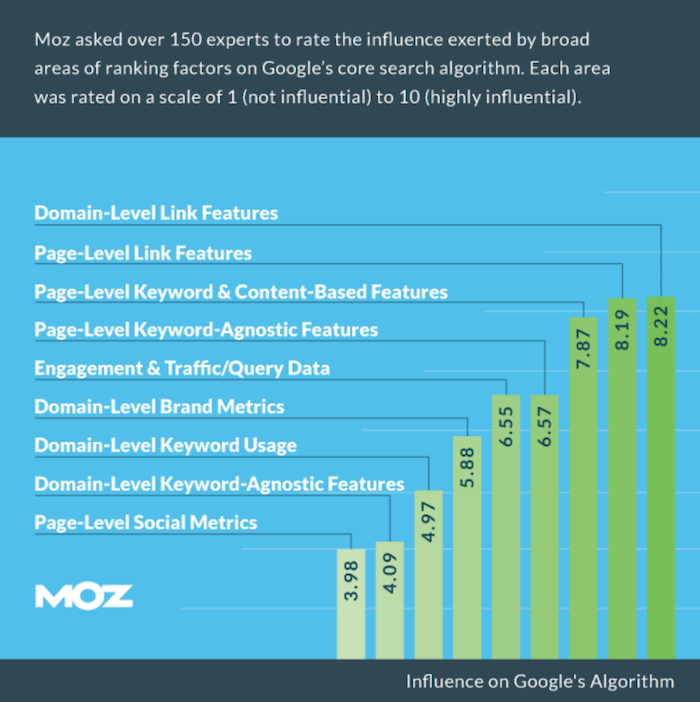
And of course, what’s content without links? Because the 2 most important factors that affect rankings according to the SEO industry are domain level links and page level links.

moz links

But here is the thing: SEO isn’t what it used to be. Until 2010, you used to be able to add keywords in your meta tags and you would get rankings within a few months.

And as the web got more crowded, you could then get results by doing the same old thing but you also had to build a few links. That worked really well between 2010 and 2013.

As more businesses popped up, everyone started focusing on content marketing. That was the hot thing. From 2013 to 2017, if you created tons of text-based content, got a few social shares, and picked up a few natural backlinks you could dominate Google.

But now, there are over a billion blogs if you include WordPress.com, Medium, and Tumblr.

That means Google has their choice when it comes to determining what sites to rank at the top.

In other words, just because you write lengthy content or build backlinks it doesn’t mean you are going to ranks. Millions of other sites do that as well.

And even if you got in early and your site is 10 years old, it’s no longer that easy to dominate the web.

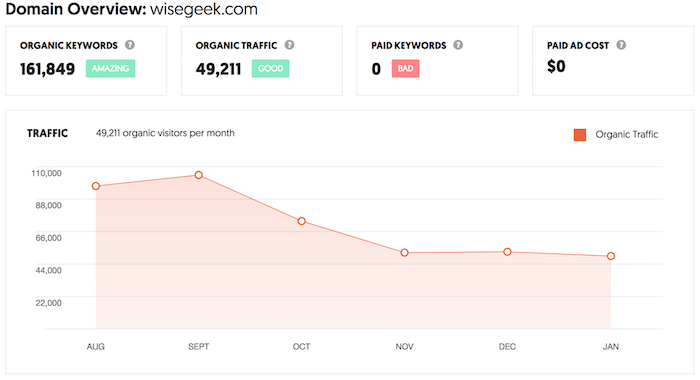
Just look at sites like Wisegeek. They used to dominate the web as it’s a site with thousands of informative articles.

And now look at their traffic

wisegeek

According to Ubersuggest, they get roughly 49,211 visitors a month from Google within the United States. It may seem like a lot, but their traffic is continually going down.

When I met the founder years ago it was in the millions… but not anymore.

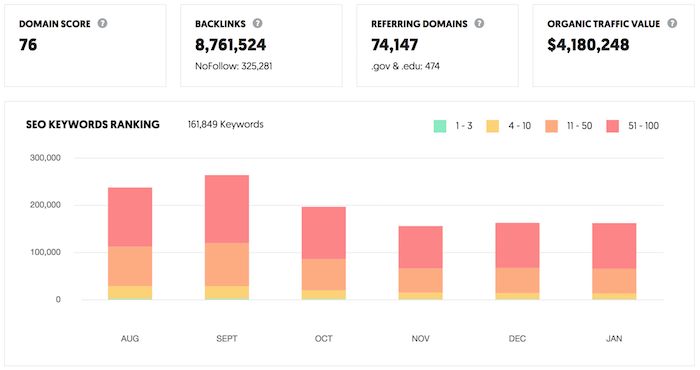
It doesn’t even matter that the site has 8,761,524 backlinks from 74,147 referring domains.

wisegeek links

Now you may make the argument that Wisegeek doesn’t have the best content. But I have tons of examples of sites with amazing content that have the same issues.

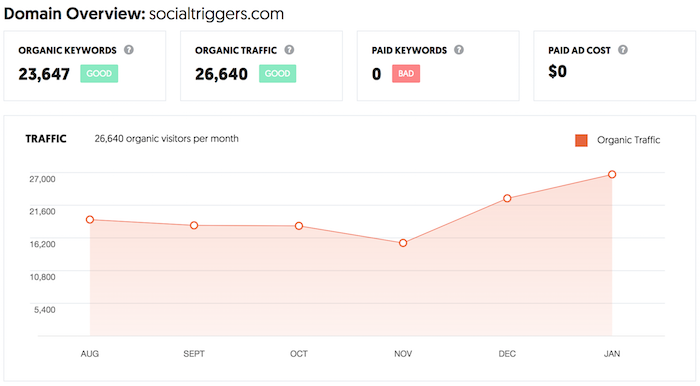
For example, Derek Halpern from Social Triggers creates great content. Just go check out some of his blog posts if you don’t believe me.

But let’s dive into his traffic stats

social triggers

According to Ubersuggest, he gets roughly 26,640 visitors a month from Google in the United States and he has 993,790 backlinks from 5,678 referring domains.

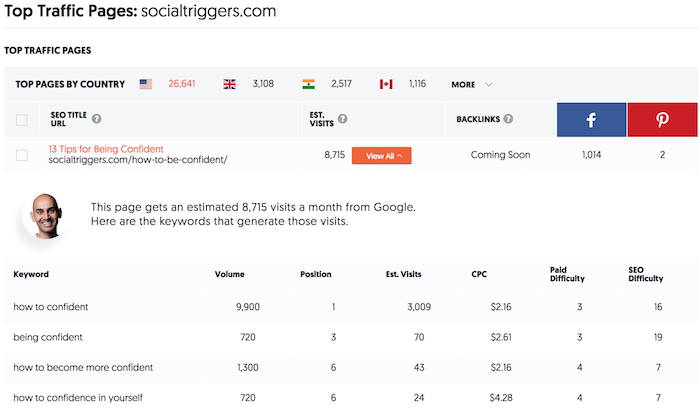
And he ranks for some great terms. Just look at the top pages he is ranking for with terms like “how to become more confident.”

social triggers top pages

But even Social Triggers has struggled to keep their traffic over time. It’s nothing to do with Derek, he’s a smart entrepreneur, but he decided to quit and focus on his new venture Truvani, which has been doing well.

In other words, content and links don’t guarantee success.

So, what’s the best way to get rankings these days?

You have to go after low hanging fruit.

Sure, you need content, you need links, and you need to optimize for the other 198 factors Google keeps track of the optimal amount of traffic. 

But it’s UNREALISTIC for you to do everything. Even if you hire an SEO agency to help you out.

And there is no way you can wait 12 months to get results from an SEO campaign.

Which means your only solution is going after the low hanging fruit.

Now I wish I could tell you the exact low hanging fruit to go after, but it varies for every site. What I can do is show some of the simple tactics that have worked for me and are easy to implement.

Strategy #1: Don’t put dates in your URL

I used to have dates in my URL because it was a default option from WordPress. I didn’t think twice about it. But the moment I removed the dates from my posts, my search traffic went up by 58%.

Best of all, it only took 30 days to get the boost in traffic. 🙂

Strategy #2: Link to the most popular posts in your sidebar

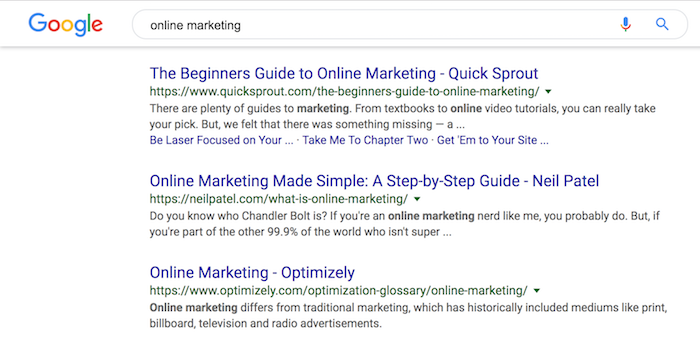
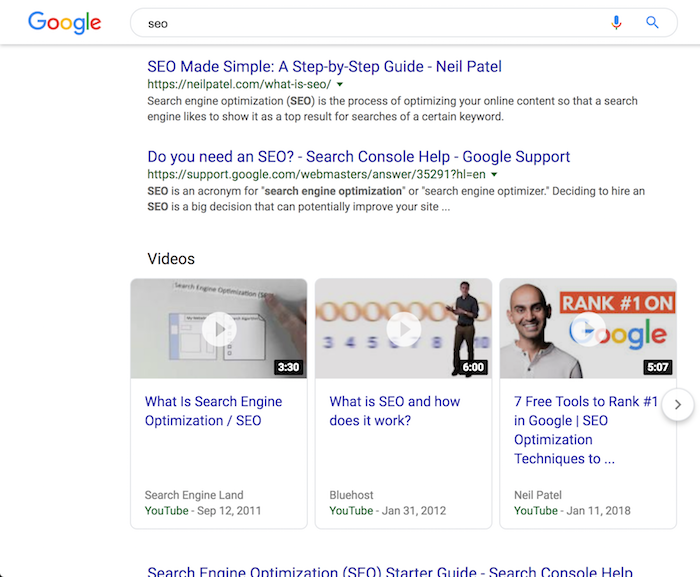
Have you noticed that I rank for terms like “online marketing” and “SEO”?

I’m currently number 2 for the term online marketing:

online marketing rankings

And number 5 for the term SEO:

seo rankings

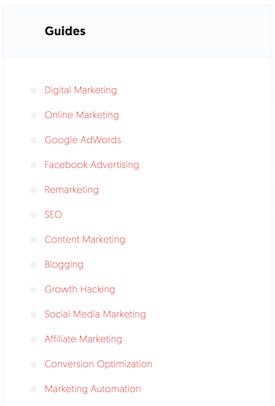
Do you want to know a hack that helped me rank higher for those terms? Well, I’ll give you a hint… you’ll find it in my sidebar.

sidebar links

As you can see, I’ve linked to all of my major guides in my sidebar. It helps give them the juice they need so they can rank higher for terms like SEO and online marketing.

If you haven’t done this, you should consider trying it out as it will provide a quick win.

You won’t see the results in 30 days, but within a few months, you’ll notice that those pages will climb in the ranks.

Strategy #3: Land and expand

I’ve talked about this one a lot in the past, but only because it works really, really, really, well.

It’s also one of the main reasons I’ve made Ubersuggest into a robust SEO tool. Not just for you, but also because I use it for the land and expand strategy to grow my search traffic.

It’s how I get 2,105,896 visitors a month from just Google…

search traffic

So, what’s this land and expand SEO strategy I use?

You need to first log into Google Search Console.

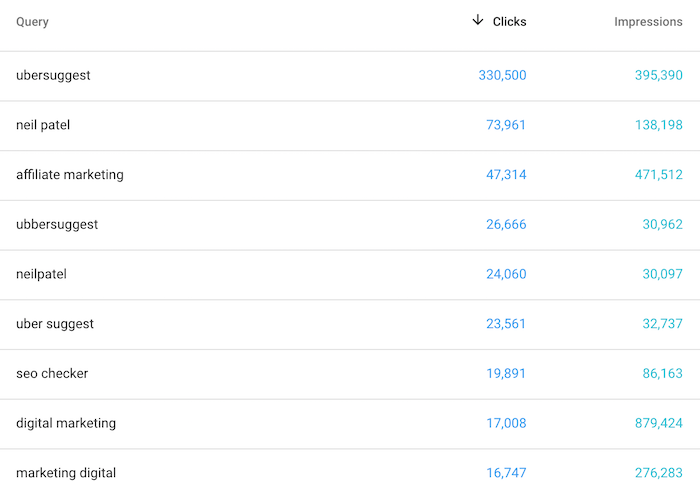
Once you are logged in, click the “performance” link and you’ll see a list of keywords you are currently ranking for.

search console

Then click on the most popular term you rank for. Make sure that keyword isn’t your brand name.

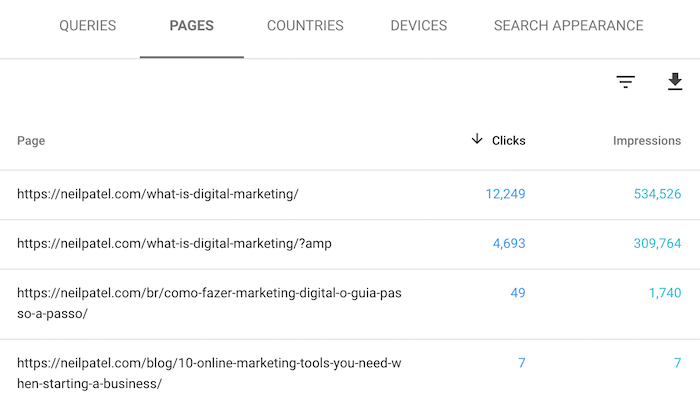
Then click on “pages.” You’ll see the page that is ranking for that keyword.

search console pages

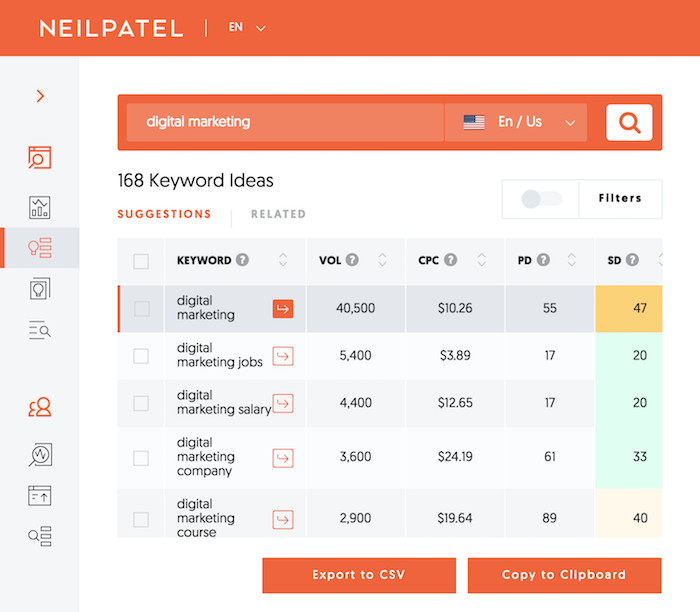
I want you to then head over to Ubersuggest and type in that keyword. Once the report loads click on “keyword ideas” in the sidebar. You’ll see a report that looks something like this:

ubersuggest keywords

You’ll see a long list of keywords that are variations of the main keyword that you already rank for. Most of those terms are pulled from Google Suggest.

If you take the popular phrases that are related to the main term you already rank for and integrate them into that page, you’ll notice within 30 to 60 days your search traffic will shoot up.

But when leveraging this strategy you need to make sure you adjust your content. You can’t just shove in more keywords, you have to rework your content so it makes sense and it flows naturally.

The reason this SEO strategy is my favorite tactic of all time is that content marketing is a hit or miss. Just because you write content and build links, it doesn’t guarantee success. But if you expand the pages that Google already loves, there is a high chance that you’ll get more traffic.

Strategy #4: Expand internationally

In many of my companies, I generate more revenue from outside of the United States than I do within the United States.

For that reason, plus it was a piece of advice I got from a Google employee, I’ve translated my site into multiple languages.

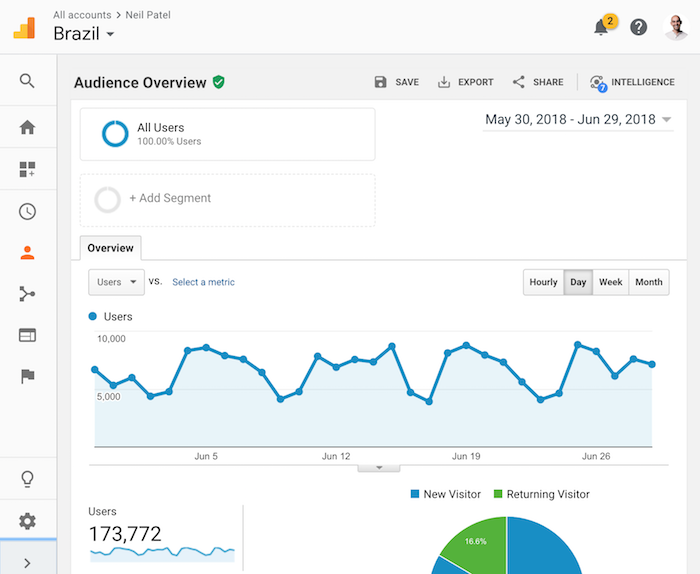
Just look at my traffic from Brazil…

brazil

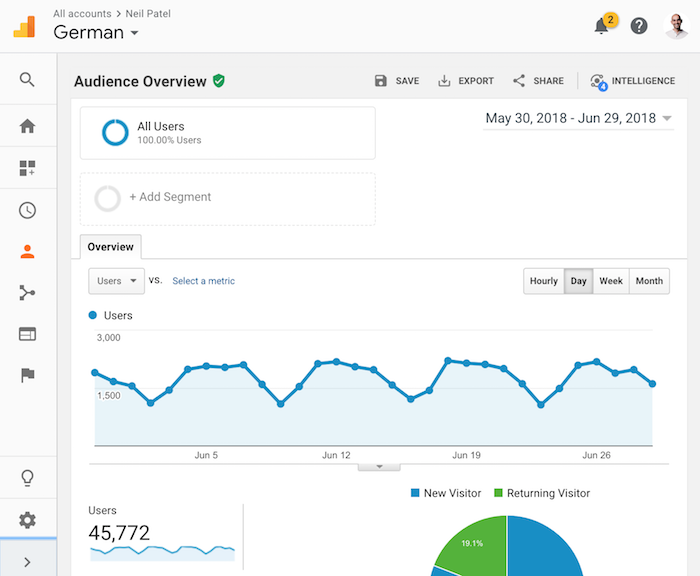
And here is my traffic from Germany…

german

And the Spanish market…

spanish

What I learned from a Google employee is that they lack content in regions where English isn’t their primary language. So if you focus on these regions, you’ll quickly notice a quick traffic boost and your conversion rate from visitor to customer within those regions should also go up.

Strategy #5: 5-minute brand hack

Google loves brands. It really is the future of SEO. In addition, brands are more defensible.

As the EX-CEO of Google said:

Brands are the solution, not the problem. Brands are how you sort out the cesspool.

In other words, if more people search for your brand name on Google, you’ll notice that your rankings will go up.

As more people typed in “Neil Patel” within Google, my traffic went from 185,980 a month:

feb traffic

to 454,382 visitors a month:

august traffic

That’s a huge increase considering I saw the increase in a 6-month time frame. And even though I pulled that off back in 2016, it works even better today.

Building a brand isn’t easy and it is a long-term approach. But I am going to give you a head start… one that only takes 5 minutes.

Before I break it down, it follows the rule of 7. Someone needs to see your brand 7 times before they build up loyalty to it. In other words, if you can keep getting people to come back to your site in the short run, you’ll start building a brand and you’ll find your brand queries increase in the long run.

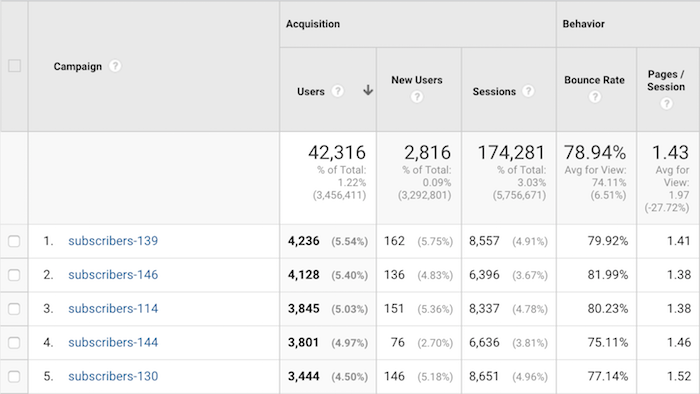
Now here’s a screenshot of my stats so you can see it in the works:

push traffic

So far, I’ve gotten 42,316 people back to my site 174,281 times. That’s roughly 4 times, which means I have 3 more to go according to the rule of 7.

How did I do this?

I used a tool called Subscribers.

In which I send out a push notification every time I release a new blog post:

neil subscribers

Plus, it allows me to generate 4,000 plus visitors for every push I send. 🙂

subscriber stats

Strategy #6: Optimize your click-through-rate

You don’t have to write new content or build links to boost your rankings.

You can do something as simple as optimizing your click-through-rate.

Just think of it this way, if 1,000 people performed a Google search and everyone clicked on the second listing instead of the first listing, what does that tell Google?

It tells Google that the second listing should, in theory, be the first listing. And that’s what Google does… they take the listings people are clicking on and move it up to the top and move down the ones people don’t click on.

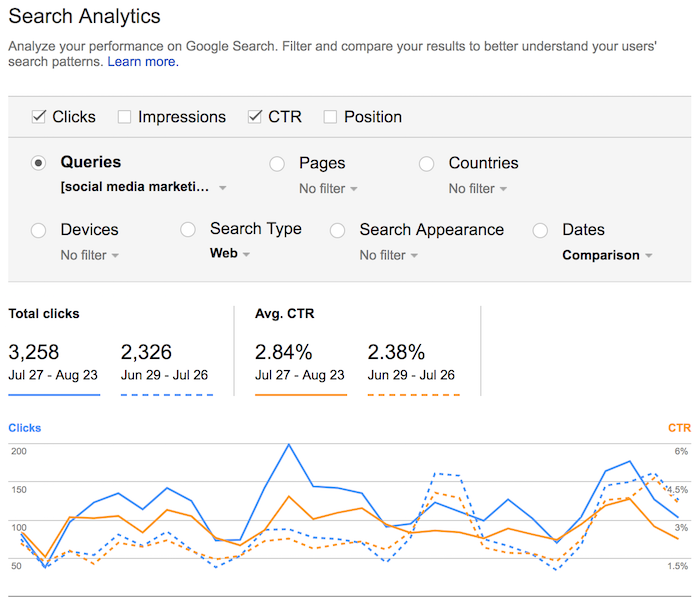
If you want step-by-step instructions to increasing your click-through-rate, follow hack #1.

It works really well and fast too. It’s how I boosted my search traffic for one of my main keywords by 1,289 visitors in 30 days.

social media marketing

Strategy 7: Update your old content

SEO and paid ads have something in common, in which if you stop doing it your traffic goes down.

Paid ads are a bit worse in which once you stop paying your traffic goes back down to where it was.

With SEO, once you stop you’ll see a slow decline over time.

Now, this strategy is so effective that I employ a full-time person to help me out with it and this is all they do.

Remember how I talked about there being over a billion blogs on the web now?

Well, I have one full-time person updating my old content to ensure it doesn’t get out of date.

Because Google has so many options to choose from when it comes to ranking sites for any keyword out there, they are going to rank sites that are fresher.

By updating your old content, not only do you ensure that you’ll maintain your traffic, but you’ll also get more traffic.

There isn’t any real strategy to this other than to go through your old pieces of content that get traffic and make sure they are up to date.

Sometimes you won’t have to make any changes, other times you may have to change a few sentences or links, and hopefully, not too often will you have to re-write a whole article.

And every blue moon you’ll need to delete a page or a post because it is irrelevant. For example, I’ve deleted my older blog posts that discuss social networks like MySpace that no one uses.

Conclusion

Yes, SEO does take time if you think about it the same way everyone else does.

But if you think about it from a strategical perspective, you’ll find new opportunities that can provide quick results.

You may not get all of the traffic you want tomorrow but going after the low hanging fruit will give the quickest results.

If you want help finding the low hanging fruit with your SEO campaign, you can always reach out to my ad agency and someone will help out. Or you can leave a comment below.

So, are you going to stop thinking of SEO as just link building and content and start thinking of ways to get quick wins?

The post How to Think About SEO appeared first on Neil Patel.


from Blog – Neil Patel http://bit.ly/2DSDDXp
via IFTTT