Friday, 27 March 2020

Content Marketing During a Crisis or World Event

Marketers tend to think optimistically when planning their strategies, campaigns, and events. A lot of hard work goes into their efforts, and they try to cover every detail they can. Still, they think that in the end their work will pay off and they will see results. They might encounter a misstep or setback, but they can regroup and make the proper adjustments to their planning. Then, once it’s all done, they can look over the results and use the numbers to analyze what worked best and what didn’t and put those insights into improving future promotions.

However, things can happen that are beyond a marketing team’s control. World events, an internal crisis, or some type of disaster or tragedy can occur, at which point, a good number of plans and promotion grind to a halt or at the very least have to be altered or reconsidered. You can expect events to be put off, rescheduled, sometimes made into virtual events, or outright cancelled.

A great deal of how your marketing team goes about its business will have to be reassessed. Your team might have to work remotely (if they weren’t before), and you might have to consider what your priorities are at that time, as it will be more important to be there for customers rather than making a hard sell or introducing a new product, service, or offer.

So, then how does content marketing change during such a time?

After all, you can’t just pretend that it’s business as usual. If something is going on, you have to acknowledge it in some way, even if it’s only indirectly. At the same time, you might already have a few projects in the works that you can’t just drop or that your team (and brand) will eventually need. Of course, you will also have to pay strict attention to your tone, regardless of the project, and some content assets just might not be appropriate for the time being.

How can you decide though?

There is no easy answer for what to do in such a situation. Much of it will depend on you, the situation, what your team needs, and what your customers need. You will have to try and make the best judgement call you can, often in trying and confusing circumstances. Bearing all this in mind, I tried to put together a few general guidelines I thought might help:

  • Ease back. You will have to dial down on any fanfare. It is not a time to dress up your marketing and make it as flashy as possible. You do not want to come across as disrespectful or flippant. Take the events that are occurring seriously and allow your content to reflect that. Also, try not to just put out more and more thought leadership, as if acting like nothing has changed.  In some cases, business can continue in some form, and people might like a bit of normalcy, so you can publish a few new assets. However, at this time, your content, for the most part, should put more of a focus on how you can help your customers with whatever issues they are experiencing during this event.
  • Quality over quantity. Whatever content you do put out during a crisis should focus more on being helpful and of high quality. You do not want to post too much content at a time, especially if it isn’t relevant and you know your audience has other things on their mind and perhaps not the time or are in the right frame of mind for what you have published.
  • Tone. Your tone should reflect the situation you find yourselves in. If it a serious matter, you might treat it as such in your writing. Some lightheartedness and humor could do much to add levity and brighten someone’s day when they need, but be careful and make sure it’s appropriate. You do not want to give the impression that somewhere people might be experiencing hardships and suffering and that you might be making light of it. Above all, remain calm and composed and try to be as clear as possible, since that is what customers need at such a time.
  • Empathy and sensitivity. When writing content, place yourself in your customers’ shoes. Think about what they are going and how your content might be able to help. What would they find disrespectful or irrelevant during a crisis? What information would put them more at ease? Remember to be sensitive as well. A crisis might affect certain industries, trades, and professions worse or in different ways than others. You want to always ensure that you are careful with your wording, messaging, and imagery.
  • Solicit feedback from your teammates. You are not alone. You have a whole team to ask for input and feedback about your content. If you are unsure of tone, relevancy, and appropriateness, they can give you their opinions and guide you in the right direction. Moreover, your company might also have a PR or communications team, who are no doubt working on a messaging and communications strategy to deal with the crisis. You may have to run your content past them or another approver to see that it fits into that strategy, so be sure to do so. It’s not a bad idea to have another set of eyes on content, and you want to be as cautious and careful as you can during a difficult time in everyone’s lives.

Use common sense and double-and-triple-check everything to make sure that it’s all right.  Remember that many people might have being a hard time at the moment, and patience and understanding will be required.


Learn more about how content ties into your organization’s goals and can help increase profitability. See how you canDo More with Content Marketing.”


from Oracle Blogs | Oracle Marketing Cloud https://ift.tt/3dB7hkG
via IFTTT

Thursday, 26 March 2020

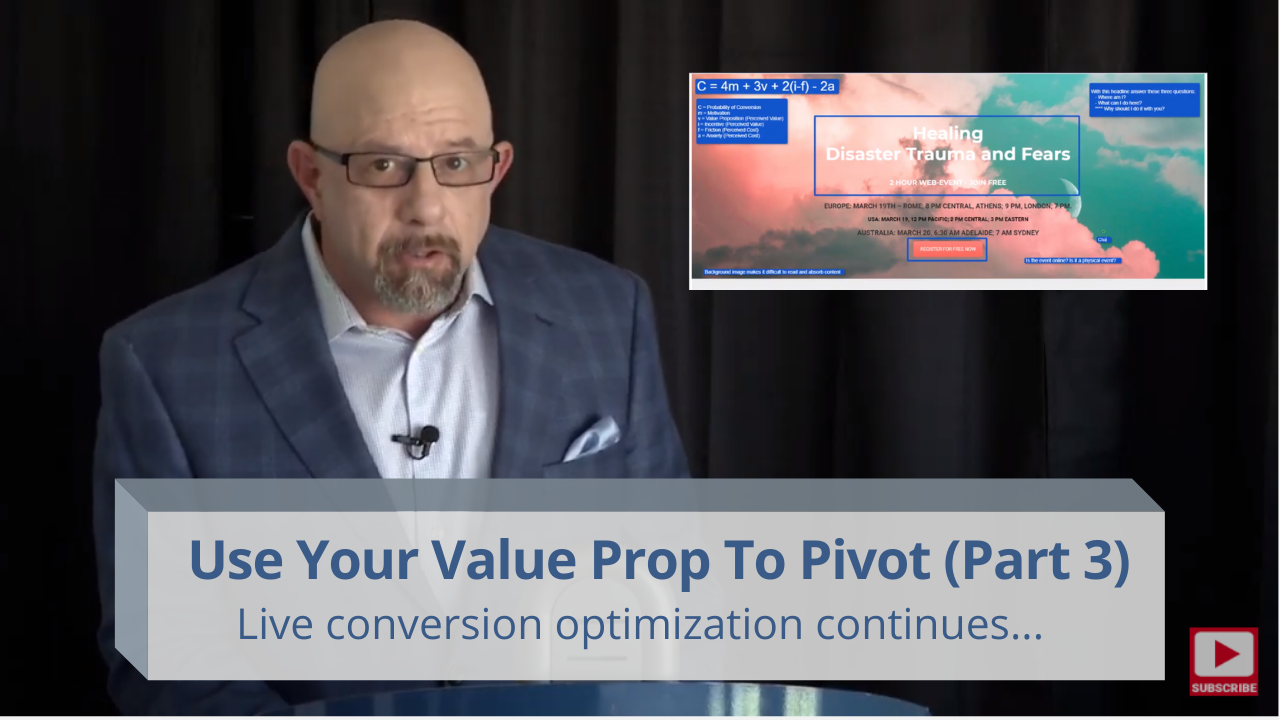
Use Your Value Prop to Pivot: LIVE optimization to help with marketing amid coronavirus (Part 3)

The post Use Your Value Prop to Pivot: LIVE optimization to help with marketing amid coronavirus (Part 3) appeared first on MarketingExperiments.


from MarketingExperiments https://ift.tt/2J52YQG
via IFTTT

How to Drive Brand Awareness with Loyalty

In an overcrowded marketplace where brand differentiation isn’t always apparent, brand awareness is a key driver of consumer purchase decisions. In fact, customers are 60% more likely to purchase from a brand they’ve heard of than from one they’re unfamiliar with. An investment in loyalty can help a brand stand out from the competition, drive brand awareness, and increase revenue.

Here’s how to design a loyalty program that that boosts the profile of your brand.

Reward members for referring a friend

Referrals are an effective way of increasing brand awareness. A loyalty program’s membership is made up of a brand’s best customers and most likely advocates. By including refer-a-friend activities in your loyalty program, you are able to fill the top of your sales funnel by leveraging the influence of your existing loyal customers. In return your customers are rewarded for introducing a potential new customer to your brand. Sleep Number’s online loyalty program, InnerCircle, rewards members for introducing new customers to the brand. Program members earn $100 for each successful referral, and after 10 successful referrals, they are awarded with an additional $799!

Form strategic partnerships

Not only does the right partnership help extend value to your existing customer base, it also broadens your reach and connects your brand to potential new customers. By building in partnerships as part of your loyalty offering, both brands have the ability to increase visibility and potentially connect to a new and relevant audience. For example, by partnering with Uber, Spotify was able to reach a new audience and promote their subscription-based music streaming service by enabling members to listen to their own Spotify playlist during Uber rides. Simultaneously, this partnership incentivizes Spotify customers to choose Uber over other transportation apps.

Incentivize content sharing & social connect

Content marketing can help you build greater exposure for your brand and help consumers during the buying process. The more valuable the content, the more shareable it becomes. You can incentivize loyalty members to share blog posts and video content across their social networks by rewarding them with points. This is a very effective tactic to build into your loyalty program, considering research indicates 33.2% of social posts can reach up to 999 people. Also consider rewarding customers for connecting their social accounts and checking in on their social networks. This helps increase visibility for your brand and keeps existing members engaged. For example, Carhartt’s Groundbreaker Loyalty Program offers members 25 points for visiting a store location and checking in on Facebook.

Encourage product reviews

Product reviews are an effective way to increase brand awareness. According to BrightLocal’s Local Consumer Review Survey88% of consumers trust online reviews as much as personal recommendations. Positive reviews can influence a consumer’s decision to purchase. Incorporating product reviews as a point-earning activity is an effective way of driving up the number of online reviews from your most loyalty customers and building your brand’s reputation. Product reviews are not only a valuable source of feedback for a brand, they also make customers feel heard and appreciated. Steve Madden’s loyalty program, SM Pass, rewards members with 50 points for writing a product review.

Surprise and delight loyal customers

Incorporating surprise and delight tactics as part of your loyalty initiative is a great way of strengthening the emotional connection between your brand and customers. It can also be used to increase brand awareness. When customers receive unexpected gifts and perks from brands they like, they are inclined to share the experience with their friends and family. Zumiez is an example of a brand that incorporates surprise & delight into their loyalty program. In one surprise and delight campaign run by the brand, inactive members of The Zumiez Stash loyalty program received a secret hashtag to post on social media to earn bonus loyalty points. This gave recipients a fun way to re-engage in the program and generated buzz about the program on social media, increasing the brand’s reach and awareness.


How do leads become customers and how do customers become repeat customers? Lead scoring shows you whom to nudge and nurture. Learn more about “Lead Scoring for Modern Marketers.”


from Oracle Blogs | Oracle Marketing Cloud https://ift.tt/39mqaol
via IFTTT

Wednesday, 25 March 2020

8 Marketing Automation Best Practices to Maximize Your Campaign Efforts

Marketing automation allows digital marketing teams to do more with less. But how can a marketer make the most of their marketing automation efforts? These eight practices give a framework teams can use when planning out their campaigns in order to ensure that they use automation properly and to their best effect:

  1. Set Goals

Look at how marketing automation can improve your campaigns by setting and exceeding goals for the number of:

  • Quality leads you attract

  • Leads deemed ready to pass onto sales

  • Conversions you help contribute to, and at what points in the customer’s journey these conversions happen

  1. Develop Buyer Personas

You create buyer personas by looking at your audience’s backgrounds, demographics, interests, preferences, location, jobs, industries, the challenges they meet, and more to understand where they are coming from and what their pain points are. By knowing that, you can understand how you can help them, offer solutions to their problems, and thus better market to them.

  1. Build Workflows Based upon the Buyer’s Journey

Map out workflows for the personas you create to engage them and address their concerns at each point of the buyer’s journey. You want a workflow based upon each stage of the buyer’s journey:

  • Awareness – A prospect has identified a problem and is seeking a solution.

  • Consideration – They are weighing their options and considering which solution to use.

  • Decision – They decide upon a solution and make a purchase.

  • Post-Purchase – They might have questions about the solution or need add-ons or other products and services in the future.

Knowing what persona you are targeting at what stage will help you send the right message at the right time.

  1. Create Engaging Content

Who your personas are and what stage of the buyer’s journey they are at will dictate the type of content you produce. Emails and thought leadership can help make prospects aware of your brand. Data sheets that show why your solution stands out can make a difference at the consideration stage. Case studies and demos might nudge someone toward making a final decision and purchase. After that purchase, a thank-you note and follow-up emails to see if they have any questions can keep them engaged and willing to do more business with you.

The possibilities for content are endless. However, all the content you create must be relevant. It has to be something your audience would be interested in. It has to capture their attention, keep it, and present something of value to them, such as information, a pro tip, an invitation to an event, or even an offer.

  1. Personalization

Use your customer data to personalize your content (and marketing in general) as much as possible. The more you can personalize to your audiences and the stage of the buyers’ journey they are at, the better your chances of winning them over.

  1. Multi-Channel Approach

Customers now expect a seamless, multi-channel experience. You will have to engage them with consistent content and marketing across on the channels they prefer and be ready to jump from one to the other. Also, do not forget the importance of mobile, as everyone lives on their phones nowadays.

  1. Lead Scoring and Qualification

Once the leads start coming in, you have to develop a model by which to score them. Then you will know which leads need more nurture and which are qualified to be handed off to sales.

  1. Measure Your Performance

How many leads did your campaign attract? How many did you hand off to sales? How many conversions did you help make? How much did you affect ROI? Review your goals and see where leads might have dropped off and how you can tweak, revise, and improve your process.

See how else marketing automation can enhance your campaigns with Oracle CX Marketing.


from Oracle Blogs | Oracle Marketing Cloud https://ift.tt/2wCgdWn
via IFTTT

7 Steps to Building A World-Class Luxury Loyalty Program

Luxury brand marketers who are considering loyalty programs are often concerned that they won’t align with the image or appeal of the brand. Traditional spend and get loyalty programs reward customers with discounts and couponing, which many luxury brands could argue “cheapens” their offering. However, the most effective luxury loyalty programs in market today go beyond discounting to provide value for members.

In addition, consumer expectations are changing from a luxury retail experience perspective. According to a recent Deloitte Fashion and Luxury Report, findings indicate:

  • 39% of luxury consumers want accessibility to more shopping channels, for example home delivery

  • 44% want to be rewarded with gifts in exchange for their loyalty

  • 45% want more personalized services and goods

In order to meet customer expectations and drive loyalty, specific strategies should be in place for luxury brands. In this guide, we’ll highlight the unique tactics luxury brands can implement in their loyalty offering to encourage greater spend and retention from customers.

1. Align program name with its benefits

Your luxury loyalty program name should convey the prestige of your brand and should indicate a certain exclusivity around membership. For example, the Paris Gallery Group of Companies, which sells luxury products including perfumes, cosmetics, watches and sunglasses, named their program “Luxury Club” and Rosewood Hotels Group, a global chain of high end hotels, named their program  “Rosewood Elite.” Both of these names appropriately speak to the status of the members.

2. Structure the program in tiers

By structuring your loyalty program into tiers, you can offer better rewards and perks for your best customers and motivate new or existing customers to spend and engage more. The highest tier in a luxury loyalty program should be exclusive, and attainable only to a very small percentage (under 10%) of members. The benefits of this tier should be highly desirable to your customers, and should make those who attain it feel prestigious.

3. Reward customers for spending

Since luxury shopper purchases are high value, not high volume, level up loyalty program members based on how much they spend with your brand per year. The Saks Fifth Avenue loyalty program, SaksFirst, is structured across five tiers, with members spending $5,000 per year qualifying for the premier tier, and those sending more than $25,000 qualifying for the diamond tier. Uniquely the program even offers a super exclusive “invitation only” tier for its biggest spenders.

4. Surprise and delight  

A simple way to make your customers feel special is by offering free gifts to commemorate special occasions. Swarovski’s loyalty program, Be Swarovski, provides members with a free gift every year for their birthday. Diamond members of the Coach loyalty program have access to exclusive gifts and personally selected items.

5. Offer experience-based rewards

Instead of offering discounts and free products, offer your luxury loyalty program members money can’t buy experiences that go beyond the offerings of your brand. High end fashion brand Luisa Via Roma goes beyond fashion rewards to offer loyalty members that reach platinum level status access to luxury hotel getaways, cooking classes, and exclusive dining experiences. Retailer Neiman Marcus offers members of its InCircle program access to personalized travel experiences, and hard-to-get tickets and restaurant reservations.

6. Provide valuable perks and benefits

In exchange for their loyalty, affluent customers want the types of perks and benefits that make their lives easier. Perks such as free and fast shipping or free giftwrapping in-store are all valued added extras that provide convenience and make members feel special. The Hilton Hotel Hilton Honors rewards program offers each member across each tier benefits including free Wi-Fi, late checkout and even the option to choose their room – giving them more flexibility and exclusivity than non-members.

7. Provide personalized brand experiences

Luxury customers want a memorable brand experience in return for their loyalty. Luxury brands can leverage customer data captured in loyalty programs to understand customers’ history of purchases, preferences, likes and dislikes to deliver personalized experiences. Luxury retailer Burberry leverages loyalty data to inform personalized recommendations for customers online and in-store. For example, when an identified customer enters a store, sales assistants use tablets to suggest products to the customer based on their purchase history and social media activity.

Conclusion

When the right strategies are in place, a luxury loyalty program can contribute to increased revenue and retention. It’s important to remember affluent shoppers are less concerned with price points and discounts, and are more likely to show loyalty to brands that provide memorable experiences and demonstrate they understand the benefits that are valuable to them, all while making them feel a part of an exclusive, elite group of shoppers. 


For more insights into building customer loyalty and crafting a better customer experience, visit us at Oracle CX Marketing


from Oracle Blogs | Oracle Marketing Cloud https://ift.tt/3bmcrzh
via IFTTT

Tuesday, 24 March 2020

Ubersuggest is Now More Free

Please read the whole post as I have a few surprises for everyone and it affects all member types.

A month or so ago, I blogged about the future of Ubersuggest and how there will still be free plans along with paid ones.

But as you probably noticed, the free plan wasn’t as generous as you were hoping for.

And with Coronavirus growing at a rapid pace and affecting so many people and businesses, I thought I would do my part and help small businesses out.

Because if I help you grow a bit more without spending money, hopefully, you won’t have to lay off any people and, ideally, you will even be able to hire a few more people.

So today, I have made Ubersuggest “more free” and over the next week, it will become even more free.

What does that mean? Let me break it down for you…

You’ll have full access to historical data

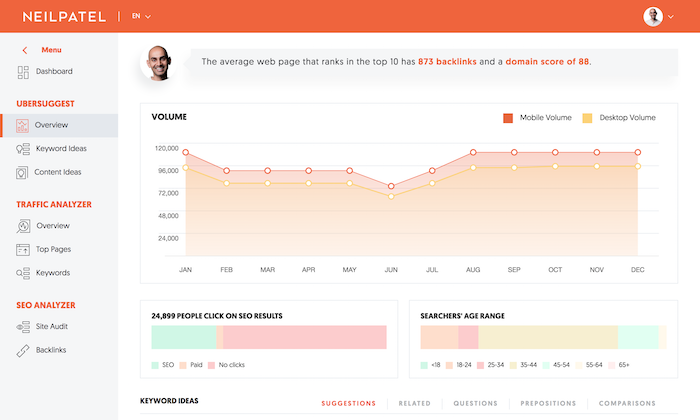
First off, anytime you want to view graphs on historical data, you no longer have to pay.

For example, if you want to see how popular a keyword was over the last 12 months, all you have to do is type it in and you’ll see the data.

If you aren’t logged in, you only see 3 months’ worth of data (this is to help stop scrapers and reduce server expenses), but once you log in, which again is free, you’ll see historical data.

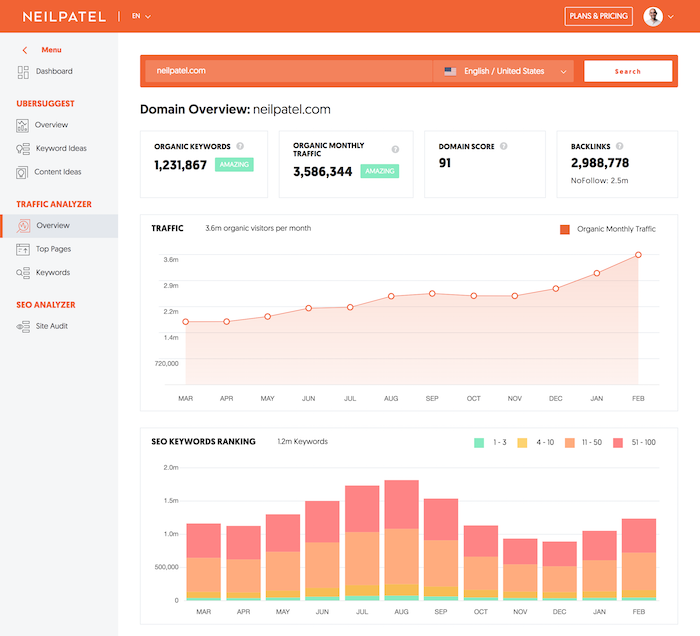
The same goes for traffic estimates. Anytime you look up a competitor, you’ll be able to see their search traffic over the last 12 months as well as how many keywords each site is ranking for during that time period.

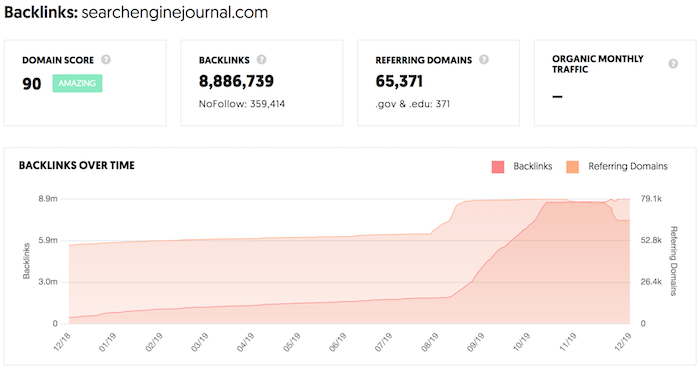
As for backlinks, there is a historical link graph and a new and lost link graph.

Currently, it is blocked off for only paid members, but in the next 7 days I WILL BE OPENING IT UP FOR FREE.

Sorry for the delay, but it takes my developers a bit of time to make this change.

So, within the next week, this will also be available for free.

You also have access to more keywords

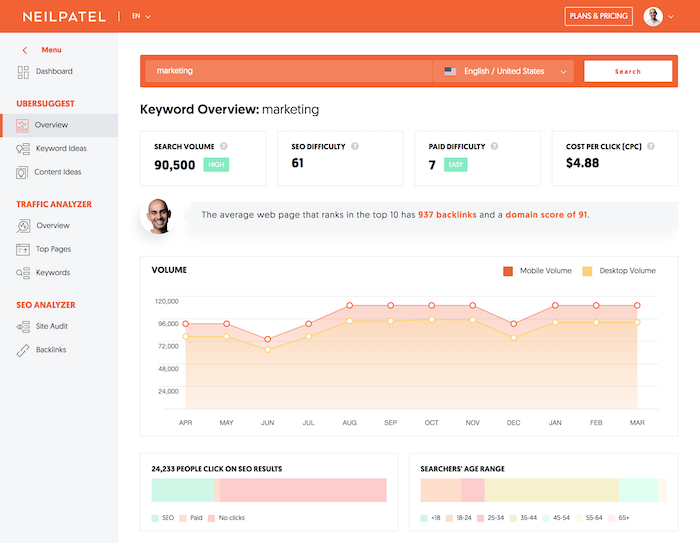
Have you performed keyword research recently?

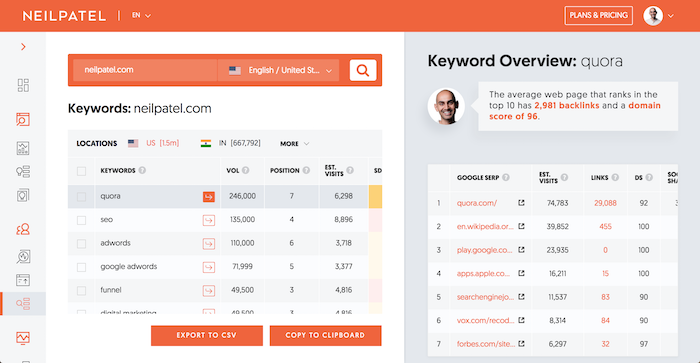
If you haven’t tried, look up a domain and go to the “keywords” navigation item…

Once you land on that report, you will see a really long list of keywords. 🙂

If you aren’t logged in, you’ll be asked to do so, and this is also free. The reason being is this helps stops scrapers and reduces server costs.

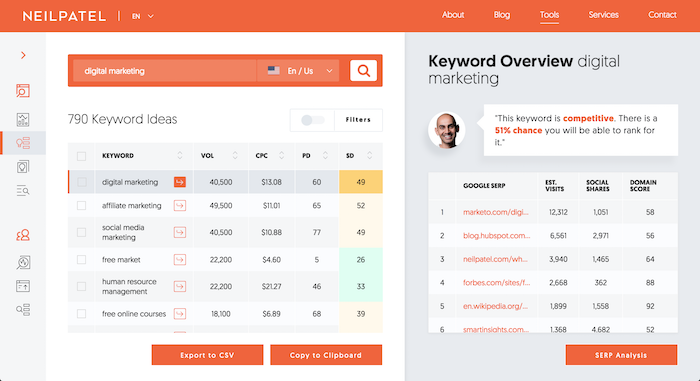
The same goes for the keyword ideas report. This report gives you more keyword suggestions once you enter in a keyword.

In the navigation menu bar, click on “keyword ideas.”

Enter in a keyword and you’ll be given a list of other related terms.

Again, you may be asked to log in, which is free, but that is to reduce scrapers on our end to save on server costs.

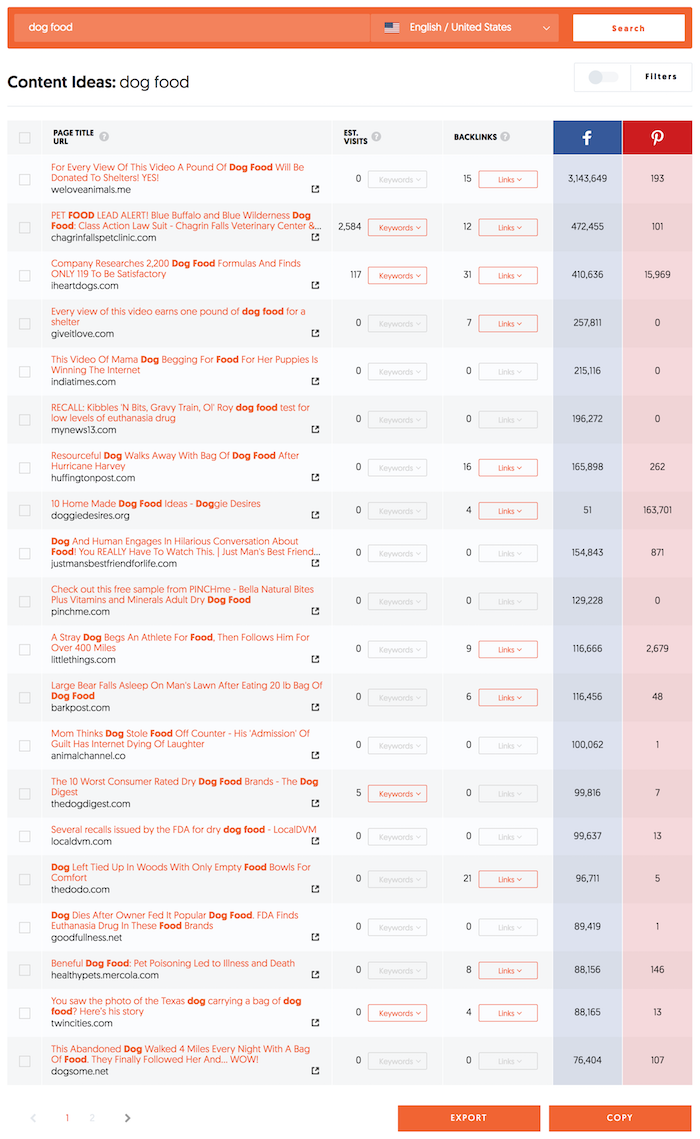
More content ideas and top pages

Over the next 7 days, we are also going to make the content ideas report and the top pages a bit more generous.

We will probably provide four times more results for free on these two reports.

So when you are looking for ideas for your next blog post, you’ll see more recommendations.

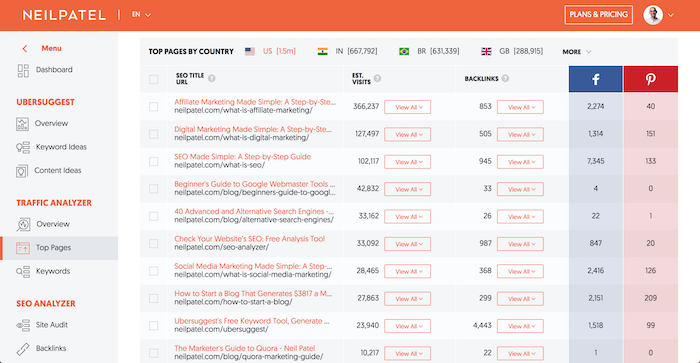
Or if you are looking up a competitor to see which pages drive them the most traffic, you’ll want to go to the “top pages” report. In the navigation, click on “top pages.”

At the moment, you can see some for free, but again in the next week, you will be able to see roughly four times more without having to pay for it.

The changes with the content ideas report and the top pages may be rolled out sooner but by next Tuesday at the latest, they will be ready.

There’s also more good news

My goal with Ubersuggest isn’t to make money. It is honestly to break even as my costs are so high. It’s well over $200,000 a month. 🙁

These changes will probably make it take 12 months for me to break even instead of 6 months… but hey, that’s life. It’s the least I can do with all of the businesses out there struggling due to the Coronavirus and all of the people getting sick.

As paid members, you will still get access to more data, be able to create more projects, and crawl more pages to find SEO errors.

But I am going to sweeten the deal for you over the next 30 days as I am adding some stuff that is going to really help you grow your traffic.

Here’s what I am thinking:

  1. Bi-weekly training – every month, my team and I will be holding 2 group calls to help you grow your traffic. The first call will go over an SEO tactic that you need to implement and I will break down how you can do so. The second monthly call will be a QA where anyone can ask me and my team questions and we will answer them. And if you are wondering if I am going to be on the calls, I will. With my busy schedule, I probably will miss some, but I will be on many of the calls training you myself.
  2. Weekly action plan – I’m currently working on an SEO action plan. As a paid member, I will be giving you 12 things to implement (one each week for 12 weeks) to grow your SEO traffic. If you implement them, you’ll get more traffic. I know many of you are busy business owners, so I am trying to make things easy and help you get the most traffic with the least amount of work.
  3. On-demand help and support – we are adding live chat to Ubersuggest and the NeilPatel.com site. That way you can talk with my team of SEO experts, ask any questions related to your site or marketing, and we will help you. That way you can get customized one-on-one advice. This is what you’ll really need to grow.
  4. Ultimate SEO course – I’m working on an SEO course that teaches you everything about SEO. It’s looking like it will be over 20 hours of video training material as well as worksheets, cheat sheets, and templates for you to use to make it easier for you to get results.
  5. Private Facebook group – we have a pretty decent size community, so why not leverage it to help each other grow? We will be creating a private Facebook group or Slack group (not sure which one), were we all help each other grow our traffic.

You’ll start seeing this stuff rolled out within 30 days as well as the Chrome extension which is in the final round of testing.

I also have some cool new features that we are close to adding that I know you will be excited for. 😉

Conclusion

Over the next 30 days, if you are a paid member, you’ll be getting even more.

And if you are strapped for cash, no worries. I am making the free plan even more generous, as you can see above. Just give Ubersuggest a try and you’ll see it is already “more free.”

My goal has never been to make money with this tool. It’s to help small and medium business owners succeed.

I know times are tough right now but try to stay safe by staying indoors more often and practicing social distancing.

So, what do you think about the new Ubersuggest Free plan?

The post Ubersuggest is Now More Free appeared first on Neil Patel.


from Blog – Neil Patel https://ift.tt/2xkWpH8
via IFTTT

Monday, 23 March 2020

Whatever Happened to the Buzzword “Content Marketing?”

Remember when “content marketing” was the buzzword of the day? You literally couldn’t walk into a digital marketing meeting without someone bringing up the term. And, at one point, it seemed like all major brands were turning into publishers, churning out digital content at a prodigious pace. So what happened? Today, most of the buzz surrounding “content marketing” seems to have dissipated, as digital marketers search out the Next New Thing.

Content vs. distribution

At the end of the day, there is always going to be a struggle between “content” and “distribution.” Content wants to be king, but so does distribution. So it might just be the case that the whole content marketing trend reflected the fact that content was king for a very long time. Now that content is losing its buzz, it could be the case that digital marketers will now shift their focus to distribution.

Think about it this way: there is only a limited amount of content that any brand can create, no matter how many digital marketing agencies they hire. So it makes sense to focus on the platforms (i.e. distribution channels) where you can get the biggest bang for your buck. If you’re a small- to mid-size business, for example, it might make the most sense to focus on Twitter and Instagram, without spreading yourself too thin by embracing every possible social media platform.

As part of the whole content marketing” philosophy, brands were essentially creating content for the sake of content. Even if they didn’t particularly have anything important to say, they were still churning out YouTube videos, Instagram Stories, podcasts, and all types of short-form content. They were developing massive content calendars in which they planned out and scheduled social media content for weeks at a time.

And, in some cases, they were employing so-called “content farms” to generate all sorts of low-quality content, simply to trick the search algorithms to gain some extra traffic. If, for example, brands knew that people were searching for “What time is the Super Bowl?” on Google, they would generate a really short snippet of content telling people when and where to watch the Super Bowl, while also including a brief brand message (i.e. “Don’t forget to buy our nacho chips before watching the Super Bowl on Sunday, February 2, 2020”).

Content marketing, under another name

So it’s perhaps unfair to say that “content marketing” is disappearing. More likely, it’s simply being reinvented and re-thought to reflect the fact that brands need to be a lot more focused about the type of content they create. It can be exhausting to think about creating content for every possible platform, every possible device, and every possible channel – especially when brands are told over and over again that they can’t simply repurpose the same content for a variety of different platforms.

For brands of all sizes, it’s time to figure out where they are getting the biggest bang for their buck. That means re-thinking distribution first and focusing on those social media platforms where they have a competitive advantage, or where they have the available resources to create valuable, compelling content rather than just “content for the sake of content.”


Focusing on quality rather than quantity should be something every marketing team strives for. What else should you bear in mind? See “5 Content Marketing Goals Every Brand Should Have.”


from Oracle Blogs | Oracle Marketing Cloud https://ift.tt/2UrGu1C
via IFTTT