Wednesday, 9 November 2022

Content Gap Analysis: 5 Ways to Find Them & Fix Them

A graphic stating: Content Gap Analysis 5 Ways To Find Them & Fix Them

When it comes to content creation, gaps are inevitable. You can be the best writer out there, but that doesn’t stop the world from continuously evolving.

Information becomes outdated.

Keywords fluctuate over time.

Customers shift interests.

It’s not your fault. But if you want to stay ahead of the game, it IS your responsibility to find and fix any content gaps that arise.

Why are content gaps a big deal?

Content gaps are basically missed opportunities. When customers can’t find what they’re looking for on your page, you can bet their next step will be in the direction of your competition.

The trick is learning how to identify content gaps and knowing what to do when you find them.

What Are Content Gaps?

Content gaps are topics not currently on your website that your target audience is looking for.

Your audience is always on the lookout for new information. And with content gaps so common, you would think that companies would pay closer attention to them. However, a 2021 study shows that 46% of companies with unsuccessful content marketing strategies don’t analyze their content once it’s been published.

Your industry may have thousands of topics your target audience is searching for that you have yet to cover.

For example, say you’re an SEO agency that has dozens of blog posts on advanced SEO techniques. However, you notice readers are bouncing from your pages quickly and far too often.
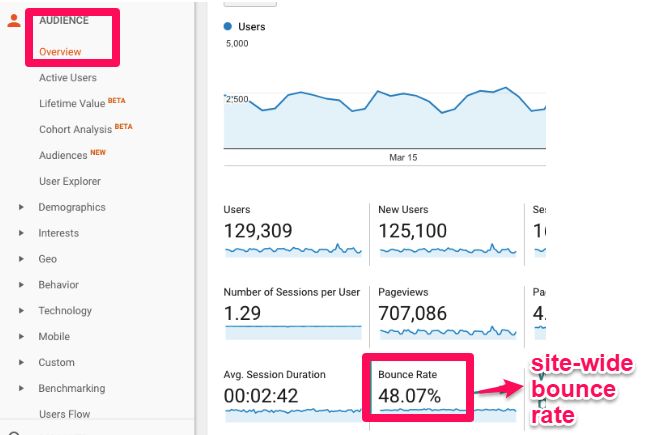
Analyzing the site-wide bounce rate of a website.

You might wonder if your content is engaging enough.

A quick content gap analysis can shed some light on the problem. Maybe your target readers are looking for basic SEO techniques while you only offer advanced information beyond their interest or ability to understand.

If you want to make sure your readers stay engaged, it’s important that the content they’re reading is current and useful for their needs.

Why Is It Important to Identify Content Gaps?

Content gap analysis sounds like a lot of work, but the results are worth the effort.

  • Improved SEO: Eliminate content gaps to improve your site rank on search engines. Your placement on the search engine results pages (SERPs) matters because 88 percent of searchers only visit links on page 1 of search engines like Google.
  • Better connect with your target readers: Fixing content gaps can give your readers exactly what they’re looking for, thus establishing a connection with your site. It’s important and possible to build a relationship with your audience— in a survey of 1,000 American participants, over 65 percent say they felt an emotional connection to a particular brand.
  • An optimized buyer journey: Content gaps analysis reduces bounce rates and increases on-site time, which in turn will improve your conversion rate, resulting in more sales.

What Are the Different Kinds of Content Gaps?

In order to perform a content gaps analysis, you have to learn how to identify them in the first place. Content gaps generally take one of three forms: keywords, topics, and media.

Keyword Gaps

Not all keywords are created equal.

For instance, the click-through rate (CTR) for the top spot in Google for one-word search queries is 32.5 percent, which is higher than the CTR for long tail keywords. However, starting at position two, the CTR for long-tail keywords is actually higher than the CTR for one-word queries.
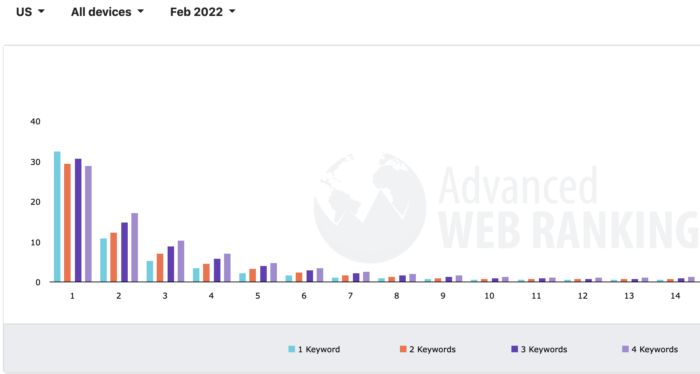
A chart showing keyword gaps for long tail keywords.

Long-tail keywords are so effective because they reach customers that are further along in the purchasing process. While 1-keyword searches tend to be used for information gathering about a topic, searches with 4 keywords or more are used, also known as long tailed keywords, when potential customers are honing in on the product or service they are looking to buy.

If you focus all your marketing resources on short, popular keywords, consider integrating these longer chains of keywords into your content.

The best part? While short keyword searches are highly competitive and lead to low conversion rates, long-tail keywords typically have less competition. So your website will likely rank higher than sites that only optimize their content for generic, overused target phrases. Less keyword competition means your content ranks higher in the SERPs and traffic to your website goes up.

Check out my free tool, Ubersuggest, for some extra help.
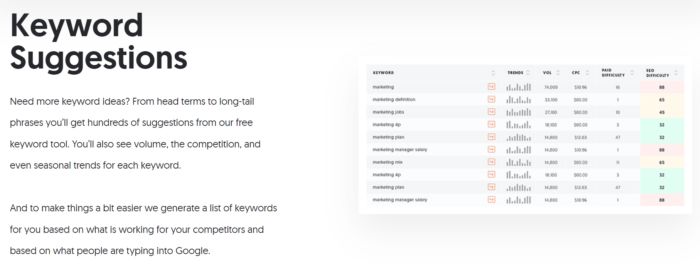
Ubersuggest's keyword suggestions.

Topic Gaps

When people think of content gaps, topics are typically the first thing that comes to mind. Each time you run a content gap analysis on your topics, ask yourself the following questions:

  • Does my site cover every topic readers are interested in?
  • Does my site have comprehensive content for readers at all levels?
  • Are the topics relevant to readers’ current interests?

If you answered “no” to any of those questions, congratulations: you have found a content gap!

Topic gaps are hidden opportunities to add brand-new content to your site. Whether you are diving deeper into a specific aspect of a broader subject you’ve already covered or you are solving new problems that have sprung up in your field, filling topic gaps is a fast way to provide new quality content to potential customers.

Media Gaps

Media gaps refer to a lack of video content on your website. If you have trouble finding time to make video content, you’re not alone. However, you are in a swiftly shrinking demographic.

A survey released in 2022 found that only 14% of businesses refrain from video marketing.

There’s a good reason businesses have shifted to video: it’s what their audiences crave.

Recent studies show nearly 75% of users prefer to learn about a product or service by watching a video instead of reading about it.

The benefits of adding media to your content should not be ignored. Increased brand awareness, higher website traffic, and more direct sales are all possible by simply converting your written content into a video format. In fact, 81% of marketing professionals surveyed say they increased their direct sales with the use of video content.

This is a huge wake-up call for all the content marketing teams out there to find media gaps in their content and fix them by adding videos to their posts.

5 Methods for Finding Content Gaps

You’ve learned what content gaps are, why they’re important, and what you should be looking for.

Now let’s look at how to find and fix them using content gap analysis.

1. Run a Content Gap Analysis Using an SEO Tool Like Ubersuggest

If you’re worried about spending hours poring through data, manually analyzing every piece of content you’ve ever posted, I have some good news for you.

Free and paid online tools like Ubersuggest will do this job for you.

Ubersuggest offers a number of features that let you dig into your website’s data to quickly find problem areas.

Use it to generate reports for keywords, browse top-performing content and even analyze your competitor’s site.

The process for using my tool is simple.

  1. First, visit the Ubersuggest homepage.
  2. Next, enter the domain name or keyword you want a report on.
  3. Click “View all” or select the appropriate filters at the top of the report.
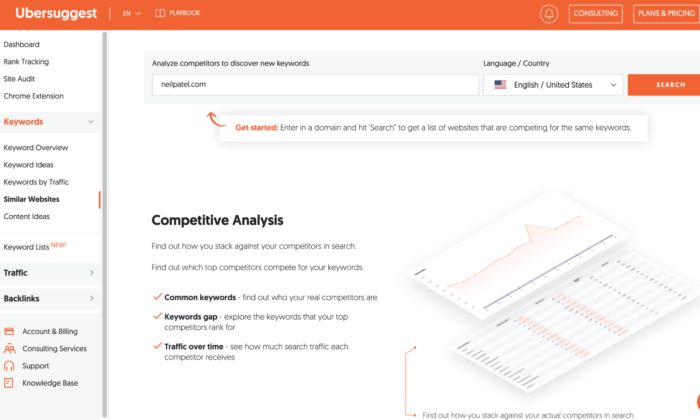
Entering the domain name on Ubersuggest.
  1. Finally, click Export at the top of the report to store the information elsewhere.
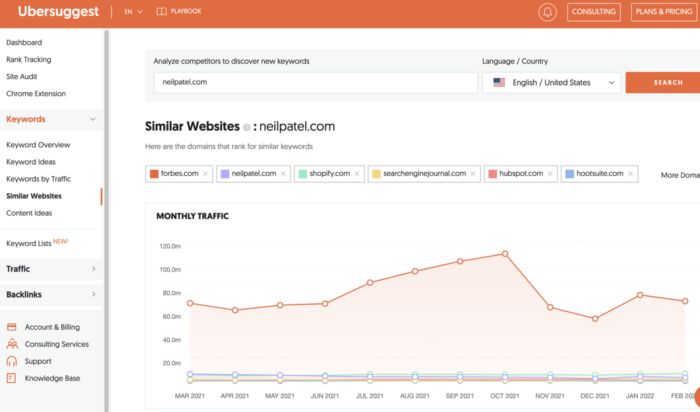
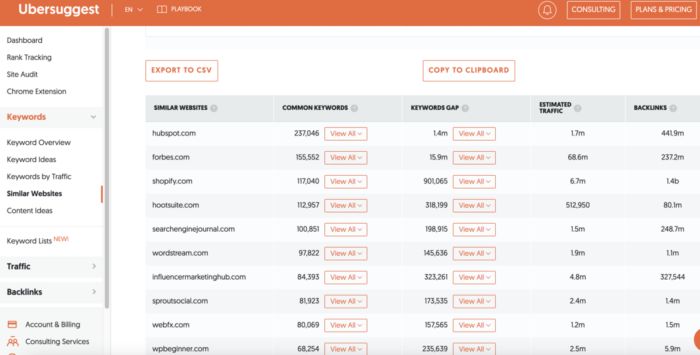
Ubersuggest's similar websites research.
Ubersuggest's keyword research.

How to Fix Keyword Content Gaps

Once you have found stronger keywords for your posts, you can fill the content gaps in several ways.

Include the new keywords in your upcoming content. Don’t just sprinkle them haphazardly. Instead, incorporate keywords organically, in ways that increase the quality of your content.

Update old content with missing keywords. This often entails reworking sentences and even whole sections in order to maintain quality content for your audience.

As a preventative measure, you may want to alter your current keyword optimization strategy as well. Make a habit out of searching for keyword content gaps in your articles to remain at the top of the search results in your field.

2. Audit Your Customer Journey and Identify Content Missing from the Funnel

Not all content gaps are as easy to fix as keyword content gaps. The trick here is to dive deeper into your customer journey to figure out what your target readers need at each stage of their buying process.

Not every customer visits your website ready to make a purchase. Some are just curious, while others are comparing your products with the competition.

For the best results, you want to create content for each of these stages.

You need posts that make users aware of your products and services. You also need posts that provide valuable industry insights that address customer pain points and solve problems.

Even USA.gov took this approach to figure out what content they were missing. With the help of a specific customer audit process called journey mapping, USA.gov created detailed customer personas which were given behavior lines similar to their actual customers. From there, they were able to identify problem areas, confusing web pages, customer pain points and more.

Let’s use my site as an example. New website visitors wondering what my companies are all about can find everything they need to know with one click.

Neil Patel promoting thought-leadership.

You’ll also need content for users to compare options between your product and the competition. This can be as simple (and powerful) as a “vs” article. You can offer comparison points for well-known competitors.

Buy Me a Coffee does this well with an attractive comparison page featuring their top competitor, Patreon. Notice how they highlight features that are exclusive to their brand.
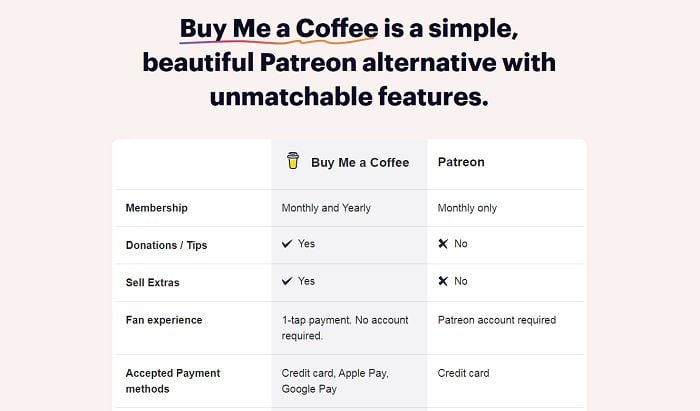
Buy me a Coffee's pricing plan.

How to Fix Content Gaps

Content gaps are the easiest type of gap to find and fix. Once you’ve mapped your customer journey, you’ll have a better idea of which stages in the buying process you need to add to your existing content.

Create helpful tutorials and interesting industry articles. Write about the products and services you offer. Take what you have to offer and compare it to the competition.

3. Manually Search Competitor Websites to Identify Content Gaps

It’s not always clear what your content is missing. Thankfully you can always take a peek at what the competition is up to!

It can be hard to figure out what’s missing from your content on your own.

That’s where you can get help from the competition!

It’s quite simple.

Identify what your competitors are doing right and then replicate it. Remember, the goal isn’t to create an exact copy. Rather, your aim is to find keyword, topic, and content gaps that your competition fills.

You can do this manually by visiting competitor websites and noting what is missing from your own site.

For example, you may visit another SEO agency’s page and see they’re covering Google’s most recent algorithm update, but you haven’t yet.

How to Find and Fix Content Gaps Through Manual Competitor Research

  1. First, make a list of your top competitors. If you aren’t sure who they are, Google some of the most important keywords you target and see who else is ranking for them. You can also use SEO tools to help you find competitors.
  2. Next, visit each competitor’s page and make a list of topics your website is missing.
  3. Finally, brainstorm with your team about how to create a page on the same topic in a different or better way.

Be careful, though.

While competitors can provide inspiration for new content ideas, avoid copying exactly what they do. You want to look for new perspectives they failed to cover. A competitor may be getting great results with a particular keyword, but it doesn’t mean you should always create similar content. Think critically about whether what your competitor is doing is even applicable to your website and audience.

4. Use Google Search Console

Did you know you can use the Google Search Console to perform a content gap analysis?

I’ll show you how.

First, log into Search Console and click “Search Results” on the left side of the page.
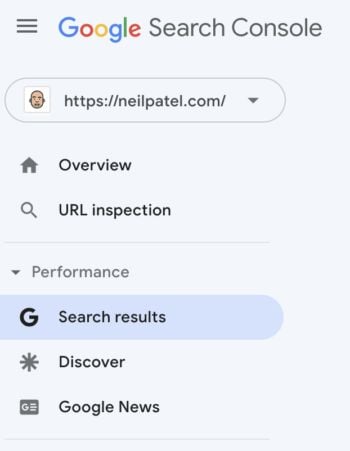
Google search consoles side bar.

Next, click the “+ New” next to “Search type” and “Date range” (which you can modify).
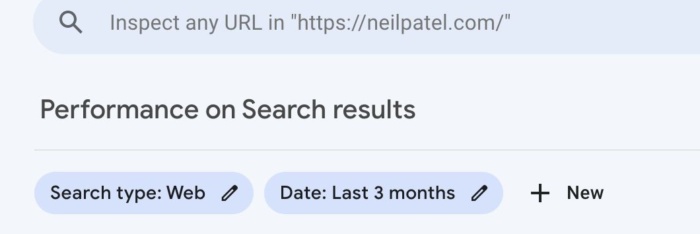
Google search console's filters.

When the box pops up, click “Page.”

Enter the URLs for your top-performing pages, one at a time.

When the results populate, see what keywords you’re ranking for on that page.

Go to the page on your website or in your CMS and search for all of your top keywords from Search Console (either top clicks or impressions).
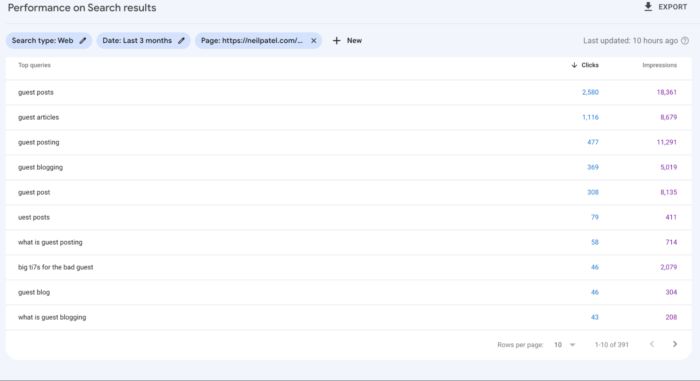
Top keywords from google search console.

Finally, go to the post on your website and make sure the content is related to your top-performing keywords. Odds are, some of the keywords you rank for will not actually be covered on the page.

Once you identify the keywords you’re ranking for that are not covered on the page, create content that does by either creating a new post or adding a section to your existing one.

5. Perform a Self Content Audit

When was the last time you poked around your own website to find gaps in your content?

Using SEO tools and checking out the competition can be effective, but sometimes it’s easier to perform an audit on your own content instead.

Self content audits are a solid practice to perform on a regular basis, as it develops your eye for identifying gaps faster. This can help you find problem areas in your current approach and improve the creation process for future content.

Not only that, by running a content audit, you’ll occasionally discover broken links, outdated images, and even grammatical errors that can then also be fixed before they give visitors a negative experience.

For instance, you can start by updating old reviews on your page. Studies show 79 percent of consumers trust online reviews as much as they believe in personal recommendations, so updating outdated reviews can increase customer trust in your website.

An important thing to keep in mind here is that self content audits aren’t the type of thing that you only do once. A regular cadence is key here to keep your content fresh. How often you do it will vary based on how much content you have and your industry, but 6 months is a good starting point.

Content Gaps Frequently Asked Questions

How do I fill a content gap?

Create content for new topics, update older content with more recent data and research the best keywords to use. Check the competition for other content gaps. Run a self content audit on your entire website.

What tools do I need to find content gaps?

Free and paid SEO tools like Ubersuggest can help find content gaps through competitor analysis, keyword research, and SEO audit features. You can also perform these functions manually with the help of offline tools like spreadsheets.

What kinds of content gaps are most important to fix?

The keywords you use in your website or blog can make a world of difference when it comes to ranking higher on search engine result pages. Data shows that less than one percent of users visit the second page on Google, so it’s best to optimize your keywords to get on the first page.

Media gaps are the next most important gaps to fix. The need for video content will only increase. If you haven’t already, start transforming your written content into video. 

How bad is it to have content gaps?

Content gaps make it difficult to attract new readers, retain your current readers, and encourage them to convert. If your page has a lot of content gaps, your readers will move on to a competitor that fills the void. Having content gaps will diminish your authority in your space. Being up to date and relevant will instill trust within your readers that you are the industry expert.

Conclusion: Content Gaps

By utilizing SEO tools, like Ubersuggest, to find keyword and topic gaps in your content, your pages will see more traffic than ever before. Examine your keyword strategy with Google Search Console to figure out where you can close the gap.

Use content gap analysis on competitor pages or on your own site to discover what you can change.

Content gaps are secret opportunities that, when fixed, lead to valuable material that attracts new audiences and the potential revenue your business can earn.

Using these methods, you should be able to generate plenty of new content ideas and drive more traffic to your website.

Which method for filling content gaps are you going to try first? Let me know!


from Neil Patel https://ift.tt/pVy3XkB
via IFTTT

Monday, 7 November 2022

5 Blogs That Are Making Money in 2022 (and How You Can, Too)

Have you ever wondered how to make money blogging about the things you love?

What if I told you it’s possible to write about your passions and make money with a blog? There are a variety of niches you can monetize in different ways.

Finding the right one can bring in a steady stream of income. The average blogger sees up to $1,000 every month.

I want you to aim higher. Let’s talk about how you can make money blogging.

There’s no one formula to creating a successful blog, but there is one common thread: Have a unique story to tell.

Blogging is not dead, and it’s not too late for you to start one.

Why Do Some Blogs Fail to Make Money?

Blogs fail to make money because they’re focused on the wrong thing. What are the right things?

You want to make sure your blog is interactive and informative. Your blog supplies something to your audience, so you need to bring value or you’ll be just another blog of many.

While quality of content is the most important factor in your blogger success story, let’s get you bringing in some money.

However, the money won’t come without earning your audience’s trust.

You want to build authority, right? You want to show you’re an expert in your field. Well, don’t treat this like a hobby or a side hustle.

After all, we know how important E-A-T—which stands for expertise, authoritativeness, and trustworthiness—is to ranking in SERPs.

Have a Plan in Place

Build upon a workable plan. Don’t just “wing it” and set yourself up for failure.

Some fail to learn how to make money blogging because:

  1. They don’t research the niche they’re blogging about prior to launch.
  2. They aren’t investing in their blog like the business it is.
  3. They aren’t building a team to assist them.
  4. They aren’t connecting with their audience.
  5. They aren’t setting actionable goals.
  6. They don’t measure their success.

You must have a clear purpose and intention with your blog. If you want to build trust in your niche, it takes a strategy.

Making money from your blog is possible, but it won’t happen if you set a blog post and forget it.

I’ll show you some success stories so you can focus on creating standout content that attracts and builds a community.

You can make money with blogs, and I’m going to show you how.

2022’s Blog Success Stories

Your blog may not be an overnight success, but you can spark interest in people to engage with your content.

Let’s look at some of 2022’s most successful blogs generating a sizable revenue.

Huffington Post: How Blogs Make Money Without A Product

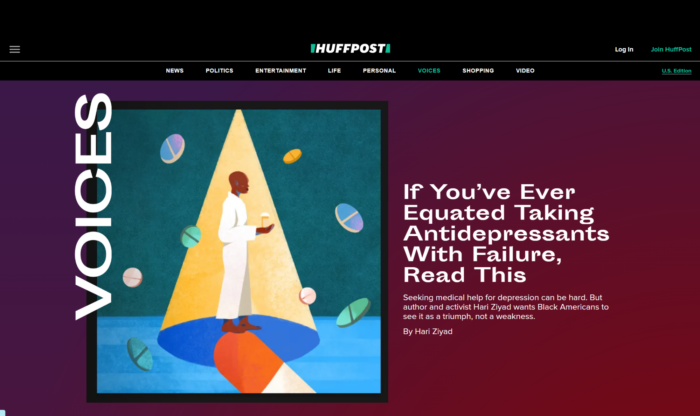
A screenshot of Huffington Post's website.

I’m sure you’re not surprised by this one.

Since 2005, Arianna Huffington and her Huffington Post co-founders have been publishing news stories as they unfold. Thousands of readers daily rely on their articles. They’ve established themselves as not just one of the world’s largest websites but one of the most popular.

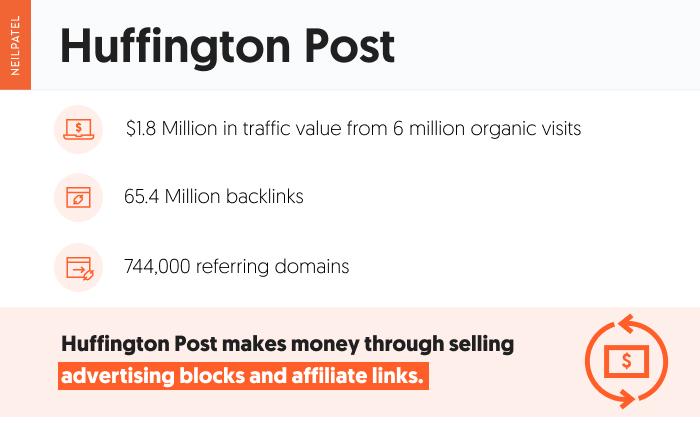
A graphic indicating the profitability of Huffington Post's website.

In June 2022 alone, HuffPost’s organic traffic of 6 million had a value of $1.8 million. Note that by organic traffic value, we mean the monthly equivalent cost of traffic from all the keywords that a given URL or website calculates for if the site owner was paying for it through PPC versus earning the traffic organically.

Not only does HuffPost make money with blogs, but its revenue consists of online ads and money from corporate investments.

Seeing the numbers above, it is easy to understand why they are among the top-earning blogs worldwide.

While no products are sold on HuffPost, they make money with blogs that speak to their value—creating trustworthy content that engages readers.

goop: Profit Through Lifestyle and Wellness Branding

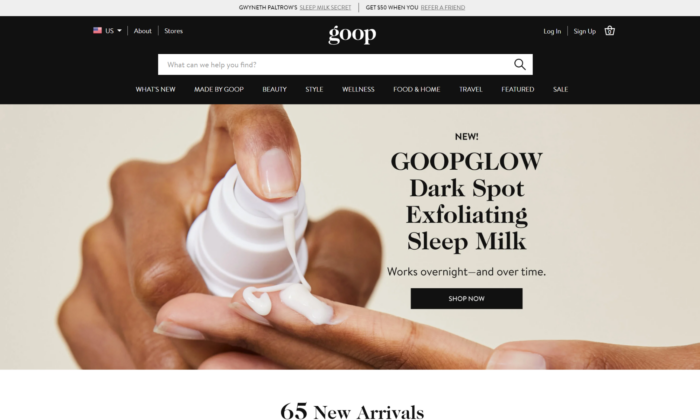
A screenshot of goop's website.

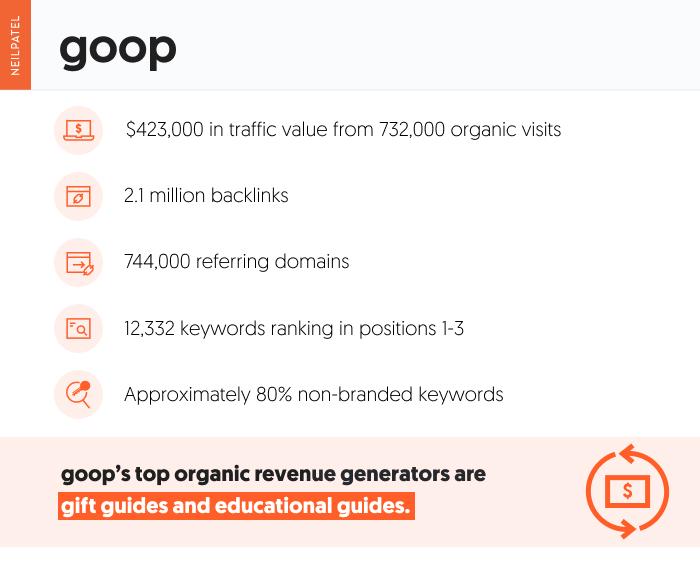
goop is a wellness and lifestyle brand started by actress Gwyneth Paltrow as a weekly lo-fi newsletter back in 2008. Her slogan “Nourish the Inner Aspect” resonates with her audience based on the average 732K organic traffic.

A graphic depicting the revenue generated by Goop.

This traffic value is about $423K but wellness products are also sold on the site.

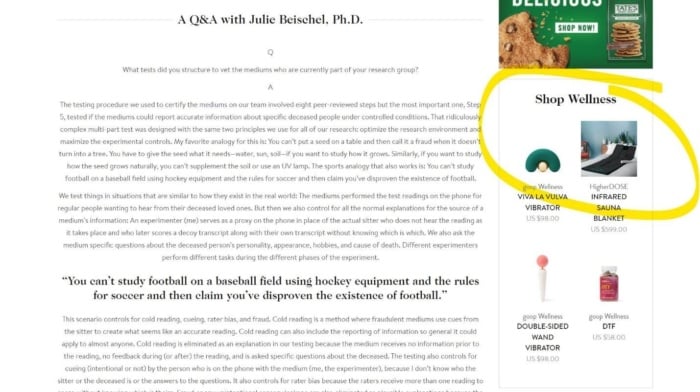
A screenshot of goop's website with a yellow highlighter circling the words "Shop Wellness."

Let’s look at goop’s third-largest revenue driver, “Are Mediums Real?” The reason it’s likely successful is because it’s thought-provoking. This is an edgy topic you probably won’t see on other sites, let alone the extensive research to support the ideas mentioned.

Other top pages that bring in organic revenue on goop are generally guides. They educate the audience aside from having product offerings listed on screen and ads from aligning brands. goop shows that when you’re true to your audience and provide unique content for them, you will see the return in numbers.

Yaro: Building Revenue Through Ad Space

A screenshot of Yaro Starak's webpage.

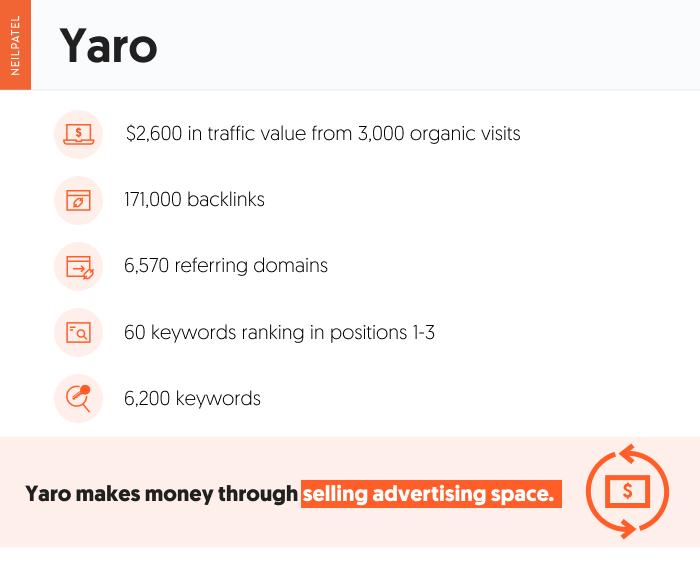
Unlike the last two examples, Yaro is written in “true” blog fashion. It’s not a true media publisher, and he makes money selling advertising space.

The data shows backlinks and the use of organic keywords drive this blog’s strong numbers. The majority of the high-ranking positioned keywords are non-branded.

What does that mean?

It means Yaro Starak provides solutions for those seeking his expertise on personal growth and success. He captures people searching for queries related to the space – not those specifically searching for this name.

A graphic depicting the revenue generated by Yaro.

Yaro drives success through meeting search intent. By having the answers that people need, he is able to increase his rankings, which in turn, increases the value of the ad space he sells.

Yaro’s blog is a good example if you want to make money with blogs using a more organic method. There’s nothing wrong with that as long as you stay true to your audience and site goals.

Abby Organizes: Relatability As A Marketing Tool

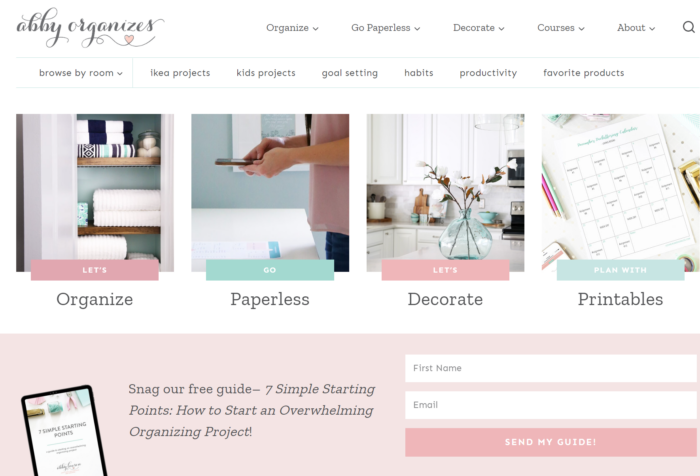
A screenshot of Abby Lawson's blog page.

Abby Lawson took to her blog to create a space where she could share inspirational tips on organization. Her hobby has grown into a six-figure family business, helping others with productivity and home décor tips along the way.

Her content is relatable and covers the bases for those who, as she puts it, don’t have the “organized gene.” She’s likely earned her audience’s trust by helping address this issue for many other hard-working families.

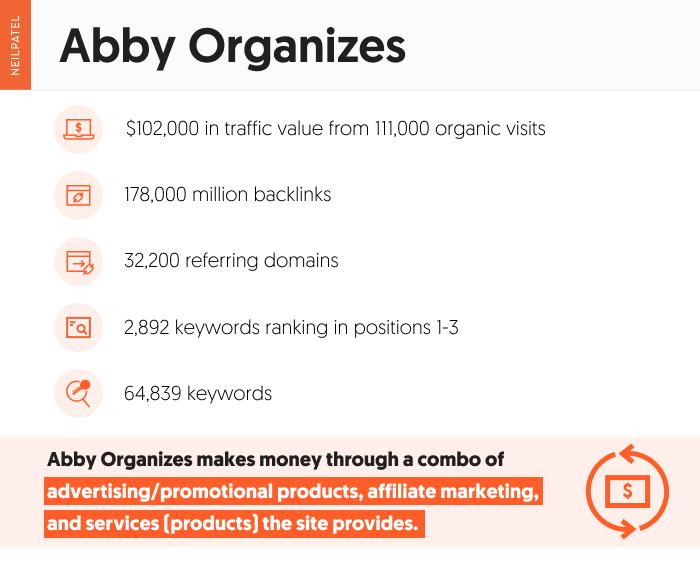
A graphic depicting the revenue generated by Abby Organizes.

Her organic traffic is reflective of her traffic value. More than 175K backlinks show how credible others deem her site and information.

We can also see this broken down in her URLs and keywords. Lawson’s top keywords— branded and non-branded—include reviews from supporting sources and printable templates. There’s value in what she’s offering that is tangible for her audience.

With so much to offer her target audience, she gains more income from ads, affiliate marketing, and various sponsorships. Because Lawson’s audience trusts her, they are likely to support and trust her paid recommendations.

This is a great way to foster your community online.

A Beautiful Mess: How Helpful Content Makes Money

A screenshot of "A Beautiful Mess," a lifestyle blog founded by sisters Elsie Larson and Emma Chapman.

Founded by sisters Elsie Larson and Emma Chapman, this lifestyle blog resonates with those looking for an ideal DIY project. It’s one of the largest DIY style blogs in the world. You name it. They’ve probably already made it.

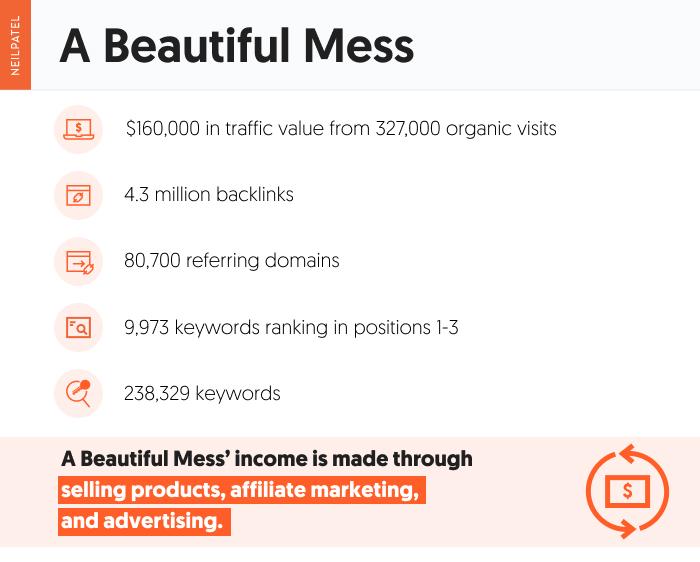
A graphic depicting the revenue generated by A Beautiful Mess.

A Beautiful Mess has garnered over 4 million backlinks, showing just how many sources find the site credible. The road to 4 million backlinks takes work.

High-quality, or link-worthy, content is what gets you there.

Why?

Because backlinks are like testimonies for your web page(s). Backlinks are some of the most important SEO ranking factors. The more high-ranking URLs link to your page, the more domain authority you gain.

Besides the huge number of referring domains and backlinks, Elsie and Emma offer skills to their audience. This is key to relationship building with an online community.

How these sisters mix in products, affiliate marketing, and ads works because their audience trusts them to educate them. They’re all about getting creative, and their audience is looking to get creative—whether it’s in the kitchen or through a project.

The keywords they use put them in the position to make money while blogging. What’s especially ideal is their branded and non-branded keywords are ranking equally. From Elsie and Emma’s results, it’s clear that their site is who Google, and other search engines, deem the authority in the DIY and recipe space due to their keyword dominance in those important positions 1-3.

How You Can Start Making Money with Blogs

You know how to start a blog, but have you grasped how to make money blogging? There are many strategies bloggers use. Some are more demanding than others.

The majority of blog revenue sources depend on varying factors like search engine algorithms and brand budgets. Therefore, I strongly advise you diversify your income by utilizing a variety of sources like ads, products, or sponsorships.

When it comes to income potential, your blog feeds off two variables: your niche and your revenue sources. Once you know your audience, you can explore monetization strategies.

You know what makes sense to them and what benefits their needs as well as yourself financially. You don’t want to be paid for affiliations you don’t agree with. So, stay true to your brand and your audience will stay true to you.

But in the beginning, you need an entrepreneurial mindset.

Income does vary from blogger to blogger. However, as the money trickles in, you can experiment with ideas to see what is working in your favor.

Turning your blog into a moneymaker isn’t a linear process.

Focus on building content that converts to develop that loyal following — and the monetization opportunities that come with it — and you might just end up as successful as HuffPost or goop.

Conclusion

The bottom line is starting a blog can be fun and profitable.

But it won’t come easily.

You’ll wear a lot of hats getting your footing through an ever-changing medium. However, you can replicate what’s working once you see fulfillment and success.

So, ask yourself: Am I blogging as a hobby or in a way that yields income?

There are different strategies for simply running a blog versus monetizing a blog. Your endgame is to go from content for content’s sake to being able to consistently make money blogging.

Once you find a reliable host for your site, you’ll be ready to start building credibility and trust with your audience.

Always stick by what works, remember your audience’s needs, and the money will come.

Have you considered making money by blogging? Are you seeing the results you want, or have you hit a plateau? Let me know about your experience.


from Neil Patel https://ift.tt/SyeoV7Q
via IFTTT
Friday, 4 November 2022

Link Building for Local SEO: 7 Simple Strategies

Graphic that says, "Link building for local SEO: 7 simple strategies."

Consumers want to connect with local businesses.

According to Google, searches including “near me” are increasing by 500 percent year on year.

What’s more, 81 percent of consumers used Google to search for information on local businesses in 2021.

What does this mean for digital marketers?

Well, if you’re hoping to reach local consumers, then you need to ensure they can find your business online. You need to propel your content to the top of relevant local Google search rankings.

One way to do this is by embracing the power of link building, specifically, link building for local SEO.

Let me show you how local link building works, why it matters, and how you can start building your own link profile.

What Is Link Building for Local SEO?

Link building refers to the process of acquiring links from other websites back to your own. These links are known as “backlinks,” “inbound links,” or “incoming links,” and they help to drive traffic to your website.

Now let’s put the two concepts together.

Link building for local SEO is the process of acquiring backlinks from relevant local businesses. The goal of local link building is to boost visibility in organic local search results and draw more traffic from local customers who are more likely to purchase from you.

Why Link Building for Local SEO Matters

There are three major reasons local link building matters.

First, Google considers the number of backlinks you have when determining your page rank. The higher the number of quality backlinks you have, the better your chances of securing a page one ranking. Over 67.6 percent of clicks go to the first five organic search results!

Second, link building for local SEO helps you drive specific, highly targeted search engine traffic to your website. By targeting the right traffic, you’re more likely to draw people who are serious about making a purchase.

Finally, link building for local SEO is a great way to build your brand’s visibility organically. It takes, on average, seven brand impressions before someone takes action (the marketing “Rule of 7” as it’s colloquially known). Better brand visibility helps you nurture prospects.

Link Building for Local SEO Strategies

Are you ready to get started on building your backlinks? Here are my top six strategies.

1. Get Links From Travel and Local Review Websites

According to research, 98 of consumers read online reviews about local businesses, and 85 percent of consumers are looking for a high star rating.

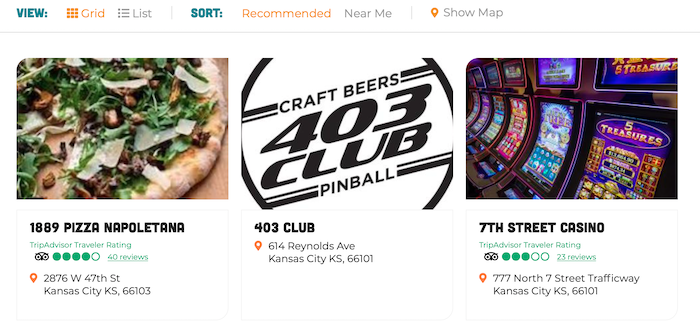
In other words, you need positive reviews, and you want them from websites that can help you with your local link building goals. For example, here’s a rundown of nine great new restaurants in Kansas City:

A review website providing a list of the best new restaurants in Kansas City.

Each listing includes a backlink and contact details:

Local link building on a review website in Kansas City.

As another example, Visit Kansas City, a travel website, has listings of popular local restaurants:

Local link building on a travel website in Kansas City.

Want customer reviews like this? You need to encourage your existing customers to leave reviews.

Kansas City magazine reps visited restaurants based on existing customer reviews rather than accepting cold pitches.

  1. Make it easy for customers to leave reviews on Google, Yelp, and other popular platforms.
  2. Offer incentives, e.g., a kayak business might offer a discounted kayaking session for reviewers.
  3. Highlight customer testimonials on your social media platforms—they make great User Generated Content, and often encourage others to leave their thoughts.

Link building for local SEO often means doing some manual outreach, so you can, of course, pitch local websites and see if they’ll list your business.

Just make sure you send a professional pitch, include relevant business information, and provide links to any customer reviews (if available.)

2. Hold Special Events and Promotions to Get PR Links

Want to build your local presence and increase brand awareness, all while sourcing local link building opportunities?

Consider holding special events or campaigns.

If you need some event inspiration, you might:

  • sponsor a local sports team
  • host a charity fundraiser
  • run a workshop
  • hold a contest

Or, you could offer promotions like a free product demo or seasonal discounts. It all depends on what makes the most sense for your business model.

Once you’ve chosen an event or promotion, you need to advertise it.

  1. Do some online research to find your local news outlets such as local papers, radio channels, Facebook community groups, etc.
  2. Decide which outlets to target based on your consumer demographic. 96 percent of 18 to 25-year-olds and 87 percent of 55 to 66-year-olds check social media daily, so online platforms are a good place to start.
  3. Draft a short press release. Include key events, details, and a URL for the backlink.
  4. Don’t forget to include keywords in your press release, too. Ubersuggest can help you find relevant keywords.

3. Get Listed in Local Business Directories

According to research, 94 percent of consumers have turned to a business directory at least once in the last year to learn more about a new company.

For local link building opportunities, target directories and get your company listed. Popular business directories include:

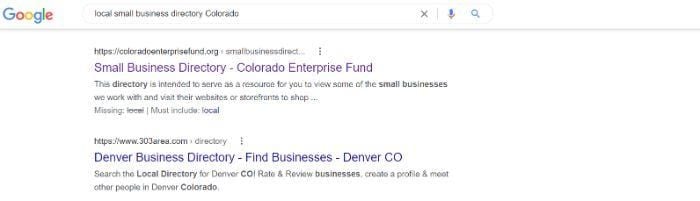
Want to find more local or niche directories? Google is your friend. For example, if you search “local small business directory Colorado,” one of the top organic search results is Colorado Enterprise Fund’s Small Business Directory:

A screenshot of Google's webpage with "local small business directory Colorado" in the search bar.

When you’re ready to pitch a local directory, follow their instructions closely. Set out your key details, like your website and opening times, and include a short description of your business.

Every detail helps a directory verify your business which could improve your chances of acceptance (and acquiring a backlink).

4. Create a Blog Covering Local Topics

Do you have a blog yet? If not, start one and focus on covering local topics. Sure, this step requires more effort on your part, but here’s why blogging is worth it to build links for local SEO.

  • Blogging lets you showcase your knowledge and expertise, which increases consumer trust and, ultimately, encourages them to choose your brand over competitors.
  • According to a Demand Gen report, 60 percent of buyers read blog posts in the early stages of the purchase process.
  • Blog content is easy to share on social media. Over time, more shares mean more visibility for your brand which draws more traffic.

Once you’re ready to start your local blog, here’s how to get backlinks to your posts.

  • Backlinks begin with great content. Spend time researching what your audience wants and craft articles to meet their needs. If readers find your content useful, they’ll link back to it.
  • Pitch your content to link roundups. Roundups highlight great new content in a specific niche, and since the authors are always looking for content to feature, there’s a good chance they could offer a listing and backlink.
  • Highlight your posts on social media. The more people share your content, the more likely it is you’ll reach bloggers looking for content to link to.
  • Be active on platforms like Twitter, LinkedIn, and Facebook. Build business relationships, establish yourself as a local expert, and you’ll acquire backlinks naturally.

5. Use an SEO Tool Like Ubersuggest to Find and Target Competitor Backlinks

Why should you care where competitors get their backlinks?

It’s simple.

These are the types of places likely to link back to you, too, so it’s worth doing some competitor research to find websites to target for local link building opportunities.

Here’s how to use Ubersuggest to target competitor backlinks if you’re link building for local SEO.

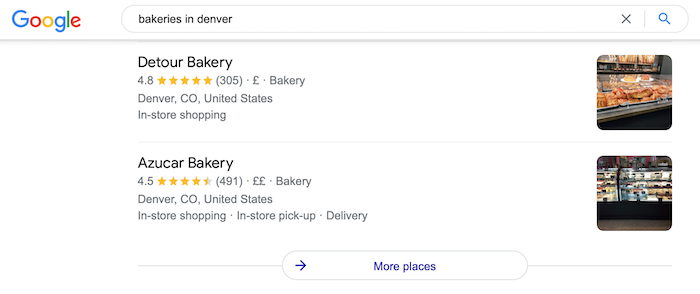
Say you run a bakery in Denver. If we run a Google search, we can see one of the highest-ranking local bakeries is Azucar Bakery:

Screenshot of Google's webpage with "bakeries in denver" in the search bar.

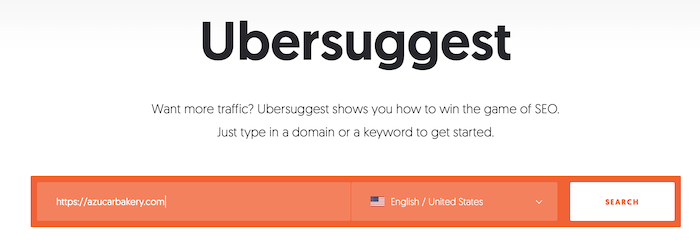
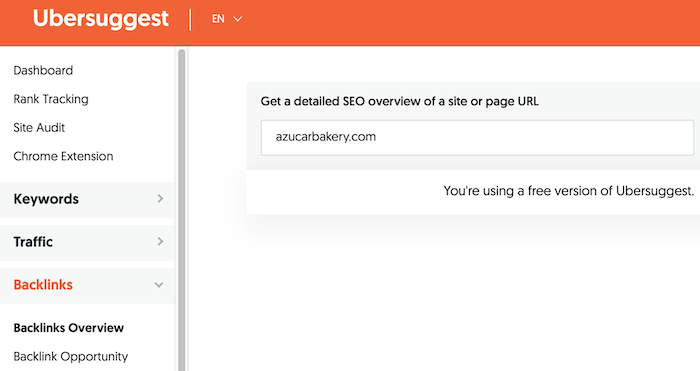
Enter their website domain into Ubersuggest and click “Search” to get started:

Use Ubersuggest to help with local link building.

From the main screen, go to the left-hand column, scroll down to Backlinks, and click “Backlinks Overview”:

Use Ubersuggest to help with local link building.

Enter the domain name again and hit “Search” to load the results:

Use Ubersuggest to help with local link building.

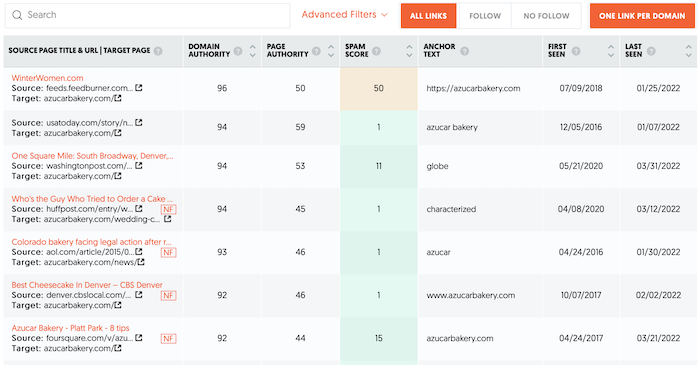
On the next screen, scroll down to the “Backlinks” results. You’ll see a list of the domains that link back to Azucar Bakery:

Use Ubersuggest to help with local link building.

Once you know the type of websites linking to your competitors, you can target them yourself.

How you use these backlinks depends on your marketing strategy and business goals; in this case, you might make sure you’re listed on Foursquare and also target websites for product reviews.

6. Find Unlinked Mentions of Your Brand and Ask for Links

Unlinked brand mentions can present golden opportunities to secure backlinks from high-quality, authoritative websites.

For one thing, it’s easier to send outreach emails to the relevant contact if they already know your brand.

If they’re discussing your products or services, then it’s reasonable to think you might ask for a backlink, right?

There’s no need to pursue every brand reference, though, especially if it’s on a low-quality website that won’t boost your rankings—so here’s how you might find backlinks worth pursuing.

First, scan the internet for unlinked brand mentions. You can do this by using a tool such as BrandMentions:

Screenshot of BrandMentions, a local link building tool.

Then, identify the relevant contact to send an outreach email. The contact could be the website owner or someone from the marketing department. You can usually find these details using tools like LinkedIn or social media such as Twitter.

Finally, send your outreach email. Compliment their company, and thank them for mentioning your brand. Politely explain why adding a backlink could benefit their company and consider offering them a link in return.

Don’t neglect those unlinked brand mentions. Instead, seek them out, build relationships with other website owners, and convert them into useful backlinks.

7. Work To Get Mentioned By Local Publications and Bloggers

While PR campaigns are a good idea, you should also look to get noticed more organically by local publications and bloggers. You don’t want every mention of your website to be linked to an event or publicity stunt. Instead, focus on building real connections with local bloggers.

You can also request to have your website added to local business roundups that may already exist on their blogs. These types of posts tend to be published and then not updated for years.

So seek out local round-ups that were published, but not updated, within the last 6 months or more and reach out. You really want to sell your website as a beneficial addition for readers, so don’t be modest.

Are you hesitant to reach out?

Remember that local publishers and content creators are always looking to network with, you guessed it, local businesses.

Just reach out with the intention of benefiting both of your interests and the reception is likely to be positive.

8. Purchase Domains In Your Industry

Did you know that a whopping 70 percent of domains are not renewed after the first year?

That’s a lot of opportunity for local businesses, like yours, to swoop in and buy relevant domain names in your industry.

You can purchase more than the domains, too. You can purchase the website outright from the owner. This is sometimes referred to as a domain name transfer agreement, or a website asset transfer agreement.

What’s the difference?

When you buy a lapsed domain from a host like GoDaddy, the domain name can then be used by you to set up a new website. You can also set it up as a redirect to your established website.

When you buy a website from the owner, you typically purchase the domain as well as all content that currently exists on it.

While the price tag for a complete website takeover may be daunting, just consider the time and money you spend by inheriting all of this worthwhile content. Not to mention, you retain the domain authority and the content retains its publication date, which lends more credibility to the site.

So where do you start?

If you have a domain in mind, head over to Whois.com and enter the domain in the top right search bar:

Screenshot of Whois website's.

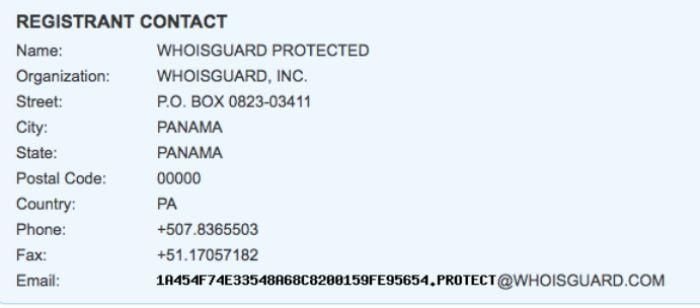
You can usually find the contact information for the owner via the records that come up. That is, unless, the domain information is protected, like this:

Use Whois.com to help with local link building.

In that case, find a contact form on the website and reach out. It never hurts to ask!

9. Don’t Forget About Internal Links

Internal linking should be a part of your content strategy already. After all, it’s an opportunity to serve up more relevant content to your readers.

The longer time spent on your website, the more engagement.

Internal linking can also be a good strategy for local link building. How so?

Your website is considered local content. So, while internal links won’t count as backlinks, they will still count as local links to your content.

The benefits of internal linking don’t stop there.

Internal links help Google to understand the structure of your website, including the relationship between pages and their relevance. By linking to posts internally, you’re ensuring Google can find and rank all relevant content. This will serve you well when it comes to ranking for local search results.

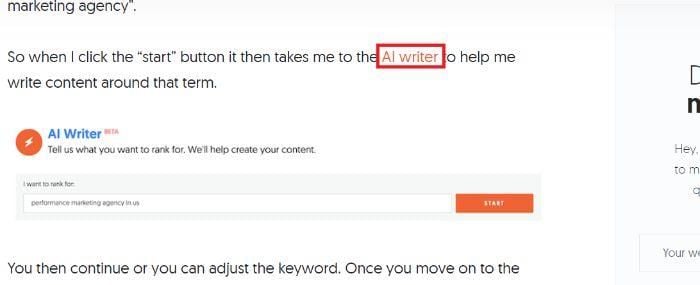
Take this example from our blog post on prioritizing SEO:

Screenshot of an AI writer to help with local link building.

The phrase “AI writer” is hyperlinked to our blog post on, you guessed it, the Ubersuggest AI writer feature. This lets Google know that we think that article is 1) related to this topic; and 2) important enough to highlight.

Internal links can also help you to establish value for a new blog post without significant work. You’re essentially lending value from one (or more) blog posts to another. This is known as the “flow of link value.”

So, while internal links shouldn’t be your first line effort for link building for local SEO, they should be included in your overall strategy.

Link Building for Local SEO Frequently Asked Questions

How important are links for local SEO?

Links are hugely important for local SEO because they help to boost your local search ranking. With a higher ranking, you’re more visible in search results, and customers are more likely to visit your page.

Should I use an agency for help with my local SEO link building strategy?

You might find a digital marketing agency partnership helpful if you lack the time or resources to dedicate to marketing, but it’s absolutely possible to create your own strategy by following the tips I’ve outlined above.

How can I get reviewed by local publications to get backlinks for my business?

Link building for local SEO means liaising with local businesses. You could contact local publications directly, host an event and invite their representatives, sponsor a contest, or even reach out to and sponsor local influencers. It all depends on your marketing budget and what’s most likely to appeal to your target audience.

Is a blog a good way to build local SEO backlinks?

Yes! Blogging is a great way to build links naturally in the long term, so prioritize writing useful, engaging content on a regular basis. Don’t forget to optimize your articles for local keywords.

Conclusion

Local link building is a great way to improve your SEO, boost search engine visibility, and draw relevant traffic to your website.

You won’t see results overnight, no, but you should consider link building as a key part of your longer-term marketing strategy.

While you don’t need to try all the tips I’ve suggested, start with the strategies that make the most sense for your business and, in the meantime, focus on producing regular, high-quality blog content to build your brand’s trustworthiness.

If you need any extra help with link building for local SEO, check out my consulting services to see how I can help you boost your local rankings.

Have you tried any of these local link building strategies? How are they working out for you? Let me know below!


from Neil Patel https://ift.tt/hHB5vOV
via IFTTT
Thursday, 3 November 2022

What Is the Difference Between Copywriting vs Content Writing?

Graphic that says, "What is the difference between copywriting vs content writing?"

Have you been using these two interchangeably? You’re doing your business a disservice.

Copywriting and content writing are two very different skill sets, but both are essential for a successful marketing strategy.

Copywriters are responsible for creating effective copy—the text on your website that converts browsers into buyers. These are the words you see in digital ads, billboards, emails, and more.

Content writers, on the other hand, create valuable content that engages and informs your audience. Long and short form blogs, ebooks, and whitepapers are often written by content writers.

So what is the difference between copywriting and content writing? Let’s take a closer look.

The Basics on Copywriting vs. Content Writing

Understanding the basics of copywriting vs. content writing is the first step in determining which will best fit your business needs.

Copywriting is all about persuasion. Copywriters are experts at using words to get people to take a desired action—whether that’s purchasing an item, signing up for an email list, or downloading an ebook.

Copywriting is often written in shorter form, making more of an impact in fewer words. Additionally, copywriting often has a shorter life , being used for a specific campaign or goal.

A Yeti graphic that says, "Imagine a cooler as frosty as your ex-wife. With a mouth that seals."
https://petewinecke.space/yeti

This ad from Yeti is an example of copywriting. It’s short, succinct, and has a strong message that speaks directly to its target audience.

Content writing is more about education and building relationships. Content writers produce content to help readers better understand a topic, solve a problem, or make a decision.

Content writing is most often in blog form, meaning it’s at least 500 words, with the ideal length ranging from 2,100 to 2,400 words. It has a longer life, often finding a permanent home on the blog or resource page of a website.

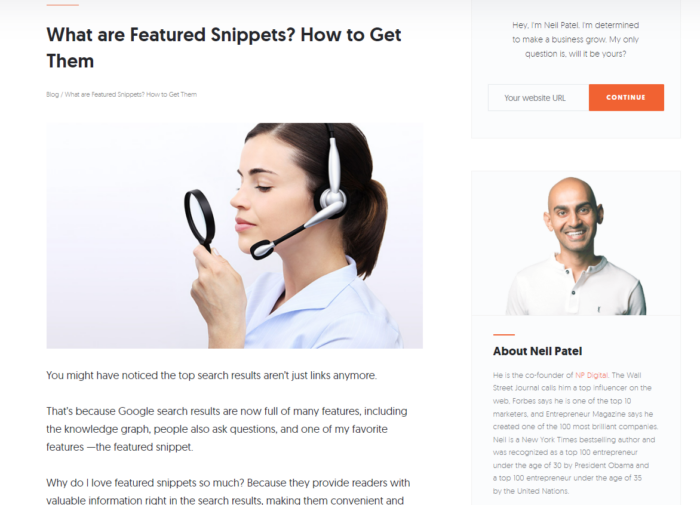
A screenshot from Neil Patel's blog showing an example of copywriting vs. content writing.

The above example is one of my posts from the Neil Patel blog. This is one of the most recognized forms of content writing, with 7.5 million blog posts published every day. This particular piece was written to help marketers understand how Google’s Featured Snippets work and the best ways to rank for them.

When you think of content writing and copywriting, what images come to mind? We often remember copywriting because of its use in ads and content writing when we’ve learned something from an article.

The goals of these two types of writing differ quite a bit, often changing the intent of the words. The copywriter’s ultimate goal is to get the reader to take action, while the content writer’s goal is to build trust and credibility with the reader.

Which is Better for Your Business: Copywriting or Content Writing?

The answer to this question depends on your business goals.

If you want to increase sales or get more leads, copywriting is the way to go. If you want to build relationships with your audience and establish yourself as a thought leader in your industry, then content writing is the better option.

Both copywriting and content writing are important for a successful marketing strategy. Don’t worry, we’ll dive into that later in the article.

Great writing is the foundation of both copywriting and content writing. The key is to figure out which one will help you achieve your specific business goals.

The Skills Behind Content Writing vs Copywriting

The skills required for copywriting and content writing are quite different.

Copywriters need to be experts at persuasion, sales, and marketing. They need to understand human psychology and be able to use words to influence reader emotions and drive them to take action. Learn more about how to write compelling copy with my guide to copywriting.

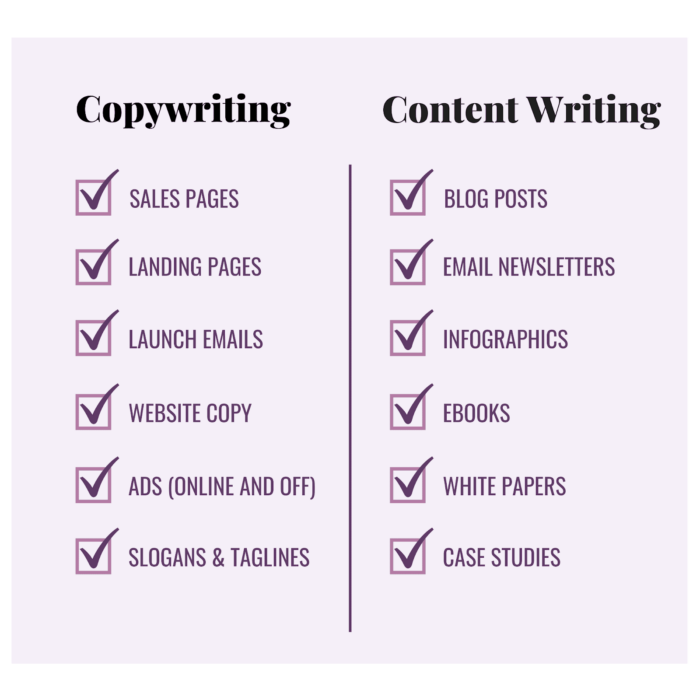
Some of the common types of writing copywriters create include:

  • SEO copy
  • Ad copy
  • Email campaigns
  • Landing page copy
  • Web page copy
  • Video scripts
  • Billboards
  • Direct mailers
  • Social media
A graphic showing the differences between copywriting vs. content writing.

Content writers need to be able to write well and do extensive research. They also need to be experts at creating content that is valuable and informative without being too salesy.

Some of the common types of writing content writers create include:

  • Articles
  • Blog posts
  • Press releases
  • White papers
  • Newsletters
  • Podcasts
  • Print magazines
  • Ebooks

Understanding the difference between copywriting and content writing and how they address your specific business goals will ultimately help you become a more productive writer, as well as work alongside your writing teams. You’ll be able to determine what types of assets you’re in need of and create a more effective and efficient writing process.

Integrating Copywriting and Content Writing for Marketing

The best marketing strategies use both copywriting and content writing.

Copywriting is great for getting people to take action, but it can’t be used all the time. If you only use copywriting, you’ll quickly lose credibility with your audience. All they will think you are concerned about is selling things to them. This is where content writing comes in.

Content writing provides value and builds relationships with your audience. It helps you establish trust and credibility so that when you do use copywriting, people are more likely to take the desired action.

Whether you’re seeking an internet sensation with viral content or an increase in your lead conversions on your website, using copywriting and content writing together in your marketing strategy will help you achieve the best results.

For example, you can create an awesome blog post—which is content writing—that you want to share out to the world. To get the word out, you need to craft some clever social media captions—which is copywriting—to get readers interested in clicking. Combining both styles of writing will help you achieve your ultimate goal of getting more visitors on the website.

Be sure to always offer value in your content. Don’t post just to post. Nobody enjoys garbage content.

How to Find Writing Talent for Your Business

If you’re looking to add copywriting or content writing to your marketing strategy, there are a few ways to find talent.

One way is to post a job on a freelancer platform like Upwork.

When posting your job, be sure to include:

– The type of writing you need (copywriting or content writing)

– A detailed job description

– Your budget

You can also use a networking platform like LinkedIn to spread the word of your content needs. If you have connections in your industry, reach out and see if they know anyone who might be a good fit.

You can also contact a content marketing agency that specializes in copywriting and content writing. This is a great option if you need help with both copywriting and content writing but don’t have the time or resources to do it all yourself.

While you may be able to write some content yourself, writer’s block is no joke, and can act as a huge hurdle for your production, so finding talent is key. No matter which route you choose, be sure to take the time to find a writer who is a good fit for your business and your marketing goals.

FAQs

What does a copywriter do?

A copywriter is a person who writes copy, or content, for marketing purposes. Copywriters are responsible for creating ad campaigns, writing website content, and coming up with concepts for email marketing or other types of marketing collateral.

What does a content writer do?

A content writer is a person who writes content for the purpose of providing value to readers. Content writers are responsible for creating blog posts, eBooks, white papers, or other types of content that educate and inform their audience.

What’s the difference between copywriting and content writing?

The main difference between copywriting and content writing is the purpose of the content. Copywriting is written to persuade or sell, while content writing is written to educate or build relationships.

What’s the best way to use copywriting and content writing together?

The best way to use copywriting and content writing together is to use copywriting sparingly. Use it for your call-to-actions or other times when you need to get people to take action. Use content writing the majority of the time to provide value and build relationships with your audience.

Can you be a freelance copywriter?

Yes, you can be a freelance copywriter. Many copywriters are self-employed and work with different businesses on a project-by-project basis.

Can you be a freelance content writer?

Yes, you can be a freelance content writer. Similar to copywriters, many content writers are self-employed and work on a project-by-project basis as well.

What is an SEO content writer?

An SEO content writer is a type of content writer who specializes in creating content that is optimized for search engines. This includes using the right keywords and phrases, as well as following other SEO best practices.

Conclusion

Copywriting and content writing are two different types of writing that serve different purposes.

One is not better than the other. They are simply used for different reasons.

Copywriting is written to persuade or sell, while content writing is written to educate or build relationships. Both copywriting and content writing can be used to achieve your marketing goals, but it’s important to use them sparingly and strategically.
When in doubt, always err on the side of content writing to provide value and build relationships with your audience. And, if you need help, don’t hesitate to reach out to a content marketing expert or agency that specializes in copywriting and content writing.

How do you use copywriting and content writing in your business?


from Neil Patel https://ift.tt/3jhPcfr
via IFTTT