Tuesday, 7 April 2020

How to Adapt Your Marketing During the Coronavirus (COVID-19)

It’s been roughly a month now since the Coronavirus started to flip our lives upside down.

From having to practice social distancing and getting used to life without the outdoors to continually washing our hands and wearing masks and seeing loved ones and friends getting sick, the Coronavirus is something none of us expected.

Even our businesses our suffering. Just look at the Coronavirus marketing stats I shared a few weeks ago. The results are devastating.

It’s why I decided to change Ubersuggest and make it more free to help small businesses out.

Since then a lot has changed and there are new opportunities that have come around when it comes to your online business and marketing activities.

Opportunity #1: Help others selflessly

My ad agency has thousands of clients around the world. We lost a ton, but we still have enough to see trends in what’s happening.

When I saw businesses starting to lose a ton of money, I decided to give more of Ubersuggest’s premium featurs for free. That means it would take me much longer to break even, but hey that’s life.

Just look at the image below… you’ll see something interesting.
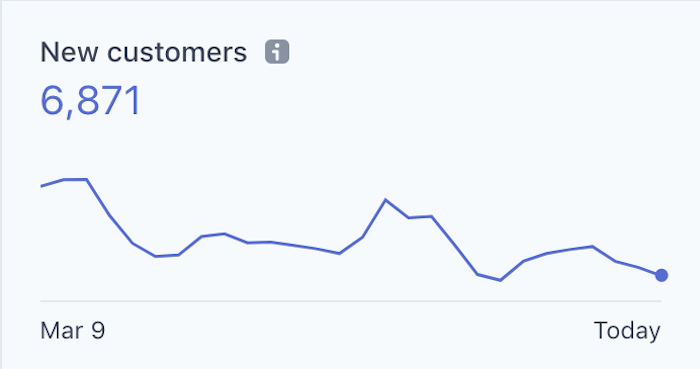
The chart breaks down how many free-trial signups Ubersuggest has received throughout the month.

Keep in mind, new customers means free trials… a large portion of free-trial users doesn’t convert into paying customers but still, the more trials you get in theory, the more paid customers you will eventually get.

As you can see, the chart is declining. That’s because I opened up more of Ubersuggest’s paid features and made them free.
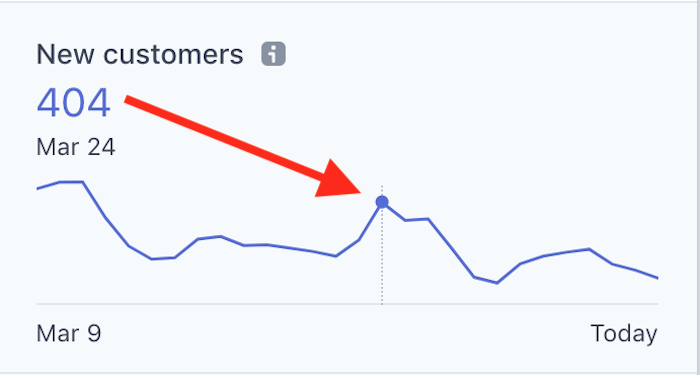
What’s interesting is you (and other community members) helped support me.

The moment I blogged about more features being opened up for free, many of you decided to purchase a paid subscription.

I received dozens of emails from the marketing community thanking me and letting me know that they appreciate everything that I was doing AND they purchased a paid plan to help me out.

Now granted, in general signups are down, but that’s what happens when you decide to give away more for free. I didn’t do it because I am trying to leverage Coronavirus or look good, instead, I am just trying to help people out like I’ve been lucky enough to have people help me out during my time of need.

But here is what’s interesting… my traffic started to go up on Ubersuggest the moment I told everyone that I am giving more away for free.
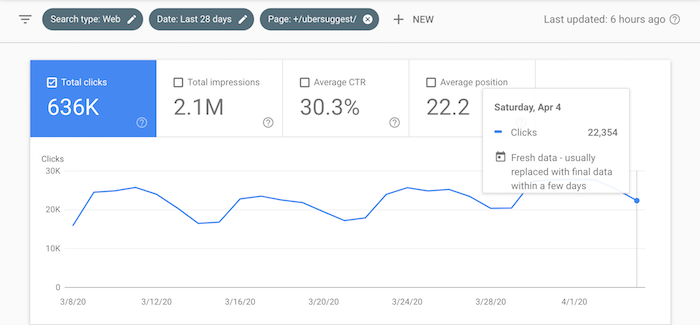
I’m not the only one who experienced this.

Eric Siu decided to give away a course that teaches people how to start a marketing agency for free (he normally charges $1,497) and a bit more than 250 people have taken Eric up on his offer. If you want it, you can get it here for free.
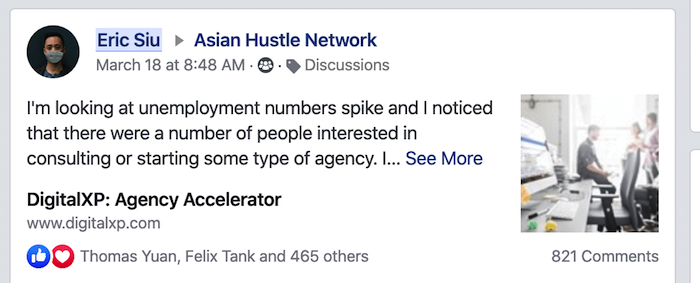
This has led Eric to gain more social media fans and it’s given him an opportunity to do a webinar about his product/services to a new audience of 50,000 people.

Similar to me, Eric wasn’t trying to do this to gain anything, he is just trying to help people out.

I also know someone in the health space who did something similar and one person in the employment space.

They all saw the indirect benefits of helping people out.

In all cases that I have seen, the result is more traffic.

With your website and business, consider what you can give away for free. Anything you can do to help people out is appreciated, especially during this difficult time. You’ll also find that it will drive you more visitors, which is a nice indirect benefit.

Opportunity #2: Paid ads are really, really cheap

The latest trend we are seeing is that paid ads are becoming cheaper.

It makes sense because the way these big ad networks make money is through an auction system. They need small businesses to drive up the cost per click (CPC) for ads so that way the big, billion-dollar corporations have to spend more money on ads.

If you don’t have as many small businesses advertising (like we are experiencing now) there isn’t as much competition for the inventory, so the cost per click decrease.

But the virus has been causing us to spend more time online, so much so that companies like Netflix have had to reduce their streaming quality to help.

In other words, traffic on the web is up and there are fewer advertisers. This means ads are cheaper.

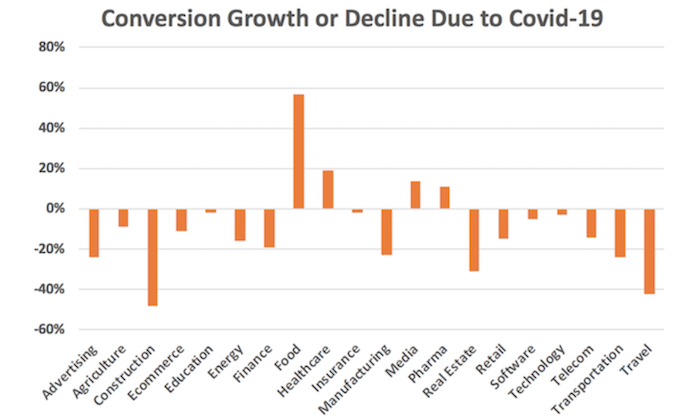
Now we are also seeing conversions rates dropping in certain industries, but nowhere near at the same rate as the CPCs.

When we average things out per industry and globally, we are seeing paid ads producing a much higher ROI than before the Coronavirus hit. Just look at the chart below.
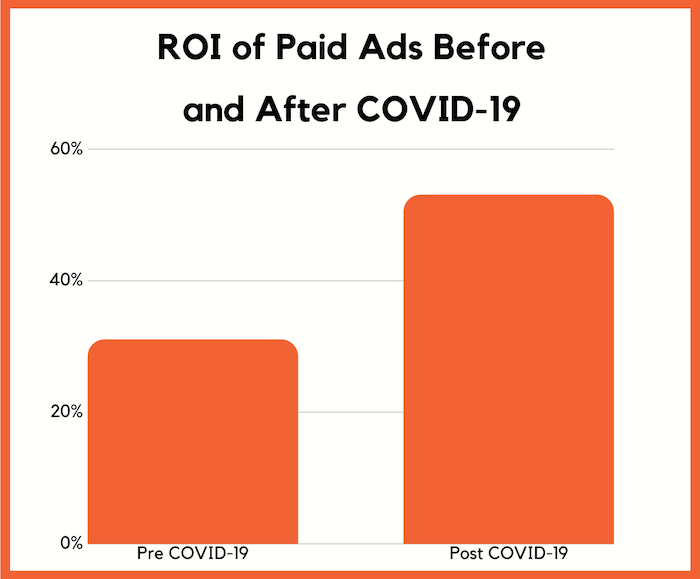
Our clients, in general, have seen their ROI go from 31% to 53%. That’s a 71% increase in ROI.

If you haven’t tried paid ads yet, you should consider it. If you do, consider ramping up as there is more excess inventory than there has been in years.

Opportunity #3: Conversions are down, but there’s a solution

For many industries, conversion rates are down. Here’s a quick snapshot of what it looked like right after the first big week in the United States.
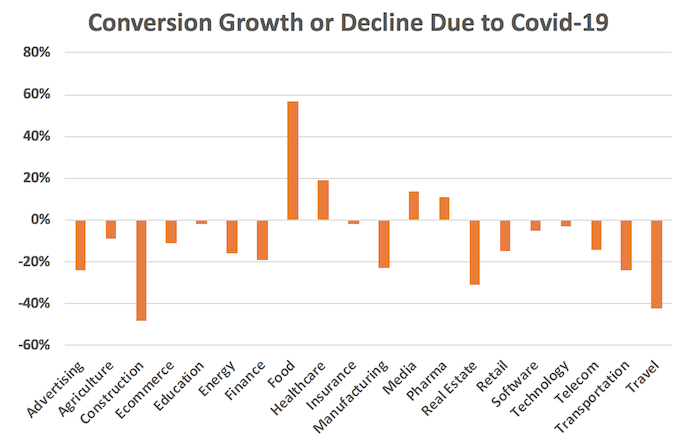
Since then, things have changed. For some industries, it has gotten better, but for others like travel, it’s still terrible and will be for a while. Delta Airlines is currently burning $60 million a day.

But we found a solution that has boosted conversion rates by 12% on average.

If you are a store selling something online, consider offering payment plans through services like Affirm.
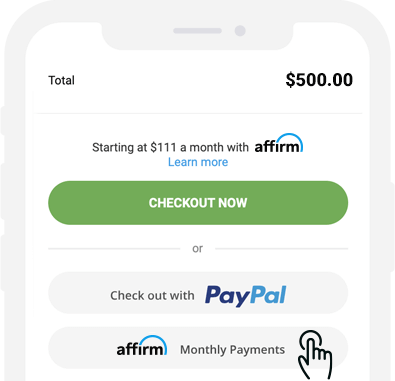
Payment plans reduce the financial burden your customers will face in the short run.

And you don’t have to be an e-commerce company to leverage payment plans. If you are selling consulting services, you can accept money over a period of a year.

If you are selling ebooks or digital courses, you can also have a monthly installment plan.

When I sold digital products on NeilPatel.com, I found that roughly 19% of people opted in for my payment plan.

It’s an easy way to boost your conversion rates, especially in a time where many people are looking to reduce their cash spend in the short term.

Opportunity #4: Offer educational based training

If you are looking for a good opportunity, consider selling your audience educational based courses.

With unemployment numbers reaching all-time highs, more people than ever are looking for new opportunities.

Many of these opportunities are in fields like high-tech that not everyone has experience in.

And, of course, going back to school can be expensive and is time-consuming. Plus, let’s face it… you can probably learn more applicable knowledge on YouTube than sitting in a college class for 4 years (at least for most professions).

So, where do people go to learn? Any online education website offering very specific, niche advice and courses.

Whether that is Udemy or you are selling your own courses, people are looking for help.

If you don’t know how to sell online courses in mass quantity, follow this. I break it down step by step and even give you the templates you need to be successful. It’s the same ones I used to reach over $381,722 a month in sales.

Opportunity #5: Geography diversification

COVID-19 is a global issue. But it is affecting some countries worse than others.

For example, South Korea has had better luck controlling the spread of the virus compared to many other countries.

And countries like the United States and Italy have exploded in daily cases.

With over 84,000 new cases a day and growing quickly, the spread of the virus or the slowdown of the virus can affect your traffic drastically.

For that reason, you should consider diversifying the regions you get your traffic from.

Through international SEO, you can quickly gain more traffic and be less reliant on one country’s economy.

For example, here is my traffic swing for my SEO traffic in the United States over the last few months.
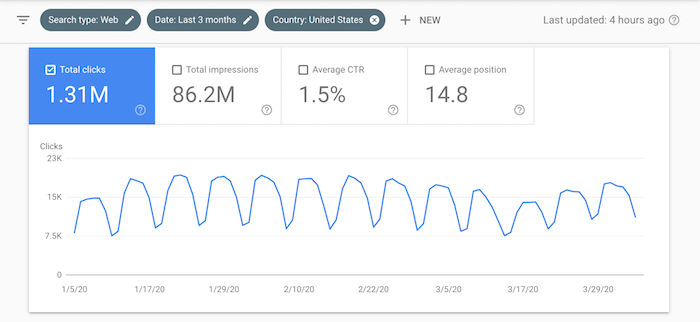
The US traffic is slowly starting to climb back. It’s still not back to where it was during my all-time highs, but it’s not as low as when the Coronavirus first hit the United States.

On the flip side, our traffic in Brazil has been going through the roof.
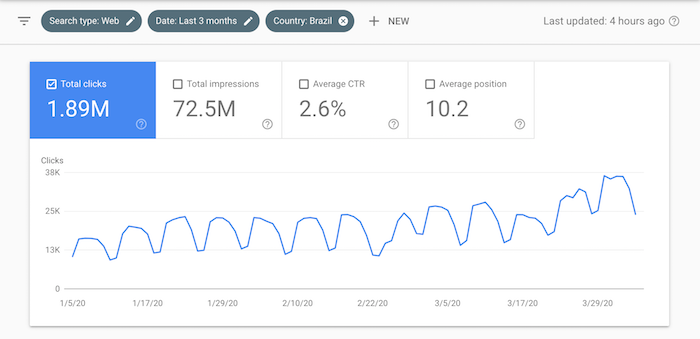
We haven’t changed our strategy, it’s not algorithm related… we haven’t produced more content than usual… we’ve just seen an increase.

We are also starting to see a nice increase in India.
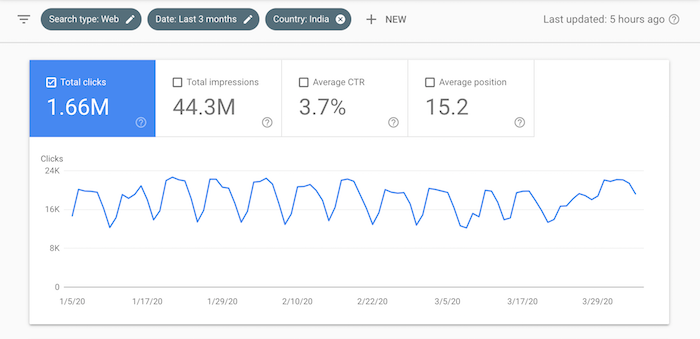
By translating your content for other regions and leveraging international SEO, you can quickly grow your traffic.


Sure, it may take 6 months to a year to start seeing results in the United States, but that isn’t the case with regions like Brazil where there isn’t as much competition.

If you want to achieve similar results to me, follow my global SEO strategy. It works well… just look at the images above.

Conclusion

Sadly, the next few months are going to get worse. The daily count of new Coronavirus victims is growing.

From a personal standpoint, all you can do is stay indoors and practice social distancing.

But from a marketing, business, and career perspective, you can make a change.

You should have more time now (sadly), so use it to your advantage. Put in the effort so you can grow, that way you’ll come out of the Coronavirus stronger.

So which one of the above opportunities are you going to implement first?

The post How to Adapt Your Marketing During the Coronavirus (COVID-19) appeared first on Neil Patel.


from Blog – Neil Patel https://ift.tt/2RjRzRx
via IFTTT

Monday, 6 April 2020

Systemic Shocks: Adjusting Your Email Messaging in Times of Disruption

The dot-com bubble. 9/11. The Great Recession of 2009. And now COVID-19. When extreme shocks such as these occur, business as usual ceases. These shocks cause prolonged changes in consumer behavior, forcing smart businesses and marketers to adjust, too. 

While these adjustments typically start with crisis messaging, that’s just the beginning. Brands need to make changes to their future messaging, and that can be hard to do when many brands plan their messaging out months in advance, coordinating it across marketing channels and synching it up with advertising efforts. After all the time that’s been invested in that strategy, it can be emotionally hard to reevaluate that—or completely reboot it, which may be necessary in some cases.

Let’s discuss some of the ways in which marketers may need to change their messaging and strategy in the weeks and months following a major systemic shock. We’ll start with a look at automated campaigns and then talk about promotional broadcast and segmented campaigns.

Check Your Automated Messages

The first thing you should do is review your triggered emails and other automated programs, since these are being sent right now. Start with your highest volume programs and work your way down.

“It’s easy to forget what you might be messaging in them that now could be interpreted as insensitive,” says Clint Kaiser, Head of Strategic Services, Oracle CX Marketing Consulting. “Whether it’s the subject line, the preview text, imagery, the tone, or timing, look through them and evaluate the need for changes.”

Here are some examples of automated programs to update or pause:

  • Are you sending automated renewals for an event that has been postponed or cancelled?

  • Are any of your triggered emails urging subscribers to visit store, restaurant, or other locations that are closed for the time being or indefinitely?

  • Do you have abandoned cart messages that offer free overnight shipping or another service that might not be logistically possible right now?

  • Do you have a welcome series that incentivizes new subscribers to book a service with you that you can’t currently book or fulfill?

  • Are you sending back-in-stock alerts for high-demand items that might only be in stock a very short time before becoming unavailable again?

Re-engagement campaigns are another automated program that you should take a look at, says Kaiser. “Your messaging can come across as insensitive if the person hasn’t been engaging with your emails lately because their house has flooded or they were hospitalized with COVID-19,” he says. “The tone of these emails can suddenly be really off during crises.” 

After you address your automated programs, you’ll want to look at your planned promotional emails. However, before you really get into that, you’ll want to... 

Recognize the Changes in Consumer Behavior

First, before you can make wise changes to your marketing, you need to get into the heads of your customers. Understanding that portions of your audience may be affected differently, ask yourself:

  • How are they personally affected? How is their day-to-day life impacted? How are vacations and travel affected?

  • Are they more concerned about their finances? Do they have less money to spend?

  • What are they worried about? Afraid of?

  • Are there business-mandated, government-decreed, or other restrictions they’re coping with?

  • Are they using certain channels more or less? Are they using them in new ways?

  • What are their new priorities?

Answer those questions without referencing your brand at all. At this point, it’s not about you. It’s about your customer and understanding where they’re at psychologically, emotionally, and financially. In a word, it’s about empathy.

“Empathy provides the window into not just customer behavior, but into how people feel,” says Reed Pankratz, Sr. Strategic Consultant for Strategic Services, Oracle CX Marketing Consulting. “That allows us as marketers to provide utility to customers and create genuine moments that forge positive brand relationships.

“In times of disruption,” he says, “empathy is more even important because the repercussions of untimely, insensitive, and off-brand messaging is significantly magnified. By putting yourself in the customer’s shoes and asking yourself the right questions, brands can at the same time protect themselves, and also treat customers the right way and help them in times of uncertainty.”

Now Look at Your Business

Next, look how the answers to those questions affect how your customers interact with your business. Try to determine how best to adjust your messaging and how your business operates to get back in sync with your customers. Ask yourself:

  • Do you need to change the personas you typically use to message or target your audience? For example, has the price-sensitivity of some of your audience segments changed? Or perhaps your audience of in-store-only shoppers is now more open to buying online?

  • Do you need to change your key performance indicators? In some cases, perhaps revenue becomes less of a goal in the short-term, and goals such as increasing engagement, minimizing churn, building intent, and generating goodwill become more important.

  • Do you need to change your themes, calls-to-action, or other message elements?

  • Do you need to change the touchpoints that your customers use to engage with your brand? For example, are web and mobile app channels better than going to physical locations for now? 

  • Do you need to change your partners, advertising channels, or other elements of your business to get in front of new audiences?

Once you’ve answered those questions, reexamine your planned messaging to see how it can be updated to fit the new reality. Some of your planned messaging may simply not make sense anymore and you may have to come up with all-new messaging. If that’s your situation, you may be able to buy yourself some time to adjust by keeping your messaging and designs really simple.

For example, on Mar. 18, 2020, beauty and grooming products ecommerce company BirchBox sent an email with the subject line “Hey, whatever you need, we've got your back.” Design-wise, the email was in the mold of a crisis messaging email, with no product images. The copy was tight at just 120 words and promoted a 20%-off promo code in a way that was empathetic, uplifting, and supportive.

“Those are the kinds of feelings a lot of marketers are trying to evoke right now,” says Kathryn Alva, Associate Creative Director at Oracle CX Marketing Consulting.

“I’m seeing a lot of marketers adapting the tone of their messaging to one of community-focus, unity, and solidarity,” she says. “With so many Americans feeling the stress of social isolation, this is a great opportunity to reach across the screen and offer a little reassurance and encouragement—to take a quiet moment to remind your customers that they’re not alone and we’re all in this together.”

Here are some great examples of subject lines that have taken this messaging approach:  


While in some cases you may need to come up with completely new tactics and strategies, in other cases you may be able to at least partially...

Repurpose Existing Playbooks

While COVID-19 is causing unprecedented challenges, even our current situation isn’t wholly unique. First, the recession that we’re entering into because of the virus won’t be entirely unlike consumer behavior during past recessions, such as the Great Recession of 2008. Some consumers will be looking for bargains, more value-oriented products, DIY alternatives, and other ways to save money but not feel deprived.

Second, airlines were shut down for several days after 9/11 and there was prolonged anxiety about air travel in months and years that followed because of heightened security and ongoing risks. For those not in the travel and hospitality industry, staycations and nesting will likely be themes to explore, since many American won’t be doing any traveling for a while and will be focused on making their homes more comfortable and enjoyable.

In each case, ask yourself: 

  • What happened to your email engagement, revenue, and list churn during those periods?

  • How did your brand adjust its promotional messaging to better fit the mindset of your customers? How did your competitors or peers adjust?

  • Were your adjustments successful? 

  • Are there learnings that you can apply to today’s situation?

Another parallel that may be helpful to some brands is that our kids are out of school and home with us now just as they are every summer. If you have messaging that your brand has used in the past to engage parents who are looking for ways to entertain their kids, now’s the time to try it out. 

For example, Michaels sent a Mar. 13, 2020 email with the subject line “Need Boredom Busters? We’ve Got ’Em! (And a Coupon, Too!).” That email, which is full of crafting ideas for kids, surely resonated with many parents who were suddenly trying to entertain their kids and work remotely.

The added twist is that parents, more than usual, are likely looking for educational activities to replace some of the learning that’s being lost due to school closures.

Also take a good, long look at your existing resources, whether it’s blog posts, videos, infographics, animations, or whatever. Can you reuse or repurpose any of this content to create a message that’s relevant to the current situation?

Frequency Considerations & Audience Preservation

In my book, Email Marketing Rules, I advise companies to “Look at your customers’ natural buying patterns. The times of the year that they buy more, send more email to reinforce and strengthen that pattern. And send fewer emails when they’re less active to avoid annoying them.”

Even during turbulent times, I stand by that advice. Email is not magic. It doesn’t create demand out of nothing. Trying to use email as a brute-force tool causes unsubscribes, spam complaints, and brand damage. The working assumption is that your business will survive whatever crisis you, your industry, or the broader economy is experiencing, so you’ll want to have preserved as large of an audience as you can to fuel your rebound when the troubles are behind you.

That said, you don’t want to stop sending emails, even if your business is temporarily shutdown for some reason. You’ll want to maintain a minimum email frequency to avoid having your sender reputation on your IP addresses and domain fall to zero, says Daniel Deneweth, Head of Email Deliverability Services, Oracle CX Marketing Consulting. 

“If that happens,” he says, “you’ll have to spend two to three weeks warming up your IPs and domain and rebuilding that reputation with inbox providers again.”

If your business offers the option to snooze your email subscriptions, during crises may be a wise time to highlight that option, says Chris Wilson, Strategic Director of Strategic Services, Oracle CX Marketing Consulting.

“To help mitigate opt-outs during the holiday season, we added the options to say subscribed and to pause emails for 30 days to one of our retail client’s unsubscribe page,” he says. “The average unsubscribe rate dropped 82%, which was so successful that we left it in place year-round.”

It also might make sense to shift some resources away on short-term promotional messaging to more future-oriented projects, such as optimizing your automated emails, experimenting with new tactics or technologies, or preparing for the holiday season.

Whatever changes you end up making, be sure to monitor how your customers react by watching your performance metrics. Pay attention to not only your positive metrics, but your negative ones like unsubscribe rates, complaint rates, and inactivity rates.

"Your metrics will tell you if you’re striking the right balance between meeting business needs and minimizing any negative impact to subscriber engagement and reputation,” says Clea Moore, Director of Deliverability Strategy for Email Deliverability Services, Oracle CX Marketing Consulting. “Being flexible and nimble with your message content and email frequency will serve you well."

Want more advice on how to deal with crises? Check out these related posts:

—————

Need help with your messaging strategy? Oracle Marketing Cloud Consulting has more than 500 of the leading marketing minds ready to help you to achieve more with the leading marketing cloud, including Strategic Services and Creative Services teams that can help you develop and execute the right messaging strategy.

Learn more or reach out to us at CXMconsulting_ww@oracle.com

For more information about email marketing and other pertinent marketing topics, please visit: https://www.oracle.com/marketingcloud/.


from Oracle Blogs | Oracle Marketing Cloud https://ift.tt/2xQfTDY
via IFTTT

Your Networking Event is Cancelled. Now What?

Every year, companies budget out for various marketing and sales expenses. They decide which tradeshows, conferences, and networking events they’ll be going to. Making room for these kinds of events is pretty important, as many give businesses a chance for face-to-face interaction with potential customers and partners. It allows businesses to build trust and a…

The post Your Networking Event is Cancelled. Now What? appeared first on Benchmarkemail.


from Blog – Benchmarkemail https://ift.tt/2V1iwKY
via IFTTT

Saturday, 4 April 2020

How to Quickly and Easily Connect Oracle Eloqua with Zoom

If you’re familiar with The Hitchhiker’s Guide to the Galaxy, you’ll know that ‘42’ is the answer to life, the universe, and everything. It also happens to be the number of Zoom calls I have been on with co-workers, partners, and customers in the last week alone (yes, I counted them).

The number of Zoom meetings I now attend aside, we’re all adjusting our personal and professional lives to the new realities confronting us. Our concerns for the safety of our families and communities are paramount, but we also retain a responsibility to our customers who rely on us to provide essential services.

A perfect example of this is customer engagement. Organizations of all sizes are having to radically rethink existing customer engagement models. In the last two weeks, I’ve received a dozen inquiries from our customers about Oracle Eloqua’s integration with webinar providers. These customers are increasing their webinar volume and are looking for a more scalable webinar campaign and data integration process.

The good news is that this is not difficult. For example, we have many customers using the free Zoom for Oracle Eloqua app to manage webinars directly within the Oracle Eloqua Campaign Canvas in a simple, templated fashion. Here are some of the key use cases enabled:

  • Drag and drop Zoom steps onto the Campaign Canvas to automate registration, reminders, nurturing, checking attendance, and post event follow-up.

  • For example, if the initial invitation didn’t result in a registration then try again with a different call to action. If the contact did register, send them a personalized email with registration and webinar details and route them down a path that will send them email and/or SMS reminders leading up to the event.

  • Add a wait step to your campaign so that post webinar you can query Zoom directly for attendance data. If the contact attended for a sufficient amount of time, send them a thank you email with next best actions. If the contact did not attend, send them a “sorry we missed you” email with a link to the recorded webinar.

  • Automatically detect if someone registers after the event has already taken place and send them a relevant email with a recording of the event. In this fashion, it’s easy to support both live and on-demand events.

  • If registrations for the event occur through other channels or organically on your website, automatically feed those registrants into an Eloqua campaign for further action.

  • Empower distributed marketing teams to scale your events through templated campaigns and email/landing page assets that allow for easy local customization, while remaining brand safe and ensuring all lead information is captured and handled properly.

  • Automated capture of attendee engagement data to drive downstream lead qualification, segmentation, and personalization.

Below you can see what a sample campaign template for the above use cases might look like. All you need to do is double-click and select the appropriate emails, form, and landing page for each of the steps and add the webinar ID to the Zoom steps.

Since the Zoom action, decision, and feeder steps live right on the canvas, you can build whatever flows makes the most sense for your business, including managing multiple events/sessions at the same time, registration limits, and wait listing. It’s also important to remember that with the templating and dynamic content capabilities of emails and landing pages, those assets can be quickly reproduced and customized at scale.

I hope this helps illustrate what is possible today to help you scale your online event efforts.  While I have focused on Zoom, Oracle Eloqua has integrations with all the main webinar and event providers. 

If you’re interested in learning more, please check out the Oracle Cloud Marketplace for a full list of our partners. There are almost 400 apps listed across many categories, so you may want to filter for Events & Webinars on the left-hand side. If you would like assistance or guidance on the integration of a webinar app, please don’t hesitate to reach out to support, your account rep, or leave a comment below.


Find out how you can “Go Further with Marketing Automation” to learn more about how a marketing automation platform can benefit your campaigns.


from Oracle Blogs | Oracle Marketing Cloud https://ift.tt/39GzZ0z
via IFTTT

Friday, 3 April 2020

A Glimpse into the Future of Marketing Automation: 5 Trends to Pay Attention to

Marketing automation is becoming a must-have due to how it allows marketing teams to widen the scope and scale of their projects and how they can get more done with less resources. It saves on costs and time as well improves lead management and lead scoring to allow for a higher quality of lead to target. This plays a role in better targeting and adding as much personalization as possible to a multichannel campaign. All of this adds up to success, and you cannot stay competitive in digital marketing without keeping up with technologies that help better reach, connect, and engage with prospects and customers.

But if this is the present, what does the future hold for marketing automation and how it will continue to reshape how marketers go about their campaigns? Of course, no one can ever completely predict the future, but there are trends  that might provide a glimpse of it. Look at these five trends in particular that will impact the future of marketing automation (and marketing in general):

  1. Customer-centricity will continue. Regardless of what martech tools you use or how advanced marketing automation becomes, the customer will always remain at the center of everything a marketer does. Customer data will inform your lead management and scoring, their preferences will tell you what channel they prefer, and what solutions and marketing messages they might be interested in.

  2. Personalization and customization will become more and more integral. A marketer’s mission is to send the right message at the right time on the right channel to customers. However, customers will set the terms of engagement. They want you to meet you on the platforms and mediums that they prefer and when they wish to be contacted. You won’t be able to waste even an iota of their time, since there’s always another marketing message from somewhere to take up their attention. So, you need to be relevant. You need to personalize and customize as much as you can to grab, keep their attention, and win them over.

  3. An omnichannel approach will be necessary. With customers dictating the terms of engagement, you’ll need a holistic marketing strategy that encompasses not just a few channels but all of them: email, web, mobile, search, display, social, and so on. You have to create a strategy that ties them all together into a seamless experience, since some customers will want to jump from channel to channel, platform to platform, and device to device without having to miss a beat.

  4. Social will only grow in importance. Almost everyone has an account on some social media platform, and businesses are going to keep expanding their presence on social channels as well. People use social media to interact with each other, catch up, make friends, get news, find information, entertain themselves, and more. Brands need to be on the channels where people are living their lives. To help keep up with that ever-increasing workload, you might even see more and more of social media marketing being automated.

  5. Other martech tools will come into play. Along with automated social media tools, you may also see chatbots becoming more prevalent in marketing automation as well. More and more brands are interacting with more and more people online—more than any single team can keep up with across multiple channels. Therefore, they will need more and more automated tools to help provide a seamless experience and meet customers on the platform and channel of their choice.


Find out "6 Reasons You Need Marketing Automation." 


from Oracle Blogs | Oracle Marketing Cloud https://ift.tt/2XhqUZJ
via IFTTT

Thursday, 2 April 2020

Lessons from Sleep Number: Don’t Snooze on Your Brand Advocates

Brand advocates are the cheerleaders that help your brand engage and build relationships with future prospects, leads, and customers. These loyal patrons are invaluable for a brand, and Sleep Number knows exactly how to tap into this powerful customer base.

Before launching the new “InnerCircle”, online loyalty program, SleepNumber was creating champions out of clients by incentivizing customers with refer-a-friend initiatives and building leads from those referrals. The new online loyalty program, powered by CrowdTwist, affords Sleep Number opportunities to further engage and reward customers through digital and social activities. Here are some lessons brands can learn from Sleep Number to help drive customer advocacy.

Drive value across all channels

Sleep Number communicates and demonstrates values across all channels. In-store, video monitors play videos to promote the loyalty program. When customers purchase a mattress, they receive a welcome kit in the mail with information on how to get a better night’s sleep. When their mattress is delivered, the driver is trained to communicate the benefits of the program to the customer in-person. Sales associates follow up with calls to ensure the customer is satisfied with the purchase.

These activities make the customer feel valued and appreciated for choosing Sleep Number and assured that they have made the right purchase decision. Sleep Number is building lifelong relationships with them. Offer rewards, perks and special promotions

The Sleep Number InnerCircle program is tier structured. Members, or “Insiders” as they are referred to, are encouraged to advance tiers and are rewarded at each level with the opportunities to earn sweepstake entries, dollars off, surprise and delights and donations to charity. Insiders also enjoy exclusive members-only discount privileges off merchandise, and they are the first to know about new products and exclusive content.

These incentives keep members engaged with the brand and make them feel valued for their loyalty. Customers who feel valued are more likely to repeat purchase and are more likely to recommend the brand to their friends and family.

Give referral bonuses

Sleep Number’s Insiders are incentivized to refer friends and family. For sharing a referral link they are given points, and for each successful referral they are credited with $100. After 10 successful referrals, Insiders receive an additional $799!

Incentivizing customers for their referrals encourages word-of-the-mouth marketing, which is a great tactic for promoting your brand. Referral bonuses have the potential to bring in more customers at a fraction of the cost making it a win-win for the brand and for the customer!

“You’d be amazed how many referrals we get,” said Sr. Director of Customer Relationship Management & Loyalty at Sleep Number, Lisa Erickson. “Our customers are engaged in the program and we get more than 1,000 digital referrals a month. That’s really important to our business because your best customers bring more best customers. Testimonials are our most powerful form of marketing.”

Engage by educating

Sleep Number is committed to educating and engaging their community on better sleeping habits. The online loyalty program encourages Insiders to participate in surveys and polls where they can earn points for answering questions such as “Do you allow pets to sleep on your bed?” and “How often do you change your pillows?” Sleep Number then filters the results back to Insiders via email with advice on how to improve their quality of sleep. Insiders can also engage with the brand and earn points for reading educational blog posts.

Educating customers provides value for customers beyond their purchase and helps keep customers engaged in-between transactions. Arming your customers with insight that improves their quality of life will help establish an emotional connection and keeps your brand top of mind.

Ask for feedback

Customers want to be heard. Since incorporating product reviews as a point earning activity in their loyalty program, Sleep Number saw the number of submissions increase. Insiders can also earn points for submitting their testimonials. These testimonials are then featured on the company blog and promoted to the Sleep Number community via email and social media. Testimonials provide great return on investment for the brand.

By asking for and incentivizing customers for their feedback, brands can demonstrate how valuable customer opinion is, and start to incorporate new ideas and improvements to products and services. When a customer feels heard, they’re more likely to recommend your brand.

Personalize the experience

Before launching the loyalty program, Sleep Number had foundational data from which to build customer profiles, such as customer location and transaction history. By extending the touchpoints at which customers can interact with a brand, the loyalty program was able to bring together additional customer insight for Sleep Number.

The InnerCircle online program encourages insiders to connect on social media, answer surveys, watch YouTube content, read blog posts and write product reviews, providing Sleep Number with the data to form a 360 view of who their customers are. Using this data, Sleep Number can personalize the customer experience and target Insiders with relevant communications and promotions. Using customer data brands are also able to identify the customers most likely to advocate for the brand and surprise and delight them with free merchandise or extra points.

Personalizing the brand experience for customers is key for building loyalty and brand advocacy. Customers expect brands to know who they are and offer them authentic experiences based off the information they’ve shared with the brand. Personalized experiences lead to higher customer satisfaction rates which makes a customer more likely to advocate for a brand.

The benefits that brand advocacy brings to a company are immeasurable. Customer endorsement and influence has more reach and effectiveness than any ad campaign a company could run. By adopting a loyalty program, brands have the ability to drive greater brand advocacy, expand their reach, and gain new business.  


Gain more insights into marketing and crafting a better customer experience with Oracle CX Marketing.


from Oracle Blogs | Oracle Marketing Cloud https://ift.tt/3dQdFF6
via IFTTT

Wednesday, 1 April 2020

How to Choose the Right Loyalty Technology Solution Vendor

Whether loyalty is a new concept for your company or you’re considering making a greater investment, here’s a guide to finding the right loyalty technology solution to meet your brand’s needs.

Define your loyalty program objectives

Before you start thinking about program design and setting up demos with vendors, establish what exactly you want from your loyalty program from a business perspective. Are your objectives to acquire new customers, improve retention, create brand advocates, increase the spending of existing customers, or all of the above? At this phase, consider investing in qualitative and quantitative research about what your customers value and respond to about your current program and your brand initiatives. This is an important step in defining what your brand goals should be for a loyalty initiative. Each objective must be defined and must be measurable against a timeline.  

Consider different loyalty technology solutions available

Once you have established the goals for your loyalty initiative, the next step is to determine which type of loyalty platform is appropriate for your business to meet your objectives and targets.

In order to do so, you must consider what your budget allows, level of sophistication you need, and how quickly you need to get it into market. Assess what your competitors are doing in the loyalty space and try and understand how you can differentiate your brand and add greater value.

Then the most important factor to establish is how you choose to reward your customers – for transaction only or for engagement with your brand also.

  • Transaction-based options

If loyalty is a new concept for your brand, you may consider starting off simple with a transaction-based loyalty program. Transaction-based loyalty programs reward customers for spend and capture data such as number of purchases, transaction spend, and types of purchases. However, transaction-based loyalty programs lack robust data on who your customers are and what they want from your brand. They offer a view of only one touchpoint in the consumer lifecycle and give little insight into behavior and preferences.

  • Engagement-based options

If your goals are to increase retention and drive greater spend you should tailor your strategy to better meet the needs of your customers by adopting an engagement-based loyalty program. Consider investing in an omnichannel loyalty program that provides members with the opportunity to earn points for activities across every channel including in-store or online purchases and social media interactions, and go beyond one dimensional discounts and coupons and let your members redeem points for exclusive rewards and one-of-a-kind experiences. This type of program enables marketers to gather crucial data to drive marketing performance and provide customers with relevant personalized experiences.

Considering solution types

Once you have mapped out the functionality you want from your program, you can evaluate vendors and assess your internal resources to determine what level of customization, if at all, you need.

It’s worth noting that choosing a SaaS loyalty provider is oftentimes the easiest, fastest and most effective option due to its out-of-the-box functionality and speed to market. A custom-built solution will take more time to develop and require a larger investment.

Vendor evaluation

Once you have established the type of solution and functionality you want from a solution the next step is to evaluate relevant vendors. These are the key areas of criteria to include in your assessment:

  • Reputation

Choose a vendor that has a client list that includes well-known brands. They should be able to make quality recommendations for your brand given their experience. Ask them about their track record for success. How have the programs they’ve launched for brands made an impact on their business? Can the company demonstrate that the programs they power drive incremental revenue six months after launch? Also consider whether the vendor has certifications and designations from reputable analyst firms and industry associations.

  • Service & Support

How much or how little support does the vendor provide throughout all stages of launching a loyalty program? A reputable vendor should offer to help your brand promote the program to your customers to increase signups. Ask vendors whether there are varying levels of support available and if the provider can manage the day-to-day operations of your loyalty initiative if needed. It’s also important to establish how quickly your vendor can get the program into market, especially if you’re up against a deadline.

  • Adoptability

The technology must be simple for marketers to use and navigate so that minimal training is needed. However, full training and support should be made available. If the platform is complicated, chances are you will find it challenging to make updates to your program without assistance.

  • Functionality

In terms of functionality, ask your vendor about their customer data capabilities and whether they can provide your brand with actionable insights. The loyalty platform should also easily integrate with the systems your brand uses internally, like CRMs, point-of-sale solutions, email service providers, etc. Ensure that there is a clear process in place for system integrations so that your program gets into market as quickly and seamlessly as possible.

After speaking with and evaluating vendors you should have a better understanding of the resources and investment required to get your program off the ground. 


Gauge how your marketing is performing by seeing how to “Go Further with Digital Analytics.”


from Oracle Blogs | Oracle Marketing Cloud https://ift.tt/39AHczg
via IFTTT