Friday, 8 May 2020

The Guide to Amazing Client Management

As a B2B company, you know that if your clients aren’t happy, your business isn’t happy. Managing your clients is crucial for long-term success, and one of the cornerstones of running an effective operation. If you’re not listening to your clients, not respecting their time, or burning bridges over easily avoidable miscommunications, you’re not going…

The post The Guide to Amazing Client Management appeared first on Benchmarkemail.


from Blog – Benchmarkemail https://ift.tt/2YMDP6C
via IFTTT

Wednesday, 6 May 2020

Nydia Test Multi-Lingual

Content EN

The post Nydia Test Multi-Lingual appeared first on Benchmarkemail.


from Blog – Benchmarkemail https://ift.tt/2WAe6vg
via IFTTT

SaaS leader Hatchbuck Announces Rebrand to BenchmarkONE

The new brand reinforces the company’s global mission to help businesses everywhere ignite relationships with its customers.   St. Louis, MO – April 20, 2020 – Hatchbuck, a leading software as a service provider of sales and marketing solutions, today announced its rebranding to BenchmarkONE. In September of 2019, Benchmark Email and Hatchbuck merged, creating a…

The post SaaS leader Hatchbuck Announces Rebrand to BenchmarkONE appeared first on Benchmarkemail.


from Blog – Benchmarkemail https://ift.tt/2L7sjuw
via IFTTT

How to Improve the Customer Experience with Communications During a Crisis: 4 Things to Consider

This article originally appeared on SmarterCX as “4 Ways Communications Can Improve CX During a Crisis.”

How do you continue to provide a great customer experience during a crisis, when the very definition of “customer experience” may have changed? Now the priority must be to address customers’ needs, not to try to persuade them to buy your products.

As McKinsey & Company points out, “Particularly in a times of crisis, a customer’s interaction with a company can trigger an immediate and lingering effect on his or her sense of trust and loyalty.” Therefore, open, transparent communication is a necessity, not an option.

Communicate and communicate well

In a recent article in Harvard Business Review, Paul A. Argenti, Professor of Corporate Communication at Dartmouth College, states, “As someone who studies crisis communication, I regularly tell my students and clients that you need to communicate early and often with your key constituencies throughout a crisis.”

Now is the time to openly, honestly, and regularly communicate with your customers. According to Argenti, “Even if you’re still trying to understand the extent of the problem, be honest and open to maintain credibility.”

To avoid coming across as tone-deaf in your CX, keep in mind these four things when communicating with your customer base.

Tone

Think transparency, trust, confidence, and empathy, not business as usual. Being clear and concise goes a long way. Readability is also essential when communicating with customers. Overly descriptive, intense communications are likely to receive pushback. Also, keep in mind that people read differently based on the medium they are using. When it comes to digital communication, we tend to scan. We read the first line of each paragraph, glance at section headings, scan lists, and generally hop all over the place to see what interests us.

Audience

Write for your audience. To do so may require segmentation and utilizing different communication tactics. Follow these four questions from Forrester to help segment your audience accordingly:

  • What is the most important information for my specific audience?

  • What is their emotional context? In other words, what are they feeling because of what is going on around them? Consider regional and demographic differences and perhaps segment your audience accordingly.

  • Why am I communicating with them?

  • How should you deliver communications? Email, video? Social media? Post/banner on the website? Press release?

Frequency

Things change in the blink of an eye, so communicate frequently and with relevance. For example, if customer service hours have been scaled back, be proactive in getting that message out, and provide alternatives. If you offer free returns but require customers to drop off merchandise at a brick-and-mortar location, keep them in the loop about how to return merchandise and the timeframe for doing so.

Listening

There are a variety of social media monitoring tools that provide insight into how audience segments are reacting to a crisis and your response to it. Don’t let the name fool you—many of these tools work across social, blogs, forums, newsfeeds, and the web. Again, the results will be different across different types of businesses and industries, so don’t let one example of what a particular company does impact your decisions. Monitoring what customers are talking about, what they are reading about, and what they are clicking on is key to staying in touch you’re your customers’ sentiment.


Want more advice on how to deal with crises? Check out these related posts:


from Oracle Blogs | Oracle Marketing Cloud https://ift.tt/2W8qi7y
via IFTTT

Tuesday, 5 May 2020

Welcome to SEO Unlocked: Your Free SEO Training Course

I learned SEO by starting my own website and just testing a lot of different tactics out.

Some of these tactics worked well and others didn’t. But the way I’ve learned SEO isn’t right for everyone.

Some people prefer learning by practicing like me. Others prefer learning by reading dozens of different strategies and tactics.

And if you don’t have the time, you can learn SEO by creating a project on Ubersuggest.

But what if there was another way to learn… one that was step by step and involved hand-holding to ensure that you are really learning SEO, so much so that your traffic starts going up?

Introducing SEO Unlocked

Over the next 7 weeks, I’m going to be teaching you SEO.

I’ve released a free course called SEO Unlocked.

Eventually, it will live on the training section of this site. But for now, it is going to be published on YouTube every Monday, Thursday, and Saturday for the next 7 weeks.

Here’s the first video which is a welcome video the course.

Make sure you watch it as I also give you 2 homework assignments. But don’t worry, they are easy. I even provide the worksheets and PDF templates here so you can get them done with ease.

I’ve also released the second video that goes over the fundamentals of SEO and why it is important.

Again, this video also contains some homework assignments, so make sure you watch it and follow everything step by step.

How can I follow along during the 7 weeks?

As I mentioned above, it’s a 7-week course. You’ll see videos released every Monday, Thursday, and Saturday.

The videos are roughly 10 to 15 minutes in length on average so it will only take 30 to 45 minutes of your time each week to watch them.

The homework assignments are easy as well. The reason I will give you worksheets, PDF templates, and spreadsheets is so you can do the homework assignments faster.

The homework assigns should take you 30 to 45 minutes a week to complete.

In total, I’m asking you to commit an hour to an hour and a half each week, which really isn’t much.

Once you go through the whole course, you’ll know the formula for getting traffic to your website.

If you want to make sure you don’t miss a lesson because I won’t be blogging about each lesson, make sure you subscribe to my YouTube channel as I will be uploading the lessons there.

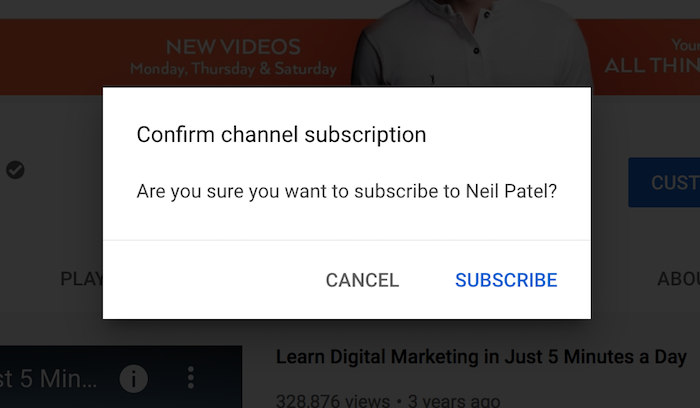
Once you click the link above, you’ll see a subscription box on YouTube… just click the “SUBSCRIBE” button.

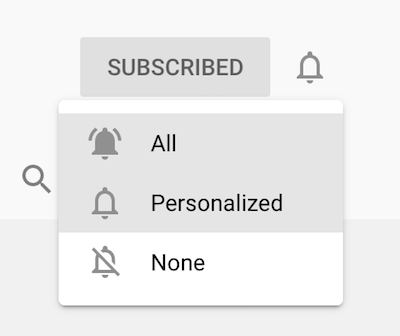
And once you click “subscribe” on my channel, you’ll notice a bell image next to the subscribe button.

When you click on the bell, you’ll be given a few options.

Click on the “all” option. Once you do that, you’ll notice that next to the “subscribe” button your bell icon should look something like this:

This will make it where YouTube notifies you when I release a new SEO Unlocked lesson.

Conclusion

If you really want more search traffic and you want to take SEO seriously, this is your chance.

There is no excuse for not having the financial resources because the course is free. If you put in the time, my team and I are here to teach and train you on everything you need to know.

And don’t worry, we aren’t going to bore you with every Google algorithm factor or anything like that. Instead, we are going to teach you the main concepts and strategies of SEO that drive the majority of the results as we know that you don’t have 40 hours a week to dedicate to SEO.

That’s why the videos are short and you should be able to watch all of them and get your homework assignments done in less than 90 minutes per week.

That’s all I am asking for you.

So, are you ready to learn SEO?

The post Welcome to SEO Unlocked: Your Free SEO Training Course appeared first on Neil Patel.


from Blog – Neil Patel https://ift.tt/35yOFOG
via IFTTT

Monday, 4 May 2020

3 Leadership Takeaways from My First 30 Days at Oracle During the COVID-19 Crisis

The original plan for my first day at Oracle was to be in Chicago for the Modern Customer Experience conference on March 23. Instead, because of COVID-19 and shelter-in-place mandates, I began my new role from my home in Atlanta.  

Onboarding as a new member of the marketing team under these circumstances was unlike anything I've ever experienced in my career. If things had been “normal,” I would likely have flown two or three times in my first month because our team, our customers, and our partners are located all over the world. Coming in from the outside, I needed to talk with as many people as I could in order to get a sense of what’s working well, what we should do more of, less of, etc. None of that was possible, or at least not in the way I imagined. Instead, I haven’t been on a plane since February 18.

What I realize now is that I didn’t need to do the flying part. At all.

These first 30 days at Oracle in a virtual work environment have changed, or reaffirmed, many values I’ve held as a leader for a long time—for the better. Here are three lessons I’ve learned that we thought others may find useful.

Lesson #1: Location is irrelevant

As a leader, if physical location were ever a determining factor for your team, now’s the time to put that idea to bed. Location is absolutely irrelevant. 

I've worked from home or in a different location from my company HQ throughout much of my career, and I've also worked in senior-level roles that required living in a particular city. This new virtual work environment has changed the location perception for everybody, for two key reasons:

A. You can meet more people in a shorter amount of time.

Prior to the last 30 days, I’d rarely go three weeks in a row without traveling for business. I don’t think I’ll ever travel nearly so often again. Since beginning at Oracle, I’ve traveled the world without leaving my house.

At last count I had 59 one-on-one meetings in my first month. That’s a lot. Why is that possible now and it wasn’t before? It's because virtual meetings don't require you to fight traffic or run from an office to another, ride elevators, or find the meeting room you have never been to before. All of those things take time, and that time is lost to meeting more people. Most companies, regardless of size, struggle with meeting space and one-on-one facilities. Zoom makes that a non-issue, as Larry Ellison points out. We can go back-to-back-to-back having 30-minute discussions with people without having to run—sometimes literally—to the next meeting location. As a new hire, that increased the time I could spend getting to know everyone in my first month.

B. There are situations when face-to-face should not be replaced by virtual.

I’ve also come to recognize that there are very specific scenarios where in-person meetings are better. For example, our team is currently pulling together our fiscal year ’21 plan. In a non-virtual world, we would have brought the team together to do a full day of planning: strategy sessions and brainstorming with whiteboards and sticky notes. In this instance, getting out of the office would’ve helped recharge the metaphorical engine, as well as get our brains collectively focused on the new year in a new way. There’s something to be said for changing the venue and the scenery in order to help us think differently about the future. Something really magical happens when everyone puts on their “design thinking” hats and thinks big about what we want to accomplish over the next year. This kind of bonding and planning is ideal in person, and I’m looking forward to the day when we can do that again.

Lesson #2: Micromanagers will struggle In the virtual work environment, everyone's more equal. We all have the same access to each other, we’re all working from our homes, and no matter what title you hold in your company, your situation is currently the same as the CEO’s. 

In a physical, face-to-face office environment, people can hide within the physical office or work area or make themselves inaccessible in other ways—and this holds true for leaders too. In a virtual environment, team members don't have to figure out how to get to the top floor of the building or to the corner office, where a leader has the natural home court advantage. The virtual environment has leveled the playing field and made us all more accessible, regardless of location or hierarchy.

No, you don’t have to turn your camera on.

Micromanaging manifests itself in many ways, but one of those is as follows: "I want to check and see if my team is online and in front of their cameras at 6:00 pm." That's a terrible way to lead people ever, but especially in this virtual world.

I’ve seen tweets and LinkedIn posts that suggest everyone in this virtual environment should have their cameras on. I fundamentally disagree with this. In this environment, sometimes you want to just dial in—maybe your kids are being more vocal than usual, or your dog won’t leave you alone—and that’s life for us all. As leaders, we need to have empathy for our teammates. I let my team know early on that they don’t have to turn on their cameras if they don’t want to. It’s a matter of respect and empathy, especially when meeting team members for the first time and building trust with each other. 

This is an environment in which we have to be flexible, and it’s based on a foundational belief that people who work from home are actually working. To assume that, since your team is working from home, they’ve got to show their faces on a camera—that’s the epitome of micromanagement.

However, for those who are working virtually, we all owe it to each other to communicate and send signals, even if they're passive signals, to say, "I’m here," or "I'm not here." If you're done for the day, use the technology available to send those signals. Set your out-of-office autoreply, or set your Slack status to indicate that you're not at work, or that you can’t be disturbed right now. If anything, that's now more important than ever—not because you’re being micromanaged, but because the usual signals, like passing one another in the hall or at lunch, are now unavailable. 

Servant leaders will thrive

If you’re the type of leader who believes people are the most important thing, and you want to get to know your team and help them succeed, a virtual environment can be a huge positive as it takes some of the psychological barriers away from people. Team members Slack me, ping me, and get on Zoom meetings with me who, in a physical world, may be more reluctant to approach me. 

I love it because I'm a huge fan of helping people do the best work of their lives. Leaders I worked for early in my career really let me go as far as I could go and were there to help coach me and make sure that I didn't veer off course. They were very much servant leaders. I feel like that’s my job—to move barriers and obstacles out of the team’s way, to give actionable and specific feedback, and ultimately, to allow people to do what they think is right.

Take the time to reflect on your leadership style.

This is an opportunity to reflect on the kind of leader you want to be. Do you want to be the leader who only gets people to respond because of your title and where you sit in the hierarchy of the organization, or do you want people to feel like they want to be part of what you're doing? Now's the time to think through that, and change accordingly.

A leader’s job is not to micromanage, it's to allow people to do the best work they can, to coach them, to be there to give them constructive and actionable feedback, and to hold them accountable. The last thing you want to do as a leader, especially during uncertain times, is to undermine your team's energy and enthusiasm for doing their job.

Lesson #3: It’s time to get back to marketing basics: sharing solutions to problems In the midst of the COVID-19 pandemic, if you’re a marketer and you’re not thinking, “How is my work helping right now?” then you're not doing it right, and you’re doing a disservice to your customers and your brand. 

In this environment, I learned that we have the opportunity to bring marketing back to its fundamental mission, which is to help someone who has a problem find a solution to that problem.

For example, many government or public-sector organizations are currently facing unprecedented challenges. At Oracle, we wanted to make sure that, as they’re searching for solutions to some of those challenges, they can find us and understand how we can help them. For example, Shawna on our team shared an idea for updating our public sector website to be more specific and clear regarding how Oracle technology can help customers in the public sector respond to constituent needs. 

A simple yet effective concept, it wasn't about marketing in the COVID-19 environment. It was about making sure people could find the right information. That's how we approached that update, not: "Let's get this marketing out the door and promote it through social posts." It was a mindset shift to: "Let's ensure that those who need help can find it."

How managers set up and lead their teams right now will have an impact for years to come. Now’s the time to reflect on leadership strategy, remote work, and how we do marketing differently.


For more information and resources from Oracle regarding the COVID-19 crisis, visit our website. 


from Oracle Blogs | Oracle Marketing Cloud https://ift.tt/3fiy7iA
via IFTTT

Saturday, 2 May 2020

8 Email Marketing Improvements to Make During Slow Periods

When your business’s promotional email frequency is high during its peak season, chances are that your email program is almost exclusively focused on getting that next email out the door. However, you generally have more time to think about your strategy and invest in lasting improvements during your off-season—as well as during slow periods like the one that some businesses are experiencing now because of the coronavirus. 

“View slow periods as opportunities to reinvent your business,” says Kyle Sjoberg, Senior Strategic Consultant for Strategic & Analytic Services at Oracle CX Marketing Consulting. “Focus on projects that are typically pushed aside in the day-to-day hustle and bustle.”

Not sure which improvements your organization should focus on? To help you out, we surveyed Oracle CX Marketing Consulting’s more than 500 digital marketing experts, asking them which of 16 email marketing improvements they’d recommend most right now. 

Here’s a countdown of the top eight email marketing improvements recommended by our consultants to make during slow periods:

8. Improve Data Governance & Hygiene

Data is the fuel that powers digital marketing. If you have poor control over your data and poor data hygiene, then it undermines all of your data-driven capabilities, including segmentation, personalization, inactivity management, and others that are Proven Essentials to succeeding today. 

“This is a great time for better data hygiene,” says Aaron Campbell, Account Manager at Oracle CX Marketing. “Since this is often put on the back burner, why not bring it to the front and start cooking with some real heat?”

Businesses have extra motivation to improve their data governance and hygiene as many are still not in compliance with the California Consumer Privacy Act (CCPA), which will start being enforced on July 1, despite calls for a delay due to coronavirus. 

7. Improve Email Production Workflow

Email development and production typically takes weeks to complete, but better controls and better tools can shorten that timeline so you’re spending less time on each email build.

“This is a great time for brands to increase efficiencies throughout the email development process and create a better experience for their customers,” says Allie Pietro, Designer with Creative Services at Oracle CX Marketing Consulting. “Brands should use this time to develop templates, update existing designs, and create more targeted and personalized content.” 

For example, we migrated an online travel agency to a modular build architecture and it saw a 25% reduction in their email build-times. It also made it easier for it to run tests, allowing it to increase the number of tests that it does by 10%.

But better email production workflow isn’t just better design systems. You can also shorten production by establishing clearer rules for everyone involved in production, setting tighter deadlines for review feedback, limiting the number of people who are involved in email reviews, and making other changes to the people side of the production process.

6. Improve Email Design

When you’re sending fewer emails, you can invest more time in each one, adding interactivity, animation, or Email Annotations for Gmail. You can also invest your time in making longer-term optimizations, such as optimizing for dark mode for email, making your emails more accessible, or embracing inclusive design.  

“With people stuck at home during the COVID-19 crisis,” says Cathie Richter, Design with Creative Services at Oracle CX Marketing Consulting, “now is the time to ramp up email design because so many people are looking to their digital devices as their window to the outside world.”

But be careful. While most slow periods might seem like a good time to test out new designs and see how your subscribers respond, now is not the best time for testing, says Jen Healey, Director of Strategic & Analytic Services at Oracle CX Marketing Consulting. 

“This is not an ideal time to test as consumer behavior is certainly not indicative of ‘normal’ times,” she says. “But we can implement learning from earlier in the year and instead focus on projects that can’t be tackled during peak.” 

5. Improve Signup Process

“The biggest issue with my clients—who are mostly in retail—is that they’ve lost a primary channel for email capture with the closure of their stores,” says Brian S. Sullivan, Senior Account Director at Oracle CX Marketing Consulting. 

Many B2B brands are in a similar position now that they can’t hold in-person events. That means that businesses need to be careful not to drive up list churn, while also looking for ways to increase signups. Thankfully, our data shows that unsubscribes are down dramatically, so businesses can focus their attention on improving the signup process to boost list growth.  

“Opt-in experiences can be more complex to update due to the UI and data flows required,” says Sara Lapworth, Senior Strategic Consultant for Strategic & Analytic Services at Oracle CX Marketing Consulting. “However, if marketing has slowed, this is a good time for updates because of the lower risk of missed opportunities.”

Think your email signup and account creation processes are okay? Then prove it, says Wade Hobbs, Senior Strategic Consultant for Strategic & Analytic Services at Oracle CX Marketing Consulting. 

“Now is a great time for everyone on your team who manages the customer experience to know firsthand what it is like to become a subscriber and make a purchase,” he says. “I’m always amazed by how many marketers have never been a customer of their own product. A good test for your signup, unsubscribe, and purchase process is: Would you take pride watching your mom, spouse, best friend, or child go through the experience? If not, now is your opportunity to improve it.”

4. Improve Data Centralization & Availability

Whether you’re exporting data and pooling it manually or you’ve centralized your data across channels and departments through integrations and APIs, aggregating your data in one place allows you to see the big picture and take action based on those insights.

“Data is the heart of every client’s email program and is their most valuable asset,” says John Briggs, Account Director at Oracle CX Marketing Consulting. “Centralizing your data and making it more available to your email marketing and other systems will help ensure that no opportunities are missed, especially when your slow period ends.”

3. Improve Analytics

Pretty much everyone has access to basic email marketing performance stats like open, click, conversion, and unsubscribe rates. But there’s a whole world of deeper, more meaningful stats like subscriber lifetime value, the velocity of various metrics, and return on investment. We consider access to advanced performance analytics a Competitive Differentiator.

“During slow periods, there is no better time to invest in the relationship with your subscribers,” says JT Capps, Strategic Director of Strategic & Analytic Services at Oracle CX Marketing Consulting. “The extra time can provide opportunities to better understand subscriber preferences that can be inferred through improved analytics and reporting. This intelligence can pay huge dividends when the slow period ends, and it becomes time to execute on all cylinders.”

Having better insights is closely tied to having more accurate data, more timely reporting, and insights that are presented in a more easily digestible form, so there are additional angles to improving your analytics that you can also devote time to. 

 2. Improve Customer Modeling for Targeting

Simple segmentation is great, but more detailed customer modeling allows for targeting that’s extremely powerful, as well as versatile. For example, while most marketers think of customer modeling as a growth strategy, it can also be used defensively to protect your deliverability.

“Subscriber engagement is a major influencer of deliverability,” says Daniel Deneweth, Head of Email Deliverability Services at Oracle CX Marketing Consulting. “Senders can manage their deliverability by driving engagement metrics through effective audience segmentation strategy.” 

Regardless of your goals, customer modeling takes considerable time, says Ian Rotondi Gray, Account Director for Oracle CX Marketing Consulting. “Slow periods are the perfect time to leverage your increased bandwidth to tackle customer modeling, a high-ROI project.”

 1. Improve Automated Campaigns

Of all the improvements that a business could make to their email program during a slow period, improving triggered email campaigns was our consultants’ No. 1 recommendation. Again and again, our consultants pointed out an unfortunate pattern of businesses settling for good enough with their automated programs when they shouldn’t. 

“Investment into automated emails provides probably the biggest ROI a marketer could ask for,” says Reed Pankratz, Senior Strategic Consultant for Strategic & Analytic Services at Oracle CX Marketing Consulting. “Partnered with a strong A/B testing plan, this is without a doubt in my mind the best way to improve the channel’s financial performance.”

And yet, as Adam Tosh, Senior Account Manager at Oracle CX Marketing Consulting, points out, “Companies often struggle to invest time in these campaigns since they’re ‘already running’.”

Don’t treat these as static, point-in-time campaigns like a promotional email that’s deployed all at one time. Treat them as the living, ongoing campaigns that they are, deployed again and again over years in some cases. That means that they not only need care and maintenance to continue working properly, but they need optimization through updates, redesigns, and regular A/B testing. Of course, in addition to managing existing automated campaigns, you can also launch new ones that address other points of friction or opportunity in your customer’s lifecycle.

What you do during your off seasons has a huge impact on your performance during your peak seasons. So, when your business slows down and you’re sending fewer promotional emails, re-task your team to invest more of their time into strategic and structural email marketing improvements that will help your company outperform when business heats back up. 

Want more advice on how to deal with crises? Check out these related posts:

 —————

Need help with your email marketing program? Oracle Marketing Cloud Consulting has more than 500 of the leading marketing minds ready to help you to achieve more with the leading marketing cloud, including Database Management & Compliance Services, Creative Services, Strategic & Analytic Services, and Campaign Automation Services teams that can help you improve all aspects of your email program.

Learn more or reach out to us at CXMconsulting_ww@oracle.com

For more information about email marketing, please visit: https://www.oracle.com/marketingcloud/.


from Oracle Blogs | Oracle Marketing Cloud https://ift.tt/2KU6vCg
via IFTTT