Monday, 6 July 2020

Email Deliverability Quarterly: CCPA Now Being Enforced, Coronavirus’s Deliverability Impact, ...

Email deliverability is constantly changing, as inbox providers adjust their filtering algorithms, blacklists tweak their listing criteria, and consumers evolve their definition of spam. That’s why even the best email marketing programs suffer deliverability problems sometimes.

To help you avoid trouble, the Email Deliverability Services team at Oracle CX Marketing Consulting shares the latest news and tips for what to watch out for. Here’s what’s going on at key inbox providers and what it means for email marketers.

CCPA Goes into Enforcement Without Delay

After being enacted on Jan. 1, the California Consumer Privacy Act went into enforcement on July 1 despite calls to delay it because of the coronavirus.

“While COVID-19 has resulted in so many things in our lives getting delayed, including the deadline for filing taxes, California is not delaying the enforcement of the CCPA, despite a coalition of more than 60 companies making a plea for a delay,” says Heather Goff, Strategic Director of Email Deliverability Services at Oracle CX Marketing Consulting. “To make matters even more challenging, California’s attorney general will have the ability to look retroactively on a business’s compliance as of Jan. 1, 2020, when CCPA went into effect.”

What this means for marketers

“The requirements of this law are not simple to fully operationalize, and many large companies rely on hundreds of vendors that may house data that will need to be accessed and possibly deleted,” says Goff. “Additionally, the regulations have undergone revisions and questions remain for many companies on how to translate the requirements into their day-to-day business processes.”

Coronavirus has complicated compliance because furloughs and layoffs have impacted compliance and privacy teams. However, Goff notes that consumers’ need for information security, control, and access has arguably never been higher as much more of our lives are likely now taking place online.

“If you have any concerns with finalizing compliance, we recommend considering a crawl, walk, run approach to shore up compliance,” she says. “This may mean processing deletion requests manually initially and working toward an automated process long term. As is often the case with legislation, making a good faith effort to document your efforts toward compliance might help you avoid fines should your company be scrutinized.” 

COVID-19’s Business Disruptions May Cause Deliverability Challenges for Some

Coronavirus has suddenly impacted not only business operations, with non-essential businesses shuttered for many weeks across most of the US, but has also impacted consumer behaviors in profound ways. Some companies have responded by dramatically reducing their email volume, while others have increased theirs significantly. These erratic sending patterns can lead to deliverability problems, says Daniel Deneweth, Head of Email Deliverability Services at Oracle CX Marketing Consulting.

“Fluctuations in email sending behavior can contribute to a drop in your sender reputation,” he says. “Deliverability and spam filtering algorithms reward consistent sending behavior and may negatively score sending volatility.”

What this means for marketers 

Deneweth recommends that marketers continue sending email consistently, if possible. 

“If your business needs to dictate a significant change to your email marketing programs, then plan for potential disruptions and how to minimize them,” he says. “As you begin to ramp your programs back up or increase your sending volume as stores reopen and other activity picks up, you’ll want to have a plan to manage these changes to your programs. Plan to carefully ramp sending volume back up to regular levels, and to rebuild your sender reputation and stability.”

New Mailbox Provider, Hey.com, Launches with DIY Deliverability Screening

Basecamp launched its own email service last month called Hey.now. It’s aimed at consumers rather than businesses, but carries a $99 per year price tag per account. It’s received mixed reviews, but has some novel features, such as the ability to merge email threads, view all file attachments in your inbox, and “replay later” management stream. 

However, the biggest difference between Hey.com and other email services is how they handle deliverability. Rather than deciding which emails to deliver to their users based on sender reputation, user engagement, and other factors, Hey.com quarantines the first email from any new sender and requires their users to decide whether to add each sender to either their safelist or blocklist using their Screener. Because they handle deliverability this way, they’re also able to offer tracking pixel blocking as an additional privacy benefit. Together, these two product features seem designed to attract consumers that are highly concerned about their online privacy.

What this means for marketers 

Considering that all email users passively manage their safelist by actively adding senders to their blocklist with the single click of the report spam button, it’s not clear to us that consumers want to actively manage both their blocklist and safelist, too.

Email Inbox Collective Uses Paid Recipients to Influence Spam Filtering

The Email Inbox Collective recently launched a controversial crowdsourced approach to improving email deliverability. The company explains that it does this by “sending copies of each [client’s] message to the Collective’s network of real-life email account holders. Each time a client's email is flagged as spam or promotional material, the recipient moves it to their primary inbox. From there, it is treated to a carefully planned combination of positive actions. With each of these positive actions, the AI routines responsible for assessing incoming messages are told that this particular email from this particular address is regarded by most users as safe, valuable, and substantial.”

What this means for marketers 

“Marketers need to be careful,” says Deneweth and warns that what this company is doing may be a violation of Gmail's terms of service and that there’s potential legal liability here, too. For instance, Microsoft sued a spammer in 2010 for allegedly gaming Hotmail's spam filters. 

“At best, you’re likely trading a short-term boost for a long-term headache,” says Deneweth. “The folks at Gmail are always on the lookout for senders trying to circumvent their safeguards rather than play by the rules.”

Want more email deliverability news and what it means for your company? Check out some of our other Email Deliverability Quarterly posts:

—————

Need help with your email deliverability? Oracle CX Marketing Consulting has more than 500 of the leading marketing minds ready to help you to achieve more with the leading marketing cloud, including an Email Deliverability Services team.

Learn more or reach out to us at CXMconsulting_ww@oracle.com.

For more insights into email and digital marketing, please visit Oracle CX Marketing.


from Oracle Blogs | Oracle Marketing Cloud https://ift.tt/38yYRbz
via IFTTT

9 Steps to Creating a Landing Page That Reads Your Prospects’ Minds

mind reading landing page that is high converting

So you’ve decided to create a landing page to promote your new product or service.

But how do you know if your landing page will convince your readers to convert?

There are a number of things you can do to ensure your readers are enticed by your landing page and want to know more information.

In this post, we’re going to figure out exactly what you need to do to produce a mind-reading landing page. But first, let’s start with the basics.

What is a landing page?

Before you create a landing page, you need to understand exactly what it is.

A landing page is a dedicated web page, often called a squeeze or splash page. The objective is to collect your visitor’s data through a lead capture form.

You might use a landing page to give away a free e-book, webinar, or course in exchange for your audience signing up for your email list.

Or maybe you collect emails before launching your new website.

The best part about a landing page is that it’s only one page.

It’s one page you need to optimize.

Why, then, do so many people make mistakes with their landing pages?

And why do so many people struggle to convert their customers?

A well-crafted landing page will enable you to target a specific audience, create a compelling message, and increase conversions.

But what goes into creating an effective one?

What makes some landing pages successful and some fall flat on their face?

It all comes down to whether you know your audience or not.

Those who know their audience will be able to create the right messaging, hold their audience’s attention, and come up with a mind-reading landing page.

But just how do you do that?

Let’s find out.

1. Create a persona

It all begins with creating your ideal persona. When you know who you’re targeting, you will be better equipped to create a landing page that resonates with them.

Your personas should be your ideal target audience. After all, if the right people aren’t visiting your landing page, you will never convert in the first place.

Your personas should include demographic information like where they live, their ages, and their genders.

But they should go further than that.

If you want to create a mind-reading landing page, you need to know what inspires your ideal personas and what they hope to achieve.

You must find out their opinions and how they feel towards specific ideas.

When you do this, you’ll able to position your offer to them so that it’s irresistible.

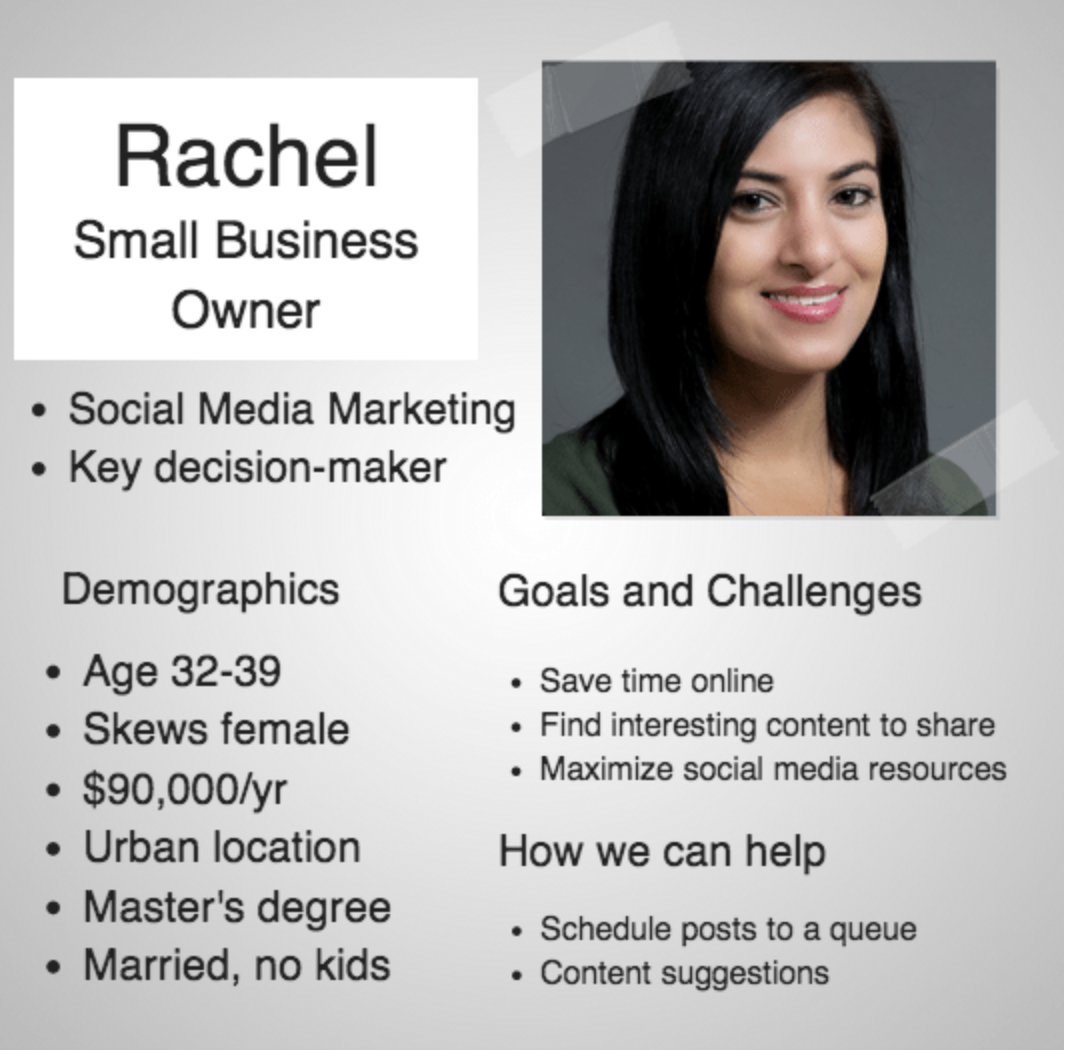
Buffer uses personas to connect with their target customers.

Screen Shot 2017 09 20 at 13.57.16

Using the information they’ve put together here, they will have a greater understanding of how to create their landing page.

You want to increase your chance of conversion, so don’t try to make your landing page appeal to absolutely everyone.

Instead, use the data in your personas to produce highly-targeted landing pages that speak to a specific group of people.

You only have a few moments to grab your visitor’s attention. And in those short few moments, they’ll decide whether or not they want to convert.

2. Present the offer

The reason landing pages are so effective is that they isolate the action.

There shouldn’t be a menu or other links on the landing page. It should all guide the visitor toward completing the action you want them to take.

Distracting them with multiple options is a surefire way to confuse them. Your conversion rate will suffer.

Do not give your visitors a choice. Make it clear what you want them to do.

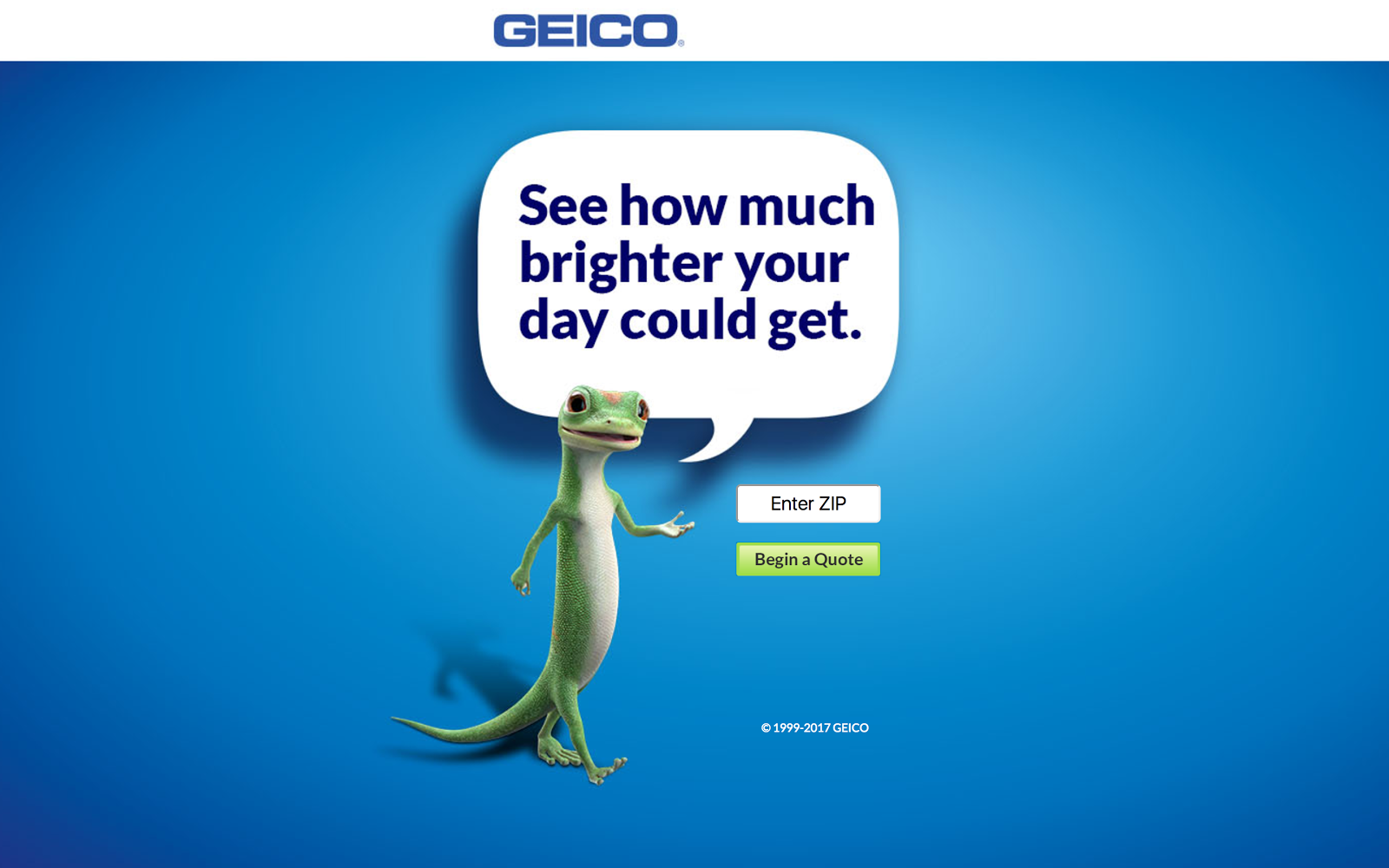
The only option they should have is to convert or not to convert, like in this example from Geico: Screen Shot 2017 09 15 at 16.12.02

The clear landing page means that whoever lands on the page only has one option. Enter their zip code or not.

But just making the chosen action clear isn’t enough to ensure that your visitors convert.

You need to create an offer that resonates with them enough to take the action.

Think about it. A landing page that asks its users to sign up for the newsletter in exchange for nothing isn’t going to convert very well.

Why?

Because there’s no incentive. Why should your visitor do anything for you without getting something in return?

And no, your newsletter alone is not enough of an incentive.

But creating a compelling offer doesn’t have to be a complicated task. You just need to provide your audience something they actually want.

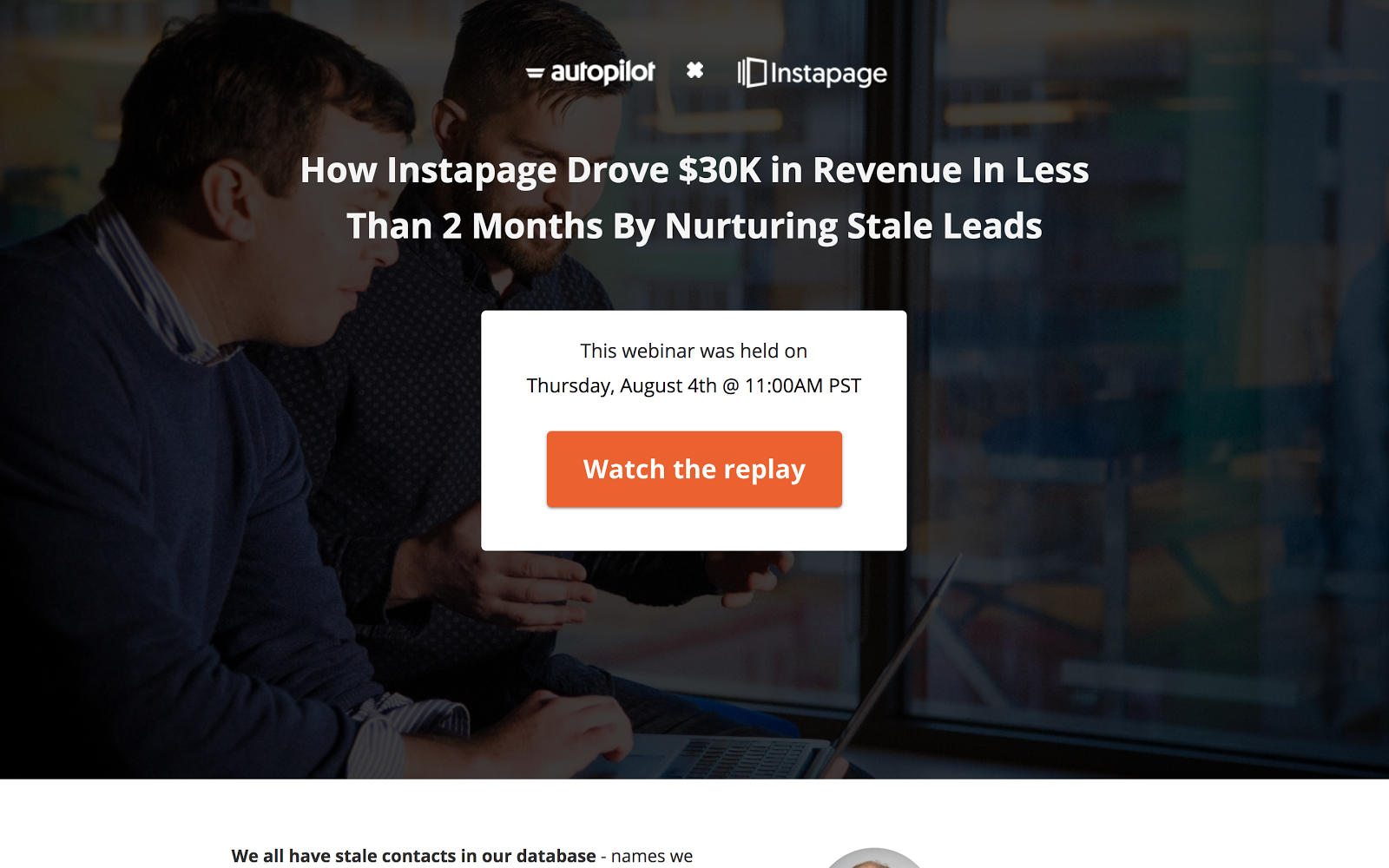
Autopilot knows their readers would be interested in growing revenue with Instapage, so a replay of the webinar would be beneficial to them.

Screen Shot 2017 09 15 at 16.13.29

This is a good example of a strong offer.

If you already have a landing page that you’re looking to improve, ask yourself whether or not as a visitor you would take the desired action.

If the answer is no, then there are changes you need to make.

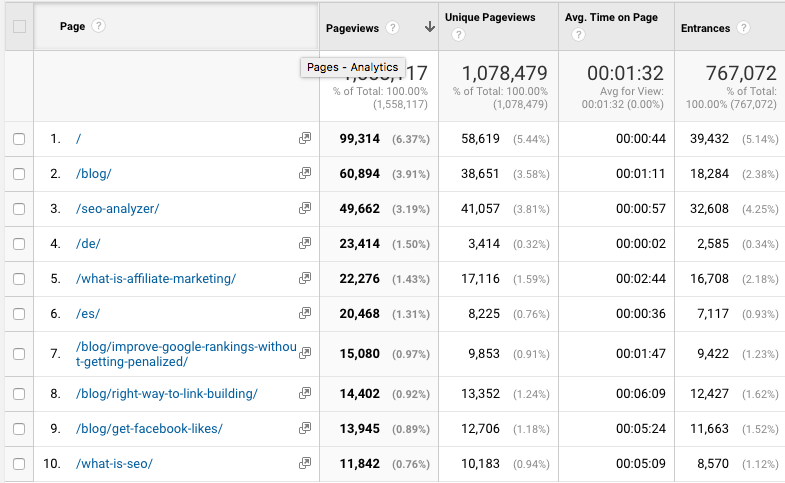
If you’re struggling to create an offer, but you know you want to build your email list with a landing page, then look at your most popular piece of content.

We can see here that the most popular piece of content on my blog is [enter content].

If you were to offer this content as a downloadable PDF or checklist, people would be likely to give you their email address in exchange.

Why?

Because you already know it performs well. You have proof there’s a need for it.

Here, the hard work is done for you. Find a popular piece of content, find a way to repackage it as a downloadable piece, and offer it to your audience.

But what if your landing page isn’t for an e-book, checklist, or downloadable PDF?

Think about other ways you can provide value to your audience.

3. Write the headline

Once you’ve got your offer down, you need to start working on the headline. The headline must be captivating.

It’s usually the first thing your visitor will see, so you need to perfect it.

The headline is often the deciding factor of whether or not a visitor will convert. And you only have one real opportunity to make it work.

Your headline should be driven by the benefits. You need to outline exactly what will happen to the visitor once they take your desired action.

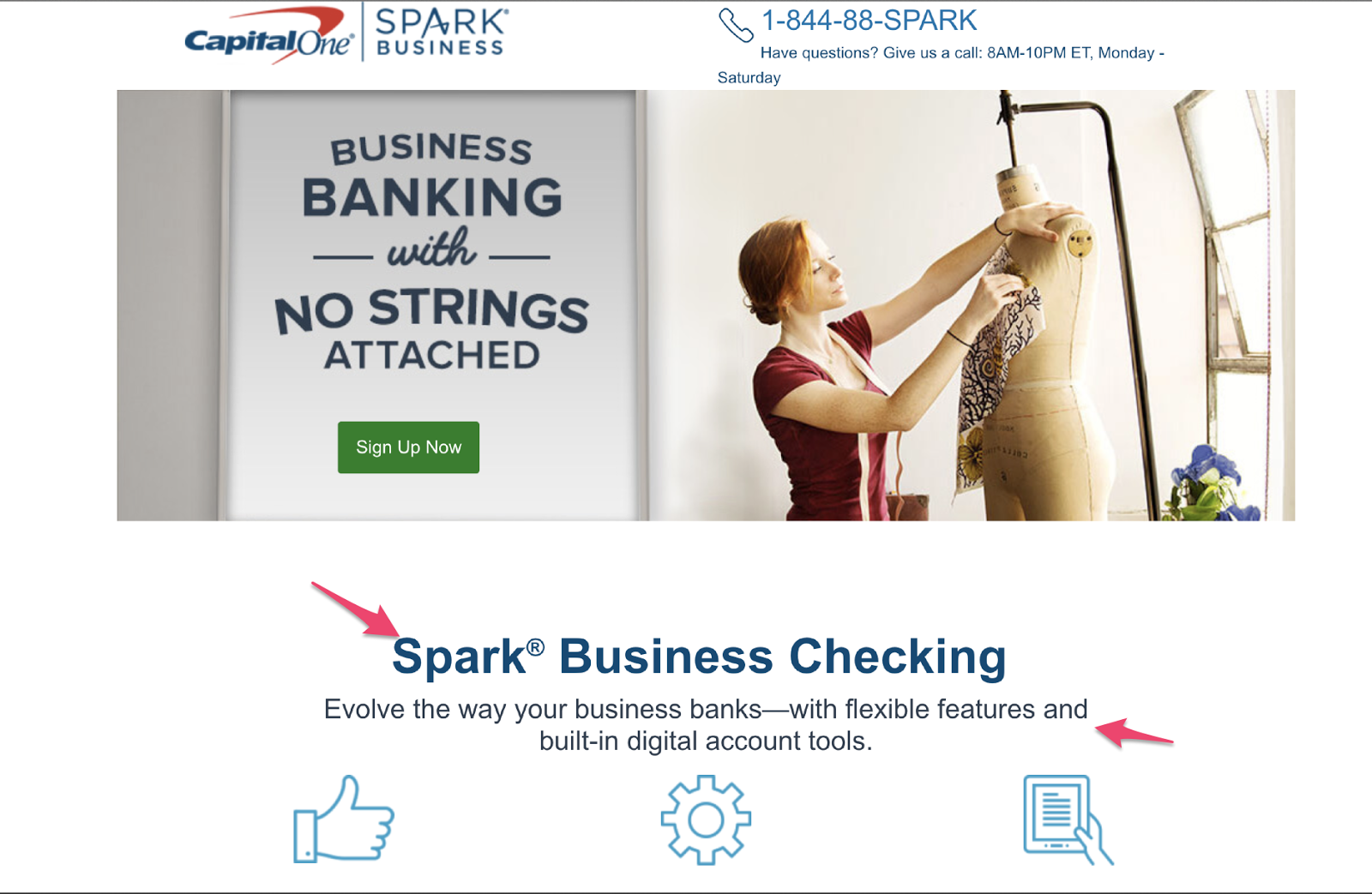
Capital One makes use of both a heading a subheading to get their point across:

Screen Shot 2017 09 20 at 14.10.15

They know people who are interested in their service are going to want to have their business in order, so they position their offer in that sequence.

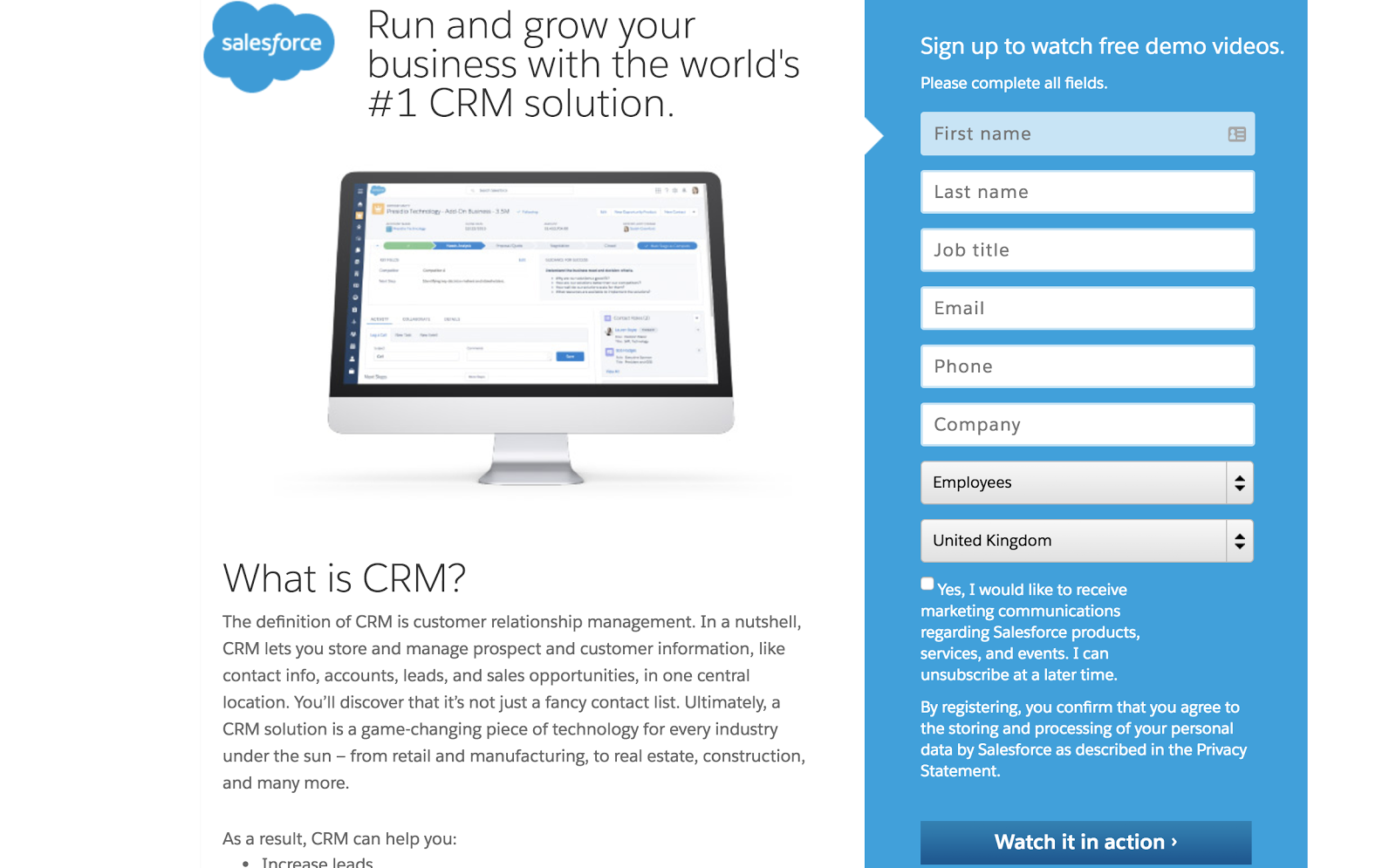
Salesforce has a clear headline and message:

Screen Shot 2017 09 20 at 14.01.23

This headline is great because it grabs the audience’s attention. They’re immediately drawn to it. Visitors automatically know what will happen if they fill in the form on the right.

Joanna Wiebe of Copy Hackers says if you’re struggling to find the right words, then look at the language your audience uses.

Why is this effective?

Because if you use your audience’s own language in your headline, it will resonate better with them.

After the headline, you’re likely going to use a subheading.

This is another opportunity to mention the benefits. It’s for people who were compelled by the headline but need some more convincing.

It gives you another chance to keep their attention and draw them closer to your call to action.

4. Create the copy

Good copy sells. You know that.  It’s why some companies pay copywriters thousands to put words on a page.

But it’s not as easy as just writing words on a page. They have to mean something to your target customer.

As we mentioned with the headline, if you’re struggling to find words, then utilize the language your prospects use.

Your copy is there as a tool to help you get your point and message across and increase the chance of conversion.

It all begins with finding the sweet spot for the right amount of copy. Write too little and you won’t have enough words to get your point across. But write too much and the page will become overwhelming.

However, just saying “find the sweet spot” doesn’t help you.

In general terms, the amount you write depends on the offer. For things that need a lot of explaining and persuading, you’re going to need more copy.

For things that require the prospect to provide you with more than just their email address, i.e. when they are making a purchase, you are naturally going to need to use additional copy to ensure all the necessary details are there.

When it comes to actually writing your copy, you should mirror your brand’s style.

Keep in mind that it’s not about you. It’s about the customer, so the phrasing you use should be customer-centric and focus on them.

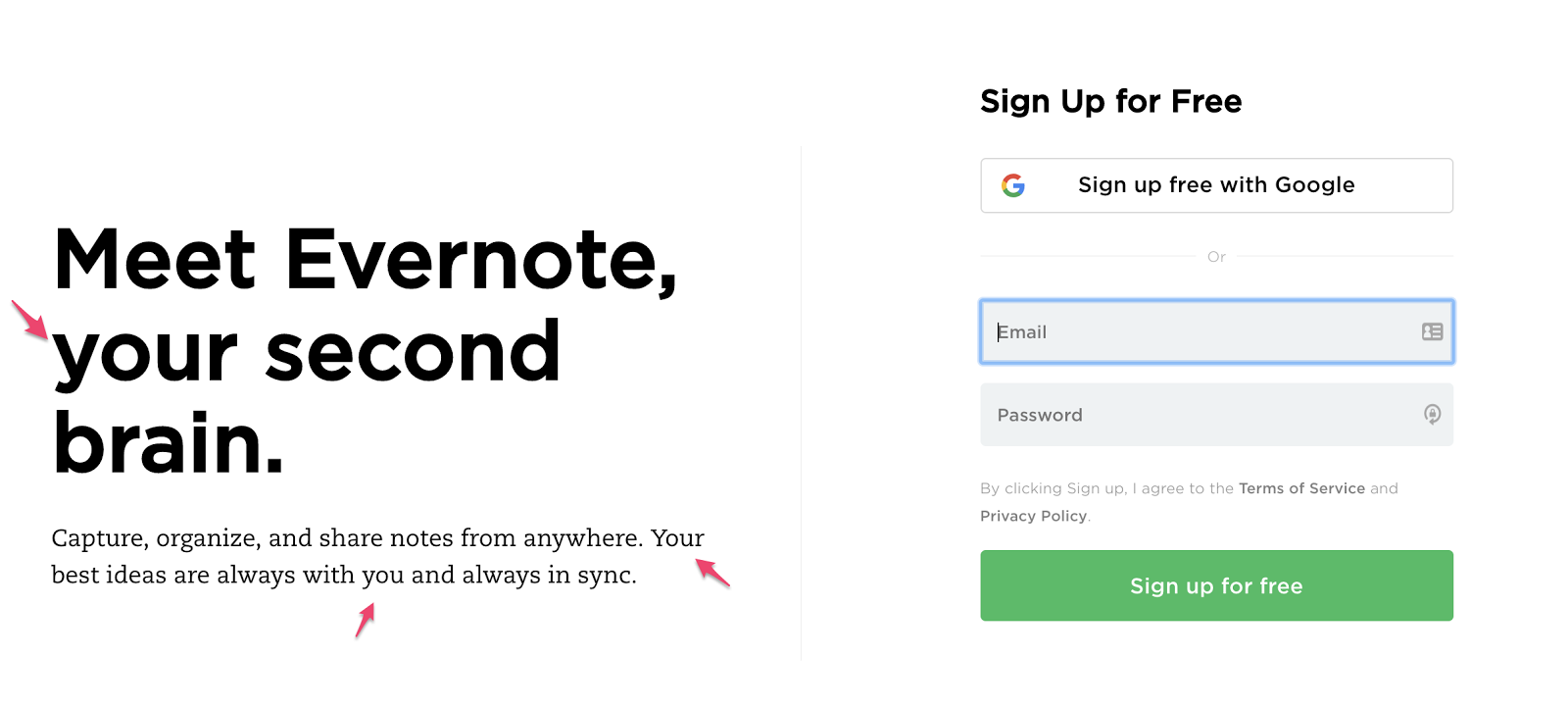
Evernote personalizes their landing page copy by avoiding using words like “we” or “our” and instead opts for words like “your” and “you”:
Screen Shot 2017 09 20 at 14.11.57
These words highlight to your prospects that the main reason for this landing page (and your business) is to help them solve their problems.

5. Use visual aids

Like we said, your landing page is only one page, so everything should be there for a reason and have a purpose. The same rule applies to any images or videos you use.

When you’re adding images to your landing page, you should utilize ones that help your visitors visualize their life after they’ve taken your action.

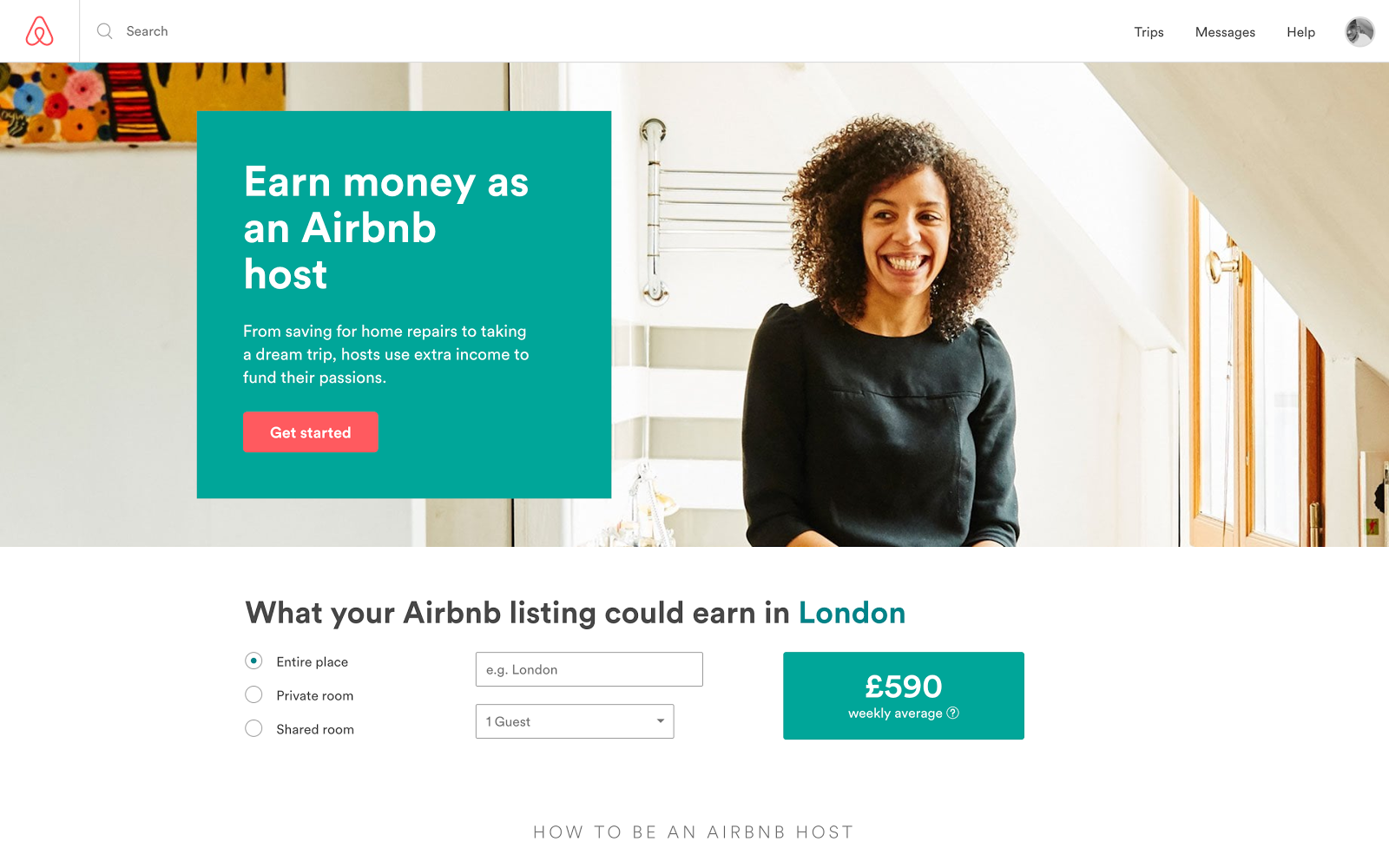
Airbnb is a business that focuses on people. So it makes sense that they should use images of people on their landing page:  Screen Shot 2017 09 15 at 16.23.39

They want their users to feel accomplished and happy if they sign up as an Airbnb host, so they include an image of a woman smiling.

For anyone thinking about signing up for the Airbnb platform, seeing an image like this will encourage them it’s a good idea.

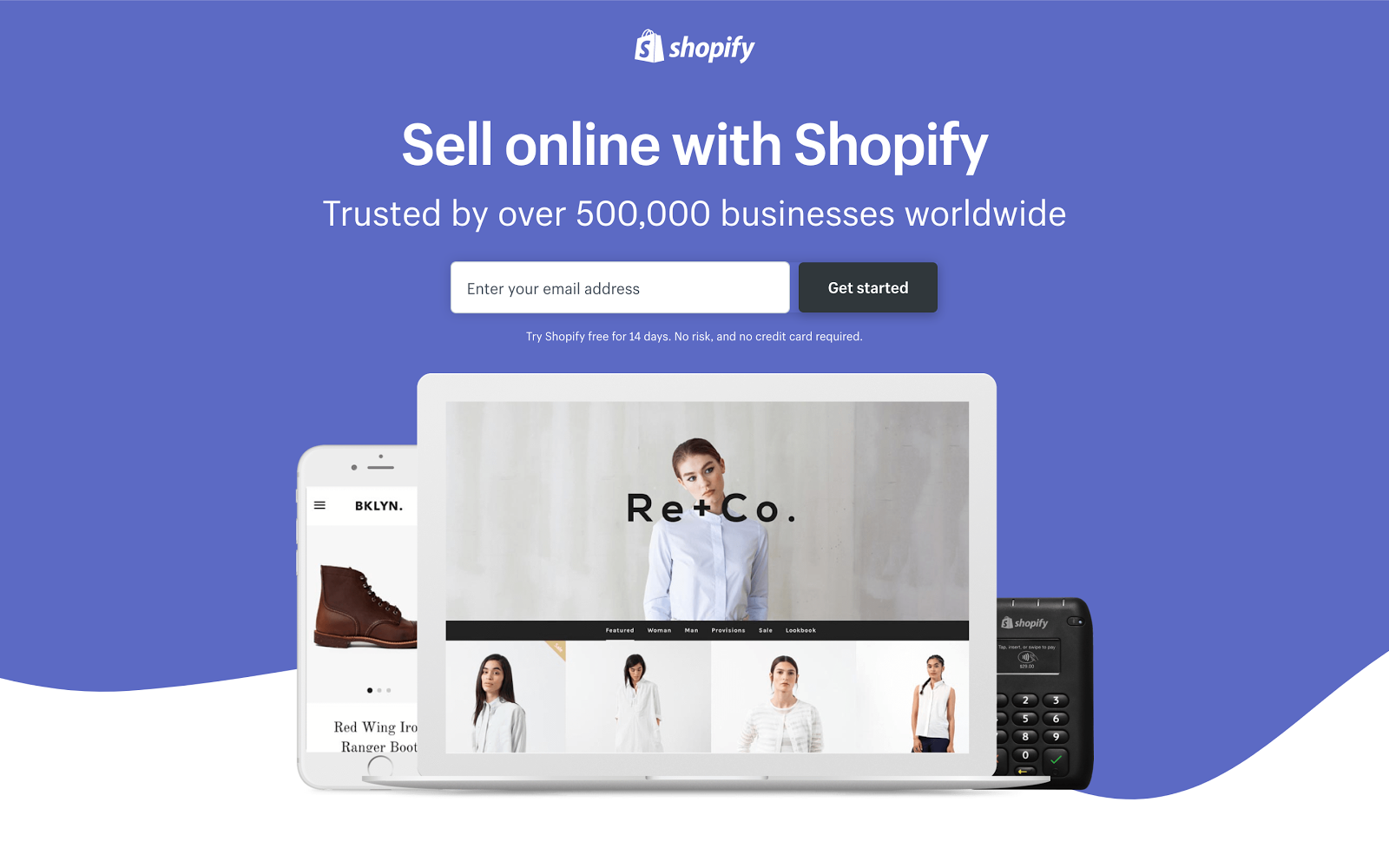
Shopify, an e-commerce platform, uses images to show visitors how their shop could look:

Screen Shot 2017 09 15 at 16.24.15

You can utilize images to guide your audience towards the call to action.

The images make your offer more human.

Your audience cannot touch or hold your product. Your landing page should make use of images to help them visualize it.

6. Include social proof

When creating a mind-reading landing page, understand that one question your audience will have is, “Do I need this?”

This is true for every landing page.

One way to read their minds is to address their question through the concept of social proof.

People are more inclined to take action if they know other people just like them have taken action and benefited from it.

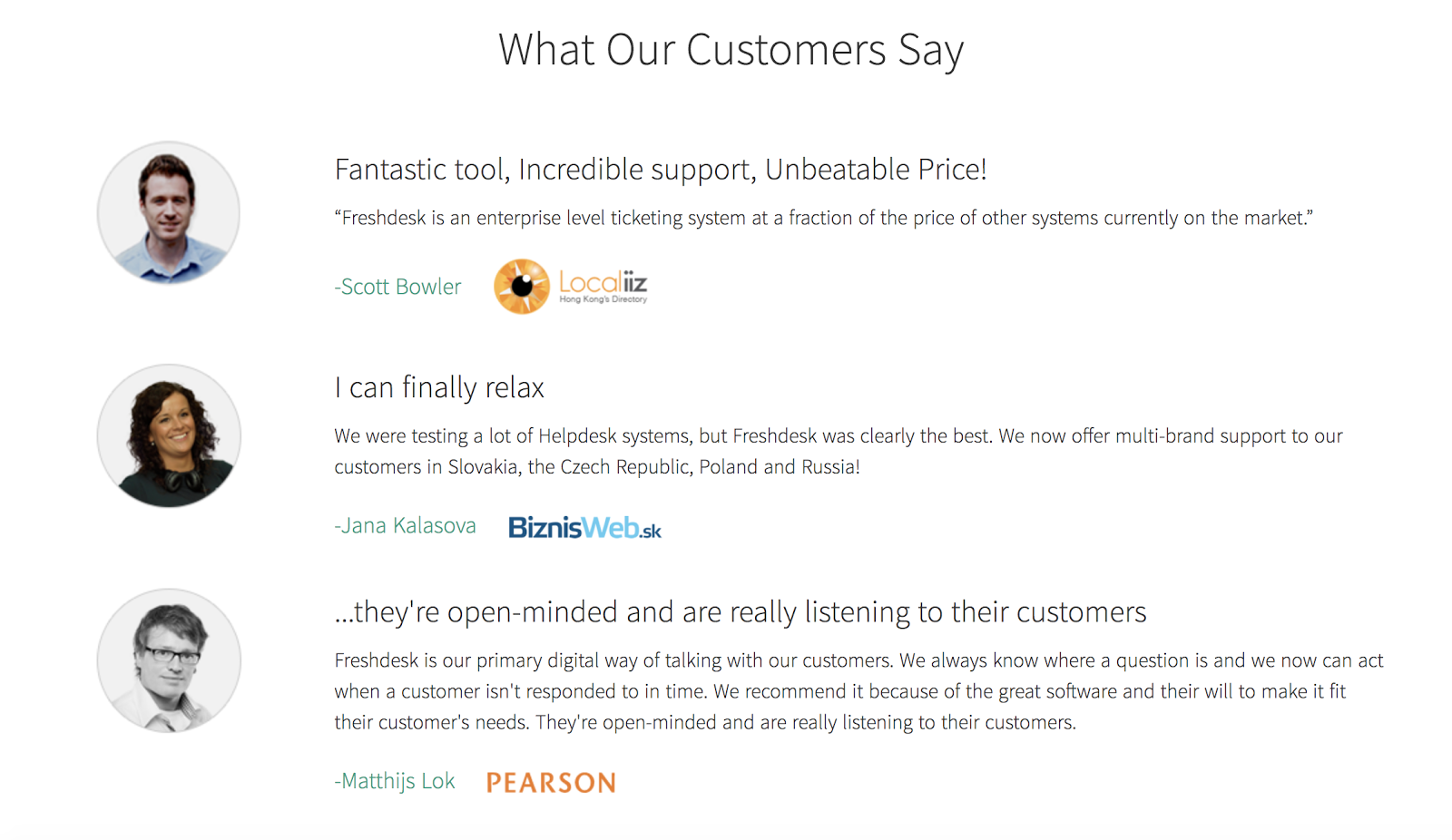
Using social proof on your landing page provides prospects with another layer of trust. They feel like it’s more likely your product/service will actually do what you say it will because they can see what other people thought about it.

For example, check out what Freshdesk does on their landing page:Screen Shot 2017 09 20 at 14.16.30

Do you have reviews and testimonials for your product you can use on the landing page?

Visitors get to experience how their life could be different from signing up. And they learn that from other people just like them.

7. Utilize a call to action

Your call to action button is important. It’s perhaps the most important element on the page.

If your audience can’t see your button clearly, they’re not going to know what to do.

Each landing page should have a call to action. The call to action is there to guide your user’s attention.

Let’s talk about your call to action button copy.

Your button copy should be action driven and relate to the offer available.

“Download” copy on the call to action is vague, and the visitor might not even remember what it is they’re downloading.

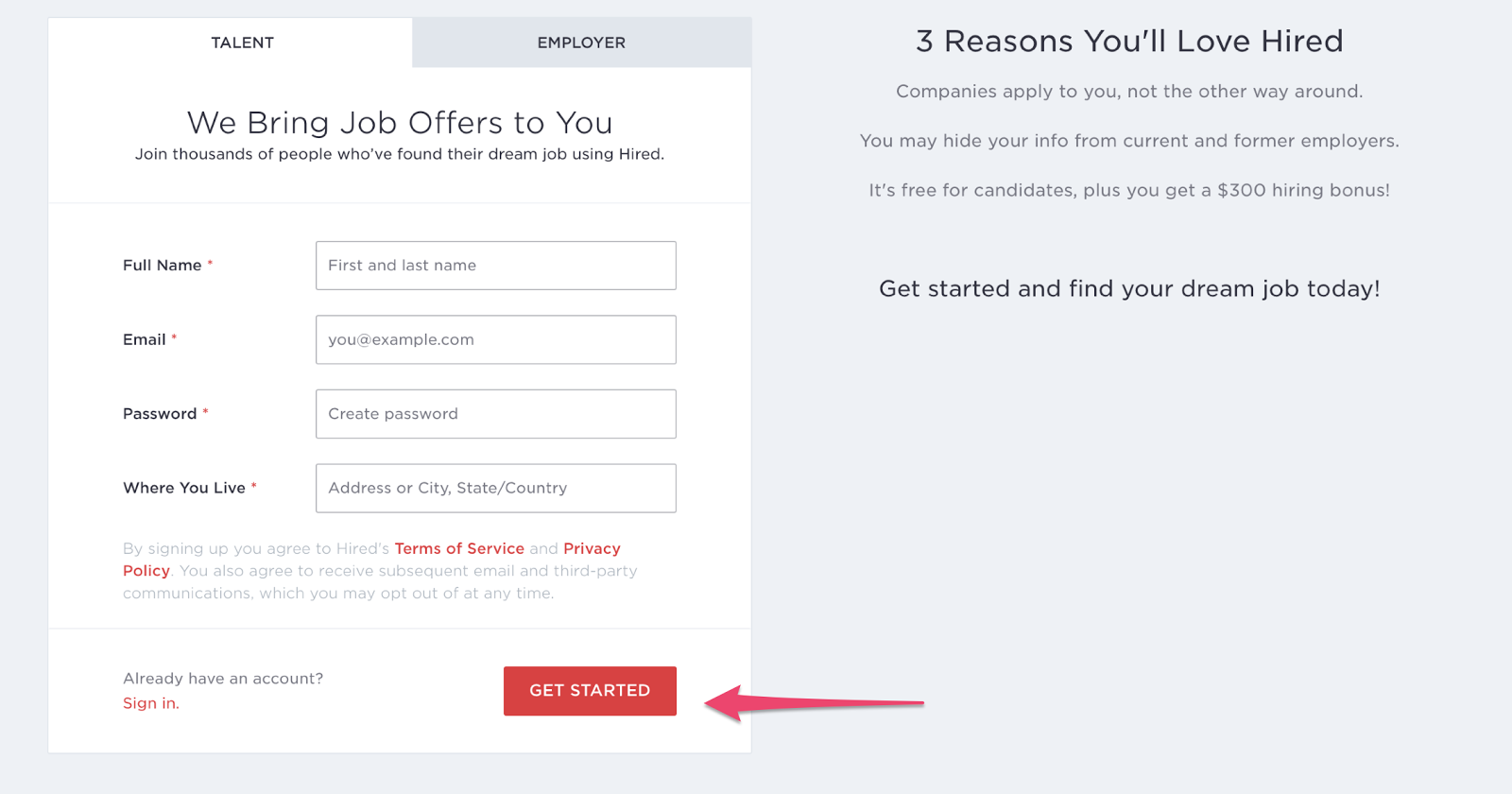
Take a look at the call to action button on Hired. It stands out as the only red button on the page:

Screen Shot 2017 09 20 at 14.22.19

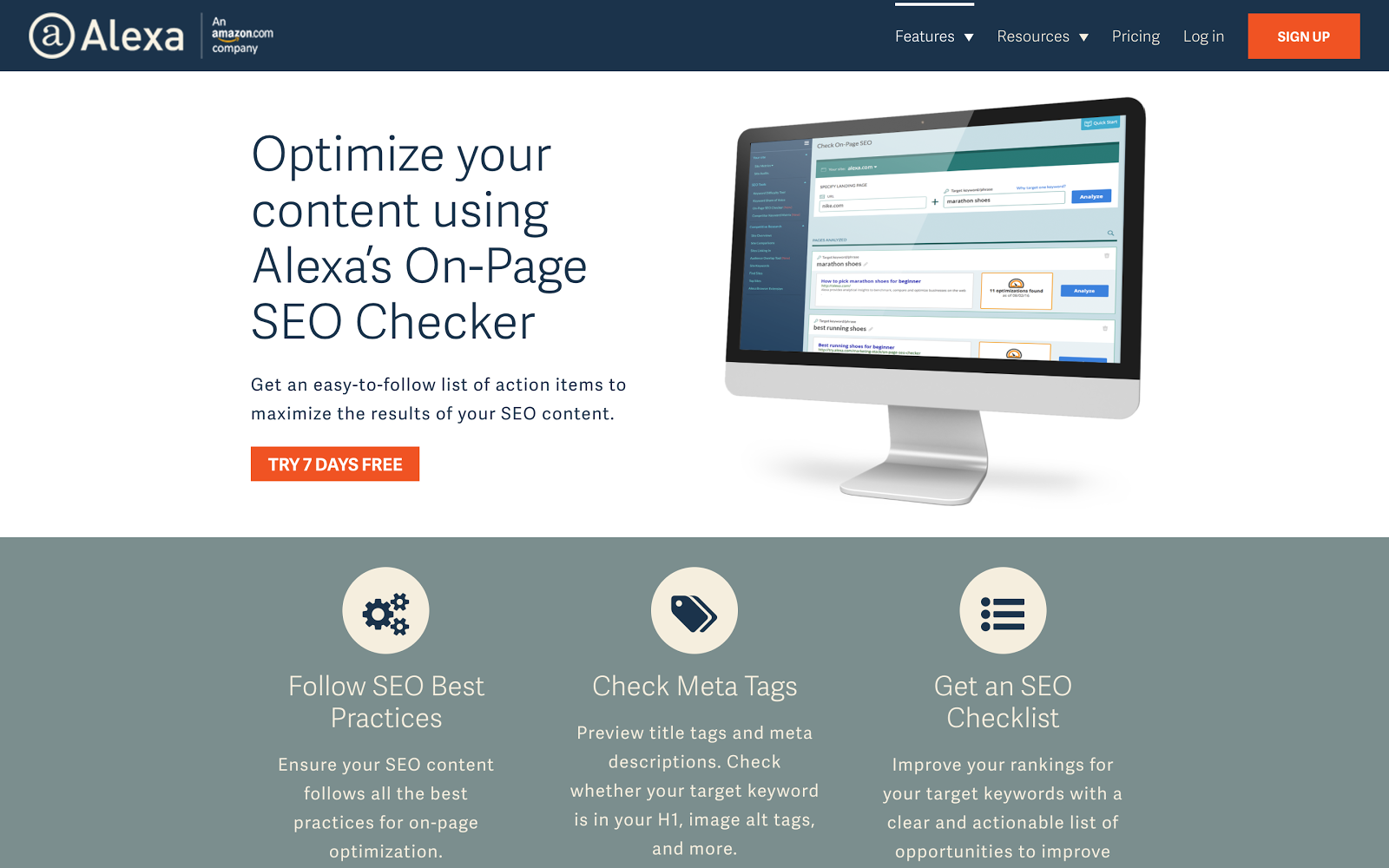
Alexa uses the “Try 7 days free” copy, which takes the pressure off the visitor. They don’t have to fully commit to using the service, and won’t be charged if they’re not happy with it:

Screen Shot 2017 09 15 at 16.27.59

Both Hired and Alexa use excited copy like “Get started.” Using the word “get” psychologically makes people feel as though they are getting something in return for giving you their details.

8. Measure your results

If you don’t measure the results of your landing page, you have no real way of understanding whether or not it is converting successfully.

Use Google Analytics to measure how many visitors came to your landing page and converted by giving you their data.

When looking at the effectiveness of your landing page, consider your bounce rate.

Your bounce rate is the number of people who landed on your landing page and didn’t convert.

If your bounce rate is low it could mean one of the following things:

You aren’t using the right keywords. Your keywords should be relevant to the audience you want to attract. If not, you will have a bunch of untargeted prospects coming to your site with no interest in what you’re offering.

The design on your landing page is poor. Consider how often the average person spends on your landing page. If it doesn’t follow a logical flow or is too confusing, they’re more than likely going to bounce.

9. Make sure you test

The only way to know if your attempts are working is to run tests.

A/B testing your landing page involves splitting your traffic in half, so half the traffic sees one version of the landing page and the other half sees another.

This way you will be able to make informed decisions about what does and doesn’t work.

You can compare two versions of your landing page and test different elements.

Do you have two headlines you want to use, but you aren’t sure which will work best? Use A/B testing.

Then after you’ve generated enough traffic, you’ll be able to see which led to the highest number of conversions.

With this data, you can continually improve your landing page to ensure it converts the most people.

When testing elements, don’t try and test everything all at once. If you do this, you’ll have no clear idea what you need to change and what you need to keep the same.

Instead, change a few elements at a time and keep the other elements the same as a control variable.

Conclusion

Your landing page has one job, and one job only: To convert.

So why are you not doing everything you can to encourage your visitors to take your desired action?

It all begins with planning.

But the planning begins even before you start thinking about what you will have on your landing page.

If you want it to be successful, you have to read your prospects’ minds.

Essentially, you need to know your customers really well.

Once you know them, you’ll determine what words, images, and reasoning resonate most with them.

And once you start using their own ideas on your landing pages, your conversion rates are going to increase.

But, with everything in marketing, there is no one size fits all.

Follow the best practices listed in this post and develop your understanding of your audience, and you’ll be able to create winning landing pages for all your offers.

What strategies do you use to improve your landing pages?

The post 9 Steps to Creating a Landing Page That Reads Your Prospects’ Minds appeared first on Neil Patel.


from Blog – Neil Patel https://ift.tt/2g0VS1J
via IFTTT

4 Ways Marketers Can Seize the Chance to Prioritize Investment Data

With COVID-19, businesses shouldn’t just expect things to just go back to ‘normal.” Gartner predicts that over a third of companies expect reduced levels of business operations for the foreseeable future. Acting like nothing has changes is a recipe for disaster.

But the outlook for marketers shouldn’t be all doom and gloom. In fact, during this time, the smartest organizations are seizing the chance to fix problems of operational efficiency and marketing agility that have been brought to light by the economic upheaval.

Fewer resources and uncertainty demand marketers prioritize efforts like never before. Marketers should be more strategic with their time, people, and dollars right now. But unfortunately this is a huge blind spot for most, as 63% of marketers cannot determine which investments drive results. And if you don’t know what’s working, how can you prioritize it?

COVID-19 has forced marketers to double down on understanding where they were driving impact and becoming more efficient in how they do it. This means developing a clear understanding of where you’re investing your financial and human resources. Most companies have at least a basic way to assess their people’s time or their campaign outcomes, but the one element most companies are missing in order to assess efficiency is an investment data set, including how much budget they planned to spend on certain programs and how much they actually spent on various programs and technologies. 

How do you get started on this critical data set? Optimizing your investments is similar to how you optimize any other resource—it calls for flexibility, accessibility, and to be aligned to strategy. Here are four key places to start as you look to gain a better understanding of your investment data:

Simplify

Your budget hierarchy should mirror the marketing organization itself. How are the teams of people organized, and how do they align around investments? Within what structure does your team already naturally spend money, such as campaigns or regions? Structure the budget as naturally as you can, based on how funds are allocated, so there are clear ways to tie investment data to performance data.

Standardize

Investment data needs to be centralized in order to paint a clear picture of where and what you’re spending on. This enables teams to drill into investment data by product line or region, but also roll it up an organizational level for marketing leaders. Categorization is also key. Investment hierarchies aren’t the sexiest topic of discussion, but if you want to start understanding which channels are the most efficient, you need to understand what ALL marketing groups are spending on advertising, not just one group. 

Accessible

Do you only check on investment data when someone asks a question? If so, it’s time to change. An accessible system that a) encourages marketers to keep their investment data up-to-date and b) pulls in actual spend data will dramatically reduce the amount of time your team has to spend hunting for investment data, while giving you a data set you trust. An accessible data set also enables your team to be proactive about investments rather than reactive.

Connect

Like any other data set, investment data should be easily combined with other data sets for actionable insights. That means connecting it to your ERP system for automated actuals and your CRM for revenue impact and performance measurements. And all data sets need aligned fields, meta-tags, and hierarchies, so they can actually drive useful insights that will guide marketing decisions.

For a long time, marketers measured success based on the sheer volume of output. But in today’s world the measure of success needs to be on quantifiable business impact, and that means prioritizing all invested resources against the activities that drive business impact. Businesses that have clear investment strategies and clean investment data will have the foundational knowledge to know where they should focus their time, money, and people. 

Our new normal has given marketers the opportunity to innovate and test new things. Think about those tests with an eye to fixing the foundational challenges the crisis exposed, so your future plans have an even greater impact on the next normal. 

Julia Steadman, CMO at Allocadia


For more insights in marketing budgets and planning, subscribe to the CMO Spark Newsletter.


from Oracle Blogs | Oracle Marketing Cloud https://ift.tt/3e20OP4
via IFTTT

Sunday, 5 July 2020

Get Higher Quality Referrals Using LinkedIn

On the Fly is our video series with small bites (two mins or less) of marketing and customer experience advice and training from experts, given to you during disruption. This week’s featured expert is Viveka von Rosen, Chief Visibility Officer with Vengreso. Viveka is a LinkedIn expert and has tips to help you get more quality referrals using LinkedIn. 

92% of consumers trust referrals from people they know, and people are four times more likely to buy when referred by a friend, shares Vivekak. LinkedIn is a great way to find your prospects, but how do you start that initial conversation? Watch this full video to learn Vivekak’s method which was had a 100% success rate with booking time with prospects. 

Visit OnTheFly.Expert to see all episodes. 


Better teamwork between marketing and sales serves to better help customers with solutions and information that can make a difference at their jobs. You may also want to read 7 Ways to Tighten Up the Teamwork Between Marketing and Sales. 


from Oracle Blogs | Oracle Marketing Cloud https://ift.tt/3f2lqIf
via IFTTT

Thursday, 2 July 2020

How to Effectively Market Your Product

Products don’t sell themselves. For most companies, product marketing is a major part of what their marketing teams do, and is a basic necessity for meeting, and exceeding, the bottom line quarter after quarter. More than half of all shoppers research products online before making a purchase, which is as true for in-store purchases as…

The post How to Effectively Market Your Product appeared first on Benchmarkemail.


from Blog – Benchmarkemail https://ift.tt/2AnyYyN
via IFTTT

Wednesday, 1 July 2020

5 Blogs You Might Have Missed in 2020

With 2020 more than halfway over, we took a look back at several blogs that you might have missed but can still provide valuable insights as you continue to work on your digital marketing strategies. Email marketing, data-driven marketing, content, customer loyalty, and martech, we tried to cover several of the more important marketing topics to give you a breadth and variety of information: 

1)    Honor the Unsubscribe: 5 Ways to Screw Up an Unsubscribe –

Marketing teams who make it easy to unsubscribe and honor the unsubscribe request better build their reputation as trustworthy email marketers and improves their targeting by seeing which recipients are more interested and responsive than others. 

2)    Using Heat Mapping to Drive Website Conversion –

Heat mapping allows you to measure website visitor behavior and derive actionable insights from it. You can see what visitors are responding to and what they aren’t in order to optimize your site. Use this step-by-step guide to get started and take a better look at the data.

3)    10 Tips for Better SEO –

SEO experts give us their pro tips on image link building, creating relevant landing pages, making the best use out of social, mobile, and YouTube, and more to optimize content for value and search. 

4)    Why an Emotional Connection Matters in Loyalty and How to Achieve It –

Customers with an emotional connection to a brand are loyal to it. Emotionally loyal customers interact and engage more with brands. Research by Forrester shows that emotion drives loyalty in multiple industries. How do you build an emotional connection with customers and how do you keep them loyal? Read the blog to find out how to drive loyalty with helpful solutions and information.

5)    What Are the Key Components of a Martech Stack? –

With more than 7,000 martech solutions available, marketers narrow what goes into their martech stack by considering what tools they actually need and remembering that quality triumphs over quantity. What basic building blocks should a martech stack include, though? It depends on multiple factors, such as whether you are B2B or B2C, your budget, your organization, and your goals.


For more marketing insights, check out Oracle CX Marketing.


from Oracle Blogs | Oracle Marketing Cloud https://ift.tt/2YNA801
via IFTTT

How to Put Together a Great Lead Nurture Strategy

What you do with your leads once you’ve got them is just as crucial as generating leads in the first place. Having an effective and well-rounded lead nurture strategy will help you do that and ensure that all that hard work you put into lead generation doesn’t waste. Small business marketing teams have to make…

The post How to Put Together a Great Lead Nurture Strategy appeared first on Benchmarkemail.


from Blog – Benchmarkemail https://ift.tt/3gfEtyV
via IFTTT