Thursday, 28 January 2016

Discover the Power of the “Only-Factor” to Drive Conversion

According to the CMO Council, digital ads will lead the way for global media growth in the next two years, accounting for 33% of total advertising revenue and growing from $133 billion to $194.5 billion. This month’s MarketingExperiments Web clinic examined how to make the most of this increasing digital investment by focusing on the “Only-Factor” — the point of your value proposition where your product’s exclusivity and appeal meet.

Check it out here.

The two experiments below illustrate the power of the “Only-Factor.”

In the first experiment, a credit card company wanted to see which PPC ad would produce the most applications.

Version A promoted its affiliation with a popular organization.

Version B noted that it offered the only credit card that supported this particular organization.


The result: Exclusivity matters. 2.34% clicked to apply for their credit card from Version A while 4.07% clicked to apply from version B. This is a 74% lift that was validated at a 95% level of confidence.

In the second experiment, a software company wanted to drive more visitors to their landing page.

Version A specifically outlined how its product stands apart (number of clients served, worldwide market leader, award-winning). 


Version B mentioned awards, but was far less specific.


The results indicated that specificity converts. Version A reported 1.08% clickthrough while Version B had only .89% clickthrough — a relative difference of 22% that was validated at a 95% level of confidence.

Want an instant test to measure how strong your “Only-Factor” is in your online advertising? Replace your brand’s name with a competitor’s in your online advertising. If the ad still works, you have work to do. You also have work to do if you you’re offering exclusive benefits that your market place is ho-hum about.

Exploit your “Only-Factor” by creating and communicating a powerful value proposition: why customers should buy from you rather than anyone else.  The heuristic below illustrates the concept. 

When you subtract the cost force (Cf — the perceived cost of taking an action like buying your product), from the Value Force (Vf — the perceived value of what you’re offering), you will get the net force (Nf). The higher the net force, the higher your conversions. Value force is made up of appeal (Ap) and exclusivity (Ex). Therefore, the higher your exclusive appeal, the higher your value your value force. So, to achieve the most conversions, you want the highest appeal and exclusivity possible. That’s the “Only-Factor. ”

To identify and communicate your strongest value force and the “Only-Factor” that comes with it, you’ll want to download and fill out the free value proposition worksheet here. This isn’t a solo activity, involve as many of your colleagues in as many departments as possible. You may even want to talk to your customers as well to attain the most accurate perceptions. It will be well worth the time invested as you’ll have the knowledge you need to pinpoint your only factor and use it to drive more conversions.


You might also like

How to Avoid Losing the Value of Your Value Proposition

Value Proposition: How do you create an effective value prop?

Value Proposition: A simple spreadsheet to help you categorize your products’ value

Discovering Your Value Proposition: 6 ways to stand out in a crowded marketplace [MarketingExperiments Web clinic replay]

Sign up for the MECLABS Value Proposition online course [MECLABS is MarketingExperiments' parent research company]


from MarketingExperiments Blog: Research-driven optimization, testing, and marketing ideas http://ift.tt/1nzWrku
via IFTTT

Wednesday, 27 January 2016

Planning for Next Month’s Goals: Priming for Success in February

Even though you might still be knee-deep in planning for the year, setting aside a content or marketing pow-wow to discuss what you’re going to do in February is crucial.Related Articles
  1. 8 Great Ways to Improve Your Holiday Email Marketing
  2. Creating an Email Marketing Plan - Who Is Your Audience?
  3. Does Best Buy’s Email Promotion Got Game?


from Benchmarkemail Blog http://ift.tt/1Ur0zxA
via IFTTT

Why Your Team Can’t Afford to Ignore the Data

A Teradata survey unveiled that 87% of marketers see data as the most underused asset in their cohorts, and 50% desire to extend the use of big data to support their digital marketing efforts.

However, ecommerce marketers are still experiencing difficulty with gaining insights from analytics. They struggle with integrating data into their everyday operations, like competitor analysis, branding strategies, and sales techniques.

Instead of suffering from analysis paralysis, marketing teams should focus on the bigger picture. Major gains are made when marketers concentrate on creating a better customer experience.

So, stop disregarding the data. Move forward by sharpening the following four key areas:

1. Monitor the Competition

Data gives SaaS teams an inside track of how to strategically outdo the competition. With keyword tools, you can measure your methods amongst other market leaders.

SEMrush monitors your competitors’ strategies in display advertising, organic and paid search, and link building. Knowing the competition’s unique keywords will help you discover unknown search terms.

Moreover, by improving your content with new keywords, there’s a greater chance to emerge in the SERP next to your competitors.

keyword-competition-research

Image Source

Social data also offers an inside track of how competitors interact with customers. Platforms like Rival IQ and Mention can help you size up the competition.

rival-iq-Twitter-Engagement

Image Source

For example, on Twitter, observe other brands’ mentions, followers, and engagement rates. Know when they outperform you, and vice versa. Then, analyze the content promoted.

What content stands out? How many times was it promoted? How did customers respond?

The purpose is not to mimic your competitors but to learn from their successes and failures. If a particular tweet does well for them, it may have a similar result for your business.

Keep the following points in mind when measuring your brand’s presence:

  • Identify insights that can contribute to your plan.
  • Learn what and when to post to produce more engagement.
  • Pinpoint substantial spikes in impressions.
  • Distinguish between what’s working and what’s not.

Mold your strategy with benchmarks, and build marketing campaigns that outwit your competitors.

2. Craft a Personalized Brand Message

Data helps ecommerce marketers create customized buyer personas. Knowing your audience means more personalized messages to segmented groups.

Forrester’s report on Competitive Strategy in the Age of the Consumer emphasizes moving away from consumer historical data. Rather, focus on the here and now.

Try conducting customer surveys, and use open-ended questions. That way, you gain actionable insight beyond the constraints of yes/no questions.

The goal is to understand customer behavior, including the roadblocks that hinder them from making a purchase. So, seek outside the usual interests and needs, and aim for actions and reactions.

Conversion copywriter Jennifer Havice suggests asking these survey questions:

  • When did you realize you needed a product/service like ours?
  • What problem does our product/service solve in your life?
  • What doubts or hesitations did you have before buying?

Your team also may want to gather data from phone interviews. While time-consuming, you will capture specific keywords from your customers. And that may be worth your efforts.

Just be mindful that these customer interviews aren’t sales calls. Instead, listen attentively.

“This is an opportunity to gather symptoms and a prospective customer’s perspective on their needs with respect to a specific problem or capability,” says Sean Murphy, CEO of SKMurphy.

In addition, enlist aid from your online community managers. These folks are pros at finding the most important conversations. Your community forums could uncover new clues about your consumers.

It’s up to brands to offer experiences that cater to their customers. To do so, businesses must look at the real-time data to match customer motivations with personalized products.

Get inside your customer’s heads. Create accurate buyer personas.

3. Acquire Sales Leads

Want to fill your sales pipeline with qualified leads? Use data to produce targeted lead generation campaigns.

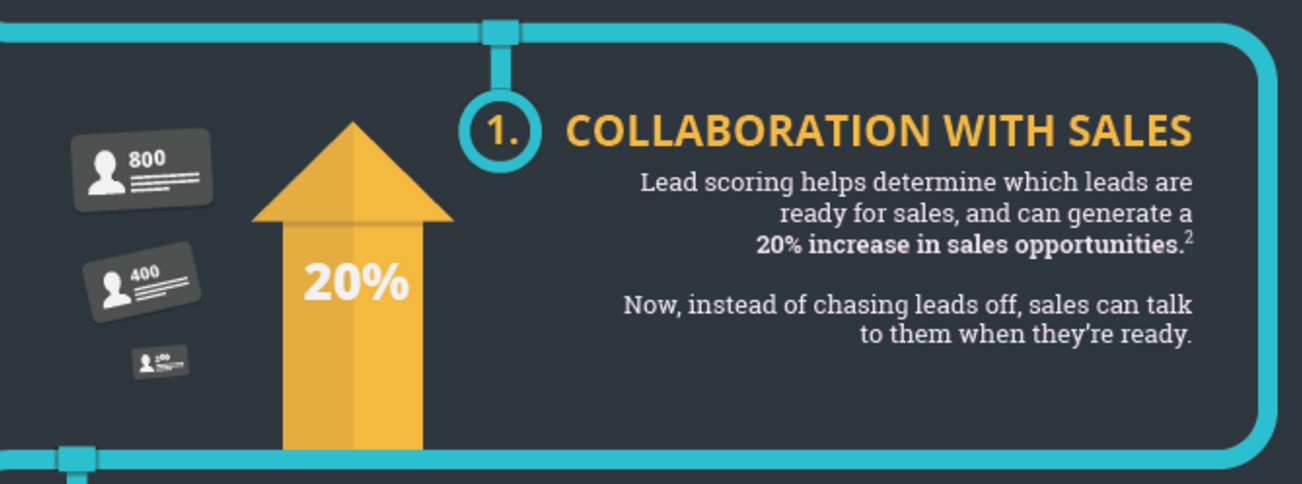
But in order to do that, sales and marketing teams must be aligned. A common issue amongst these departments is disagreement about lead qualification. Without a set definition, some organizations witness a stunt in their growth.

Research tells us that “highly aligned organizations achieved an average of 32% year-over-year revenue growth – while their less aligned competitors saw a 7% decrease in revenue.”

collaboration-with-Sales

Image Source

Marketing and sales centers around lead quality. So, to start a rewarding partnership, use consumer behavior data.

Marketing automation tools were essentially created for this purpose. Work with sales to select which leads deserve a follow up. The data will determine which prospects need to be nurtured and handed to the sales team.

The key is to eliminate missed opportunities. The collaboration should help both teams address the right leads at the right time.

Also, remember to clean your databases. Archive or delete prospects that don’t meet the lead qualification criteria.

Quality trumps quantity. Three super-qualified leads will always surpass 20 disinterested leads.

Set up your parameters. Then, filter for things like:

  • Fake email addresses and phone numbers,
  • Information-seeking job titles, like “student,” and
  • Low annual revenues.

Failure to properly process data is one reason companies don’t generate more leads. Be better. Move data to the forefront to boost sales leads.

4. Retain More Customers

Data identifies holes in the customer experience that may lead to high churn rates. Extend your customer lifetime value by predicting consumer behavior patterns.

By analyzing data, marketers learn their customers’ needs and preferences. Leverage those insights to understand why customers discontinue their services or try other brands.

Is there a disconnect in customer service? Or is your onboarding process complicated? Look for patterns and discover the reasons for your churn issues.

Researchers found that “96% of unhappy customers don’t complain; however, 91% of those will simply leave and never come back.” That’s why it’s so important for your team to be proactive.

Keep an open line of communication between your company and customers. This means promptly addressing concerns and following conversations via social media.

Effective data-gathering doesn’t have to be difficult. Below is an example of how new users sign up for Pusher. The company received a 16% reply rate.

pusher-signup

Image Source

The real challenge begins when your customers start responding. How will your team correct mistakes? Will you add more value to your services?

Incorporate customer comments into your retention strategy. Find new ways to deliver on your promises, like initiating a rewards program.

Examine the data points that increase your churn rates. Then, develop programs to exceed customer expectations. Build a brand loyal customer base.

Heed the Data

Data is your friend. Shying away from analytics will do more harm than good.

Use keyword tools to monitor your competitors. Develop customer surveys to help with buyer personas, and align marketing and sales to create more qualified leads.

Data is valuable. Think twice before you ignore it.

About the Author: Shayla Price lives at the intersection of digital marketing, technology and social responsibility. Connect with her on Twitter @shaylaprice.


from The Kissmetrics Marketing Blog http://ift.tt/1UqqXYl
via IFTTT

3 Must-Haves to Convert One-Time Shoppers to Loyal Customers

The first quarter feels like a safe time to put things into a lower gear—crunching holiday stats and forecasting the upcoming year allows us time reorient marketing efforts. Part of that reflection needs to focus on leveraging 2015’s data (especially the customer information gleaned in the holiday bustle) and using it to convert one-time Christmas buyers to all-the-time customers.

According to Marketing Metrics, the likelihood of selling to existing customers is 60-70 percent, while the probability of selling to a new prospect is 5-20 percent. So it’s a no-brainer to create loyal customers out of those that have recently engaged with your company. That conversion multiples your marketing return on investment many times over. Moreover, Retention Science found that existing customers spent 30 percent more than newer shoppers in the time period between Black Friday and Cyber Monday.

Are you engaging consumers on all the right fronts to ensure that this year’s one-time customer is next season’s returning, loyal customer? To convert holiday shoppers to constant customers, marketers should:

1. Collect and Honor Preferences Everywhere

‘Tis the season for returns, exchanges and frantic calls for product support. You’re likely to see an uptick of communications this time of year. That makes it a critical period to demonstrate that you know your customers and respect their preferences.

That’s why preference management – the active collection, maintenance and distribution of unique consumer characteristics, such as product interest, communication channel preference and frequency of communication – should be accessible throughout the company. Without centralized data for all customer service operators and other points of contact, a single interaction can prove inefficient and frustrating, making it less likely that your customer returns.

2. Ensure Cross Channel is in Order

While holiday headlines tended to position e-commerce as a detriment to brick-and-mortar shopping, the truth is that in 2016 savvy marketers know that cross channel experiences can capture a full view of the customer that includes varying shopping preferences—online, in-store and more.

Previously, naysayers warned against “showrooming,” when customers browse items in-store before buying online. But in fact, marketers should embrace showrooming as well as its more modern corollary, “webrooming,” when consumers research products online and then head to stores to make final purchases.

If you’re providing a cross channel experience, the company maintains a single view of the customer across every platform, as well as in-person. That valuable cross channel initiative meets customers where they are and can anticipate their needs by making suggestions based on their channel of choice, past purchases and even search history.

First-time visitors won’t get lost when they change channels. They’ll reappear and be able to engage seamlessly.

3. Reset and Correct the Conversation

Despite best efforts to target and segment customers or personalize messages, company communications tend to be reactive and based on your company’s calendar, not the customers’ needs.

Using preferences provided by the customers themselves empowers marketers to act on stated expectations. Self-reported customer data, paired with proactive communications, allows customers to correct the conversation – responding, guiding, and ultimately asking for more brand-driven conversations on their terms.

Breakthrough customer loyalty is driven by conversations, not campaigns. The faster your company reacts to data gleaned over the holidays and tunes communications to respect your customer’s 2016 needs, the better.

The first quarter is prime time to act on new customer data – ensuring your future loyalists can opt-in for more information, engage on their terms and share their preferences to customize the conversation.

Learn more about building these experiences with your customers both in-store and online with the Modern Marketing Essentials Guide to Cross Channel Marketing.

Author Bio: Eric Tejeda is the Director of Product Marketing for PossibleNOW. Eric supports the organization’s growth objectives by productizing and launching innovative new products and services that fill critical needs in the marketplace. With 25 years of experience, Eric firmly believes that permission-based marketing and preference management is a mega trend and the path to success for marketers today.


from Oracle Blogs | Oracle Marketing Cloud http://ift.tt/20sr6hD
via IFTTT

Last Day to Get Inside Authority, our Advanced Content Marketing Training Program

doors close today - get advanced content marketing training and lock in your low price

At 5:00 p.m. Pacific Time today, the doors to our advanced content marketing training program, Authority, close again. We won’t reopen them until later this year.

If you’ve considered getting the support, training, and feedback that’s available to you inside this program but you haven’t joined yet, you may have a few questions.

In today’s post, I’m providing quick answers to the most common questions we’ve heard. And I’m happy to answer any follow-up questions you may have: just ask in the comments section at the end of the post.

What will I learn inside Authority?

Officially, Authority is advanced content marketing training.

But it’s much more than that.

Authority is a community of people of all stripes who use content marketing to promote something.

Inside Authority, you’ll find content marketers from every corner of the career world. Professionals like:

  • Small business owners
  • Freelance writers
  • Content consultants
  • In-house content creators

Not to mention bloggers, authors, entrepreneurs, copywriters, designers, developers, and so on.

Members stay up to date with what works now. And they get the support, encouragement, and resources they need to build their businesses with effective content marketing.

How much time do I need to dedicate to Authority every week?

We know you’re busy, so we’ve made our Authority advanced content marketing training extremely flexible.

We offer a weekly live session you can attend while it’s broadcast, or you can catch the replay whenever it’s convenient for you.

Our forum is available 24/7 for you to get answers to your most pressing questions.

Some weeks, you may not check out the session or participate at all. That’s okay: We know you get busy sometimes. We’ll be there when you have more time available.

At other times, you may discover you need to get yourself up to speed quickly on a content marketing topic. In that case, the vast Authority archive (250+ hours of education) is there to help.

You’ll discover sessions about:

  • The seven essential elements you need to make content marketing work for your business
  • How to develop a content strategy for your business
  • Productivity for content creators
  • Using images in your content marketing
  • How to use email marketing to create community and promote your products and services
  • How to format your content so it’s attractive and easy to read
  • Plus much more

Is Authority included in the Rainmaker Platform?

No, Authority is not included as part of the Rainmaker Platform.

Authority access was included as part of the Rainmaker Platform initial offering, and those who signed up while that offer was valid will continue to have access to Authority for as long as they use Rainmaker.

If you’re using content marketing to promote a business, Authority is the program for you.

The skills, support, and encouragement you’ll get when you join the community will help you build a solid business on a foundation of effective content marketing.

When will Authority open to new members again?

It won’t be anytime soon.

We don’t have an exact date — we only know it will happen later in 2016.

Why wait? Join Authority today and begin benefiting from the knowledge, feedback, and support you’ll enjoy inside the program.

How does pricing work?

Access to Authority for a full year, plus access to our extensive archive of more than 250 hours of education, comes at the low price of $399. For now.

The price will be higher the next time we open Authority. But when you become a member today, you’ll lock in the current low price for the lifetime of your membership.


Join Authority today: Doors close at 5:00 p.m. Pacific Time

Authority is our advanced content marketing education program. Inside Authority, we pull back the curtain on the topics, tactics, and strategies that don’t show up in public blog posts.

Try Authority on for size, risk-free

There’s no risk to joining Authority: our 30-day money-back guarantee means you can join and begin benefiting from the knowledge and the community right now.

If you discover you don’t want Authority, let us know within 30 days and we’ll refund your purchase no questions asked.

Click the button below to join Authority before the doors close at 5:00 p.m. Pacific Time today, Wednesday, January 27, 2016.

Get Authority

The post Last Day to Get Inside Authority, our Advanced Content Marketing Training Program appeared first on Copyblogger.


from Copyblogger http://ift.tt/1PSvH5b
via IFTTT

Tuesday, 26 January 2016

The 411 on Mobile Apps

The world of mobile devices and the myriad of ways we use them is continually growing and evolving at a sometimes head-spinning rate. We’ve talked about mobile-friendly websites before, and the importance of responsive design for your business. But what about mobile apps? Are they really necessary given the myriad of marketing options that exist for small business? It only takes a handful of statistics to show the staggering opportunities that exist for businesses who invest in mobile marketing.

  • Mobile commerce is now 30 percent of all U.S. commerce, and mobile commerce sales are expected to reach $142B in 2016.
  • In 2015, the number of people in the U.S. who only use mobile devices to access the Internet exceeded the number of people who only use desktop computers to do the same.
  • Fifty-two percent of the U.S. population looks at its smartphones multiple times per hour.

It can be hard to know how to start building your mobile marketing strategy. Indeed, there are many directions your business might go, all with their own unique potential benefits. With the enormous growth of mobile and the opportunity for expansion in that space, today, we will focus on mobile apps.

Why apps? To begin, 89 percent of consumers spend their mobile media time in apps. Additionally, it’s much easier to stand out among the 26 apps that the average mobile user has on their smartphone, versus the millions of different websites that are accessible through a mobile browser. And, with new technology that’s available to businesses today, it can be quick and easy to develop and launch a mobile app.

We sat down with our own mobile marketing expert, Angie Murphy, to ask her a few common questions small business owners have about creating a mobile app.

Q: I have a mobile website. Isn’t a mobile app the same thing?

On the surface, it can seem like a mobile website and a mobile app would serve a similar purpose for a business, but, in fact, they have different – and complementary – uses. Mobile websites are informational, and an excellent way to help people to find out about your business. Mobile apps are functional. They are good at driving return business and cultivating loyalty among your customers.

Let’s say a new customer discovers your business by doing a Google search on their mobile phone. Your mobile website comes up, and they click on it to see where you’re located and your hours of operation. The customer makes a transaction and learns about your mobile app, which they download on their phone. You then use the app to deliver a coupon to your new customer. They open your app and enticed by the coupon you offered, they purchase with your business again. Now that they have your app, you award them loyalty points for each transaction they make. This motivates them to interact with your business again. And so on.

Q: How can my business benefit from a mobile app?

There are a few major ways that your business may benefit from having a mobile app.

Reward loyal customers to encourage repeat business:

An app provides you with an easy way to recognize and reward your most valuable customers. For example, you could create a digital “punch card” that tracks purchases and rewards repeat business. Or, you could set up “check-in” functionality that unlocks special offers when a customer visits you. Everything is stored on the customer’s phone, which they probably have with them every time they visit your business.

Communicate with your customers anytime, any place:

An app gives you the opportunity to communicate with your customers 24/7. Need to send out a message about a sale? Confirm a reservation? Invite guests to a special event at your store? Use your app’s push notifications. Statistics show that up to 60 percent of people open push notifications and about 40 percent engage with the app immediately following the notification.

Create Revenue Channels:

In-app features such as online shopping carts, product catalogs, food ordering, and mobile reservations provide additional opportunities for your customers to interact with your business.

Gain Valuable Insights:

App metrics give you relevant details about how your customers are interacting with your business. For example, while social media or online advertising might give you a number of impressions, an app gives you visits, check outs, purchases, search data, and more.

Q: How would my customers find out about my mobile app?

There are many ways you can let your customers know about your mobile app. A few suggestions:

  • Promote it on your website
  • Send out an email campaign
  • Post about it on social media
  • Put up signs or hand out flyers
  • Give your customers a special offer to motivate them to download it

Q: Isn’t it really expensive to develop a mobile app?

Five years ago, the answer to that question would have been a resounding “yes.” At that time, the average price tag to build a custom app was $100K or more. But technology has advanced. In fact, we now have a brand new service that makes building apps scalable and affordable. If you’d like to learn more or get early access to our new program, fill out this form, and we’ll be in touch shortly.

© 2016, Angie Murphy. All rights reserved.

The post The 411 on Mobile Apps appeared first on Vertical Response Blog.


from Vertical Response Blog http://ift.tt/23rne2D
via IFTTT

How I Got 1.7 Million Pin Views to My E-commerce Pinterest Account in 2015

Visual content isn’t the future of content marketing… it’s here now. And Pinterest is currently one of the top social media channels for visual content.

Shareaholic published a study that showed Pinterest as the #2 social media traffic referrer behind only Facebook driving more than 5x as much traffic as many referrers as Twitter.

Pinterest isn’t just for arts & crafts, clothes and recipes. It’s relevant to more niches than most people realize, including niches like real estate and even online marketing.

In fact, the two most shared posts on the Kissmetrics blog get most of their shares from Pinterest. Check it out:

Last year, my e-commerce Pinterest account generated over 1.7 million views and I’m getting close to 10,000 followers. My account is also ranked consistently in the top 2 for the competitive term “baby shower” and my boards and pins are also ranked for other related keywords.

The best part is that I typically only spend just a few minutes a day on Pinterest and it’s kind of fun.

Want to know how to grow your presence on Pinterest? Here are some tips.

1. My #1 Tip for Growing Your Pinterest Presence

The easiest thing you can do to grow your presence on Pinterest is to get into the habit of pinning consistently. While this tip may seem simple, it’s where most people fail with social media marketing.

Pinning consistently will allow you to grow your views and followers over time, similar to how blogging consistently will send you more and more long tail SEO traffic over time.

It also keeps your followers engaged and it only takes a few minutes each day.

My Pinterest account outranks a lot of bigger players including established brands like Huggies. The simple reason I was able to outrank them was because my account has a higher level of engagement since I pin regularly.

A couple of other things:
-If you’ve been reading about Pinterest, then you’ve probably heard that the ideal time to pin is in the evening.

However, ideal pinning times are a distant second concern now that Pinterest has implemented Smart Feed algorithm, which displays pins to users long after they have been pinned.

– Although I try to log into Pinterest each day, there have been periods of several days where I didn’t check it.

It’s okay to miss a day ever so often, but pins can now be scheduled with Buffer. If you want to stay active on Pinterest, there’s really no excuse not to.

Consistency is the key to succeeding with so many things and although it seems like common advice, many people that aren’t successful are failing simply because they aren’t consistent. Identify the barriers that are preventing you from being consistent and eliminate them.

2. Follow Other Like-Minded Pinterest Users

Following other Pinterest users is another tactic that can help you grow your own following.

When you follow someone on Pinterest, by default, Pinterest will send an email notification letting them know that they have a new follower. Some people will follow you back if they find you interesting.

You can view these followers by finding similar pinners and then clicking on their followers tab.

You can also use Pinterest search to find people that have created boards and pins pertaining to your topic of interest. In this example, I search for the term “baby shower food” and then click “boards”:

pinterest-board-search

Then I can click on any board that I want to take a closer look at. When viewing the individual board, I can click on “followers” to view the board’s followers and then I can click the “follow” button next to each person I want to follow.

pinterest-board-followers

One huge benefit of following a good number of like-minded people is that you can see what visual content is popular in your niche. Finding content to re-pin also becomes easier if you are following other users that pin similar images.

3. Optimize Your Boards and Pins for Search

Another important thing you should spend time on is optimizing your boards and pins for Pinterest search. Users can search for boards, pins and other users using Pinterest’s search bar so ranking well for your keywords can be helpful.

If you’ve done SEO, then you’ll be glad to hear that optimizing for Pinterest is much easier than optimizing for Google. It mostly involves keyword research and incorporating those keywords into your boards and pins.

Google Keyword Planner can be a good starting point, but you should also do keyword research on Pinterest. Here are the steps I take:

Step 1. Start typing your target keywords into Pinterest search

Pinterest will suggest keywords that other people have searched for. These keywords can be good target keywords to include in your boards and pins.

pinterest-keyword-suggest

Step 2. Check the search results to see what boards and pins show up

Do the boards that show up have a lot of followers? Are the other boards that are ranking targeting that keyword phrase?

If the answer is yes to these questions, then you may want to create a board for that keyword phrase.

You don’t have to go crazy over keywords for your pins. Rankings for pins can change daily and most of the search traffic from pins will often come from long tail keywords.

Pinterest tries to keep pins fresh based on what is popular and getting re-pinned and favorited. But you should still try to incorporate some keywords from time to time so that your pins have a chance of coming up for pin searches.

Step 3. Engagement is important, so stay active

If people are pinning images from your boards, then Pinterest will rank those boards higher. You don’t have to add new pins to every board every day, but try to pin new images to boards regularly.

4. Focus on Creating a Valuable Resource for Your Target Audience

One common mistake that people make on Pinterest is only pinning their own stuff. Be sure to take the time to follow other pinners and pin images from other people that your audience might be interested in.

Identify your target audience and focus on creating a useful resource for them by creating boards that they will find interesting. Update those boards with regular content.

Taking this approach will allow you to grow your Pinterest following faster than if you only pin your own stuff.

5. Pay Attention to Seasonality & Trends

Be sure to also pay attention to seasonality and trends. If you are active on Pinterest regularly, you may notice people pinning different images based on trends and seasons.

For example, when Halloween approaches, people in the party-planning niche will start pinning Halloween related images.

When I first noticed this trend, I created a Halloween board and started pinning Halloween related recipes and images to it.

You can view your analytics by going to the Pinterest analytics tool or by clicking on the “Analytics” link on the top left in the header area. Here’s a screenshot of the traffic increase to my Pinterest account after I started my Halloween board in 2014:

pinterest-traffic-halloween-boost

I noticed that my other competitors didn’t change their pinning activity during the holidays. Don’t make that mistake!

Conclusion

To sum it up, Pinterest is an important social media channel and being active on it consistently is key to growing your Pinterest views and followers, even if it is just a few minutes a day.

Connect with other like-minded users, do your keyword research and pay attention to trends and seasonality. And most importantly, focus on creating a useful resource for your followers.

E-commerce isn’t something I focused on heavily in 2015, but in the future, it makes sense to create more visual content on my e-commerce blog so that more of the traffic from Pinterest will end up going to my website.

I’ve spent much less time on my Pinterest account for Small Business Ideas Blog, but I noticed an uptick in traffic to my account from infographics getting pinned by other Pinterest users.

Here’s a screenshot of my Pinterest analytics for that account:

pinterest-view-increase

So what do you think? Is Pinterest an important part of your marketing plan?

About the Author: Brian Lang is the founder of Small Business Ideas Blog, where he shares tips and ideas for business and marketing. Feel free to download his free resource, 50+ Free Tools to Market Your Business and read his content marketing guide.


from The Kissmetrics Marketing Blog http://ift.tt/1PzvIKT
via IFTTT