Tuesday, 21 April 2020

The Biggest SEO Trend You’re Ignoring

The screenshot above is my Google traffic over the last 12 months.

As you can see, my traffic is growing. And there are many reasons for that, but there is one trend that’s really caused the majority of my SEO growth.

You might be thinking it is Ubersuggest because it makes up 22.4% of my traffic now. But Ubersuggest has been integrated into NeilPatel.com for years, so that’s not it.

Sure, that is responsible for some of my growth, but it’s not responsible for it skyrocketing like it has been.

So, what do you think it is?

Well, I’ll give you a hint…

My traffic per region

Let’s look at my SEO traffic in a few different regions.

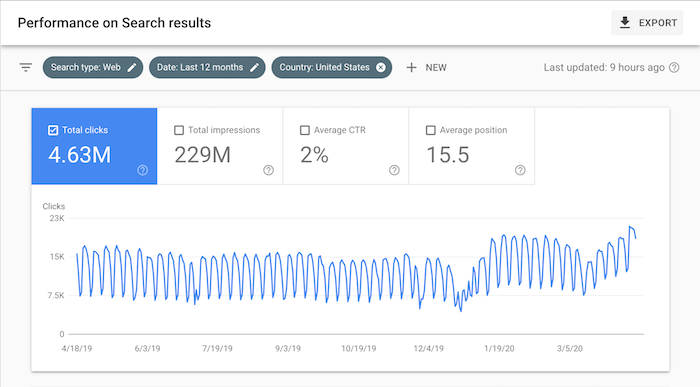
Here’s my traffic in the United States over the last 12 months:
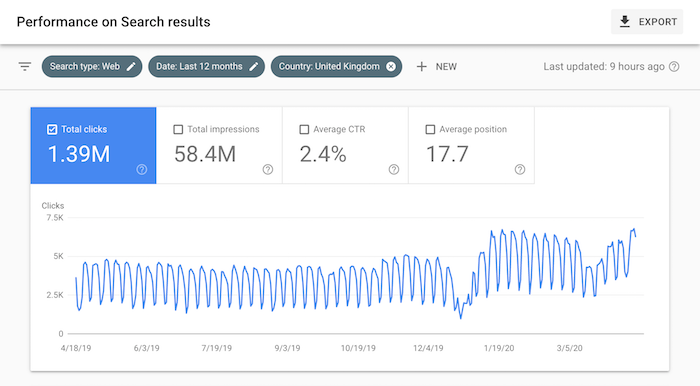
Now here’s my traffic in the United Kingdom:
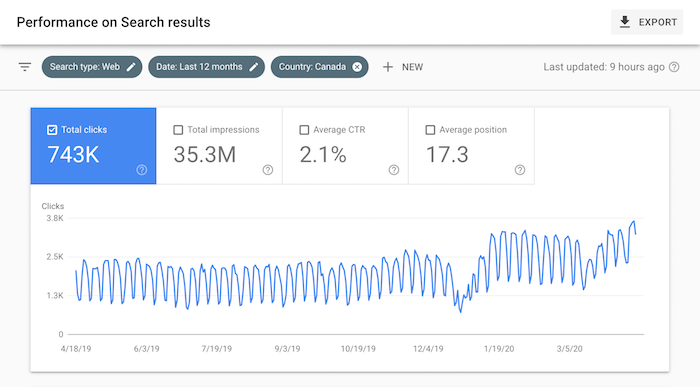
And here are the stats for Canada:
And Australia:
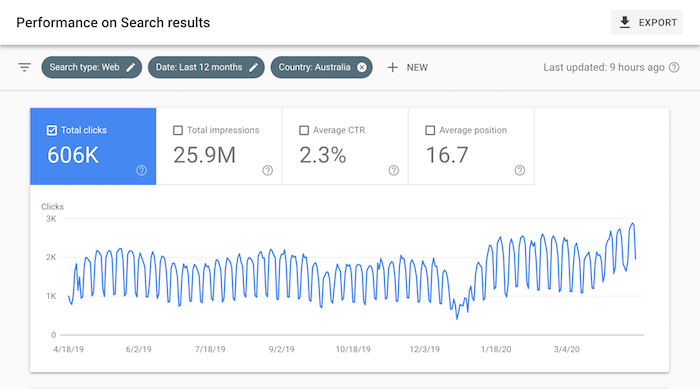
You can see that they have all increased, but not enough to cause the big spikes.

Now let’s look at some of the international markets we have been focusing on over the last few years.

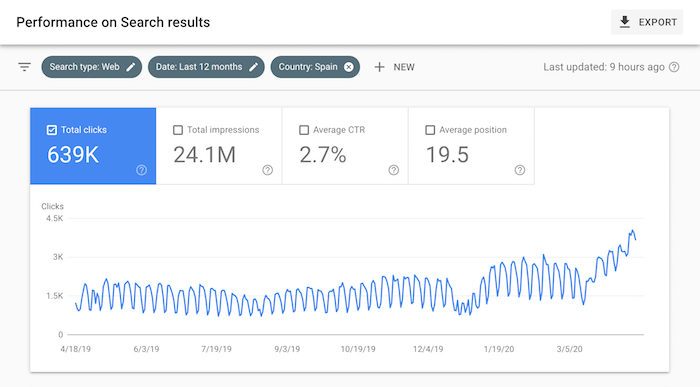
Here’s Spain:
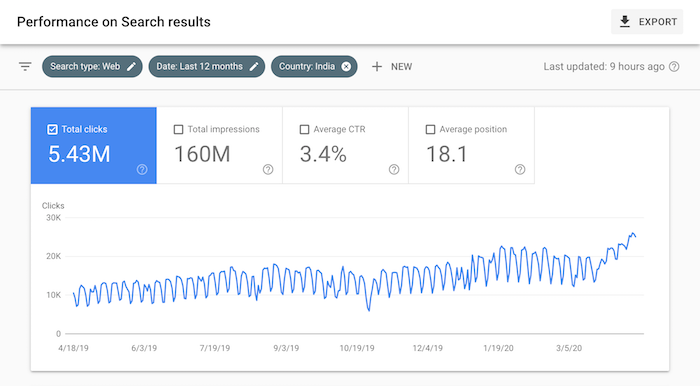
Here’s India:
And here is the first international market we expanded to, Brazil.
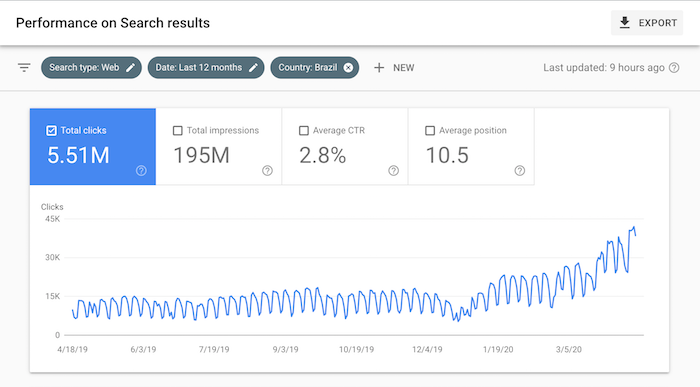
As you can see, the international markets are growing at a much faster pace, especially Brazil. But that is because we have been focusing on our SEO in Brazil more than any other country (outside of our main English markets).

Why you may ask?

Because a Google employee told me to

The most vital SEO lesson I learned came from a friend at Google, but they didn’t tell me anything that was really a secret…

They told me that the majority of the searches on the web aren’t done in English, they are done in other languages.

And in the English markets, everyone is competing, which means tons of sites and content from Google to choose from when it comes to determining which site should rank number 1 for any given keyword.

But the international markets are the opposite. There is a lot of demand but not enough sites for Google to choose from when it comes to rankings.

So even though there are tons of algorithm updates and SEO is becoming more difficult, it isn’t always the case with many international markets.

And the graphs above show it. As you can see, I’m getting huge traffic growth in those regions.

So, what should you do? Especially if you are starting off and don’t have a big budget or any budget for that matter…

Follow Amazon

Wherever you see big corporations like Amazon investing, it means there is money to be made in those regions.

Amazon has invested billions into regions like India:

It’s safe to say over the years Amazon will poor in well over $10 billion into India.

That’s a big bet for someone to make. And you can assume it’s a calculated bet because they think there is much more money to be made.

And it’s not just India…

Amazon is investing $236 million into Brazil to boost up their cloud infrastructure. And they’ve invested over $2.26 billion dollars in France. They are pretty much going after the whole world.
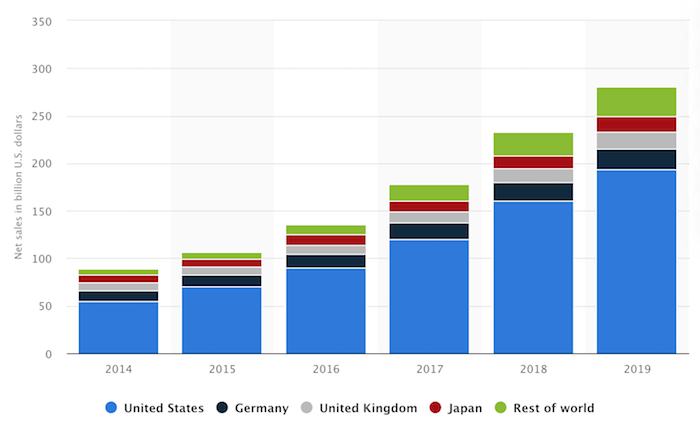
As you can see from the graph, Germany is its second-biggest market and Japan is also up there. But what’s interesting is the green bar as that represents the “rest of the world” and that green bar has been growing at a fast pace.

Now, I get that none of us are Amazon and we don’t have huge budgets, so I wanted to take a minute and break down how you can do this on a global scale without breaking the bank.

International SEO on a budget

When I first started to expand internationally, my business was much smaller and we didn’t have much money, if any, to spend on international SEO.

Yes, I am an SEO, so you would think that it makes it easier, but not really because the only language I am fluent in is English.

And if you fast forward to today, I’m still only fluent in English, but we have 7 offices around the world.

And we did it without laying out any of our own money. Yes, it did take time and it will for you too, but that’s the only way to do it when you are starting off and are small.

So how did we expand internationally without spending upfront?

We partnered with locals.

Why not find people in these regions who speak English as well as the local language of the country you are trying to expand to?

There are so many people without jobs, you’ll be shocked by how many people will be open to a partnership. All you have to do is look at Facebook groups and forums to find people in your space who live overseas.

Here’s how I structure each partnership:

  • I have the person, or a group of people, translate my content to that region’s language.
  • I have them read my English blog posts so they can learn SEO (if they don’t already know it… nowadays I look for people who already know SEO as I have been doing this long enough and can spend some money).
  • In exchange for them growing my traffic in that region, I give them a portion of the profits I make within that region. You can structure where you give them anywhere from 10% to 30%. You don’t want to go too low on the profit-sharing as you want them to work hard, but you also don’t want to go too high where you are giving away everything.
  • They put in the work each day, and they have 3 months to show some traction, and within 6 months they should have significant growth. Keep in mind it is less competitive, so it is easier to get results. You can also work with them on creating goals and milestones.
  • If they don’t show results, the partnership ends, and I don’t have to give them anything. If they show results, we keep pushing forward.

Now that we’ve covered structuring your international SEO expansion, let’s go over how you do it.

International SEO

I’ve written a handful of blog posts that break down the steps on growing your traffic in new languages and countries, but before I share them, I wanted to break down the 2 biggest lessons I learned:

  1. Transcribe the content, not translate – when you work with a partner overseas, they may think you want your content translated or that you want content written in their language just like how people would write the content in the US. That won’t work because cultures are different and keywords are different, so transcribe the content and adjust it to each country.
  2. You want a partner that lives in that country – if you expand into a country where you don’t have a partner on the ground you won’t see great results. By having people on the ground, you can more easily build up your brand, which has a big impact on rankings.

Here are some resources that will show you how to do international SEO:

  • This post will break down how to create a global SEO strategy.
  • And follow this to setup SEO correctly for different languages and countries. Keep in mind that Google doesn’t penalize for duplicate content, so don’t worry about having similar content or the same content for different regions.
  • Here’s how to expand internationally profitably.
  • This will teach you the fundamentals of reaching a global audience.

Funny enough, one of the reasons I created Ubersuggest was to build a tool that would help my team and I expand internationally.

Here’s a feature in Ubersuggest that will help you, that most people don’t know about.

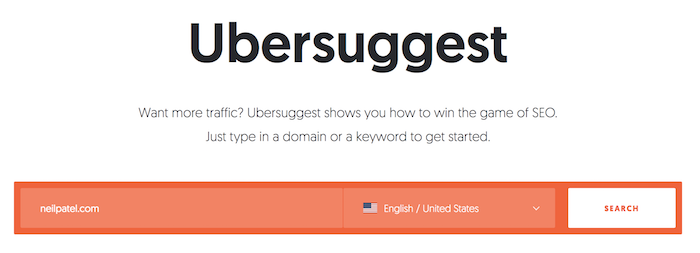
So head over to Ubersuggest and type in a competitor that you know is big and has a global presence.
I want you to click on the “Top Pages” navigational option in the sidebar.
This shows you all of the top pages that your competitors have.
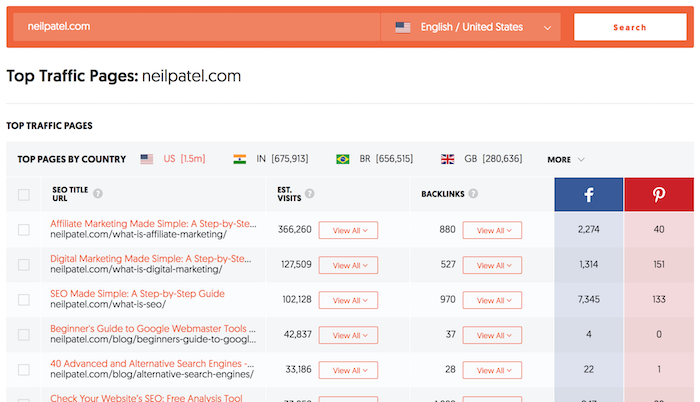
But don’t focus on those results. I want you to look at the regions that make up some of your competitions’ traffic… you’ll see that number next to each flag.

Click on one of the regions that you are considering expanding into. You’ll now see the results adjusted.
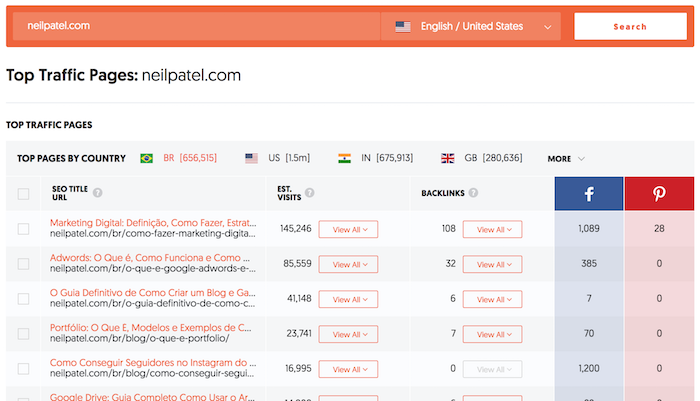
As you can see from the screenshot above, those are all of the pages on my site that are really popular in Brazil.

Now, I want you to click on “view all” under “Est. Visits” as that will show you all of the keywords that drive traffic to that page.
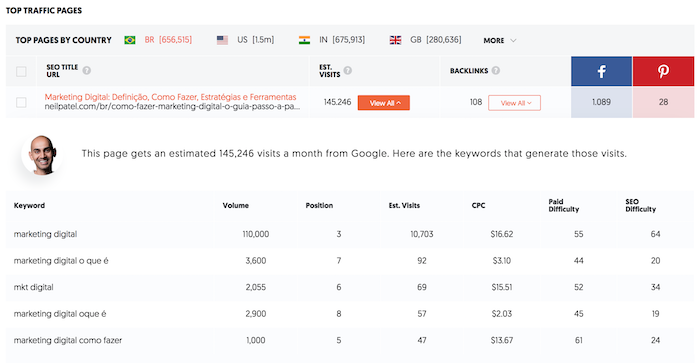
This will provide you with a laundry list of international keywords that you can give to your team so they can start creating content to go after them.

I also want you to click on “view all” under “Backlinks” as this will show you who links to your competition. You can then create a list of sites to reach out to so you can get them to link to you.

That’s the simple strategy we used to hit it hard in regions like Brazil and what we are also doing in countries like India, Spain, Mexico, France, Germany, and countless other countries.

Conclusion

English is a great language. And I love the United States as well as other English-speaking countries.

But that’s not where the opportunity is. There is more opportunity in global markets, which is why you need to follow the trend of international SEO.

Even if some of these countries don’t have as high of a GDP compared to the United States, it’s fine. Remember there aren’t as many competitors, which means you will have a lot of opportunities to still do really well.

So what region are you going to expand to first?

The post The Biggest SEO Trend You’re Ignoring appeared first on Neil Patel.


from Blog – Neil Patel https://ift.tt/34UIBQA
via IFTTT

Monday, 20 April 2020

How Coronavirus Has Changed Email Behavior

The coronavirus has disrupted most people’s lives, changing how they work, socialize, eat, and educate their children. It has also changed email behavior in profound and sometimes surprising ways. 

Let’s look at some of the changes in email behavior that we’ve seen in our Oracle CX Marketing data and how marketers can adjust their email programs:

Open times have shifted.

Because people are at home more than they previously were, their normal daily rhythms have changed. That includes when they check their email.

For instance, many people would check their email during their commutes on public transit. That’s no longer happening. In addition to email, the lack of commutes has also negatively affected podcast listening and music streaming services like Spotify.

What marketers should do:

Reconsider the best time to send emails for your brand. Consider running some A/B tests around send times, being sure to avoid these testing pitfalls.

If you’re using send time optimization (STO), understand that it may take a little bit of time for your STO data to capture this sudden shift in subscriber behavior. 

“Our recommendation for those using STO is basically to stay the course,” says Reed Pankratz, Senior Strategic Consultant for Strategic & Analytic Services at Oracle CX Marketing Consulting. “STO is built to accommodate changes in customer behavior over time, so knee-jerk reactions that completely abandon current send time strategy is likely to be more harmful than helpful. Even though it may take several weeks for the model to learn that behavior, tests and analysis have shown that using any data point we have on open time is better than using a default send time.”

Another benefit of send-time optimization is that it will also automatically adjust send times, as customer behaviors shift over time.

Email volume has dipped overall.

After a spike in email volume in mid-March when there was a flood of emails about store closures and other actions taken in response to the pandemic, email volume has started trending slightly downward across all verticals, according to Oracle CX Marketing data. 

For example, travel and hospitality email frequency is way down, which makes sense given that they’re unable to book travel and stays near-term. Telcos and media companies have increased email frequency significantly, as demand and usage of their services increases. Retail email volume was up just slightly during late March, as retailers tried to shift their customers’ purchases online and educate them about new options like curbside pickup, but it has flattened out in early April. Financial services companies haven’t changed their email cadence in any significant way.

What marketers should do:

In my book, Email Marketing Rules, I recommend that brands pay close attention to their customers’ natural buying patterns and then use email to amplify that behavior. The times of the year that they buy more, send more email to reinforce and strengthen that pattern. And send fewer emails when they are less active to avoid annoying them. 

This is still good advice, even in these extraordinary times. You always want to be in sync with your customers. So far, brands have done a good job of this, as evidenced by our email engagement data and unsubscribe data.

Email engagement is up, but revenue is down.

Open rates have increased significantly recently, driven in part by all of the coronavirus crisis messaging sent in mid-March. However, because those same messages had few or no calls-to-action, clickthrough rates were depressed during the latter half of March.

During the first half of April, open rates stabilized slightly up year-over-year, but click-through rates and revenue per email fell significantly year-over year as recessionary pressures mounted.

“Consumers’ needs clearly shifted during March,” says Clint Kaiser, Head of Strategic & Analytic Services at Oracle CX Marketing Consulting. “Our data shows industry categories trending up that were highly correlated with stay-at-home needs—and trending down for categories that didn’t meet those needs.”

Jennifer Lancaster Dana, VP of Oracle CX Marketing Consulting, adds, “But despite all the changes in people’s lives during this pandemic, there’s no question that email continues to drive connection and e-commerce engagement, even if revenue is down. Email is a vital way that consumers stay in contact with the brands that they love.” What marketers should do:

We understand that some businesses have been severely disrupted and that their budgets are under heavy pressure, and we see brands pulling budget from search and media. However, our data indicates that email marketing continues to perform at a high level compared to other channels. So, at the risk of sounding self-serving, we urge brands to continue using what is likely their highest ROI and best retention marketing channel to connect with their customers.

Unsubscribe rates are much, much lower.

Despite lots of social media chatter from consumers who were ticked off about brands they hadn’t engaged with in years sending them coronavirus crisis messages, we don’t see any evidence of a subscriber backlash against email. In fact, we’re seeing quite the opposite. Unsubscribe rates have fallen by more than 50% across all verticals, according to Oracle CX Marketing data.

This comes as adults in the US are spending somewhere between 20% and 33% more time online than average, highlighting the expanded mindshare available during this time.

“Consumers appear to have a much lower threshold to maintain their attention while they’re sheltering in place,” says Doug Sundahl, Senior Director of Strategic Services, Oracle CX Marketing Consulting. “Perhaps because they’re less hurried, spending less time commuting, and generally have more time on their hands, they’re being less critical of the emails they receive from the brands they’ve subscribed to.”

What marketers should do:

Because consumer email behaviors and attitudes are likely to fluctuate in the weeks and months ahead, we recommend that brands continue to closely monitor all KPIs and adjust their strategy accordingly. If negative metrics like unsubscribe rates and spam compliant rates start to increase and your engagement rates start to dip, then that’s a signal to adjust your email frequency and messaging.

Mobile email viewing has morphed—but only slightly.

With more people at home and working from home under shelter-in-place decrees, you’d expect that reading emails on mobile devices would decrease and that desktop and laptop reading would increase. However, that’s not true—at least at the industry level.

While reading emails on smartphones has decreased slightly, use of tablets for email increased, among Oracle CX Marketing Consulting clients through the end of March. But for the most part, there is no material shift in device usage patterns, which surprised us.

“It appears that some email habits are hard to break,” says Lauren Kimball, VP of Agency Services at Oracle Marketing Cloud Consulting. “If you’re used to reading emails on your smartphone, you wouldn’t just change because you suddenly have greater access to a laptop.”

What marketers should do:

Just because the overall data isn’t showing a big change in device preferences doesn’t mean that’s not the case among your subscribers. To be sure, check which environments your subscribers are opening your emails in. If you’re using Litmus or Email on Acid, this is easy to find in your analytics.

If you do see a shift to desktops, then pay more attention to the desktop rendering of your responsive email design. If you’re using mobile-only email design, consider reverting to a mobile-aware design to improve the desktop experience.

During systemic shocks like we’re experiencing now, it’s more important than ever to keep a close eye on your email marketing metrics, along with the performance of all of your channels. Use your metrics to guide your tactics and strategies. Stay nimble so you’re able to be responsive to your customers’ needs.

Want more advice on how to deal with crises? Check out these related posts:

—————

Need help with your messaging strategy? Oracle Marketing Cloud Consulting has more than 500 of the leading marketing minds ready to help you to achieve more with the leading marketing cloud, including Strategic Services and Creative Services teams that can help you develop and execute the right messaging strategy.

Learn more or reach out to us at CXMconsulting_ww@oracle.com.

For more information about email marketing, please visit: https://www.oracle.com/marketingcloud/.


from Oracle Blogs | Oracle Marketing Cloud https://ift.tt/2Vl7r8Y
via IFTTT

Friday, 17 April 2020

Using Heat Mapping to Drive Website Conversion: A Step-by-Step Guide

Measuring website visitor behavior has become an increasingly popular topic of conversation in the digital marketing industry. Knowing exactly how a visitor interacts with website experiences can provide a digital gold mine of commercial intelligence for digital marketers. The power to access this data can dramatically enhance overall website strategy and optimization. While there are a plethora of benefits that can come from heat mapping, you should pay especial attention to how it enables marketers to:

  • Measure website visitor behavior

  • Discover actionable consumer insights

  • Inspire tests for web optimization
What are heat maps and how can heat maps benefit my website?

Any website with a goal of encouraging visitors to complete a specific objective or set of objectives can benefit from heat mapping analysis. Heat maps are a tremendously powerful tool that have the ability to granularly track how visitors engage with elements across a website. Heat maps can track where a visitor clicks, scrolls, or even hovers over their cursor. The areas of a site which receive the highest amount of engagement will appear “hotter” than parts of the site which are more frequently ignored. This information provides a very unique view of data that is hard to achieve with typical website tracking strategies. It enables marketers to see the big picture through the visual representation of data rather than with grids or tables. The findings observed through the use of heat mapping can then be effectively leveraged during the discovery phase of website test creation and utilized to more fully develop specific hypotheses for future A/B and multivariate tests. After an A/B or multivariate test has concluded, heat maps can also be utilized to informatively differentiate how visitors interacted with multiple site variations to measure a test’s impact, such as in the picture below.

How do I get started?

Every test idea should begin with two elements: a hypothesis and an objective. In the beginning phases of test creation, heat maps can be utilized to both inspire new hypotheses relating to test creation or to provide preliminary data to support an existing hypothesis prior to testing. In the example below, we will analyze how a fictitious necktie e-commerce site might use heat maps to optimize their home page.

Step 1. Identify pages to test

If you don’t yet have a specific hypothesis in mind or know the exact pages you would like to test, I recommend beginning with your most high value pages. Testing on pages that have the greatest impact on your site performance should provide you with the most impactful results to optimize your website experience and better serve your site visitors. Landing pages, home pages and key product pages are usually great places to test.

Step 2. Apply heat map tracking on identified pages

In the example below, a digital marketing team launched a heat map on their home page to measure user interaction with the elements across the page. By tracking the interactions of visitors across the site, they can measure the effectiveness of specific site elements. The image below illustrates how heat maps are laid over the existing page to provide a unique visual solution that communicates visitor behavior without the need for extensive quantitative analysis. In this example, a digital marketing team would be able to quickly differentiate between the most effective areas of the page and the largest pain points of the page. It is very apparent which necktie SKUs are receiving the highest amount of engagement and which ties should be considered for replacement. It is also evident that the search bar is receiving almost no interaction. Insights such as these, extrapolated from the data that heat maps provide, can then be acted on to spark A/B or multivariate testing campaigns with more data-driven hypotheses.

Step 3. Launch A/B or multivariate tests

The results of heat map analysis can then be utilized to launch tests rooted in data rather than general prediction. In the above scenario, this necktie retailer would be able to quickly realize that visitors were not interacting with the search bar to aid in their site navigation. As a result, the retailer might then be inspired to test new variations of the search bar (page location, functionality, design, copy, etc.) to see if it’s possible to boost the engagement on that site element. Heat maps can also provide excellent insights into whether visitors are clicking on unexpected areas of the site, such as areas without links, to determine whether your page layout is contributing to confusion during the user journey. By uncovering these insights, heat maps will enable you to discover missed opportunities for website optimization, which will have the potential to drive major lifts in incremental revenue.

Step 4. Analyze data

The final step in this process is to analyze the results of your campaign. Was your hypothesis correct? Can you now act on your objective with near certainty of the result? Should your tested experience become your new default? Once a test is complete, it is crucial to dive deep into the results to uncover key insights and measure the impact of your campaign. Heat maps can also be utilized in post-test analysis to view the results of multiple page variants side-by-side to compare visitor engagement. Website optimization is an ongoing process which if properly implemented, will effectively leverage data to support all decisions. Insights extrapolated from this rich data can also be the inspiration for future personalization campaigns by providing the necessary knowledge to achieve the golden objective of modern digital marketers: data-driven personalization. The robust insights generated from heat mapping functionality enables modern marketers to consistently display the right website experience to the right visitors at precisely the right time.

_____________________________________________________________________________                                                                                                                                       

Want to learn more about how the Oracle Maxymiser Consulting team can take your optimization program to new heights? The Oracle Maxymiser Consulting team is made up of passionate strategists, designers, developers, quality assurance professionals, trainers, analysts and platform experts. We’re excited to understand your business needs and work with you to drive ROI.

Contact us here or find out more information about Oracle Maxymiser (and the rest of the Oracle CX Marketing suite) at our home on the web.


from Oracle Blogs | Oracle Marketing Cloud https://ift.tt/3ad2R0N
via IFTTT

Thursday, 16 April 2020

6 Reasons Being in Gmail’s Promotions Tab Is a Good Thing

Marketers have been concerned about their promotional emails landing in Gmail’s Promotions tab since Google launched Tabs in 2013. Back then, the concern was almost a hysteria, with rampant fears of Tabs causing a crash in email engagement and email revenues. 

Thankfully, concerns have cooled, with marketers seeing little to no bottom line impact from Tabs. However, we still see marketers asking about how to get their promotional emails into the Primary tab and our clients occasionally see tabbing as a deliverability issue in need of a fix. Since December, our Email Deliverability Services team has experienced a spike in questions about Tabs due to inconsistent placement of emails.

“We’ve had a number of our clients ask, What’s going on?” says Clea Moore, Director of Deliverability Strategy for Email Deliverability Services, Oracle CX Marketing Consulting. “We’re seeing our promotional emails in the Primary tab, our promotional emails in the Social tab, and our transactional emails in the Promotions tab.”

She added that all the inconsistencies have caused a few clients to ask, “Is there a way for our promotional emails to continue going to the Primary tab?”

Comments like that make us hope that this episode at Gmail won’t encourage marketers to try to manipulate their tab placement, because we believe concerns over Gmail’s Promotions tab are overblown. Here’s why:

1. Email users are incredibly comfortable and familiar with how Tabs work.

When Gmail first launched Tabs, marketers were concerned that subscribers wouldn’t know where to find their emails if they weren’t in the Primary tab. While that was perhaps a legitimate concern back in 2013, it’s a fairly patronizing view today, as consumers have had more than half a decade to get used to Tabs and other inbox providers like Outlook.com and Yahoo Mail have adopted or experimented with tabbed interfaces, too.

Consumers’ behavior toward their junk folders—the original second “tab”— should give marketers great comfort. Email users understand full well that inbox providers’ spam filters aren’t perfect, so they check their spam folder often and rescue wanted emails by marking them as “Not spam” routinely. They do the same thing with their Tabs, checking them even more often and moving emails from one tab to the tab they want those emails to be in going forward.

I’m sure that by indirectly comparing tabs to junk folders I’ve excited any deliverability concerns you might have around Tabs, so let me immediately dispel those concerns.

2. Every tab is part of the inbox, so tab placement issues are not a sign of deliverability problems.

Stemming probably in large part simply from the name of the “Primary” tab, some marketers have always thought of the other tabs as being secondary folders akin to junk folders. That’s not true. Tabs simply represent the partitioning of the inbox into several smaller inboxes. Where a brand’s emails land within that inbox is irrelevant in terms of deliverability.

However, that’s not to say that inbox placement can’t affect deliverability. Indirectly, it can. That’s because...

3. You want your emails to be where your subscribers expect them to be.

“Tab users expect their promotional messaging to show up in the Promotions tab and look for it there,” says Brian Sullivan, Strategic Director of Email Deliverability Services, Oracle CX Marketing Consulting. “An expectation that placing promotions in the Primary tab will get better engagement or conversions is misguided.”

In fact, not only are brands unlikely to see positive benefits from having their promotional emails in the Primary tab, they are likely to see negative consequences, says Moore.

“There is a bigger risk of increased attrition compared to any potential lift in opens you might see when promotional email is placed in the Primary tab,” she says. “We would expect higher unsubscribe rates, and probably higher spam complaint rates, too, since that’s unfortunately a common unsubscribe mechanism.”

Not only is having your promotional emails in the Promotions tab less risky, but...

4. When consumers spend time in the Promotions tab, it’s a sign of higher shopping intent.

This was one of my central arguments in an August 2013 MediaPost column I wrote when lots of major brands started asking their subscribers to re-tab their emails into Gmail’s Primary tab with the aim of increasing open rates.

“By asking subscribers to move your email from the Promotional to the Primary tab,” I wrote, “you’re essentially closing your store at the mall and deploying door-to-door salesmen that interrupt your subscribers’ conversations with their friends and loved ones. You’ll surely be more visible, but also probably more intrusive and ultimately less welcome.”

Any dip in top-of-the-funnel engagement that’s caused by being in the Promotions tab—and it’s not clear that there is any—is made up for in an increase in bottom-of-the-funnel engagement from higher conversion rates. That’s a trade that every brand should be more than happy to make.

A new benefit of having your promotional emails appropriately land in the Promotions tab is...

5. Email Annotations can help your emails stand out in Gmail, but only work in the Promotions tab.

One positive thing that has come out of the ongoing concerns that marketers have with their emails landing in the Promotions tab is that it partially spurred Google to create Email Annotations. It’s a nice carrot, especially considering that marketers are rarely offered anything but fewer sticks from inbox providers.

By adding JSON and microdata coding to their promotional emails, brands can enable special content when those emails appear in the Top Promotions portion of Gmail’s Promotions tab, but not when they land in other tabs. The image previews and deal badges powered by Email Annotations help your emails standout compared to those without them. 

“We are excited to see our clients testing annotations using our platform,” says Heather Goff, Strategic Director of Email Deliverability Services, Oracle CX Marketing Consulting. “As long as your reputation is good enough, when you include the annotations code then your email will show your logo and coupon codes and featured images and really stand out among the other emails in the promotions tab. Why not test it out and potentially gain a higher engagement and conversion rate?”

While we can’t wholeheartedly recommend that every marketer fully adopt Email Annotations for every email, we do recommend that all marketers use a baseline amount Email Annotation coding in every email they send. Read our full discussion of the opportunities and concerns around Email Annotations.

So that’s the carrot. Now the stick...

6. Google doesn’t appreciate gamesmanship or being manipulated.

There are lots of “tips” out there about how you can trick Gmail into placing your promotional emails in the Primary tab, such as by removing all the images from your emails. Hopefully we’ve already convinced you of the benefits of being in the appropriate tab, so you won’t consider radical changes to your email design that are likely to hurt performance and your brand’s image. However, if we haven’t, you should absolutely keep in mind that any perceived success you’re able to achieve in tricking Gmail will likely be short-lived.

“Any energy spent attempting to reroute your promo emails to the Primary tab will be futile when Gmail tweaks their algorithm or its users just move your messages back to where they want them,” says Sullivan.

And, honestly, that’s the best-case scenario. The worse-case scenario is that Google penalizes your Gmail reputation—or your Google search ranking as well. It’s been known to happen. Gmail has even penalized other Google brands that have manipulated Gmail’s algorithms.

Our Email Deliverability Services team is usually able to convince our clients to leave this issue alone and be at peace with letting Gmail and their users tab emails where they deem them most appropriate. We hope we’ve convinced you too, as any attempts to manipulate tab placement is likely to end up poorly, in addition to distracting you from focusing your attention on wiser tactics and more pressing trends. 

—————

Need help with your email deliverability? Oracle Marketing Cloud Consulting has more than 500 of the leading marketing minds ready to help you to achieve more with the leading marketing cloud, including a dedicated email deliverability practice within our Strategic Services Group.

Learn more or reach out to us at CXMconsulting_ww@oracle.com

Find out more about email deliverability and success by visiting: https://www.oracle.com/marketingcloud/.


from Oracle Blogs | Oracle Marketing Cloud https://ift.tt/3a9JVA1
via IFTTT

How to Generate More Leads Online

Establishing an online presence is relatively easy these days. Generating leads from your online activity, on the other hand, is an entirely different ballgame. Further complicating matters is the sheer number of sources that you can tap into for leads. It can feel pretty overwhelming – especially for small business owners or those new to…

The post How to Generate More Leads Online appeared first on Benchmarkemail.


from Blog – Benchmarkemail https://ift.tt/2yfDm1s
via IFTTT

Wednesday, 15 April 2020

10 Tips for Better SEO

This article originally appeared on SmarterCX as 10 SEO Tips to Implement in 2020.

The world of SEO, or Search Engine Optimization, is ever-changing — and can be somewhat mysterious. As Google and other search engines evolve their algorithms and implement nuances, such as Google’s introduction of BERT, and consumer behaviors evolve from mobile search to voice search and beyond, marketers and customer experience practitioners can find it challenging to keep up.

So what can digital marketers do in 2020 to stay ahead of the curve? I asked SEO pros for their best SEO tips for 2020, and here are 10 of them.

SEO Tip #1: Image link building

“Your business has spent time and money on attractive images of your products and services for your website. Then one day you are searching around your industry and find YOUR image on another website.

Don’t get angry and fire off an email for them to take it down. Think of this as an opportunity for an inbound link to your website. Write an email to the website that includes: a link to the original image, a thank you for using the image, and a polite request for attribution and a link back to you.

Now think, if one website has used our image, maybe others have? Do a Google search of your image to easily find other websites that have used your image. Repeat the email request for every site you can.”

Brogan Renshaw, SEO Director, Firewire Digital

SEO Tip #2: Relevant landing pages

“My best tip for 2020 is to ensure your landing page is relevant to the user’s search intention. It’s pointless trying to rank for keywords for the sake of traffic if your landing page doesn’t satisfy the user’s intent. Take the time to work out whether the keyword you are targeting and the content you plan to create will match what the user is trying to obtain from the search. Nothing wastes more SEO or users’ time than misaligned intent!”

Alistair Dodds, Marketing Director and Co-Founder, Ever Increasing Circles

SEO Tip #3: Audit your meta data

“My one biggest tip would be to audit and resubmit your meta data including meta description and title. Since Google’s BERT update, keyword density has become less important as Google’s crawler bots have become smarter at understanding a site’s content. We no longer need to stuff keywords into our meta descriptions. This means we can now focus on the click-through-rate of meta titles and descriptions, so we are more focused on attracting the customer with sales language rather than stuffing the available characters with keywords.”

Aled Nelmes, Digital Marketer, Diploma MSc

SEO Tip #4: Speed is king

“It was two years ago that Google publicly announced page speed as a ranking factor. And with all websites being switched over to mobile-first indexing by the end of the year, it’s essential for your SEO and business success to make sure that your pages load quickly and offer great user experience to your visitors.”

Amir Shahzeidi, Digital Marketing Manager, Uscreen

SEO Tip #5: Focus on content themes vs keywords

“My number one SEO tip for 2020 is to focus on themes instead of keywords. Instead of using lists of keywords, I like to simply think about the content people are interested in, and naturally add it to the article. I find that comprehensive articles naturally contain variations of the main keywords. Focusing on themes instead of keywords is not only great for SEO but also for users since it makes a website’s content sound much more interesting.”

Benjamin Houy, Founder, Grow With Less

SEO Tip #6: Mobile matters

“A great SEO tip for 2020 is to focus more on mobile. In September 2020, Google will switch all websites to mobile-first indexing. This means that Google will increase the focus on mobile user experience to evaluate websites on SEO.”

Erico Franco, Inbound Marketing Manager, Gravity Digital

SEO Tip #7: Take note of titles and subtitles

“Make sure your content has titles and subtitles. You would be surprised how many people don’t do this and wonder why they are not ranking high enough. Also, optimize your article length. People usually think that longer is better, but if your article answers the question quickly and effectively, you will more than likely rank better.”

Dustin Vann, Owner & CEO @ Trusy Social – https://trusy.co/

SEO Tip #8: Social media is a priority

“The most crucial tip for SEO in 2020 is social media. Social signals that include the totality of a webpage’s likes, shares, and overall social media visibility in the eyes of search engine crawlers indicate the interaction of people on your brand’s content on social media. The collaboration of SEO and social media together give audience relevance and value, both directly and indirectly. Similarly, the more people engaging with your content through social media, the higher your page SERP (Search Engine Result Page) ranking.”

Rameez Ghayas Usmani, Digital Marketing Executive, PureVPN

SEO Tip #9: Build content for your users

“My best SEO tip for 2020 is to focus on building content for your users. Create content based on what users are searching, content which answers users questions, and content which is useful in the customer journey. These types of content pieces will attract qualified users to your website, which is half the battle. Crafting the right piece of content can also attract backlinks to your website which will increase your website’s authority, trustworthiness, and boost your website in Google search.”

Brian Barwig, SEO Consultant, Integrate Digital Marketing

SEO Tip #10: Utilize YouTube

“A little-known SEO tip is to place an embedded YouTube video on your page. This keeps people on the page longer, so Google thinks your content has the most value.”

Becky Beach, SEO Strategist and Business Blogger, MomBeach.com


SEO is a crucial piece of the puzzle when it comes to search and display. You need to also make sure your home page can be found and is easily read and navigable. See “What Your Website’s Home Page Should Look Like: 5 Things to Consider.”


from Oracle Blogs | Oracle Marketing Cloud https://ift.tt/3bbWTOP
via IFTTT